 Anacortes Siding
 Building a Deck on Guemes Island: What's Different
Guemes Island sits just across the channel from Anacortes, and while it feels close on the map, building a deck out there is not quite the same job as building one three miles inland. The island catches wind and salt spray off the water on more sides than most mainland lots, homes are often sited to take advantage of view exposure rather than shelter from weather, and a good share of the housing stock is older cabins and cottages that have been added onto over the years. A deck built for a sheltered Anacortes neighborhood lot won't necessarily hold up the same way on a windward stretch of Guemes.
None of that means a deck on Guemes Island needs to be exotic or overbuilt. It means the material choices, fastener selection, and a handful of construction details need to match what the site actually throws at the structure — salt-laden air, long stretches of driving rain, and a wet season that runs longer than most people expect in Skagit County.
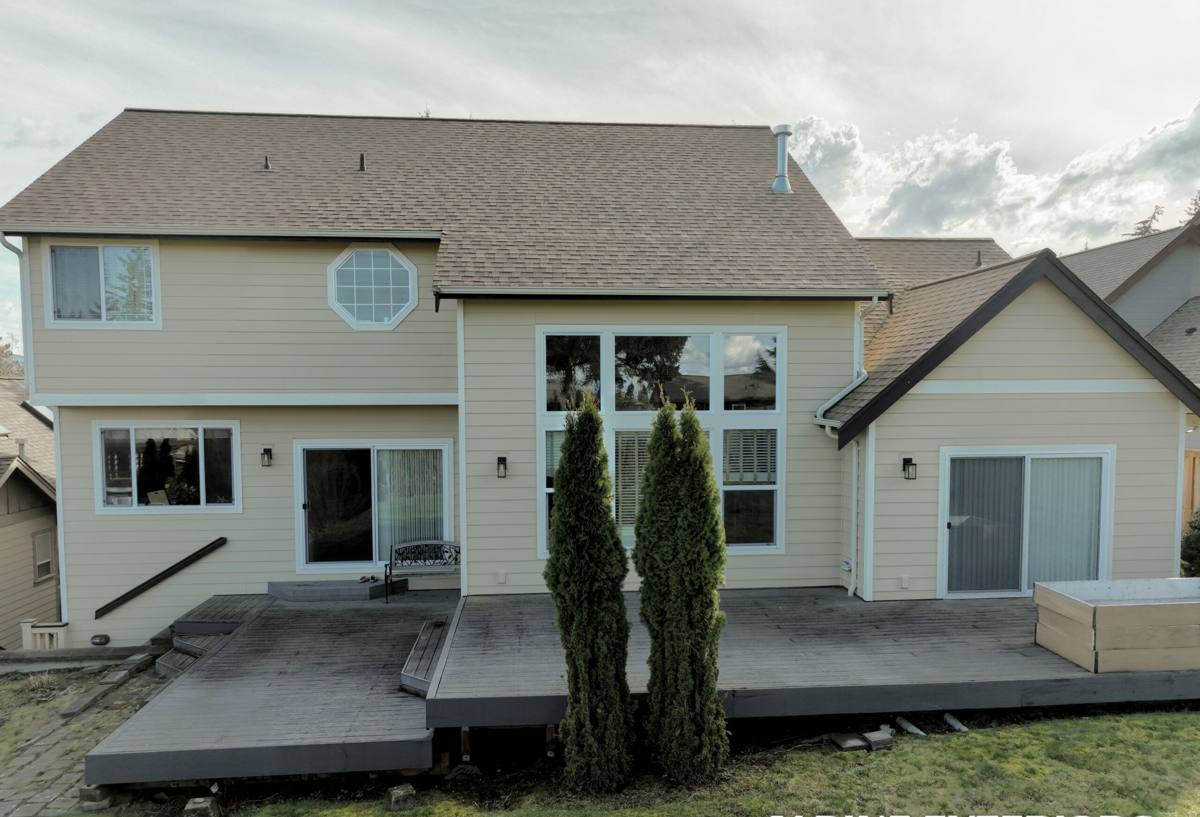
How Salt Air and Marine Moisture Affect Deck Materials
Salt air doesn't just make metal rust faster — it accelerates almost every failure mode a deck can have. Moisture carried in on salt-heavy air holds onto wood and metal surfaces longer than plain rainwater, which means finishes break down sooner, fasteners corrode from the inside of the wood outward where you can't see it, and any gap in a protective coating becomes a starting point for a bigger problem.
Fasteners and Hardware
This is where a lot of decks near the water actually fail, and it's rarely dramatic — it's slow. Standard galvanized deck screws and joist hardware are fine inland, but in a marine-influenced environment they can start showing rust bleed and pitting well before the wood around them shows any wear. On Guemes Island jobs we spec stainless steel fasteners for anything exposed to weather, and hot-dip galvanized or stainless structural hardware (joist hangers, post bases, ledger bolts) rather than the lighter-duty coated products that are perfectly adequate elsewhere. It costs more up front. It's a fraction of the cost of pulling up decking to replace corroded hangers in eight years.
Decking Material Behavior
Salt air affects wood and composite decking differently. Cedar and other real wood decking need a finish that's actually maintained on schedule, because salt accelerates UV and moisture breakdown of unprotected wood fiber. Composite decking generally shrugs off salt exposure better than wood, but not all composites are created equal — cheaper capped or uncapped boards can still absorb moisture at cut ends and fastener penetrations. Where composite is the right call for a Guemes Island deck, end-cap treatment and correct fastener spacing matter more than they would on a dry inland lot.
Moss, Shade, and Drainage — the Long Wet Season
Anacortes and the surrounding islands get a genuinely long stretch of damp, low-light months, and Guemes Island — with tree cover on many lots and a lot of shaded north- and west-facing decks — grows moss on decking surfaces that don't get airflow or sun. Moss isn't just cosmetic. It holds moisture against the board surface, which is exactly the condition that rots wood decking and delaminates lower-quality composite over time.
Footing and Framing Height
Decks built low to the ground or over poorly draining soil trap moisture underneath the structure, which feeds moss and slows drying of the framing itself. We build in enough clearance between grade and framing for airflow, and grade the ground under the deck so water moves away from posts and footings instead of pooling under them.
Gaps and Airflow at the Board Level
Board spacing that's too tight — often done to make a deck look seamless — is one of the most common reasons decks in this climate stay wet longer than they should and grow moss faster. Correct gapping between boards, and around the perimeter where decking meets a house or planter, lets water shed instead of sitting and lets the underside of the deck dry out between rain events.
Ledger Attachment: Where Most Structural Deck Failures Start
The ledger board — the piece that attaches the deck framing directly to the house — is the single most important structural connection on most decks, and it's also the most common source of rot damage nationwide, not just here. Where the ledger meets the house wall, water can get behind the siding or trim and sit against wood framing for months without being visible from outside.
On every ledger installation we flash the connection correctly: proper flashing between the ledger and the house sheathing, sealed and lapped so water sheds outward rather than tracking behind it, with the ledger bolted (not just nailed) to the house framing. In a driving-rain climate like this one, skipping or shortcutting ledger flashing is the kind of mistake that doesn't show up for a few years — and then shows up as a very expensive repair.
Choosing a Decking Material for Guemes Island Conditions
| Material | Salt/Moisture Behavior | Maintenance | Typical Lifespan Here |
|---|---|---|---|
| Cedar | Naturally rot-resistant but needs sealed finish maintained on schedule | Refinish every 1-3 years in this climate | 15-20+ years with upkeep |
| Pressure-treated fir/pine | Treatment resists rot but end cuts and fastener holes need field sealant | Stain/seal every 1-2 years | 10-15 years |
| Capped composite | Strong resistance to salt and moisture; cut ends need capping | Periodic cleaning, no refinishing | 25-30 years |
| Uncapped/economy composite | Can absorb moisture at edges and fastener points over time | Low but not maintenance-free | 15-20 years, variable |
There isn't one right answer for every home. A homeowner who wants the look and feel of real wood and is willing to keep up a finishing schedule can get a long, good life out of cedar here. A homeowner who wants to install it and mostly forget about it is usually better served by a quality capped composite. We'll walk through the honest trade-offs for your specific site — sun exposure, how sheltered or exposed the deck is, and your appetite for maintenance — rather than pushing one product across the board.
Working on Guemes Island: Ferry Logistics and Scheduling
Any contractor who tells you island access doesn't affect a project timeline hasn't actually built much out there. Getting a crew, tools, and materials onto Guemes Island means working around the ferry schedule, which affects how a job gets sequenced compared to a mainland Anacortes project. Material deliveries, in particular, need to be planned rather than handled on the fly — you don't want a crew standing around waiting on a lumber order that missed a ferry run.
Because we already work Guemes Island regularly, material staging and crew scheduling around ferry timing is built into how we quote and plan the job, not something we figure out after we've started. That matters for keeping a project on schedule and avoiding the kind of delays that come from a contractor learning island logistics on your project instead of the last one.
Our Process for Guemes Island Deck Projects
- On-site assessment — we look at sun/shade exposure, wind exposure, existing drainage, and the condition of the house wall where a ledger will attach.
- Material and layout recommendation — matched to your exposure, maintenance preference, and budget, with the trade-offs explained plainly.
- Permitting — Skagit County requirements vary by structure size, height, and attachment method; we handle the paperwork side of this.
- Logistics planning — materials and crew scheduled around ferry timing so the project moves without avoidable gaps.
- Framing and flashing — correct footings, joist layout, and ledger flashing done to hold up under sustained wet-season exposure.
- Decking and finish work — installed with the fastener spacing and gapping that keeps the deck drying properly year-round.
- Final walkthrough — including a plain-language rundown of what maintenance (if any) the material you chose will need.
Permits and Skagit County Requirements
Most new decks and significant deck rebuilds on Guemes Island require a permit through Skagit County, with requirements that depend on the deck's height above grade, its size, and how it attaches to the house. Setback rules and shoreline-adjacent regulations can also come into play depending on where the lot sits relative to the water. We handle this process as part of the job rather than leaving it to the homeowner to sort out — it's part of doing the work correctly, not an optional extra.
Keeping a Guemes Island Deck in Good Shape
Whatever material you choose, a few habits go a long way in this climate:
- Sweep debris and needles off the deck surface regularly, especially in shaded areas — trapped organic matter is what feeds moss growth
- Check and clear gaps between boards each fall so water and debris don't build up before the wet season
- Inspect ledger flashing and any visible fasteners yearly for early signs of corrosion or gaps in sealant
- Re-seal or refinish wood decking on the schedule appropriate to the product — don't wait until it visibly needs it
- Rinse salt residue off the deck surface periodically if the lot faces open water or takes direct spray
- Keep gutters and downspouts near the deck clear so roof runoff isn't dumping extra water onto or under the structure
If you're planning a new deck or replacing one that's showing its age out on Guemes Island, we're happy to take a look and give you a straightforward, no-pressure estimate. Fill out the form below and we'll get in touch to talk through what your site actually needs.