 Anacortes Siding
 Building a Deck That Holds Up on March Point
March Point sits out on the water, and that changes what a deck has to survive compared to a build a few miles inland. Homes here take on salt-laden air, wind-driven rain off the bay, and a moss season that can run most of the year in this part of Skagit County. A deck built to a generic spec sheet will often show its age in three or four years out here — soft spots at the ledger, black streaks on the boards, corroded hardware. A deck built for this specific location holds its finish, its footing, and its fasteners much longer.
This page focuses on one thing: custom deck construction for March Point properties, and what it actually takes to get one right in this climate. If you're comparing bids, the differences that matter most usually aren't visible in a rendering — they're in the framing, the flashing, and the fastener spec.
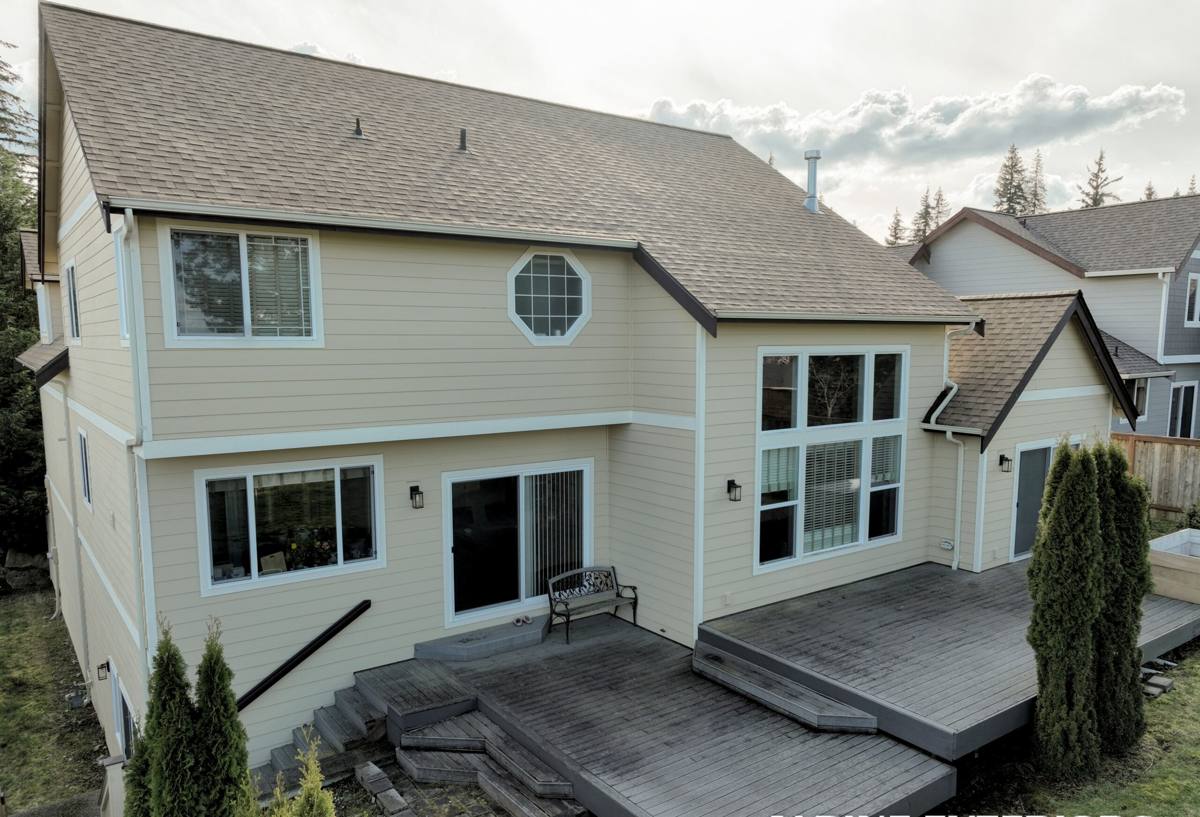
What Salt Air and Moss Actually Do to a Deck
It helps to understand the two forces working against a deck here, because they don't damage the structure the same way.
Salt Air and Corrosion
Airborne salt from the surrounding water accelerates corrosion on anything metal — nails, screws, joist hangers, post bases, railing brackets. Standard electro-galvanized fasteners can start rusting within a season or two in a coastal exposure like March Point's. Once a fastener starts to corrode, it loses holding strength long before it looks obviously bad, which is part of why hardware choice matters more here than it would on a build set back from the water.
Moss, Algae, and Moisture Retention
Skagit County's damp, low-light stretches let moss and algae establish on any horizontal surface that stays wet — deck boards, stair treads, the tops of railings. Beyond looking bad, moss holds moisture against the wood or composite surface far longer than open air would, which is what actually drives rot in wood decking and can affect the wear layer on lower-grade composite boards. Slope, spacing, and airflow underneath the deck do more to prevent this long-term than any surface treatment applied after the fact.
Choosing a Decking Material for This Location
There's no single "best" decking material — there's a best material for your budget, your maintenance appetite, and how exposed your specific site is. On March Point, exposure to wind, salt, and standing moisture should weigh more heavily in that decision than it would for an inland deck.
| Material | Moisture & Salt Resistance | Moss/Algae Behavior | Maintenance | Typical Lifespan |
|---|---|---|---|---|
| Cedar | Naturally moisture-resistant; needs sealed cuts and fasteners | Can host moss if not cleaned; ages to gray without upkeep | Annual cleaning, periodic sealing | 15-20 years with upkeep |
| Pressure-Treated Fir/Hem-Fir | Good with proper flashing; treatment protects against rot | Prone to moss if shaded or poorly drained | Cleaning, occasional sealant | 15-25 years with upkeep |
| Capped Composite | Excellent; won't absorb moisture or salt | Resists staining better than wood; still needs periodic washing | Occasional washing, no sealing | 25-30+ years |
| PVC Decking | Excellent; fully synthetic, no organic material to feed rot | Very low moss adhesion; easiest to keep clean | Occasional washing | 30+ years |
We'll walk through this table against your actual site — how much sun the deck gets, how close it sits to grade, and how exposed it is to wind off the water — because those factors shift which material makes the most sense for your project and budget.
Why We're Selective About Low-Grade Composite
Not all composite decking performs the same. Older-generation and uncapped composite boards can absorb moisture at the core over time, which in a marine climate like this one can lead to swelling, staining, or premature wear years before the manufacturer's warranty period ends. Our standard is to spec fully capped composite or PVC products for anything on March Point, and to be upfront when a lower-grade product isn't something we'll put our name behind — not because the category is bad, but because this specific climate exposes its weak points faster than most inland installs.
Framing, Fasteners, and Footings: The Parts You Don't See
A deck's surface material gets most of the attention, but the framing underneath is what determines whether it's still solid in fifteen years.
Ledger Attachment and Flashing
Where the deck ties into the house, proper flashing keeps driving rain from finding its way behind the siding and into the wall framing — a common failure point on older decks in wet coastal climates. This is one of the most-skipped details on budget decks, and it's the one most likely to cause hidden rot damage to the house itself, not just the deck.
Fastener and Hardware Grade
Given the salt exposure on March Point, we spec stainless steel or heavy hot-dip galvanized fasteners and connectors rather than standard-grade hardware. It costs more upfront and it's invisible once the deck is finished, but it's the difference between hardware that's still sound at year fifteen and hardware that's rusting through at year five.
Footings and Drainage
Proper footing depth and concrete work matter everywhere, but on a low-lying, water-adjacent site like March Point, grading and drainage around the footings deserve extra attention so water isn't pooling against posts or piers. We also build in airflow under the deck structure itself, since trapped moisture underneath is what feeds long-term rot and moss growth from below.
Permits, Codes, and Guardrails
Most custom decks in Anacortes and unincorporated Skagit County require a building permit, and guardrail height, baluster spacing, and stair geometry all need to meet current code — this isn't optional paperwork, it's what keeps a deck safe to actually use for years. If your property sits close to the water's edge, it's also worth checking whether shoreline jurisdiction rules could apply to your project; that's a conversation worth having with the local permitting office early, before design work goes too far. We handle the permit submission and inspection scheduling as part of our process so you're not the one tracking down approvals.
Our Process, Start to Finish
- Site visit and consultation — we look at exposure, drainage, grade, and how the deck will connect to your home before talking materials.
- Design and material selection — sizing, layout, and a material recommendation based on your site's specific exposure and your maintenance preference.
- Permit submission — we prepare and submit the permit package to the local jurisdiction and handle any follow-up questions.
- Framing and structural work — footings, posts, ledger flashing, and joist framing, built to the fastener and hardware standard described above.
- Decking, railing, and stairs — surface installation, guardrails to code, and finish details.
- Final walkthrough — we go over the finished deck with you, including basic care guidance for your specific material.
Keeping a March Point Deck in Good Shape
Materials and construction quality set the ceiling on how long a deck lasts, but a little seasonal attention keeps it there. This is a reasonable maintenance rhythm for this climate, regardless of which material you choose:
- Sweep debris off the deck surface regularly, especially in fall when leaves and needles trap moisture
- Rinse or wash the surface a few times a year to slow moss and algae buildup before it takes hold
- Check railing connections and stair fasteners annually for looseness or early corrosion
- Keep gutters and downspouts near the deck clear so runoff isn't dumping directly onto or under it
- Reseal wood decking on the manufacturer's recommended schedule — don't wait until it's visibly gray or dry
- Look underneath the deck once a year for standing water, debris buildup, or signs of rot at posts
Why Local Experience on March Point Matters
A contractor who's worked on this specific peninsula already knows how exposed a given lot is likely to be, what the local permitting office expects to see in a submission, and which material choices tend to disappoint homeowners a few years down the road in this climate. That's not something you can fully get from a showroom brochure or a generic install crew working from a standard spec sheet. It shows up in smaller decisions — fastener grade, flashing detail, board spacing — that don't cost much more at build time but save real money and frustration over the life of the deck.
If you're weighing a custom deck for your March Point home, we're happy to take a look at your specific site, talk through material options honestly, and put together a free, no-pressure estimate — just fill out the form below to get started.