 Anacortes Siding
 Windows Built for Ship Harbor's Waterfront Exposure
Ship Harbor sits right where Anacortes meets the water, and that location cuts both ways. The views and the marine air that make this part of Fidalgo Island desirable are the same conditions that wear down a window faster than almost anywhere else in Skagit County. Salt-laden air corrodes hardware, driving rain off Rosario Strait finds every weak seam, and the long, damp moss season keeps wood trim and sills wet for months at a time. A window that would hold up fine in a drier inland neighborhood can start failing here within a few years if it wasn't chosen and installed with this exposure in mind.
We treat Ship Harbor as its own case, not a generic Anacortes job. The wind direction, the amount of direct salt spray a home gets, and how much afternoon sun hits the glazing all factor into what we recommend and how we detail the installation.
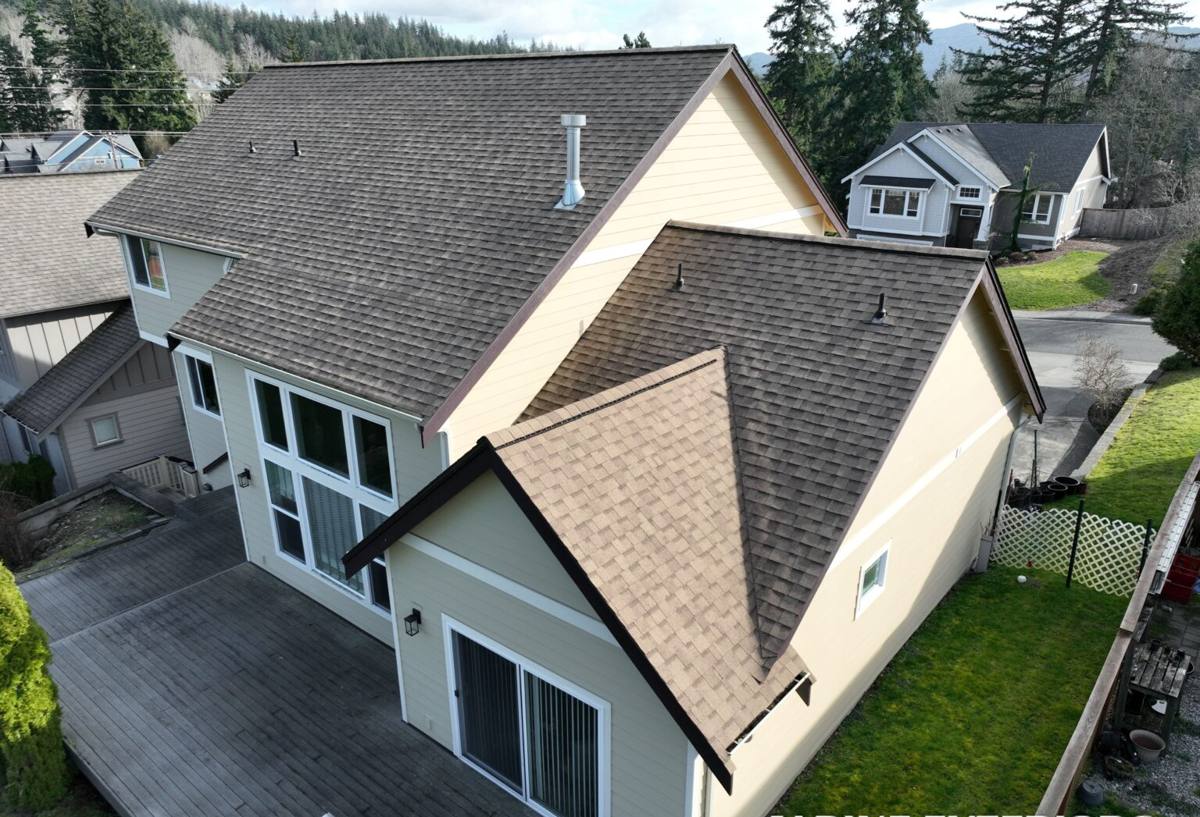
What Salt Air and Driving Rain Actually Do to a Window
Corrosion and Hardware Fatigue
Airborne salt is conductive and corrosive. It settles into hinges, cranks, locks, and screws, and over time it pits metal and gums up moving parts. Cheaper hardware finishes give out first — a window that still looks fine from the curb can have a lock or roller that's seizing up on the inside.
Wind-Driven Water Intrusion
Standard rain falls straight down; wind-driven rain off open water hits siding and window openings sideways and can be pushed upward under poorly lapped flashing. Most window leaks we find in this area aren't glass failures — they're flashing and sealant details that weren't built for horizontal water pressure.
Moss, Mildew, and Trapped Moisture
Anacortes' long wet season keeps humidity high around window openings for much of the year. Wood sills and trim that don't get a chance to fully dry out are prime spots for moss and soft rot to take hold, especially on north- and west-facing walls that see less sun.
What a Correct Installation Involves Here
The window unit itself is only part of the job. In a marine environment like Ship Harbor, the installation details matter as much as the product:
- Self-adhered flashing membrane at the sill, jambs, and head, lapped in the correct order so water sheds outward, not into the wall cavity
- A sloped sill pan so any water that gets past the frame drains back out instead of pooling
- Backer rod and a marine-grade, UV-stable sealant at the exterior trim joint, not just caulk smeared over a gap
- Corrosion-resistant fasteners and hardware rated for coastal exposure
- Proper shimming and squaring so the sash operates smoothly and the weatherstripping seals evenly on all four sides
- Interior air sealing with low-expansion foam so conditioned air isn't leaking out around the frame
Skip any one of these and the window may look fine for a season or two before wind-driven rain or trapped moisture finds the gap.
Choosing a Window Material for This Environment
Every window material handles salt air and rain differently. There's no single "best" choice — it depends on your home's exposure, your maintenance appetite, and your budget.
| Material | How It Handles Salt Air & Moisture | Maintenance |
|---|---|---|
| Vinyl | Won't corrode or rot; UV-stable formulations resist fading from reflected water glare | Low — occasional rinse to clear salt film |
| Fiberglass | Very stable dimensionally, resists warping from temperature and moisture swings | Low — durable factory finish |
| Wood-clad | Exterior cladding protects the wood, but any breach at joints exposes wood to rot risk | Higher — joints and cladding seams need periodic inspection |
| Aluminum | Strong and slim-profile, but standard aluminum can corrode and pit near salt spray without marine-grade coatings | Moderate — coating condition matters |
For homes with direct water exposure, we most often steer clients toward vinyl or fiberglass because they don't give corrosion or rot anything to grab onto. Wood-clad windows can still make sense on more sheltered elevations where the architectural look matters and the exposure is lighter.
Glass Packages Worth Considering
Beyond the frame material, the glass package affects comfort and durability just as much:
- Dual-pane with Low-E coating — the baseline for new installations, cuts UV fading and improves year-round comfort
- Argon or krypton gas fill — improves insulation value between panes, worth it in a house that gets steady wind exposure
- Tempered glass — required by code in certain locations near doors, low sills, and wet areas; we'll flag where it applies
- Impact-resistant or laminated glass — an option for homes with heavy wind exposure or debris risk during winter storms
Signs Your Current Windows Are Losing the Fight
Because failure here tends to happen at the seams rather than in the glass itself, the warning signs are often subtle at first:
- Fogging or moisture between panes (a failed seal on a dual-pane unit)
- Soft, discolored, or spongy trim and sills, especially on the shaded side of the house
- Hardware that's stiff, gritty, or hard to turn
- Drafts you can feel near the frame even with the window latched
- Moss or dark streaking building up on the sill or exterior trim faster than the rest of the siding
- Paint or finish that's bubbling or peeling right at the window perimeter
Any one of these is worth a look before it turns into a bigger repair. Caught early, most of this is a straightforward fix; left alone through another wet season, it can spread into the wall framing.
How We Handle a Ship Harbor Window Project
- On-site assessment — we look at each opening's actual exposure, existing flashing condition, and any signs of moisture already in the wall
- Product and glass recommendation — matched to that specific elevation, not a one-size answer for the whole house
- Written estimate — clear on scope, materials, and timeline before anything is ordered
- Removal and inspection — old units come out carefully so we can check the sheathing and framing underneath for hidden rot before closing it back up
- Installation with full flashing and sealing detail — sill pan, membrane, backer rod, sealant, and hardware built for the exposure
- Final walkthrough — every window opened, closed, and checked for smooth operation and a tight seal before we call it done
What Affects the Cost
Every home and opening is different, but these are the main factors that move the price on a custom window project in this area:
| Factor | Why It Matters |
|---|---|
| Frame material | Vinyl is typically the most budget-friendly; fiberglass and wood-clad cost more up front |
| Window size and configuration | Custom shapes, large picture windows, and multi-unit combinations take more material and labor |
| Condition behind the old window | Hidden rot or damaged sheathing found during removal adds repair time before the new unit goes in |
| Glass package | Gas fills, tempered glass, and impact-resistant options each add cost but address specific needs |
| Number of openings | Doing multiple windows in one project spreads setup and crew costs over more units |
| Access and elevation | Second-story or hard-to-reach waterfront-facing windows can require extra staging |
We walk through these factors with you at the estimate so there aren't surprises once work starts.
Why Local, Ship Harbor-Familiar Experience Matters
A crew that mostly works drier, inland neighborhoods can still install a window competently — but they may not automatically account for wind-driven rain direction, salt exposure on hardware, or how long moisture lingers on a shaded, water-facing wall through a Skagit County winter. Working regularly in Anacortes' coastal neighborhoods means we've already seen how different installation shortcuts play out a few years down the road, and we build around those failure points from the start rather than after a callback.
We also know which details inspectors and code officials in this jurisdiction pay attention to, so the permitting and inspection side of a window project doesn't become its own headache.
Protecting Your Windows After Installation
A well-installed window still benefits from a little upkeep in a salt-air environment:
- Rinse frames and hardware periodically to clear salt film, especially after storms
- Keep weep holes and drainage tracks clear of debris and moss buildup
- Lubricate locks and cranks on the manufacturer's recommended schedule
- Check exterior caulk lines once a year and touch up before a small gap becomes a leak path
- Trim back vegetation that keeps a window's exterior trim shaded and damp longer than it needs to be
None of this takes much time, and it goes a long way toward getting the full service life out of a window that's already built for the exposure.
If you're weighing repair versus replacement, or just want a straight answer on what your Ship Harbor home's windows actually need, we're glad to take a look. Use the form below to request a free, no-pressure estimate.