 Anacortes Siding
 Decks Built for Similk Beach's Marine Climate
Similk Beach sits close to the water on Fidalgo Island, tucked into the wooded shoreline near Similk Bay south of downtown Anacortes. That location is part of what makes it a beautiful place to live, and part of what makes a deck out here a different build than a deck in a dry inland yard. Salt-laden air off the Salish Sea, wind-driven rain that comes in sideways during fall and winter storms, and a long moss season under the fir and cedar canopy all put steady stress on outdoor structures. A deck built without those conditions in mind will show it within a few years — soft spots, rust streaks, slick green boards, and fasteners that back out before their time.
We build and repair decks throughout Skagit County, and Similk Beach's combination of shoreline exposure and heavy tree cover is a recurring theme in the work we do there. This page covers what that means in practice: the materials that actually hold up, what correct construction looks like below the decking boards, and how we run the job from first look to final walkthrough.
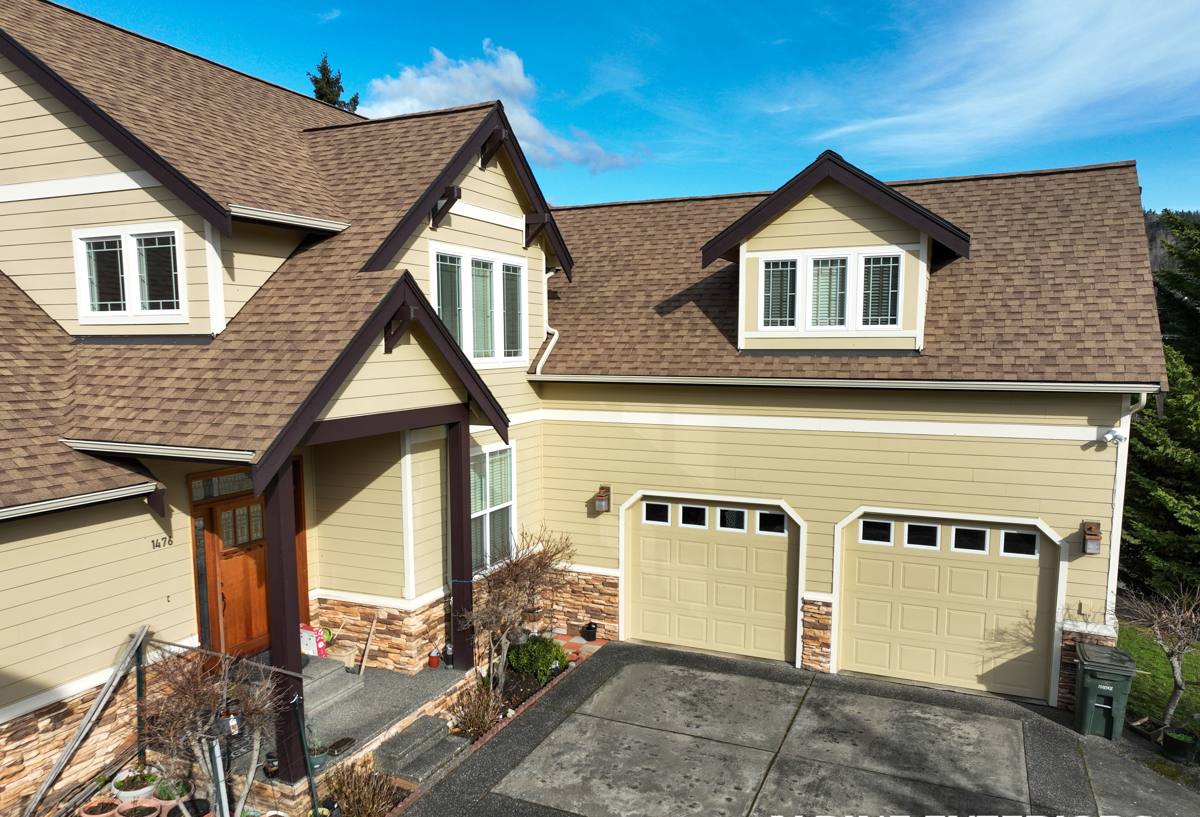
What Similk Beach Homes Actually Need From a Deck
Salt Air and Metal Fatigue
Being close to Similk Bay means airborne salt settles on everything outside, including your deck's hardware. Standard zinc-coated fasteners and connectors can start corroding faster near the water than they would a few miles inland. Once a joist hanger or ledger bolt rusts, it loses holding strength long before it looks bad enough to notice from above. This is a structural issue hiding under a cosmetic one, and it's the main reason we're particular about hardware specification on waterfront and near-waterfront lots.
Moss, Algae, and a Long Wet Season
Western Washington's wet season runs long, and a shaded, tree-covered lot like the ones common around Similk Beach holds moisture even longer than an open one. Moss and algae take hold on any decking surface that stays damp and shaded, and once established they hold water against the board and make the surface dangerously slick. Decking that can't shed water and dry out between storms will grow moss faster than the manufacturer's warranty language ever accounts for.
Overhanging Trees and Debris Load
Wooded lots mean needles, cones, and leaf litter collecting in deck board gaps, against ledgers, and in stair treads. That debris holds moisture right where you don't want it — against fasteners, framing connections, and the house band board. A deck design that ignores this (tight board spacing, poor drainage gaps, boxed-in framing with no airflow) sets itself up for rot and corrosion regardless of what decking material sits on top.
Choosing the Right Decking Material for This Area
There's no single "best" decking material — there's the right material for your budget, your maintenance appetite, and your exposure. For a Similk Beach lot, we weigh moisture behavior and salt tolerance more heavily than we would for a dry, open, inland yard.
| Material | How It Handles This Climate | Maintenance | Typical Lifespan Here |
|---|---|---|---|
| Pressure-treated wood | Affordable, but absorbs moisture readily and needs consistent sealing to resist rot and moss in a shaded, damp yard | Annual cleaning and re-sealing | 10-15 years with upkeep |
| Cedar | Naturally rot-resistant and handles moisture better than treated pine, but still needs sealing near salt air to keep its color and surface integrity | Sealing every 1-2 years | 15-20 years with upkeep |
| Capped composite / PVC | Sheds water well and resists moss growth better than wood; capped boards resist moisture intrusion at the core, a real advantage under tree cover | Periodic washing, no sealing or staining | 25+ years |
| Uncapped composite | Better than wood for moisture, but can still absorb water at cut ends and in a shaded, wet environment without a full cap | Periodic washing | 15-20 years |
We install all of these depending on what the homeowner wants, but we'll always tell you honestly where a material is going to struggle on your specific lot. A heavily shaded, close-to-the-water yard is where the gap between capped composite and everything else shows up fastest.
What a Correctly Built Deck Involves — Below the Surface
The decking boards are the part everyone sees, but the parts that determine whether a deck lasts are underneath. This is where corners get cut on a rushed or underbid job, and it's where salt air and standing moisture do the most damage if it's done wrong.
Ledger Attachment and Flashing
The ledger board — where the deck attaches to the house — is the single most common failure point on decks we're called out to repair. It needs proper flashing to keep water from tracking behind it into the house's structural framing, and lag bolts or through-bolts rated for the load, not just nailed on. In a wet, wooded, coastal-adjacent setting, a poorly flashed ledger is a slow leak waiting to happen.
Footings and Post Bases
Footings need to be sized and set below frost depth per Skagit County code, and post bases should hold the post above the deck surface so it never sits in standing water. On sloped or partially shaded lots, we also pay attention to drainage around the footings themselves so water doesn't pool against concrete year-round.
Fasteners and Connectors
Given the salt air exposure common around Similk Beach, we spec hardware rated for coastal or high-corrosion environments — stainless steel or heavy-duty coated fasteners and joist hangers rather than bargain-grade galvanized hardware. It costs a bit more up front and it's the difference between hardware that's still solid in fifteen years and hardware that's rusting through in five.
Board Spacing and Airflow
Correct gapping between boards, and airflow underneath the deck itself, let the structure dry out between rain events instead of staying damp continuously. On shaded lots this detail matters more than it would in full sun, because there's less natural drying happening on its own.
Our Deck Building Process
- On-site consultation — We walk the lot with you, look at sun/shade exposure, tree cover, drainage patterns, and how close you are to the water. This shapes our material recommendation before we talk numbers.
- Design and material selection — We lay out size, layout, railing style, and material honestly against your budget, including the trade-offs above.
- Permitting — We handle the permit process with the relevant local jurisdiction so the structure is built and inspected to code, not just to eye.
- Construction — Footings, framing, ledger flashing, decking, and railing, built in that order with each stage checked before the next starts.
- Final walkthrough — We go over the finished deck with you, including what maintenance it will need and roughly when.
Permits and Local Code Considerations
Deck construction in Skagit County and the Anacortes area is subject to building permit and inspection requirements, especially once you're above a certain height off grade or attaching structurally to the house. Properties near the shoreline can also fall under additional review depending on their exact location relative to the water. We pull the appropriate permits and build to the code requirements that apply to your property rather than treating that step as optional — it protects you if you ever sell the home and protects the structural integrity of the deck itself.
Maintenance That Actually Matters in This Climate
Every deck needs some upkeep. In a shaded, salt-air, high-moisture setting like Similk Beach, a short list of habits goes a long way toward avoiding early repairs:
- Sweep needles, leaves, and debris out of board gaps and stair treads regularly, especially in fall
- Wash the surface periodically to interrupt moss and algae growth before it establishes
- Check and re-seal wood decking on the schedule the product actually needs, not just when it looks dry
- Inspect visible fasteners and hardware yearly for early rust staining
- Keep gutters and downspouts near the deck clear so runoff isn't dumping extra water onto or under the structure
- Trim back overhanging branches where practical to cut down on shade and debris load
Why Hire a Crew That Already Works This Area
Building a deck that holds up around Similk Beach isn't about a special product — it's about specifying and detailing an ordinary deck correctly for salt air, shade, and a long wet season, and not skipping the parts that don't show once the decking boards are down. A crew that's already worked this stretch of Skagit County has seen which ledger details fail here, which hardware corrodes early, and which decking materials actually shed water under tree cover instead of just looking good in a showroom. That's judgment you don't get from a general contractor pricing a deck the same way in every neighborhood they touch.
If you're planning a new deck or need an honest look at an aging one in Similk Beach, we're happy to come take a look. The estimate is free, there's no pressure, and you'll get a straight answer about what your lot actually needs — use the form below to get started.