 Anacortes Siding
 Decks at Similk Beach Take a Different Kind of Beating
Similk Beach sits close to the water on Fidalgo Island, and that proximity shapes how decks age here. Salt-laden air corrodes metal fasteners and hardware faster than it would a few miles inland. Wind-driven rain off the water doesn't just fall straight down — it gets pushed sideways into joints, ledger connections, and end grain that were never designed to shed water at an angle. Add in the shade from mature evergreens common on this stretch of Skagit County waterfront, and you get long stretches where deck surfaces stay damp, which is exactly what moss and algae need to take hold.
None of this means a deck at Similk Beach is doomed to fail early. It means the maintenance and repair window is tighter than it would be in a drier, more sheltered part of Anacortes, and small problems left alone tend to compound faster. A loose ledger bolt or a hairline crack in a stair stringer that might sit stable for years elsewhere can turn into a real structural issue in a couple of wet seasons here.
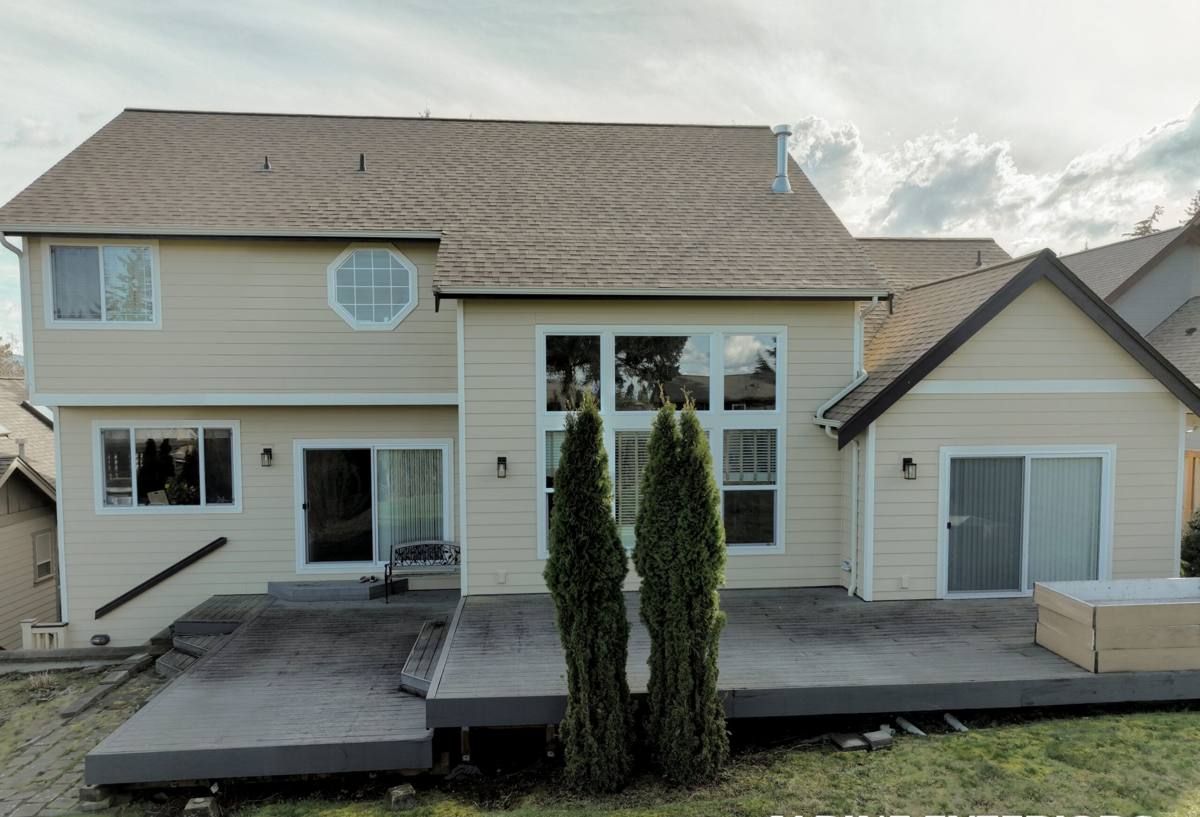
Signs Your Deck Needs Repair Now, Not Later
Most deck failures don't happen suddenly — they show warning signs first. The trouble is those signs are easy to write off as cosmetic when they're actually early structural clues. Here's what we look for, and what you should check for yourself between visits from a contractor.
- Soft, spongy, or springy spots in the decking boards when you walk across them
- Rust streaks bleeding out from screw heads, nail heads, or bracket hardware
- A visible gap, dark staining, or soft wood where the deck ledger meets the house
- Railing posts that wobble or flex when pushed, even slightly
- Green or black staining on boards and stair treads that doesn't scrub off easily
- Cracking or splitting at stair stringers, especially near the base
- Water that pools and sits on the surface instead of draining off within an hour or two
- Visible daylight or gaps where support posts meet footings
Any one of these on its own might just need a targeted repair. Several at once, especially involving the ledger board or support posts, usually means it's time for a closer structural look before anyone puts a table and chairs back out there.
What an Honest Deck Repair Actually Involves
Structural Components Come First
The framing underneath a deck — ledger board, joists, beams, posts, and footings — is what actually holds the structure up and keeps people safe. A repair that only replaces a few surface boards while ignoring soft or corroded framing underneath isn't a repair, it's a cosmetic patch. We check the ledger connection to the house first, because that's the single most common point of hidden rot on older decks, followed by joist ends and post bases where water tends to collect and sit.
Decking Surface Repairs
Once the framing is confirmed sound, surface-level work is straightforward: replacing individual boards that have cupped, split, or gone soft, re-securing boards that have started to lift, and addressing stair treads and railings separately since they take the most direct wear. We match materials and fastening patterns to what's already there whenever it makes sense, rather than mixing approaches that age differently.
Fasteners and Hardware
In a salt-air environment, hardware is often the first thing to fail — well before the wood around it does. Old galvanized nails and screws corrode, swell, and eventually stop holding. Any real repair near the water means upgrading to fasteners and structural connectors rated for coastal exposure, not just replacing like-for-like with whatever was originally used.
Repair or Replace: How to Think About the Decision
Not every deck problem calls for a full rebuild, and not every squeaky board can be fixed with a few screws. The right call usually comes down to how much of the structure is affected and how old the deck already is.
| Factor | Leans Toward Repair | Leans Toward Replacement |
|---|---|---|
| Ledger board condition | Solid, dry, properly flashed | Soft wood, rot, missing or failed flashing |
| Joists and beams | Isolated soft spots | Widespread rot or sagging |
| Decking surface | A handful of damaged boards | Most boards cupped, splitting, or gray throughout |
| Posts and footings | Stable, no movement | Shifting, undersized, or not code-compliant |
| Age of the structure | Under 15-20 years, built to a reasonable standard | Original construction quality unknown or clearly dated |
A straightforward repair on a structurally sound deck is usually a matter of days and a modest, defined cost. A deck with framing problems can sometimes still be saved, but past a certain point, spending on partial repairs to a compromised structure isn't a good use of money — full replacement ends up being the more honest recommendation.
Material Choices That Make Sense for This Climate
Pressure-Treated Lumber
Pressure-treated framing lumber remains a solid, cost-effective choice for structural repairs, and it's what most existing decks in this area are built on. The key in a salt-air, high-moisture environment is proper end cuts sealed after fabrication and fasteners rated to resist corrosion — treated lumber and the wrong hardware is a common combination we see failing prematurely.
Composite and Wood Decking Surfaces
For visible decking boards, both wood and composite have a place. Composite decking generally holds up better against the moss, staining, and moisture cycling common near the water, and it needs less ongoing upkeep. Traditional wood decking costs less up front and can look great, but it asks more of the homeowner — regular cleaning, sealing, and closer attention during the wetter months. We'll walk through both honestly based on your deck's exposure and how much maintenance you actually want to take on, rather than pushing one option across the board.
Our Deck Repair Process
- On-site inspection. We check the ledger connection, framing, posts, footings, and surface boards, and identify anything hidden from view where we reasonably can.
- Clear scope and estimate. You get a plain explanation of what's structural, what's cosmetic, and what it will cost — no vague allowances.
- Framing and structural repairs first. Anything load-bearing gets addressed before surface work starts, including hardware upgrades where the original fasteners aren't holding up.
- Surface and railing repair. Damaged boards, stair components, and railings are replaced or resecured to match the rest of the deck.
- Final check and cleanup. We walk the deck with you, confirm everything is solid underfoot, and leave the site clean.
Problem Areas We See Most Often on Similk Beach Decks
Working regularly in this specific stretch of the Anacortes area, a few patterns show up again and again. Ledger boards on the shaded side of a house, away from direct sun, tend to stay damp longer and show rot earlier than the sunnier side. Stair stringers exposed to driving rain from the water side crack and split before the rest of the structure shows any wear. And original fasteners — especially on decks built before corrosion-resistant hardware was standard — are almost always the first thing worth inspecting closely, even when the wood around them still looks fine.
Why It Matters to Hire a Crew That Already Works This Area
Deck repair isn't identical from one neighborhood to the next, even within the same city. A crew that regularly works Similk Beach and the surrounding waterfront pockets of Skagit County already knows where moss builds up fastest, which hardware actually holds up to the salt air, and how local wind and rain patterns tend to attack a structure over time. That's the kind of knowledge that comes from doing the work here repeatedly, not from a general checklist. It means fewer surprises during the inspection and a repair plan built around how your specific deck is likely to age, not a generic assumption.
Keeping Your Deck in Good Shape Between Repairs
A repaired deck still needs some basic upkeep to get the most life out of the work. Sweep debris and standing water off the surface regularly, especially in fall and winter when moss growth accelerates. Rinse off salt spray and grime a few times a year if the deck faces the water directly. Check railings and stair connections for movement once or twice a year, and address small issues — a loose board, a rust spot on a fastener — before they turn into bigger ones. A deck that gets this kind of light, consistent attention typically goes much longer between major repairs than one that's left alone until something breaks.
If your deck is showing any of the signs above, or it's just been a while since anyone took a close look at the framing, we're happy to come out, walk the structure with you, and give you a straight answer on what it needs. Reach out for a free, no-pressure estimate using the form below.