 Anacortes Siding
 Roofing in Edison's Coastal Farm Country
Edison sits in that stretch of Skagit County where saltwater air off the bay meets open farmland, and the wind doesn't have much to slow it down before it hits a roofline. That combination is harder on a roof than most homeowners realize. It's not one big storm that does the damage — it's the steady, year-round exposure to moisture, salt, and shade that wears a roof down faster than the same roof would age twenty miles inland.
If you're looking into roof replacement for a home in or around Edison, the job isn't just "pick shingles and nail them down." It's about building a roof system that can shed a lot of rain fast, resist moss colonization through the wet months, and hold up to salt-laden wind without the fasteners, flashing, and edges failing early. That's the standard we hold every Edison roof to.
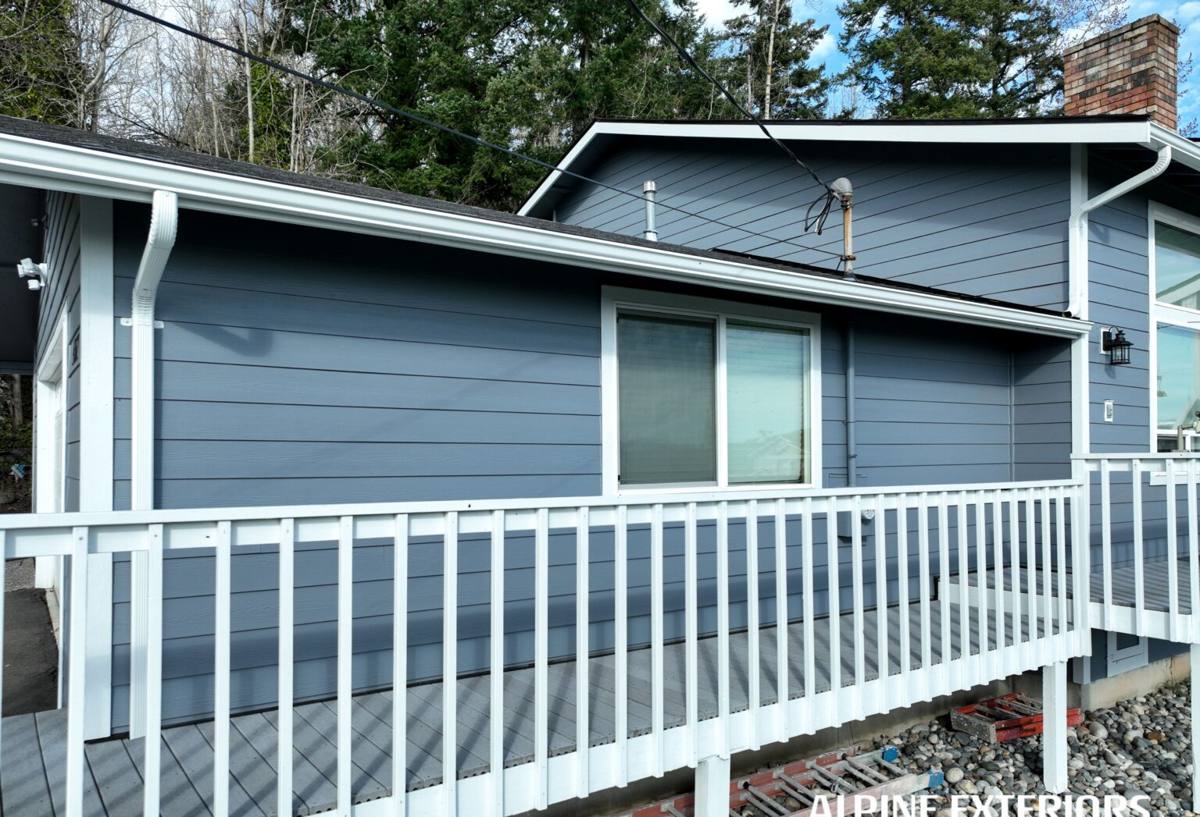
Why This Climate Is Hard on Roofs
Salt Air
Homes closer to the water pick up airborne salt that settles on roofing materials and metal components. Over years, that accelerates corrosion on exposed fasteners, flashing, and any lower-grade metal roofing or trim. It doesn't ruin a roof overnight, but it shortens the life of anything not rated or protected for coastal exposure.
Driving Rain
Skagit County storms often come in sideways off the water, not straight down. Wind-driven rain finds weak points that a calmer climate would never expose — under-lapped shingle courses, marginal flashing details around chimneys and valleys, nail patterns that are technically "to code" but not built for wind-driven water intrusion. A roof that would be fine in a drier, calmer region can leak here.
Moss Season
Edison gets a long stretch of damp, shaded, cool weather every year, and that's exactly what moss needs to take hold. Moss isn't just cosmetic — it holds moisture against the roofing material, works into shingle laps and granule surfaces, and lifts edges over time, giving water a path underneath. A roof that isn't detailed and ventilated with moss in mind will grow it back within a season or two of a cleaning, no matter how thorough that cleaning was.
Signs a Roof Needs Replacing, Not Just Repair
- Granule loss showing up in gutters, or bald patches on the shingle surface
- Moss established in the shingle laps rather than just sitting on the surface
- Soft or spongy decking felt underfoot during an inspection
- Daylight visible through the attic or staining on the underside of the roof deck
- Curling, cracking, or cupped shingles, especially on the south and west-facing slopes
- Flashing that's rusted, lifted, or was never properly step-flashed at walls and valleys
- A roof approaching or past its rated lifespan, especially if it's had multiple repairs already
A repair makes sense when the damage is localized and the rest of the roof system is sound. Replacement makes sense once the underlayment, decking, or flashing details are failing broadly, or once repairs would cost more over a few years than doing the job right once.
What a Correct Roof Replacement Involves
A roof replacement done right in this climate isn't just swapping old shingles for new ones. It's a full system:
- Full tear-off to inspect the decking underneath — layering new roofing over old hides problems and traps moisture
- Decking repair or replacement for any plywood or sheathing that's soft, delaminated, or water-damaged
- Ice-and-water shield or high-quality synthetic underlayment at eaves, valleys, and penetrations, where wind-driven rain is most likely to get in
- Proper flashing at every chimney, wall intersection, skylight, and valley — this is where most leaks actually start, not in the field of the roof
- Balanced attic ventilation (intake at the eaves, exhaust at the ridge) to keep moisture from condensing in the attic and to reduce the damp, shaded conditions moss thrives in
- Fasteners and metal components rated for coastal exposure, not standard-grade hardware that corrodes early this close to salt air
Skip any one of these and the roof may look fine for a year or two before the shortcuts show up as a leak, premature moss growth, or rot in the decking.
Choosing the Right Material for Edison Conditions
There's no single "best" roofing material for every home — it depends on your roof's exposure, slope, budget, and how much long-term maintenance you're willing to take on. Here's how the common options actually compare for a property dealing with salt air, heavy rain, and moss pressure:
| Material | Moss Resistance | Salt Air Durability | Typical Lifespan | Trade-offs |
|---|---|---|---|---|
| Architectural asphalt shingle | Moderate — depends on ventilation and shade | Good with corrosion-resistant fasteners | 25–30 years | Best value; needs proper ventilation to control moss |
| Standing seam metal | Excellent — sheds moss with minimal foothold | Very good if properly coated/rated finish is used | 40–50+ years | Higher upfront cost; installation quality matters a lot |
| Synthetic/composite shingle | Good | Good | 30–50 years | Higher cost than asphalt; fewer local install crews familiar with it |
| Cedar shake | Poor without diligent upkeep | Moderate | 20–30 years with maintenance | High maintenance burden in a damp climate; not our default recommendation here |
For most Edison homes, a well-ventilated architectural asphalt system or a standing seam metal roof is the honest recommendation — both handle the moss and moisture pressure well when installed correctly, at different price points. We're candid that a cedar shake roof, while attractive, asks for a level of ongoing maintenance that most homeowners in this climate underestimate; that's a maintenance conversation, not a knock on the product.
Our Process for an Edison Roof Replacement
- On-site inspection — we walk the roof and attic, check decking condition, ventilation, and flashing details, and photograph problem areas
- Written estimate — clear scope, material options, and pricing with no vague allowances
- Scheduling around weather — we plan tear-off and dry-in around Skagit County's rain patterns so your home isn't exposed longer than necessary
- Tear-off and deck inspection — old roofing removed, decking checked and repaired as needed
- Underlayment, flashing, and ventilation installed — the parts that determine whether the roof actually performs in this climate
- New roofing installed to manufacturer specification, with attention to coastal-rated fasteners and components
- Cleanup and walkthrough — site cleared, magnetic sweep for stray fasteners, and a final walk-through so you know exactly what was done
Why a Crew That Already Works Edison Matters
Edison and the surrounding Skagit County farmland come with practical realities that shape how a roofing job gets scheduled and executed: long gravel driveways, rural access for material delivery and dumpster placement, wells and septic systems that need to be avoided when staging equipment, and weather windows that are genuinely different from what you'd plan around in Anacortes proper or Mount Vernon. A crew that's done roofs out here before isn't guessing at logistics on your job.
Local familiarity also means knowing which details actually matter for this specific stretch of coastline versus a generic install checklist — where moss tends to establish first on a given roof pitch, how far wind-driven rain typically reaches under an eave, and which flashing failures show up most often on older Skagit County homes. That's knowledge you only get from doing the work here repeatedly, not from a regional playbook.
What to Ask Any Roofing Contractor Before You Hire
- Are you licensed and insured in Washington, and can you provide proof?
- Will you do a full tear-off, or are you proposing to roof over the existing layer?
- What underlayment and flashing details do you use at valleys and penetrations?
- How will you handle attic ventilation as part of this job, not as an afterthought?
- What's the manufacturer's warranty, and what's your own workmanship warranty?
- Can you provide a written, itemized estimate rather than a lump-sum guess?
- Have you worked in this specific area, and do you understand its access and weather constraints?
A contractor who answers these plainly, without dodging, is worth trusting with a job this size. One who rushes past ventilation, flashing, or licensing questions is telling you something too.
Get a Straight Answer on Your Roof
If your Edison home's roof is showing its age — moss that keeps coming back, granules in the gutters, a leak that shows up every time the wind blows off the water — it's worth having someone look at it before it turns into decking damage. We'll walk your roof, tell you honestly whether it needs replacement or just targeted repair, and put it in writing. Reach out below for a free, no-pressure estimate.