 Anacortes Siding
 Why Oak Harbor Homes Take a Different Kind of Beating
Oak Harbor sits close enough to the water that the weather isn't just "Pacific Northwest wet" — it's marine weather. Homes here deal with salt-laden air coming off the Salish Sea, wind-driven rain that hits siding sideways instead of falling straight down, and a moss and algae season that can run most of the year in shaded, north-facing spots. A short drive across Deception Pass connects this area to Anacortes, but the exposure on Whidbey Island's shoreline can be even harder on exterior materials, especially on homes with a clear line to open water or prevailing wind.
None of that is a reason to panic about your siding. It's a reason to be specific about what you install and how it's installed. Generic siding advice written for a dry inland climate doesn't hold up here, and a lot of failures we get called out to inspect trace back to a product or installation detail that was fine somewhere else but wasn't right for this stretch of coastline.
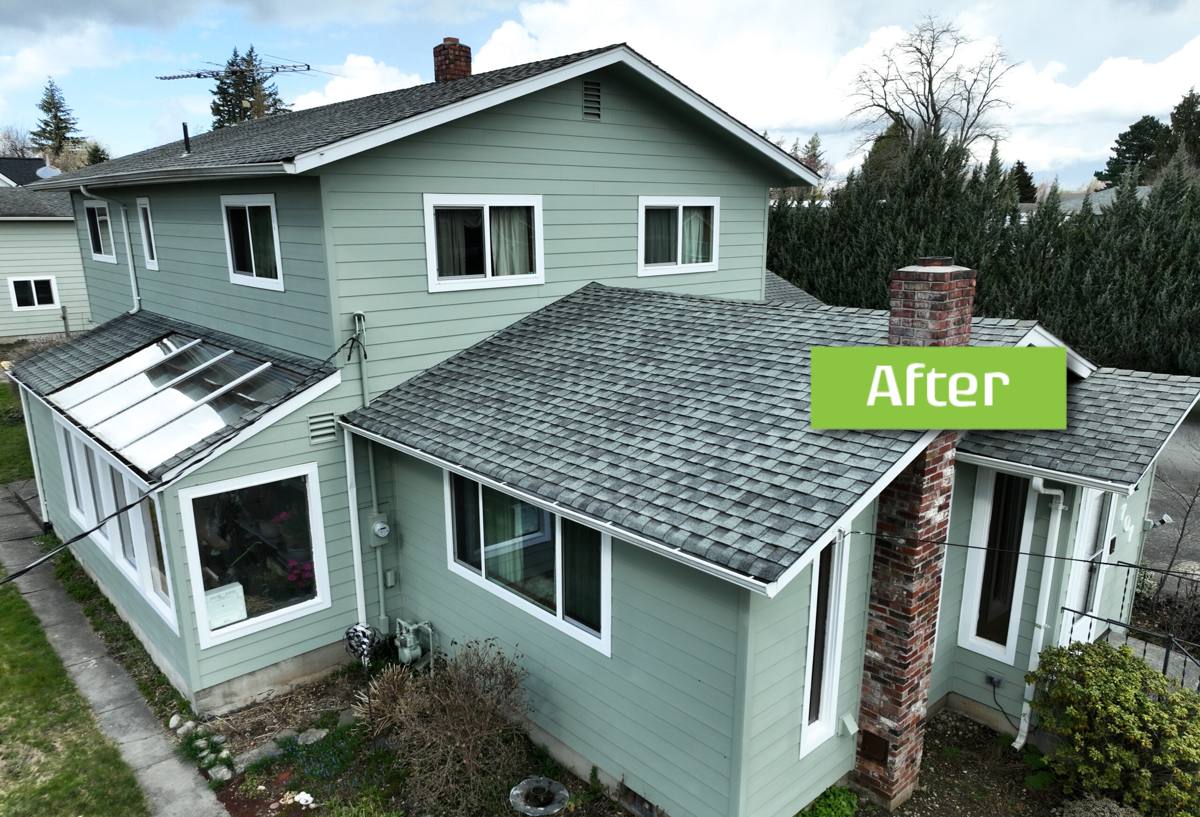
What Salt Air, Driving Rain, and Moss Actually Do to Siding
Salt air
Airborne salt is corrosive to exposed metal fasteners, flashing, and trim, and it accelerates the breakdown of low-quality paint finishes. Siding that isn't factory-finished with a coating designed to resist this kind of exposure will chalk, fade, and lose adhesion faster near the water than the same product would ten or twenty miles inland.
Driving rain
Wind-driven rain doesn't just hit a wall — it gets pushed sideways and upward into laps, seams, and any gap in the water management behind the siding. On a marine-exposed home, the water management details (flashing, weather-resistive barrier, drainage plane) matter as much as the siding material itself. A great product installed with sloppy flashing will still leak.
Moss and organic growth
Shaded walls, roof overhangs that don't shed water cleanly, and the near-constant damp of a Northwest winter all favor moss, algae, and mildew. Porous or absorbent siding materials hold that moisture longer, which feeds the growth cycle and can lead to rot underneath if it goes unaddressed for years.
Why We Only Install James Hardie Fiber Cement
We install James Hardie fiber cement siding exclusively. We don't install vinyl, LP SmartSide, Cemplank, Allura, or primed wood species like spruce or cedar. That's not a marketing position — it's a standard we hold because of what we've seen hold up on homes in this climate and what hasn't.
Fiber cement is a mix of cement, sand, and cellulose fiber, which makes it non-combustible and dimensionally stable — it doesn't expand and contract with moisture the way wood-based products do, and it doesn't soften or warp the way vinyl can in sustained wet-and-dry cycles. James Hardie's ColorPlus factory finish is baked on and warrantied against fading and peeling in a way field-applied paint on wood siding simply isn't. For a home a few blocks from saltwater, that finish durability is the difference between repainting every several years and not.
A quick honest comparison
| Material | Behavior in salt air & driving rain | Moss/moisture resistance |
|---|---|---|
| James Hardie fiber cement | Non-combustible, dimensionally stable, factory finish resists fading | Doesn't rot; still needs clean drainage details behind it |
| Vinyl | Can warp or become brittle with UV and temperature swings; seams are a weak point in driving rain | Won't rot, but trapped moisture behind it goes unnoticed longer |
| Wood / primed spruce or cedar | Absorbs moisture, prone to checking and cupping near the coast | Most vulnerable to rot and sustained moss growth if finish fails |
| LP SmartSide / other engineered wood | Treated strand product, but edge and cut-end sealing is critical near saltwater exposure | Manufacturer maintenance requirements are stricter than fiber cement |
None of these are "bad" products in every situation. But for a coastal Northwest home, we've made the call that fiber cement — specifically James Hardie's climate-engineered HZ5 line for this region — is what we're willing to put our name behind and warranty.
What a Correct Fiber Cement Install Involves in This Climate
Water management comes first
Before a single piece of siding goes up, the wall needs a proper weather-resistive barrier, correctly lapped and taped, with flashing integrated at every window, door, and penetration so water sheds outward instead of behind the cladding. On a marine-exposed wall, we pay particular attention to head flashing above openings and to kick-out flashing where roof lines meet walls — these are the spots driving rain finds first.
Fastening and clearances
James Hardie specifies fastener type, spacing, and penetration depth for a reason — under-driven or over-driven nails, or the wrong fastener material, create weak points that show up as cracking or corrosion staining years later. We also hold proper clearance between the bottom of the siding and grade, decks, and roof lines so splash-back and standing water don't sit against the board.
Caulking and joints
Every butt joint and trim intersection is a place water can get behind the siding if it's not sealed correctly. We use sealants rated for exterior, wet-climate use, and we don't rely on caulk to cover for a flashing detail that should have handled the water in the first place.
Our Process for an Oak Harbor Job
- On-site assessment — we look at wind exposure, sun/shade pattern, existing moisture or moss issues, and the condition of the sheathing underneath your current siding.
- Product and color selection — we walk you through James Hardie's plank, shingle, and panel options and ColorPlus color line so the choice fits your home and this climate.
- Tear-off and inspection — removing the old siding lets us check for hidden rot or water damage before it's covered up again.
- Water management install — barrier, flashing, and drainage details go in first and get inspected before siding goes up.
- Siding installation — installed to James Hardie's fastening and clearance specifications, not shortcuts.
- Final walkthrough — we go over the finished job with you before calling it done.
Cost Factors for Fiber Cement Siding in Oak Harbor
Every home is different, and we won't quote a number without seeing the house, but these are the main factors that move the price up or down:
| Factor | Why it matters |
|---|---|
| Tear-off complexity | Multiple layers of old siding or damaged sheathing add labor |
| Home size and wall complexity | More corners, gables, and trim details mean more cutting and flashing work |
| Siding profile chosen | Lap siding, shingle-style panels, and board-and-batten each have different material and labor costs |
| Wind/rain exposure of the site | Higher-exposure walls may warrant upgraded flashing or fastening details |
| Existing moisture damage | Rotted sheathing found during tear-off has to be repaired before new siding goes on |
We'll walk your property, point out anything that affects cost before work starts, and give you a written estimate — not a number pulled out of thin air.
Living With Fiber Cement Siding in a Marine Climate
One reason we like recommending James Hardie for this area is how little upkeep it actually needs compared to wood or lower-grade products. That said, "low maintenance" isn't "no maintenance," especially with the moss and algae pressure common around Oak Harbor.
- Rinse siding once or twice a year with a garden hose to knock off salt residue and organic buildup — avoid high-pressure washing, which can force water behind joints
- Keep gutters clear so overflow doesn't run down the wall and feed moss growth
- Trim back vegetation and tree cover that keeps a wall shaded and damp longer than it needs to be
- Check caulking at trim and joints every couple of years and have gaps resealed before water gets behind the board
- Watch for any staining at fastener heads or corners, which can signal a flashing or drainage issue worth having looked at
Why Hiring a Crew That Already Works This Area Matters
Siding installation instructions look the same on paper everywhere. What changes is judgment — knowing which walls on an Oak Harbor property need extra flashing attention because of prevailing wind, recognizing early moss patterns that point to a drainage problem instead of just a cleaning problem, and understanding how a Skagit County contractor's standard details need to flex for homes right on the water. A crew that's done this work up and down this coastline has already made and corrected the mistakes that a first-timer to the region makes on your house.
We also stand behind our work with James Hardie's product warranty plus our own installation accountability — if something we installed fails because of how it was put on, that's on us to fix.
Ready to Talk About Your Home?
If your siding is showing its age, growing moss it shouldn't, or you're just planning ahead for a Northwest-tough exterior, we're happy to take a look and talk through honest options. Fill out the form below for a free, no-pressure estimate — no obligation, no pressure, just a straight assessment of what your home needs.