 Anacortes Siding
 Deck Repair Built for Fidalgo Island's Weather
Fidalgo Island decks take a beating that decks twenty miles inland never see. You're dealing with salt-laden air off Rosario Strait and the surrounding saltwater, driving rain that comes in sideways during winter storms, and a moss and algae season that can run eight or nine months out of the year in the shade pockets under trees and on north-facing decks. We're an Anacortes crew, and Fidalgo Island deck repair is work we do regularly, not something we bid once a year and have to relearn each time.
A deck here isn't just outdoor furniture space — it's structural lumber, fasteners, and connections exposed to some of the harshest residential conditions in Skagit County. When repair is done right, it addresses the actual cause of the damage, not just the symptom you can see from the yard.
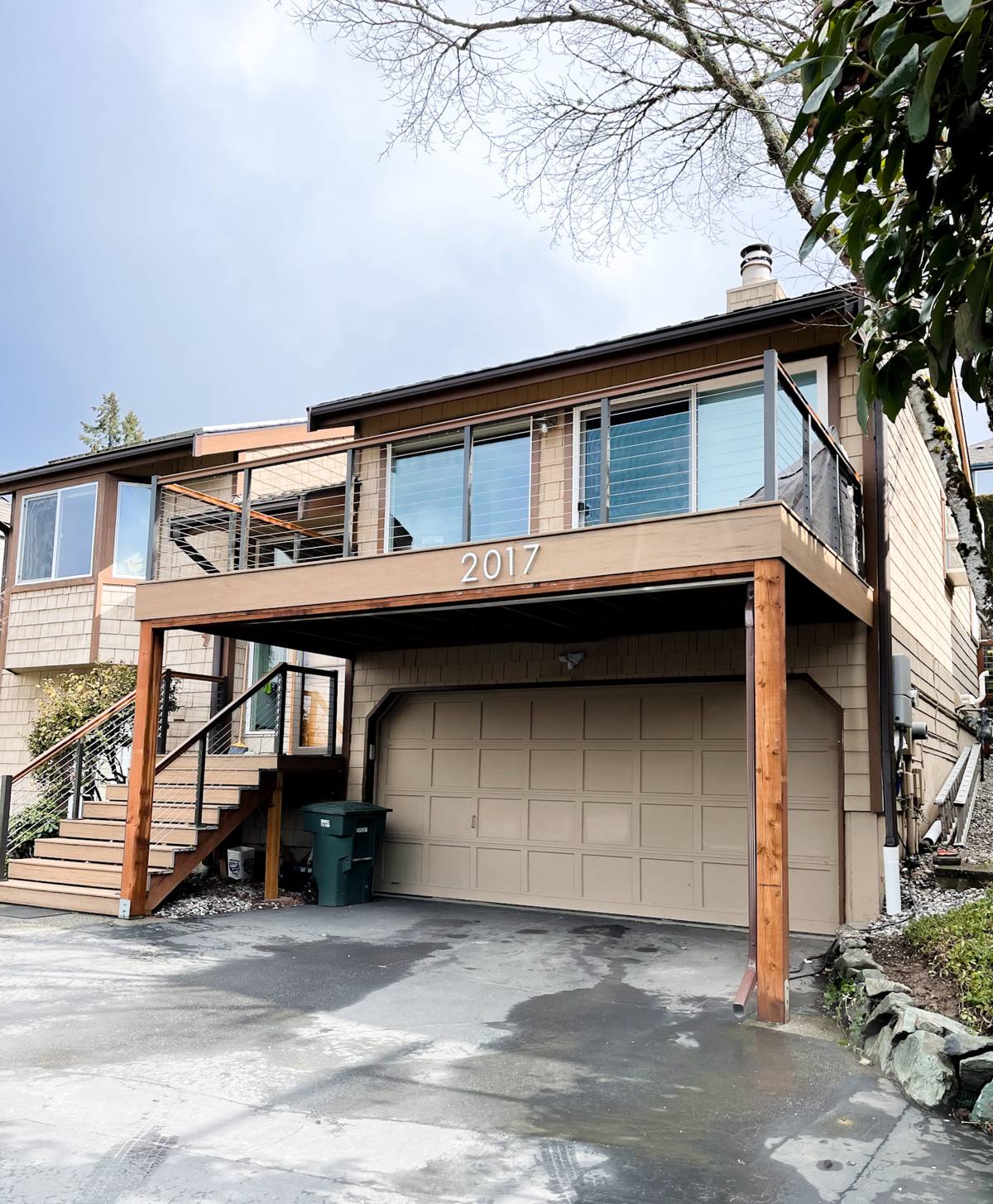
Why Fidalgo Island Decks Fail Faster
Homes on and around Fidalgo Island sit close enough to salt water that airborne salt settles on every exterior surface, including deck framing and fasteners. Combine that with our wet, mild winters and you get a specific set of failure patterns that show up over and over:
- Fastener corrosion: Nails and screws that aren't rated for coastal exposure rust, weep stains into the wood, and eventually lose their grip.
- Ledger board rot: The board that attaches the deck to the house is the single most important structural piece, and it's also the one most likely to trap moisture against the siding if flashing was skipped or done wrong.
- Moss and algae buildup: Shaded decks under tree cover or on the north side of a house hold moisture longer, which feeds moss growth and keeps the wood damp for weeks at a stretch.
- Post base rot: Support posts set in or near soil, or posts without proper standoff hardware, wick moisture up from below even when the deck surface looks fine.
- Railing and stair connection fatigue: These get the most flex and load cycling of any part of the deck, and corroded or undersized hardware here is a safety issue, not a cosmetic one.
None of this is unique to any one property — it's the pattern we see across Anacortes and the island generally, from waterfront homes to properties set back from the shoreline. The salt and moisture exposure doesn't stop at the water's edge.
What a Correct Deck Repair Actually Involves
Start With a Real Structural Assessment
Surface staining, a soft board, or a wobbly rail are symptoms. Before we quote a repair, we check the framing underneath: ledger attachment, joist condition, post bases, and the hardware holding it all together. A deck can look rough on the surface but be structurally sound, or look fine and have a rotted ledger connection hiding behind the rim board. You need to know which one you're dealing with before you spend money.
Match Fasteners and Hardware to Coastal Exposure
This is where a lot of repairs go wrong, and it's usually invisible until it fails again a few years later. Standard interior-rated screws and nails will corrode fast this close to salt water. We use fasteners and structural hardware rated for coastal and treated-lumber exposure — typically stainless steel or heavy hot-dip galvanized, depending on the connection — because replacing a board with the wrong fastener just restarts the clock on the same failure.
Fix the Moisture Path, Not Just the Symptom
If a ledger board rotted because flashing was missing or improperly lapped, replacing the board without correcting the flashing means it rots again. Correct repair means tracing water back to where it's getting in — a gap in flashing, a low spot that pools water, end grain left unsealed — and closing that path as part of the repair, not as an afterthought.
Address Moss and Algae at the Cause
Cleaning moss off a deck surface helps for a season. Reducing how much moss comes back means improving airflow and drainage where practical, using cleaning methods that don't damage the wood fibers or strip finish unevenly, and, where it makes sense, adjusting board spacing or ventilation under the deck so it dries out between rains instead of staying damp.
Our Repair Process
- On-site inspection: We walk the deck, check framing from below where accessible, test boards and railings for soft spots and movement, and look at ledger flashing and post bases specifically.
- Honest scope and options: We tell you what's failing, what's still sound, and what your realistic options are — spot repair, partial rebuild, or full replacement — with the trade-offs of each laid out plainly.
- Written estimate: Materials, fasteners, and labor spelled out so you know what you're paying for and why, before any work starts.
- Repair work: Damaged framing, decking, railings, or stairs are replaced with coastal-rated materials and hardware. Flashing and moisture paths are corrected as part of the job, not treated as extra.
- Final check: We confirm railings and stairs are solid under load, connections are tight, and the repaired areas are sealed or finished appropriately before we call it done.
Repair vs. Replacement: How We Help You Decide
Not every deck problem needs a full rebuild, and not every deck is worth patching. The right call depends on how much of the structure is affected, the age and condition of the framing, and what you want out of the deck long-term. Here's the general framework we use when we walk a property:
| Situation | Usually Repair | Usually Replace |
|---|---|---|
| Isolated soft or cracked boards | Yes — spot replace decking | No |
| Rotted ledger with sound framing otherwise | Yes — ledger and flashing repair | No |
| Widespread rot across multiple joists | No | Yes — framing has lost integrity |
| Loose or corroded railing hardware only | Yes — hardware and post repair | No |
| Structure older than its expected service life with recurring failures | No | Yes — repeated repair costs add up |
| Post bases rotted at soil contact | Depends on extent — often repairable if caught early | Yes, if multiple posts affected |
When a deck is borderline, we'll say so and explain the reasoning rather than defaulting to the bigger job. A repair that's done with the right materials can add years of solid use to a deck that's otherwise sound.
What This Kind of Repair Costs
Deck repair costs vary a lot depending on scope, so we won't pretend to give you a number without seeing the deck. What drives the price up or down is generally:
- How much of the structure is affected — a few boards versus multiple joists or the ledger connection
- Whether flashing and moisture correction work is needed in addition to visible repairs
- Access — decks over sloped ground, near water, or with limited crawl access under the framing take more time
- Railing and stair code compliance if hardware or spacing needs to be brought up to current standard
- Material choice for replaced boards — matching existing decking versus upgrading during the repair
Small spot repairs can be a modest job measured in a day or less. Ledger and flashing corrections or multi-joist framing repair are a bigger scope. We'll walk the deck, explain what we're seeing, and give you a written number before anything starts — no guessing over the phone.
A Pre-Winter Deck Checklist for Fidalgo Island Homeowners
Given how much our wet season and salt exposure accelerate wear, a quick seasonal check catches small problems before they become structural ones. Before the rains set in each fall, it's worth looking for:
- Soft, spongy, or discolored decking boards, especially near the house or in shaded spots
- Rust streaks bleeding from fastener heads or hardware
- Gaps or separation where the deck ledger meets the house
- Moss or algae buildup holding moisture against the surface
- Railing posts or stair stringers that flex or feel loose when you lean on them
- Standing water or slow drainage after rain instead of water shedding off the deck
- Visible wood movement or rot at post bases near ground level
If any of these show up, it doesn't automatically mean a major repair — but it does mean it's worth having someone look before another wet winter works on it.
Why a Local Anacortes Crew Matters for This Job
Deck repair isn't one-size-fits-all, and a crew that mostly works drier inland conditions can under-spec what a coastal deck actually needs — the wrong fastener grade, flashing details that work fine elsewhere but not here, or simply not recognizing early salt corrosion for what it is. Working Fidalgo Island and greater Anacortes regularly means we've seen how these decks age in this specific environment, from waterfront exposure to the shaded, moss-prone lots further from the water.
Being local also means we're a short drive away if something needs a follow-up look, and we're not disappearing after the invoice clears. We stand behind the repairs we do, and if something about the job needs a second look, getting us back out isn't a logistics problem.
Get a Free, No-Pressure Estimate
If your deck has soft spots, rust stains, a wobbly rail, or just years of moss and salt air wear catching up with it, we're glad to come take a look. We'll give you an honest read on what's actually going on structurally, walk through your repair options, and put together a written estimate — no pressure, no obligation. Use the form below to get started.