 Anacortes Siding
 Roofing in a Waterfront Microclimate
Flounder Bay sits close to the water on Fidalgo Island, and that proximity changes what a roof has to deal with compared to a house a few miles inland. Homes here take on salt-laden air, wind-driven rain off the bay, and heavy shade from surrounding evergreens in a lot of the older lots. That combination is hard on roofing materials in ways that don't always show up until a roof is 10-15 years old and starts failing early. A roof installed correctly for this specific setting will simply last longer and cause fewer headaches than one installed the same way you'd do it in a dry inland subdivision.
We install roofs throughout Anacortes and Skagit County, and Flounder Bay is one of the areas where we've learned to adjust our approach for the marine environment — fastener choice, underlayment strategy, ventilation, and flashing details all get tightened up compared to a standard install.
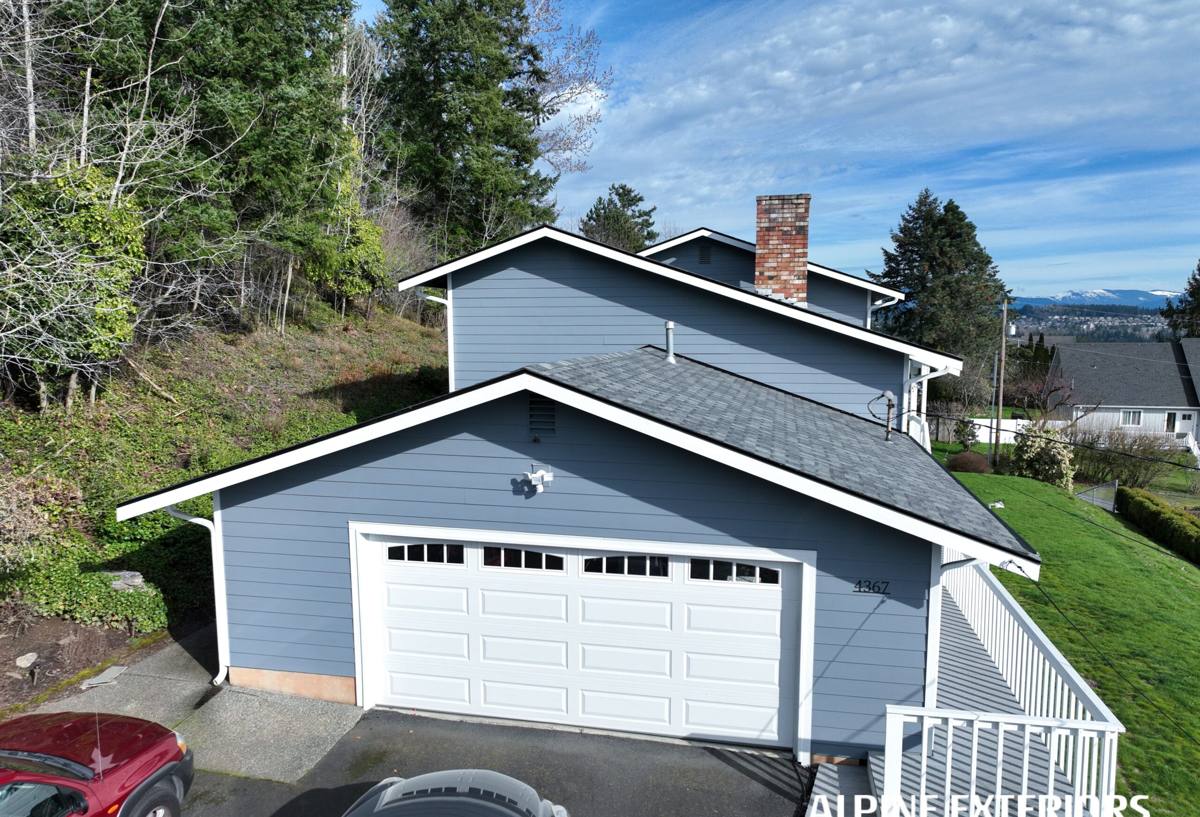
What Salt Air and Coastal Wind Do to a Roof
Salt air isn't just a coastal cliché — it's corrosive, and it travels further inland on windy days than most homeowners expect. On a roof, that shows up as:
- Accelerated corrosion on exposed metal fasteners, flashing, and roof vents not rated for coastal exposure
- Faster degradation of cheap or unsealed metal drip edge and valley flashing
- Wind-driven rain forcing its way under shingles or panels at edges, valleys, and penetrations if laps and seals aren't done right
- Salt residue holding moisture against roofing surfaces longer than plain rainwater would
None of this means a roof in Flounder Bay needs to be exotic or dramatically more expensive — it means the details that are optional elsewhere (corrosion-resistant fasteners, properly lapped underlayment, sealed penetrations) are not optional here.
Moss and Shade
A lot of Flounder Bay properties have mature tree cover, which is part of what makes the neighborhood attractive to live in — but it also means extended shade and slower drying after rain. Western Washington's moss season is long, and moss holds moisture against roofing material, works into shingle mat and granule layers, and can lift shingle edges over time if it's never addressed. A roof designed with moss in mind uses materials with better moss resistance where it makes sense, proper ventilation to speed drying, and a maintenance plan that keeps moss from getting established in the first place.
Signs a Flounder Bay Roof Needs Replacing, Not Patching
We get called out for a lot of "just fix this one spot" requests, and sometimes that's genuinely the right answer. But a coastal, shaded roof often reaches a point where patching is throwing money at a system that's failed as a whole. Signs worth taking seriously:
- Granule loss showing up in gutters, or shingles that look bald in patches
- Multiple leak points in different areas, not just one isolated spot
- Visible rust streaking from fasteners or metal flashing
- Soft, spongy decking felt underfoot when walking the roof
- Heavy, persistent moss or moss regrowth right after cleaning
- A roof original to the house and past 20-25 years old, regardless of visible damage
If you're seeing two or more of these, a full inspection before committing to another round of patch repairs is worth the time — it can save you from paying for the same repair twice.
What a Correct Roof Install Includes Here
Tear-Off and Deck Inspection
We don't install new roofing over old, and we don't recommend anyone else do it either — it traps moisture and hides deck damage that needs to be caught before it gets covered up again. A full tear-off lets us inspect the decking underneath for rot, soft spots, or prior water damage, which is common on shaded, coastal roofs where leaks can go unnoticed for a while. Any damaged decking gets replaced before anything new goes down.
Underlayment Built for Wind-Driven Rain
Standard felt underlayment is not what we spec for a bay-facing roof. We use synthetic underlayment with proper overlap and, in vulnerable areas like eaves and valleys, self-adhering ice-and-water membrane that seals around fastener penetrations rather than just shedding water downhill. This is the layer that saves a roof when wind pushes rain sideways under the roofing material — it matters more here than it does a mile inland.
Corrosion-Resistant Fasteners and Flashing
This is the detail that gets skipped most often on budget installs, and it's the one that costs homeowners the most in the long run. In a salt-air environment, we spec fasteners and flashing rated for coastal exposure rather than standard-grade hardware. Cheaper fasteners can start rusting within a few years near the water, and once fasteners fail, the roofing above them is compromised regardless of how good the shingles or panels are.
Ventilation That Matches the Site
Balanced intake and exhaust ventilation does two jobs on a shaded, coastal roof: it helps the roof deck dry out faster after rain and humid weather, and it keeps attic moisture from condensing and rotting the decking from underneath. We size and place vents based on the actual roof and attic layout rather than defaulting to a generic vent count.
Flashing at Every Penetration and Valley
Chimneys, skylights, plumbing vents, and valleys are where the overwhelming majority of roof leaks start — not the open field of shingles. We flash these correctly the first time: proper step flashing, counter-flashing where needed, and sealed valley metal rather than relying on caulk or roofing cement to do a flashing detail's job.
Material Options for a Coastal, Shaded Roof
There's no single "best" roofing material for every Flounder Bay home — the right choice depends on your roof pitch, budget, how much shade you get, and how long you plan to stay in the house. Here's how the common options compare for this specific setting:
| Material | Coastal/Salt Air Performance | Moss Resistance | Typical Lifespan Here |
|---|---|---|---|
| Architectural asphalt shingle | Good, with coastal-rated fasteners and flashing | Moderate — benefits from algae/moss-resistant granules | 20-30 years |
| Standing seam metal | Very good when hardware and coatings are coastal-rated | High — sheds moisture quickly, little surface for moss to grip | 40-50+ years |
| Cedar shake | Requires diligent maintenance near salt air; higher upkeep | Low without regular treatment and cleaning | 20-30 years with upkeep |
| Synthetic/composite shingle | Good; check manufacturer coastal warranty terms | Moderate to high depending on product | 30-50 years |
We install and stand behind asphalt shingle and metal roofing systems most often in this area, because they give homeowners the best balance of upfront cost, coastal durability, and manageable long-term maintenance. Cedar shake can look great, but the maintenance burden near salt air is real, and we make sure homeowners understand that trade-off before choosing it — not after.
Our Process for a Flounder Bay Roof Replacement
- On-site inspection and estimate — we walk the roof, check the attic and decking where accessible, and note site-specific factors like tree cover, exposure direction, and existing ventilation.
- Material selection — we walk through options based on your budget, roof style, and how much shade and wind exposure the house gets.
- Written scope and timeline — you get a clear, itemized proposal before any work starts, no vague allowances.
- Tear-off and deck repair — full removal of old roofing, deck inspected and repaired as needed.
- Underlayment, flashing, and roofing installation — installed to the coastal-appropriate spec described above.
- Final walkthrough — we go over the finished roof with you, including basic maintenance guidance for moss and gutter upkeep going forward.
Why Local Coastal Experience Matters
A roofing crew that mostly works inland jobs isn't necessarily going to think about fastener corrosion ratings or wind-driven rain detailing unless they're specifically asked — it's just not what they run into every day. Working regularly in Anacortes and the surrounding Skagit County waterfront means we're not guessing at what a bay-exposed roof needs; we've seen how roofs installed without those details hold up over time, and we build accordingly from the start. That's the difference between a roof that needs attention again in eight years and one that goes the full distance of its expected life.
We also know the practical side of working in Flounder Bay — access on narrower waterfront lots, tree cover that affects staging and cleanup, and being mindful of neighbors in a tight-knit community. None of that shows up on a spec sheet, but it affects how smoothly a project goes.
Maintenance That Protects Your New Roof
A correctly installed roof still needs basic upkeep, especially with moss season being what it is here. A short checklist worth following:
- Have gutters cleaned at least twice a year, more often if you're under heavy tree cover
- Get moss growth removed before it spreads, rather than waiting until it's heavy
- Schedule a roof inspection every 1-2 years, particularly after major windstorms
- Trim back overhanging branches that keep sections of the roof shaded and damp longer than necessary
- Address any small leak signs (ceiling stains, attic moisture) right away rather than waiting
What This Typically Costs
Roofing costs vary based on roof size, pitch, material choice, and how much decking repair is needed once tear-off starts — we won't quote a number here that doesn't mean anything until we've seen your roof. What we can tell you is that upgrades like coastal-rated fasteners, ice-and-water membrane at eaves and valleys, and proper ventilation add a modest amount to the upfront cost compared to a bare-minimum install, and they're the details most likely to determine whether your roof reaches 25-30 years or fails early. We'll walk you through where your money is going in the written estimate, not just hand you a bottom-line figure.
If your Flounder Bay roof is showing its age, or you just want an honest read on how much life is left in it, we're happy to come take a look. Fill out the form below for a free, no-pressure estimate — we'll tell you what we actually see, not just what sells a job.