 Anacortes Siding
 Guemes Island Decks Live a Harder Life Than Most
A deck on Guemes Island isn't dealing with the same conditions as one twenty miles inland. Sitting out in the Salish Sea's weather, island decks take on salt-laden air, wind-driven rain that gets pushed sideways under railings and into ledger connections, and a long stretch of the year where shade and damp air keep moss and algae established on every horizontal surface. That combination doesn't just make a deck look tired faster — it accelerates the actual decay process in ways homeowners on drier, more sheltered lots don't have to think about as much.
Salt air is corrosive to metal fasteners, joist hangers, and railing hardware long before it does visible damage to wood. Driving rain finds its way into end grain, fastener holes, and the seam where a deck ledger meets the house — the single most common point of hidden rot on any deck in Skagit County. And moss holds moisture against decking boards for weeks at a time, which is exactly the environment wood rot fungus needs to get going. None of this means a Guemes Island deck is doomed — it means repairs here need to account for exposure that a generic deck repair job might not.
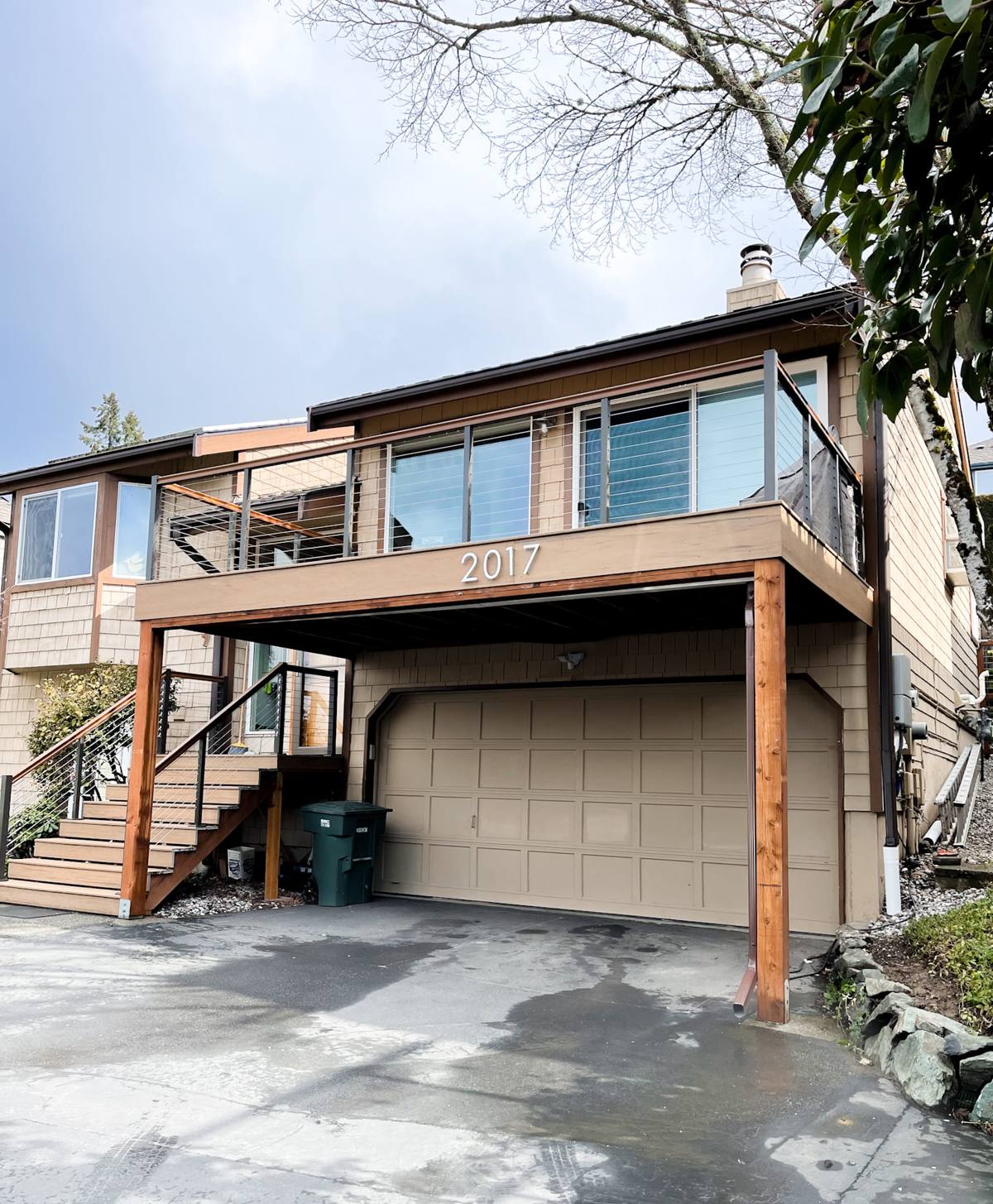
Signs Your Deck Needs Repair — And What They Usually Mean
Surface-Level Issues
Graying, cupping, or splintering decking boards are often just weathering and can sometimes be addressed with board replacement or refinishing rather than a full rebuild. Moss and algae staining, while unattractive, is usually cosmetic on its own — the concern is what's happening underneath if it's been left untreated for a long time.
Structural Red Flags
These are the ones that matter for safety and shouldn't wait:
- Soft, spongy, or spring-loaded decking when you walk across it
- Railings or posts that wiggle or flex under hand pressure
- Visible gaps, rust streaks, or pulling at the ledger board where the deck meets the house
- Stair stringers that feel uneven or bounce underfoot
- Rust-stained wood around joist hangers or fastener heads
- Any post base sitting in standing water or visibly rotted at the bottom
If you're seeing any of the structural items, that's worth a professional look before it's used again, not just noted for "someday."
What a Correct Deck Repair Actually Involves
A repair that just swaps out the boards you can see and skips everything underneath is a cosmetic fix, not a structural one — and on a Guemes Island deck, the structure is usually where the real damage is hiding. A thorough repair starts with pulling problem boards to inspect the framing underneath, checking the ledger connection and flashing, testing joists and beams for soft spots with a probe (not just a visual look), and confirming that post bases and footings are still sound and not sitting in trapped water.
From there, the actual repair work typically includes some combination of: sistering or replacing rotted joists, re-securing or rebuilding the ledger-to-house connection with proper flashing, replacing corroded fasteners and hardware with materials rated for coastal exposure, rebuilding compromised railings and stair stringers to current safety expectations, and installing new decking with attention to drainage and airflow underneath — because a deck that can't shed water and dry out will just fail again in a few years.
Why the Ledger Connection Gets Extra Attention Here
The ledger board — where the deck attaches to the house — is the highest-consequence failure point on any deck, and it's also the spot most exposed to wind-driven rain being pushed against the building. We check flashing integrity and fastener condition at the ledger on every repair, because a deck that looks fine everywhere else can still be structurally unsafe if that connection has quietly rotted.
Material Choices for Island and Waterfront Exposure
Not every material handles salt air and constant damp equally well, and repair is a good time to reconsider what's going back on the deck.
| Material | How It Handles This Climate | Trade-Off to Know |
|---|---|---|
| Pressure-treated lumber | Solid structural choice for framing; needs sealing/staining on visible surfaces to resist moss and moisture | Requires ongoing maintenance to keep performing |
| Cedar decking | Naturally rot-resistant, ages well with treatment | Softer wood — more prone to splintering without regular care |
| Composite decking | Very low maintenance, doesn't absorb moisture like wood | Higher upfront cost; still needs cleaning to keep moss from staining the surface |
| Stainless or coated fasteners/hardware | Resists the corrosion that plain galvanized hardware sees fast in salt air | Costs more than standard hardware — worth it for anything staying hidden in the structure |
Our standard on any coastal repair is to use fasteners and structural hardware rated for corrosive exposure, even where it costs a little more up front — hardware failure inside a deck's structure is one of the hardest problems to catch until it's already serious, and it's not worth cutting that corner on a repair meant to last.
How We Handle Guemes Island Jobs
Working on the island means building the ferry schedule into the plan from the start. We scope the job, confirm the material list, and stage everything so that once we're on-site, the work moves efficiently instead of losing time to extra trips back and forth. That means a more thorough initial assessment up front — we'd rather over-inspect before we start than discover a surprise that requires a second ferry crossing for materials we didn't know we'd need.
Our process on a typical repair: an on-site assessment where we physically test the structure rather than eyeball it, a written scope that separates "needs to happen for safety" from "worth doing while we're in there," the repair work itself, and a final walkthrough so you know exactly what was done and what to watch going forward.
Common Problem Areas We Run Into on Island Decks
Across repairs in the Anacortes area, including Guemes Island, a few failure patterns show up repeatedly: ledger boards with hidden rot behind old or missing flashing, joist hangers corroded from years of salt exposure, post bases rotted from sitting in soil or standing water instead of on a proper footing, and decking that was never gapped or oriented to let water drain and the surface dry between rain events. Recognizing these patterns from experience — rather than treating every deck as a first-time puzzle — is a big part of what makes a repair efficient instead of exploratory.
Repair Cost Factors
Every deck is different, but the price of a repair generally comes down to a few consistent factors rather than square footage alone.
| Factor | Why It Matters |
|---|---|
| Extent of structural damage found | Surface board replacement costs far less than joist or ledger repair |
| Access and ferry logistics | Island jobs need material staged in advance, which factors into scheduling and trip planning |
| Material selection | Composite runs higher upfront than wood but needs less future maintenance |
| Hardware and fastener grade | Corrosion-rated hardware costs more than standard but is essential this close to salt water |
| Age and condition of the original build | Older decks may have code items — railing height, stair spacing — that come up for correction during repair |
We don't quote sight unseen — a real number comes after we've actually looked at the deck, because the difference between "replace a few boards" and "rebuild the frame" is significant and only shows up on inspection.
Keeping a Repaired Deck From Needing the Same Fix Again
A repair is only as good as what happens to the deck afterward. A little regular upkeep goes a long way in this climate:
- Sweep off standing debris and needles regularly — they trap moisture against the boards
- Clean moss and algae off the surface at least once a year, ideally before it gets established in spring
- Check railings and stair connections for looseness a couple times a year
- Keep gutters and downspouts clear so runoff isn't draining directly onto or under the deck
- Reseal or re-stain wood decking on the manufacturer's recommended schedule, not just when it looks bad
- Look underneath the deck occasionally for rot, rust staining, or standing water at post bases
None of this replaces a real structural inspection when something feels off, but it does stretch the time between repairs and helps you catch small problems before they become expensive ones.
Why It Matters to Hire a Crew That Already Works Guemes Island
Deck repair on the island isn't just carpentry — it's carpentry plus knowing how to plan around ferry schedules, how salt air specifically attacks fasteners and framing here versus a mainland lot, and what failure patterns to check for first based on having actually opened up decks in this exact environment before. A crew unfamiliar with island logistics can lose a day to a missed ferry or an under-planned materials trip, and that cost eventually lands on the homeowner one way or another. Experience here isn't a marketing line — it directly affects how efficiently and correctly the job gets done.
If your deck on Guemes Island is showing soft spots, loose railings, or just years of moss and weather wear, we're happy to come take an honest look. There's no pressure and no cost to get a real assessment and a straight answer on what it actually needs — you can request a free estimate using the form below.