 Anacortes Siding
 Why March Point Homes Need a Different Approach to Windows
March Point sits on its own point of land off the Anacortes mainland, with water on multiple sides and very little standing between your windows and whatever the Salish Sea sends your way. That exposure is the whole story here. Homes just a few miles inland in Anacortes proper deal with a milder version of the same weather; March Point gets it straight on, day after day, year after year.
That means three things working against your windows at once: salt-laden air that corrodes hardware and finishes faster than manufacturers' warranty language usually accounts for, driving rain that gets pushed sideways into gaps a calm-weather installation would never expose, and a long wet season that keeps moss and algae established on north- and west-facing exteriors for most of the year. Any one of these is manageable. All three, on the same window, for years at a time, is what actually causes the failures we get called out for — fogged glass, soft framing, sashes that won't seal, and heating bills that creep up even though nothing looks obviously wrong.
Energy efficiency and weather durability aren't separate problems out here. A window that leaks air is very often the same window that's letting in moisture, and the moisture is what eventually causes the real damage. Get the seal and the installation right, and both problems get solved at once.
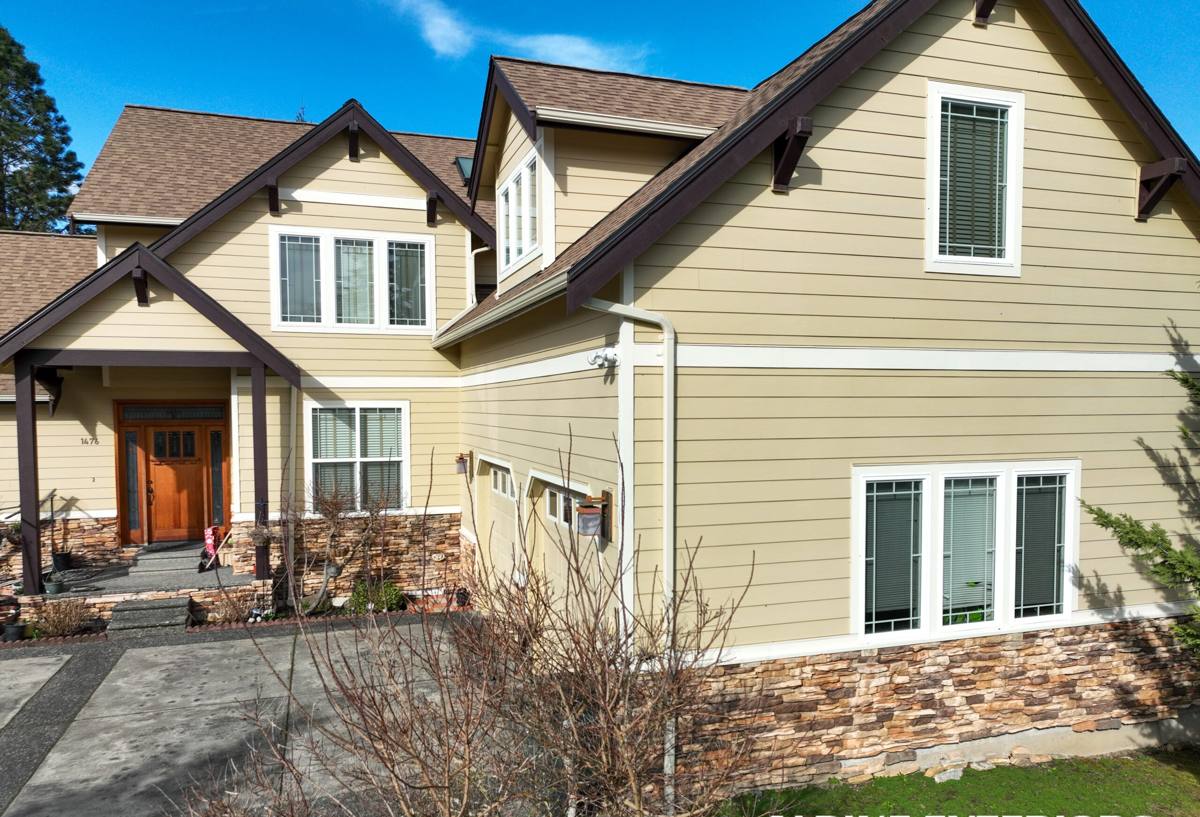
What "Energy-Efficient" Actually Means for This Location
It's easy to shop windows by U-factor and stop there. In March Point's climate, that number only tells part of the story. We look at four things together:
U-Factor and Glass Package
U-factor measures how well the window resists heat transfer — lower is better for our mild-but-damp Pacific Northwest winters. Double-pane, low-E glass is the baseline we recommend for any full replacement here; it's a meaningful step up from older single-pane or early-generation double-pane units without pushing cost into diminishing returns for our climate zone.
Air Infiltration Rating
This is the number that matters most against driving rain and wind off the water. A window can have excellent glass and still perform poorly if the sash-to-frame seal is loose. We look for low air infiltration ratings and, just as important, frame and sash designs that hold their seal after years of salt exposure on the hardware.
Material Behavior in Salt Air
Vinyl and fiberglass frames handle coastal salt exposure better than bare aluminum, which corrodes and pits over time in this environment. Hardware — hinges, locks, cranks — matters just as much as the frame material; cheap hardware is usually the first thing to fail on a March Point window, well before the glass or frame show any wear.
Installation Quality
This is the piece that gets skipped most often, and it's the one that determines whether everything above actually performs. A high-spec window installed with a poor moisture barrier and flashing job will underperform a mid-spec window installed correctly. We'll go into what a correct installation looks like below.
The Real Cost of Getting It Wrong Here
We've opened up enough wall cavities around older windows in Skagit County waterfront and near-waterfront homes to know what happens when a window seal fails and nobody catches it early. Driving rain finds the gap. It doesn't pool visibly — it wicks into the framing behind the trim, and by the time you see staining or soft drywall inside, the sheathing behind it has usually been wet for a season or more. Add the moss and algae that establish quickly on shaded, damp siding around window openings in this climate, and you get organic growth holding moisture against the wall assembly even longer.
None of this is unique to any one window brand. It's a function of exposure plus time plus a compromised seal. The fix isn't a better warranty card — it's a window and installation combination that doesn't let water in to begin with, and materials that don't degrade quickly when they're exposed to salt air on the outside face.
What a Correct Window Replacement Involves
A window replacement in March Point should account for the site conditions, not just the opening dimensions. Our process:
- Site assessment — we look at which elevations take the most direct wind and rain (usually west and southwest facing here), and note any existing moisture or moss staining around current openings before we touch anything.
- Removal and inspection — once the old window is out, we inspect the rough opening and surrounding framing for hidden water damage. This is often the first real look anyone's had at that wall cavity in years.
- Flashing and moisture barrier — proper flashing tape and a correctly lapped weather-resistive barrier around the opening, installed so water sheds outward at every layer rather than relying on caulk alone to keep it out.
- Window setting and shimming — set square, plumb, and level, with shimming that supports the frame without distorting it, so the sash seals evenly for the life of the window.
- Insulation and air sealing — low-expansion foam or backer rod and sealant around the perimeter, avoiding gaps and avoiding over-packing that can bow the frame.
- Exterior trim and sealant — trim reinstalled or replaced with a sealant rated for this climate's UV and moisture cycling, not a generic caulk that shrinks and cracks within a couple of years.
- Final check — operation, seal, and drainage checked before we consider the job done.
Comparing Frame Materials for This Climate
| Material | Salt Air Behavior | Maintenance | Typical Fit for March Point |
|---|---|---|---|
| Vinyl | Doesn't corrode; UV-stable formulations hold color well | Low — occasional cleaning | Strong default choice for most homes here |
| Fiberglass | Excellent — very stable dimensionally and resists corrosion | Low | Good upgrade where budget allows, especially larger openings |
| Wood (clad exterior) | Vulnerable at any point the cladding is breached; interior wood needs protection from condensation | Higher — cladding and seams need monitoring | Best reserved for interiors with full exterior cladding and vigilant maintenance |
| Bare aluminum | Corrodes and pits over time in salt air; thermally inefficient | Moderate to high | We generally don't recommend it for direct coastal exposure |
We're not against wood or aluminum windows as a category — there are legitimate design reasons homeowners choose them. But for a house sitting in March Point's direct salt exposure, we'll tell you plainly if a material choice is going to mean more maintenance than you're expecting, because moisture behavior and long-term upkeep matter more here than in a sheltered inland lot.
Signs Your Current Windows Are Already Losing the Fight
- Fogging or moisture between panes — the seal on the insulated glass unit has failed
- Visible condensation on the inside of the glass in cool weather
- Drafts you can feel near the frame, especially during wind off the water
- Hardware that's stiff, corroded, or won't latch fully
- Soft or discolored trim and sill wood around the window
- Moss or dark staining building up on the siding directly around the opening
- A noticeable rise in heating costs without a clear cause elsewhere
- Sashes that have swollen, warped, or no longer close flush
Any one of these on its own might not mean urgent trouble. Two or three together, especially on a west- or southwest-facing wall, usually means it's worth having someone look before the next wet season.
Why Local Installation Experience Matters More Than the Brand
Window manufacturers build to broad national standards. They don't build a special version of their product for a point of land sticking into Skagit County's tidal waters. What actually determines how a window performs here is how it's installed — the flashing sequence, the sealant choice, the attention paid to the specific elevation it's going on. A crew that's done this work across Anacortes and March Point knows which walls take the worst of the weather, has already seen how the moss and algae establish on shaded siding here, and installs accordingly instead of following a generic checklist.
That local pattern recognition is the difference between a window that's still sealing tight in fifteen years and one that needs attention in five. It's not something you can shop for on a spec sheet.
Budget Factors to Weigh Before You Decide
| Factor | Why It Affects Cost |
|---|---|
| Number and size of openings | More or larger windows means more material and labor |
| Frame material | Vinyl is typically the most economical; fiberglass and clad-wood cost more upfront |
| Existing damage | Rot or moisture damage found during removal adds repair scope before the new window goes in |
| Exposure of the elevation | West- and southwest-facing openings often warrant a more robust flashing and sealant approach |
| Full-frame vs. insert replacement | Full-frame replacement costs more but is often the right call when the existing frame or flashing has already failed |
We'd rather walk your specific windows with you and give you honest numbers than throw out a broad range that doesn't mean much until we've seen the house. What we can tell you upfront is that cutting corners on flashing and installation to save money on a coastal-exposed window almost always costs more later, once water has had a chance to get behind the wall.
Ready to Talk About Your Windows?
If your windows are original to the house, showing any of the wear signs above, or you're just tired of feeling a draft near the glass on a windy day, it's worth having a straightforward look. We'll walk the exposed sides of your March Point home, tell you honestly what we see, and give you a clear picture of what a proper energy-efficient window replacement would involve — no pressure, no upsell. Fill out the form below for a free estimate.