 Anacortes Siding
 Why Decks Struggle in Mount Vernon and the Surrounding Skagit Valley
Mount Vernon sits inland from the salt water but close enough to Anacortes and the Sound that homes here still deal with a damp, marine-influenced climate for most of the year. Add the Skagit River valley's fog, the long stretch of gray, drizzly months, and the moss and algae growth that comes with shaded, moisture-heavy yards, and you've got conditions that are hard on any outdoor structure — decks included.
A deck built for a dry climate doesn't hold up the same way here. Wood decking checks, cups, and grays out faster than owners expect. Fasteners corrode. Moss and algae take hold in the gaps between boards and on the north side of the house where sun rarely reaches. Composite decking was designed to resist a lot of this, but only when it's specified and installed correctly for the conditions it's actually going to face — not just installed the same way it would be in Arizona or a drier part of the country.
That's the difference we focus on for Mount Vernon jobs: not just "composite decking," but composite decking built with the right substructure, drainage, and hardware for a wet, moss-prone Skagit County yard.
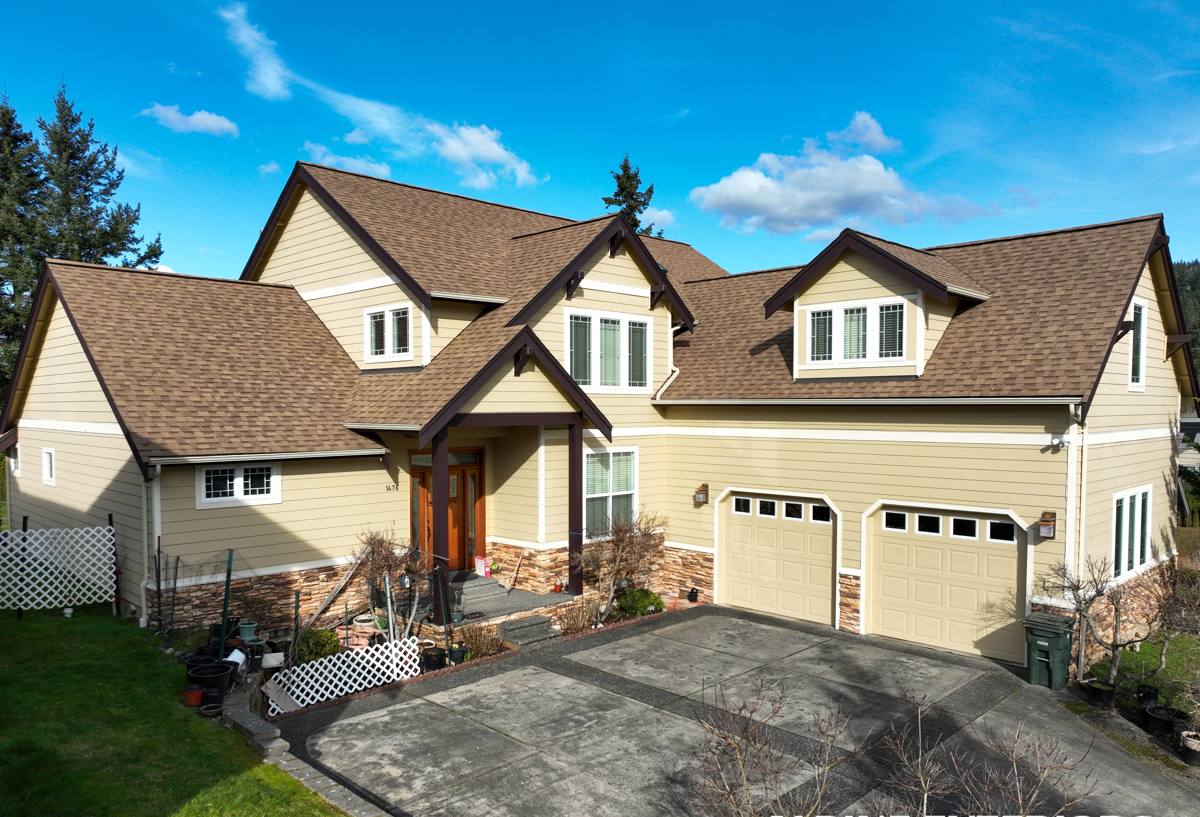
What Salt Air, Driving Rain, and Moss Season Actually Do to a Deck
Moisture That Doesn't Dry Out Between Storms
In a lot of the country, decks get rained on and then have days of sun and low humidity to dry out fully. Here, especially from fall through spring, that drying window can be short or nonexistent. Moisture sits in board gaps, under railings, and against the house ledger board for longer stretches. Any decking material that isn't genuinely moisture-tolerant — and any substructure that isn't ventilated and flashed correctly — will show it within a few seasons: soft spots, mold staining, or fastener corrosion.
Salt Air's Slow Effect on Metal
Mount Vernon isn't directly on salt water the way parts of Anacortes are, but the marine air off the Sound still reaches inland, especially with prevailing weather patterns. Salt-laden moisture accelerates corrosion on any exposed metal — fasteners, brackets, railing hardware. Composite boards themselves don't corrode, but a deck is only as good as the hardware holding it together, and that's where cheap or mismatched fasteners fail first.
Moss and Algae in Shaded, Damp Areas
Composite decking resists rot, but it isn't immune to surface growth. On shaded decks, north-facing decks, or decks under mature trees — common around Mount Vernon properties — moss and algae can build up on the board surface, especially in the fine texture grooves some composite products have. This is a maintenance issue more than a structural one, but it affects how a deck looks and how slick it gets underfoot, and it's worth planning for at the design stage.
What a Correctly Built Composite Deck Includes
A composite deck that actually performs in this climate isn't just "composite boards screwed onto joists." The parts that matter most are usually the ones you can't see once the project is finished.
- Proper joist spacing: composite boards typically need tighter joist spacing than wood, especially at angles or picture-frame borders — following the manufacturer's spec, not guessing, avoids sagging over time.
- Ledger board flashing: where the deck attaches to the house is the single most common source of hidden water damage; correct flashing keeps water from running behind the siding.
- Ventilation underneath: low, unventilated decks trap moisture against the framing; airflow underneath matters as much on composite decks as wood ones, since the framing is usually still wood or wood-alternative.
- Corrosion-resistant hardware: stainless or coated fasteners rated for the coastal-adjacent environment, matched to the manufacturer's approved hardware list (using unapproved fasteners can void a warranty).
- Board gapping for expansion and drainage: composite boards expand and contract with temperature and moisture; correct gapping lets water drain through instead of pooling, and prevents buckling.
- Framing material choice: pressure-treated lumber or composite/aluminum substructure options, depending on budget and how much ground contact or moisture exposure the framing will see.
Skip any one of these and the deck may still look fine the day it's finished — the problems show up two, five, or ten years later, usually as soft framing, a sagging edge, or hardware that's rusted through.
Composite Decking Compared to Other Materials for This Climate
| Material | How It Handles Skagit County Moisture | Maintenance | Typical Lifespan Here |
|---|---|---|---|
| Composite decking | Resists rot and moisture absorption; surface can grow moss/algae in shaded, damp spots without cleaning | Periodic washing; no staining or sealing | 20–30+ years, warranty-backed |
| Pressure-treated wood | Moisture causes checking, cupping, and warping over time; needs sealing to slow it | Annual or biannual staining/sealing, board replacement over time | 10–15 years before major repair |
| Cedar | Naturally rot-resistant but still absorbs moisture; grays and softens faster in constant damp | Regular sealing/staining to preserve color and protect from moisture | 15–20 years |
| PVC decking | Fully moisture-resistant, doesn't absorb water at all | Low; similar cleaning needs to composite | 25–30+ years |
We install composite for most Mount Vernon homeowners because it strikes the best balance of moisture resistance, appearance, and cost for this climate. Wood requires more upkeep than most owners actually keep up with once the novelty wears off, and PVC is a reasonable option too but tends to run at a higher price point with a more plastic look that not everyone wants. The right call depends on your budget, how the deck is shaded, and how much time you want to spend maintaining it — we'll walk through the honest trade-offs rather than pushing one product.
Our Composite Decking Process
1. On-Site Assessment
We look at drainage, sun/shade exposure, existing framing (if replacing an old deck), and how the deck ties into the house — this is where moss exposure and moisture risk get identified before any material decisions are made.
2. Framing and Structure
Whether we're building new or replacing decking on existing framing, we verify the substructure meets code and manufacturer spacing requirements before a single composite board goes down. Compromised framing gets addressed here, not covered up.
3. Flashing and Waterproofing
Ledger board flashing, any necessary house-wrap integration, and drainage paths are handled before decking installation — this is the step most likely to get rushed on a lower-quality job, and it's the one that causes the most damage when skipped.
4. Composite Board Installation
Boards are installed per manufacturer spec — correct fastener type, correct gapping, correct hidden or face-fastening system depending on the product line chosen.
5. Railing, Stairs, and Trim
Matched composite or complementary railing systems, code-compliant stair and railing dimensions, and finish trim to close out the exposed edges where moisture and pests can otherwise get in.
6. Final Walkthrough
We go over care instructions specific to your product line and site conditions — including what to do about moss if your deck sits in a shaded spot.
What Affects the Cost of a Composite Deck
| Factor | Why It Matters |
|---|---|
| Board tier (capped composite vs. higher-end lines) | Higher-tier boards cost more upfront but generally offer stronger stain, fade, and moisture warranties |
| Substructure condition | Replacing rotted or undersized framing adds cost but is not optional if it's compromised |
| Deck size and layout complexity | Picture-frame borders, angles, and multiple levels add labor and material |
| Railing system | Composite or metal railing systems vary widely in price versus basic wood-and-cable options |
| Site access and height | Second-story decks or difficult-access lots add labor time |
Composite decking installed in this region generally runs in a broad range depending on these factors — we'll give you a firm, itemized number after seeing the site, not a phone-quote guess.
Living With a Composite Deck Through Moss Season
Composite decking cuts maintenance dramatically compared to wood, but "low-maintenance" isn't "no-maintenance" in a climate like ours. A few honest points:
- Shaded or north-facing decks will need periodic washing (a stiff brush and a composite-safe cleaner, or a gentle pressure wash at the right distance) to keep moss and algae from taking hold.
- Keep gutters and downspouts clear so runoff isn't dumping extra water directly onto the deck surface.
- Trim back overhanging branches where possible — reduced shade and better airflow slow down moss growth significantly.
- Clear leaves and debris out of board gaps in fall so they don't hold moisture against the surface all winter.
None of this is heavy work compared to sealing and staining a wood deck every year or two, but it's worth knowing what "low-maintenance" actually means before you buy.
Why Hiring a Crew That Already Works Mount Vernon Matters
A lot of decking problems we get called to fix started with a crew that does one or two decks a year and doesn't build for the local conditions. Building correctly for Skagit County means:
- Knowing which fastener and hardware types actually hold up against the marine-influenced air here, not just what's cheapest.
- Understanding local permit and setback requirements without extra back-and-forth delays.
- Framing and flashing decisions that account for our wet season rather than a generic install method.
- Being available and local if a warranty question or adjustment comes up down the road — not a crew that was passing through the area for one job.
We work throughout Skagit County, including Mount Vernon and Anacortes, and we build every composite deck to hold up against the specific conditions this region throws at it — not a one-size-fits-all national install standard.
Checklist: What to Confirm Before You Sign a Decking Contract
- Is joist spacing specified to the composite manufacturer's requirements, in writing?
- What fastener and hardware brand/type will be used, and is it rated for coastal-adjacent conditions?
- Will ledger board flashing be replaced or upgraded if this is a re-deck project?
- What composite product line and warranty terms are included — stain, fade, and structural coverage?
- Is the framing material spelled out (pressure-treated lumber, composite substructure, etc.)?
- Does the quote include railing, stairs, and trim, or are those separate line items?
- Is the contractor licensed, insured, and familiar with local permit requirements?
If you're planning a new composite deck or replacing an aging one in Mount Vernon, we're happy to take a look and give you a straightforward, no-pressure estimate — just fill out the form below and we'll follow up.