 Anacortes Siding
 Fidalgo Island Roofs Work Harder Than Most
Fidalgo Island sits right where Puget Sound meets Rosario Strait, and that location shapes everything about how a roof ages here. Homes get a steady dose of salt-laden air, wind-driven rain that comes in sideways off the water, and long stretches of shaded, damp weather that never quite lets a roof dry out between storms. In Skagit County's marine climate, that combination shows up as moss colonies on north-facing slopes, corroded fasteners and flashing, and granule loss on shingles that would otherwise have years of life left. A roof repair here isn't just patching a leak — it's addressing why that leak happened in the first place, which is almost always tied to moisture that had nowhere to go.
We work on Fidalgo Island regularly, and we've learned that the same repair done two ways — one built for a dry inland climate, one built for this one — can have very different lifespans. That's the difference we aim to bring to every repair call.
Signs You Need a Roof Repair, Not Just a Look
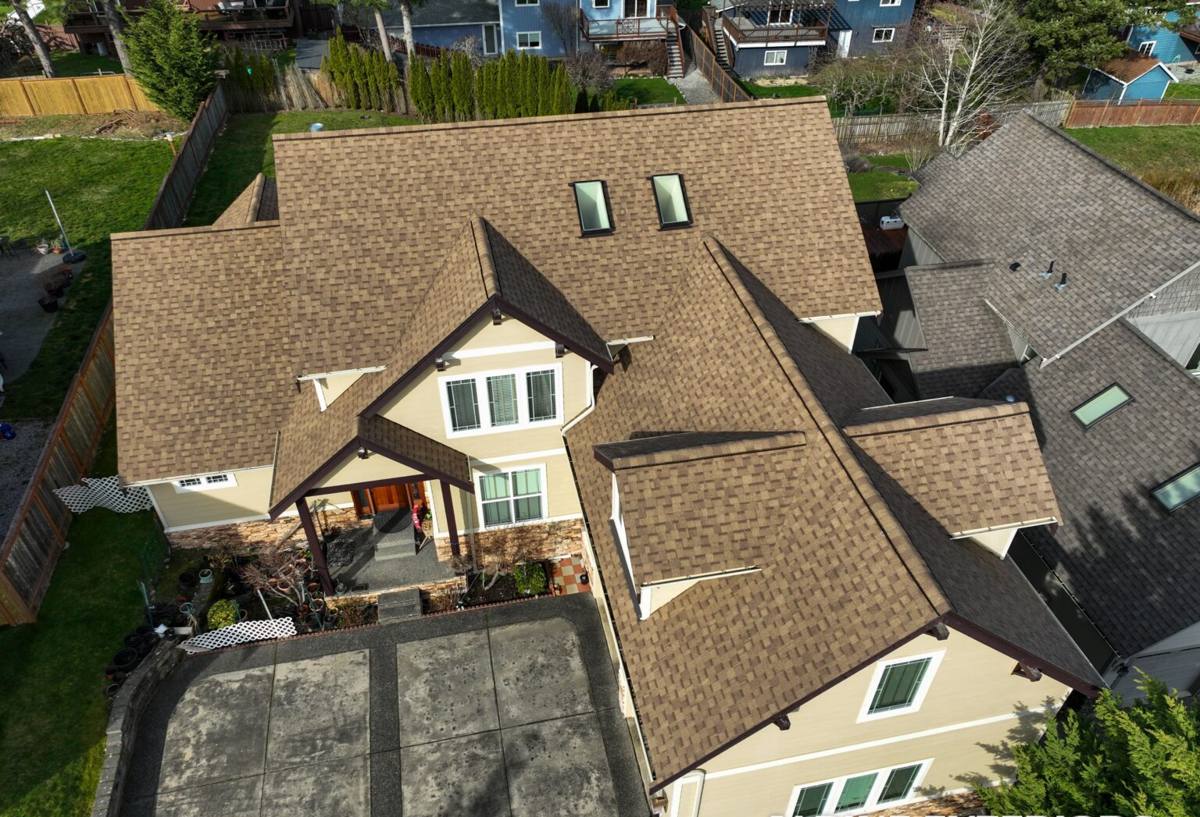
Roof problems on Fidalgo Island rarely announce themselves with a sudden leak. More often, they show up as small changes homeowners notice but put off checking. If any of the following sound familiar, it's worth having someone look before the next heavy rain:
- A dark green or black stripe of moss building up along a shaded roof edge or valley
- Granules collecting in gutters or at the base of downspouts
- A stain spreading across a ceiling or upper interior wall, even a faint one
- Curling, cupping, or cracked shingle edges, especially on the side facing prevailing storms
- Rust streaking below metal flashing or roof vents
- Soft or spongy spots underfoot on a flat or low-slope section
- Daylight visible through the attic sheathing at a ridge, valley, or chimney
- Gutters that overflow during normal rain because debris and moss have built a dam
None of these mean the whole roof is failing. Most of them mean one section needs attention, and catching it early keeps the job small.
What's Actually Causing Most Repair Calls Here
Moss and Trapped Moisture
Moss doesn't just look bad — it holds water against the roofing material and lifts shingle edges as it grows, letting wind-driven rain work its way underneath. On Fidalgo Island, shaded, north-facing roof planes and anything near tree cover are the first places we check. A repair on a moss-damaged section usually means removing the affected shingles, checking the underlayment and decking underneath for soft spots, and replacing anything that's absorbed water before it gets covered back up.
Salt Air and Metal Fatigue
Flashing, fasteners, and roof vents take a beating from salt in the air, especially on homes with a clear line to the water. Galvanized fasteners and lower-grade flashing corrode faster here than they would twenty miles inland. When we open up a repair area, we're checking every piece of exposed metal, not just the shingles, because a leak often traces back to a rusted-through flashing seam rather than the roofing material itself.
Wind-Driven Rain
Storms coming off the water don't fall straight down — they drive rain sideways and up under laps, ridge caps, and around penetrations like vent pipes and chimneys. A repair that only replaces surface shingles without checking that underlayment, ice-and-water membrane at vulnerable spots, and flashing laps are still doing their job will often leak again in the next big blow.
What a Correct Roof Repair Actually Involves
A repair that holds up on Fidalgo Island isn't a quick shingle swap. Done right, it includes:
- Diagnosis past the visible damage. We trace the leak or damage back to its actual entry point, which is sometimes several feet from where the stain or moss shows up, since water travels along the decking before it drips through.
- Deck inspection. Any plywood or sheathing that's gone soft or delaminated from trapped moisture gets replaced, not covered over. Roofing over rotten decking just hides the problem for a season or two.
- Underlayment and flashing review. We check that the water-resistant barrier and metal flashing around valleys, chimneys, and vents are intact and properly lapped, since these are the parts that usually fail first in this climate.
- Matching materials. New shingles or metal are matched to the existing roof as closely as possible in profile and color, so the repair doesn't stand out as a patch.
- Moss and debris removal before closing up. Any moss growth in the work area is cleared, and we won't seal materials in over trapped organic debris.
- Fastener and flashing upgrades where it matters. If corrosion caused the failure, we address it with more corrosion-resistant materials in that section rather than putting the same fasteners back in.
Repair vs. Replacement: How We Help You Decide
Not every roof problem on Fidalgo Island calls for a full replacement, and not every leak can be solved with a patch. The right call depends on the roof's age, how widespread the damage is, and what's happening underneath the surface. Here's how we walk homeowners through that decision:
| Factor | Points Toward Repair | Points Toward Replacement |
|---|---|---|
| Roof age | Under 15-20 years, depending on material | Near or past the material's expected service life |
| Extent of damage | Isolated to one section, valley, or penetration | Spread across multiple slopes or the whole roof |
| Deck condition | Sheathing is sound outside the repair area | Widespread soft spots or rot found during inspection |
| Moss history | First occurrence, caught early | Chronic moss returning across several seasons |
| Shingle granule loss | Localized to storm-damaged area | Uniform wear across the whole roof surface |
| Number of past repairs | This is the first or second call | Repeated patch jobs on the same roof |
We'll always tell you honestly when a repair is the right, cost-effective move — and just as honestly when a roof is patching over patches and a replacement will save money over the next few years.
Our Process for a Fidalgo Island Repair Call
When you call us for a roof repair on Fidalgo Island, here's what to expect:
- Inspection first. We get on the roof (or use a safe vantage point when conditions don't allow it) and check both the surface and, where accessible, the attic side for moisture tracks.
- Clear explanation. We show you what we found and explain what's causing it in plain terms — not just "you need a repair" but why, and where.
- A written estimate. You get a scope of work and price before anything happens, with repair and (if relevant) replacement options broken out separately.
- Weather-aware scheduling. We plan repair work around the forecast, since opening up a roof section during an active storm system does more harm than good.
- Cleanup. Old materials, debris, and any moss removed from the work area leave the site — nothing gets left in gutters or on the ground.
Materials That Hold Up in This Climate
Not every roofing product performs the same way under constant damp and periodic salt exposure. When we spec materials for a repair — flashing, fasteners, underlayment, or shingles — we lean toward options with better corrosion resistance and moisture tolerance, even if they cost a little more upfront, because the maintenance burden and callback risk of cheaper materials shows up fast on Fidalgo Island. That might mean stainless or coated fasteners instead of standard galvanized in an exposed area, or a higher-grade synthetic underlayment instead of felt where a section sees regular moisture. These aren't upsells — they're the standard we hold repair work to because we don't want to be back out for the same leak in two winters.
Why It Matters That We Already Work This Area
A roof repair crew that's worked Fidalgo Island knows which roof orientations grow moss fastest, which older homes tend to have undersized flashing at valleys, and how far wind-driven rain can travel under a lifted shingle before it shows up as a stain inside. That local pattern recognition speeds up diagnosis and helps us catch problems that a one-size-fits-all inspection might miss. It also means we're realistic about timelines — we know which weeks of the year give us a reliable dry window to work in, and we won't promise a same-day fix during a stretch of driving rain when it isn't safe or effective to open up a roof.
Anacortes and the surrounding Skagit County communities share this same marine exposure, so the standards we hold for materials and workmanship don't change from one Fidalgo Island street to the next — they're built around the climate, not the address.
Get a Straight Answer on Your Roof
If you've noticed moss building up, a stain that wasn't there last season, or you just want a second opinion before winter storms roll in, we're happy to take a look. Fill out the form below for a free, no-pressure estimate — we'll tell you honestly whether you're looking at a repair, and what that repair actually needs to include to last on Fidalgo Island.