 Anacortes Siding
 Guemes Island Roofs Face a Different Kind of Wear
A roof on Guemes Island works harder than a roof ten miles inland in Anacortes. The island sits right in the path of salt-laden air off Guemes Channel and Rosario Strait, and that salt air is corrosive to exposed metal, fasteners, and flashing in a way that dry inland air simply isn't. Add in driving rain that comes sideways during fall and winter storms, and a long, damp moss season that never fully lets up under the island's tree cover, and you've got three separate stresses working on the same roof at once. Most roofing material is engineered and tested for general Pacific Northwest conditions, not specifically for near-shoreline salt exposure, which is one reason roofs on Guemes and similar Skagit County waterfront communities tend to show wear years before their inland counterparts.
None of this means island homes need exotic materials or special treatment across the board. It means the details — fasteners, flashing metal, underlayment coverage, ventilation — have to be handled correctly the first time, because a roof out here doesn't get a second chance to dry out between storms the way it might elsewhere.
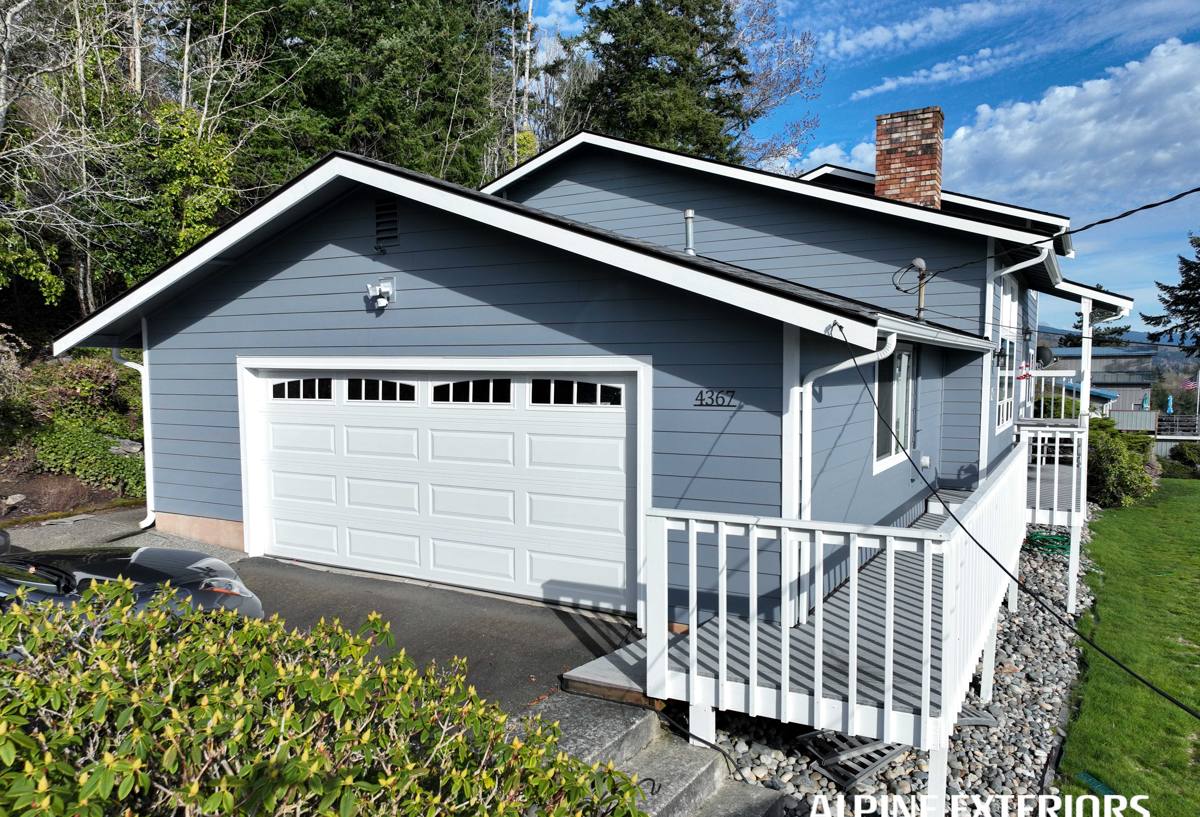
Signs Your Guemes Island Roof Needs Replacing, Not Just Repair
Not every roof problem on the island calls for a full tear-off. But there's a point where patching becomes a losing game — you're spending money to delay the inevitable instead of solving it. Here's what tells us a roof has crossed that line:
- Moss and algae have worked their way under shingle tabs, not just sitting on the surface — this lifts shingles and lets water in underneath
- Granule loss is heavy enough that you can see bare, shiny patches of asphalt, especially on south and west-facing slopes
- Shingles are curling, cupping, or cracking at the edges, a sign the mat underneath has already broken down
- Flashing around chimneys, skylights, or vent pipes is rusted, pitted, or pulling away — common on this roof after enough seasons of salt exposure
- You're finding soft spots, sagging, or staining on the decking from the attic side
- The roof is pushing 20-25 years old (for asphalt) and has never had a full replacement
- You've had more than one leak repaired in the last two winters in different spots
If you're only seeing one or two of these, a repair may still make sense. If several apply at once, replacement is usually the more honest recommendation — and cheaper in the long run than another round of patchwork.
What a Correct Roof Replacement Involves Out Here
A roof replacement done right on Guemes Island isn't dramatically different in structure from anywhere else — tear-off, deck inspection, underlayment, new roofing material, flashing, ventilation, cleanup. The difference is in which details we treat as non-negotiable given the local conditions:
Decking Comes First
Once the old roofing is off, the decking gets inspected board by board. Any wood that's soft, delaminated, or water-stained gets replaced before anything new goes down. Skipping this step is the single most common shortcut that leads to problems two or three years later — a nice new roof over rotten decking is still a problem waiting to happen.
Underlayment and Ice-and-Water Protection
Given how much wind-driven rain the island sees, we don't treat self-adhered ice-and-water membrane as optional at eaves, valleys, and around penetrations. Standard felt or synthetic underlayment alone can let wind-blown water work its way up and under shingle courses during a real storm. The extra membrane is inexpensive relative to the whole job and it's the layer that actually keeps water out when the weather gets sideways.
Flashing and Fasteners
This is where salt air does the most damage over time. We spec corrosion-resistant fasteners and flashing metal rated for coastal exposure rather than the cheaper standard-grade hardware that's fine inland but pits and rusts faster this close to the water. It costs a little more upfront and saves a full flashing replacement down the line.
Ventilation
Proper intake and exhaust venting keeps the attic from trapping the moisture that feeds moss and mildew from underneath, not just on top. A roof that looks great from the ground can still be rotting from the inside if the attic can't breathe.
Choosing a Roofing Material for Salt Air and Moss
There's no single "best" material for every Guemes Island home — it depends on your roof's exposure, pitch, tree cover, and budget. Here's an honest comparison of the main options we install, specifically through the lens of salt air and moss:
| Material | Moss/Algae Resistance | Salt Air Durability | Typical Lifespan | Maintenance |
|---|---|---|---|---|
| Architectural asphalt shingle (standard) | Moderate — better with algae-resistant granules | Good with corrosion-resistant flashing/fasteners | 25-30 years | Periodic moss removal recommended |
| Architectural asphalt with copper/zinc strips | Strong — metal ions inhibit moss/algae growth | Good | 25-30 years | Lower — strips do ongoing work for you |
| Metal roofing (standing seam) | Very strong — moss struggles to root | Excellent when properly coated/fastened | 40-50+ years | Low |
| Cedar shake | Weak without diligent upkeep — moss loves the texture | Fair — needs regular treatment near salt air | 20-30 years with upkeep | High |
We're honest with clients that cedar shake, while a beautiful look, asks the most of a homeowner in exactly the conditions Guemes Island has in abundance — shade, moisture, and salt air all encourage the moss growth that shortens its life without regular maintenance. Metal is the lowest-maintenance option long-term but comes with a higher upfront cost. For most island homes, a quality architectural shingle with algae-resistant granules or metal strips at the ridge hits the best balance of upfront cost and realistic maintenance.
Working Around the Ferry: How We Plan a Guemes Island Project
Every roofing job on Guemes Island has one constraint that doesn't exist on the mainland: the ferry. Materials, dumpsters, crew, and tear-off debris all move on and off the island on a schedule that isn't ours to control. That changes how we plan a project compared to a job in Anacortes proper:
- Materials are ordered and staged in advance so a full crew isn't waiting on a delayed delivery mid-job
- Tear-off is scheduled so debris haul-off lines up with ferry timing rather than sitting exposed to weather longer than necessary
- We batch trips efficiently — extra tools, incidental materials, and small fixes get identified during the estimate, not discovered mid-project when a return ferry trip is the only way to get them
- Weather windows get watched closely, since a rained-out day on the island costs more than a rained-out day on the mainland when crew and equipment are already committed to being there
None of this is complicated once you've done it a few times, but it does mean a contractor who hasn't worked the island before is likely to underestimate how much coordination a "simple" roof replacement takes out here.
Our Roof Replacement Process, Start to Finish
- On-site inspection and estimate. We look at the whole roof system — decking, flashing, ventilation, current material condition — not just what's visible from the ground, and give you a written estimate with material options.
- Material selection. We walk through the trade-offs above based on your roof's actual sun/shade exposure and your budget, not a one-size answer.
- Scheduling. We plan around ferry logistics and the weather forecast to minimize exposed-roof time.
- Tear-off and deck inspection. Old roofing comes off, decking is inspected and any compromised sections are replaced before we move forward.
- Underlayment, flashing, and ventilation. These layers go in with coastal-rated materials and attention to the wind-driven rain patterns specific to the site.
- Installation. New roofing goes on to manufacturer spec, with corrosion-resistant fasteners throughout.
- Cleanup and haul-off. The site is cleared and all debris removed, coordinated with the ferry schedule.
- Final walkthrough. We go over the finished roof with you before calling the job done.
Cost Factors for a Guemes Island Roof Replacement
Every roof is different, so we don't quote prices sight unseen — but these are the main factors that move the number up or down on an island project specifically:
| Factor | Why It Matters |
|---|---|
| Roof size and pitch | More square footage and steeper pitches mean more material, more labor time, and more safety setup |
| Number of existing layers | Tear-off of multiple old layers takes longer and adds to disposal volume |
| Decking condition | Rot or soft spots discovered during tear-off mean replacement boards, which isn't always visible until the old roof is off |
| Material choice | Standard asphalt, algae-resistant shingle, and metal all carry different material costs |
| Access and logistics | Ferry scheduling, staging, and haul-off add coordination time compared to a mainland job |
| Chimneys, skylights, and penetrations | Each one needs proper flashing, which adds labor and material |
We give you a clear, itemized estimate up front so there are no surprises once the tear-off starts — and if decking issues turn up mid-job, we'll show you what we found before doing the work, not after.
Why Hire a Crew That Already Works Guemes Island
A roof replacement is disruptive enough without a contractor learning the island's logistics on your dime. A crew that already works Guemes Island knows the ferry schedule without checking, knows which sides of a roof typically take the worst of the wind-driven rain, and doesn't guess at what salt air does to standard-grade flashing over a decade. That experience shows up as fewer surprises, tighter scheduling, and a roof system specified for the actual conditions your home sits in — not a generic inland spec applied to a coastal site.
It also matters for absentee and part-time owners, which describes a good share of island homes. We coordinate scheduling, keep you informed with photos and updates if you're not on-site, and make sure the project runs smoothly whether you're watching in person or checking in from a distance.
If your roof is showing its age or you just want an honest read on where it stands, we're happy to come take a look. Reach out for a free, no-pressure estimate using the form below.