 Anacortes Siding
 Board & Batten in Sedro-Woolley: A Style That Has to Earn Its Keep
Board and batten shows up a lot in Sedro-Woolley — on farmhouses out toward the valley floor, on craftsman-style remodels near downtown, and on newer builds going for that clean, vertical-line look. It's a good match for the area. The style has roots in agricultural buildings that needed simple, durable wall protection, and that practical DNA still matters here. Skagit County isn't a place where siding gets to be purely decorative. Between the valley's humidity, the rain that rolls in off the Sound, and a moss season that seems to stretch longer every year, whatever goes on the wall needs to actually perform.
The good news is that board and batten, done with the right material and the right installation details, holds up well in this climate. The bad news is that a lot of board and batten installs — especially ones built from primed wood or lightweight panel products — are chosen for the look first and the performance second. We install this style specifically because it works when it's built correctly, not because it's trendy.
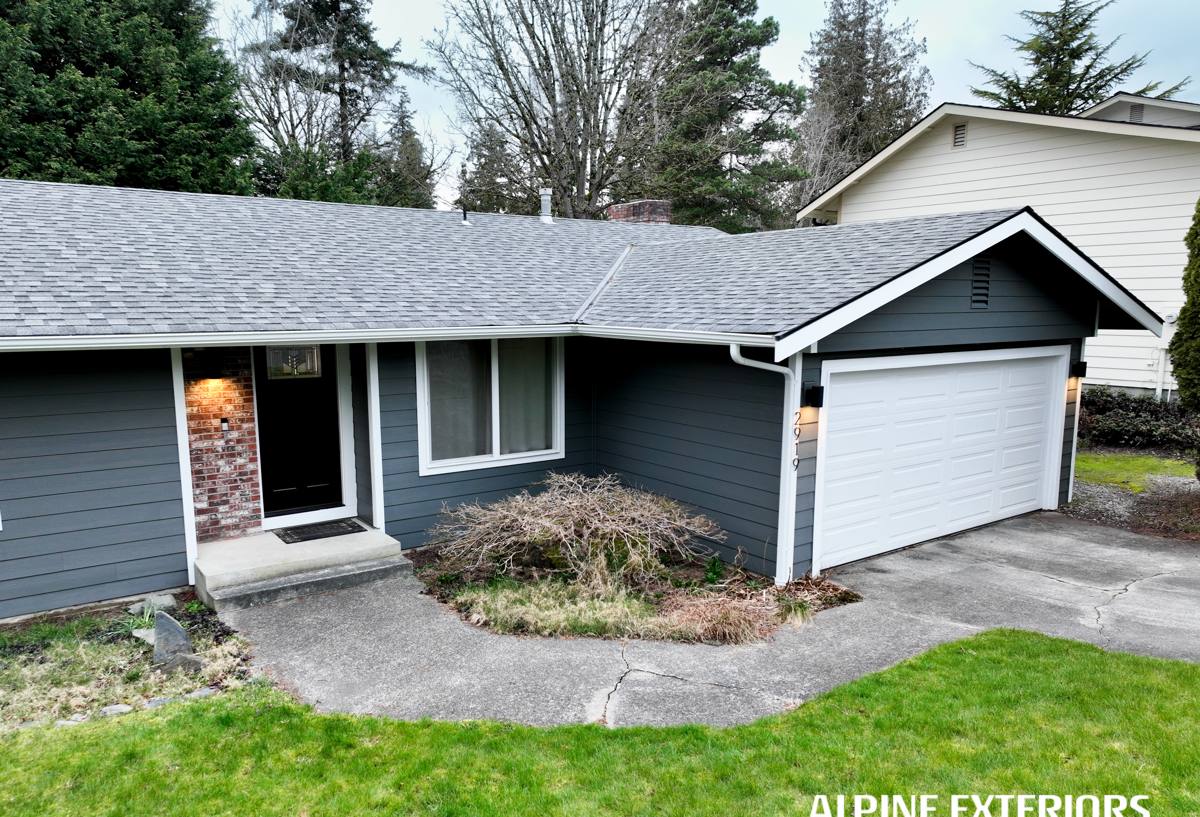
What Sedro-Woolley's Climate Actually Does to Vertical Siding
Sedro-Woolley sits inland from Anacortes, but it still gets plenty of the marine-influenced weather that defines this part of Skagit County — long stretches of damp, overcast days, driving rain that hits siding at an angle instead of falling straight down, and enough shade from mature trees and valley fog to keep north- and east-facing walls wet longer than homeowners expect. That combination is exactly what board and batten siding needs to be engineered for.
Moss and Sustained Moisture
Vertical board and batten has more seams and more edges than lap siding — the battens themselves create dozens of narrow vertical joints running down the wall. Every one of those joints is a place where moss spores, algae, and organic debris can settle and hold moisture against the substrate. On a material that swells or softens when wet, that's a slow, ongoing problem. On a material that doesn't absorb water into its core, it's a cosmetic issue you rinse off.
Driving Rain and Wind-Driven Wetting
Sedro-Woolley gets weather systems that push rain sideways, not just down. That means the battens, the panel joints behind them, and the flashing details at windows and corners are doing real work every storm season — not just during the occasional downpour.
Freeze-Thaw Swings
Winters here aren't brutal, but they're not mild enough to ignore either. A handful of freeze-thaw cycles each year is enough to stress any siding material that has already absorbed moisture — expansion and contraction opens gaps, telegraphs through paint, and accelerates rot at panel edges.
What a Correct Board & Batten Job Actually Involves
Board and batten looks simple from the street — vertical boards, battens over the seams — but the system behind that look determines whether it lasts 10 years or 40.
The Substrate and Panel Choice
Everything starts with what's under the battens. A dimensionally stable panel that resists moisture absorption gives the battens something solid and consistent to sit on for decades. A panel that swells, cups, or softens undermines the whole assembly no matter how well the battens are installed.
Weather-Resistive Barrier and Flashing
Behind the panels, a correctly lapped weather-resistive barrier and properly flashed windows, doors, and transitions are what actually keep bulk water out of the wall assembly. Board and batten's vertical seams make this more important, not less — water that gets behind a batten needs somewhere to go, and that path has to be built in on purpose.
Batten Spacing, Fastening, and Gaps
Battens need consistent spacing, correct fastener placement that avoids blow-through and rust streaking, and expansion gaps sized for the material and the local temperature swings. Nail it too tight and you get buckling; leave too much gap and you get water intrusion and an uneven shadow line.
Caulking and Sealant Details
Board and batten relies on sealant at more transitions than lap siding does. The right sealant, applied at the right joints — not everywhere, and not as a substitute for proper flashing — is part of a correct install, not an afterthought.
Why We Install James Hardie for This Style — and Not Alternatives
Board and batten can be built from several materials, and we've thought hard about each one before settling on fiber cement as the only option we put on a Sedro-Woolley home.
| Material | Where It Falls Short Here | Why We Skip It |
|---|---|---|
| Primed spruce/pine boards | Absorbs moisture at cut ends and joints; needs repainting on a tight cycle in a damp climate | High long-term maintenance burden, rot risk at seams |
| Vinyl vertical panel | Can warp or buckle with temperature swings; limited to a shallower, flatter batten profile | Doesn't hold the crisp shadow lines board and batten is chosen for |
| Engineered wood (LP-type) | Performs well when the moisture barrier is perfect, but installation sensitivity leaves little margin for error in a wet climate | We standardized on a system with more built-in moisture tolerance |
| James Hardie fiber cement | Non-combustible, dimensionally stable, factory-cured finish | What we install — engineered for exactly this climate profile |
James Hardie's HardiePanel and Artisan lines are built for vertical applications like this, with a fiber cement core that doesn't absorb water the way wood-based products do and a ColorPlus factory finish that holds color and resists the fading and chalking that shows up fast on painted wood siding in the Pacific Northwest. It's also non-combustible, which matters more each year as wildfire smoke and dry-season risk become part of the conversation even in a historically wet county. We don't install LP SmartSide, vinyl, Cemplank, Allura, or primed cedar or spruce — not because those products have no merit, but because we've standardized on one system we can stand behind on every home we touch, and Hardie's track record in wet, marine-influenced climates is the one we trust.
Our Process for a Sedro-Woolley Board & Batten Project
- On-site walkthrough to assess current siding condition, existing moisture damage, and wall exposure to prevailing rain and shade
- Substrate and sheathing inspection — board and batten only performs as well as what's underneath it
- Detailed plan for weather-resistive barrier, flashing at all penetrations, and batten layout matched to the home's elevations
- Installation to manufacturer specifications, including fastener schedule and expansion gaps sized for our climate
- Final walkthrough covering care, warranty registration, and what to watch for seasonally
Living With Board & Batten in a Moss-Prone Climate
Correctly installed fiber cement board and batten is low-maintenance, but "low-maintenance" isn't "no-maintenance." A little seasonal attention keeps it looking sharp for decades.
- Rinse walls (especially shaded, north-facing sides) once or twice a year to keep moss and algae from establishing
- Keep gutters clear so overflow doesn't run down and saturate a wall section repeatedly
- Trim back shrubs and trees that hold moisture against lower battens
- Check caulking at trim and window transitions every couple of years and re-seal as needed
- Watch for any soft spots, staining, or gaps at panel seams and address them early rather than waiting
What Board & Batten Costs to Consider
| Factor | Why It Affects Cost |
|---|---|
| Home size and wall complexity | More corners, gables, and dormers mean more batten cuts and flashing detail |
| Existing siding removal | Tear-off and disposal of old material adds labor beyond a straightforward re-side |
| Substrate repair | Any rotted sheathing found during tear-off needs to be replaced before new siding goes on |
| Batten spacing and panel selection | Tighter batten spacing and premium ColorPlus finishes cost more than standard configurations |
| Trim and accent work | Corner boards, window casing, and transition details add finish time |
Every home is different, and the only way to get a real number is to have someone look at the actual walls, the actual substrate, and the actual scope. We're glad to walk a Sedro-Woolley property and give a straight answer rather than a generic range that doesn't mean much once the tear-off starts.
Why It Matters That We Already Work This Area
Sedro-Woolley sits far enough from the water that some contractors treat it as an afterthought compared to Anacortes waterfront work, but the exposure here — humidity, shade, driving rain, and a long moss season — demands the same attention to detail. A crew that already works Skagit County knows which elevations on a given lot type get the worst of the weather, understands how local permitting and inspection work, and isn't learning the region's climate quirks on your home. That familiarity shows up in fewer surprises during tear-off and a finished install that's built for how this specific area actually behaves, not a generic weather profile.
If you're considering board and batten siding for a home in Sedro-Woolley, we're happy to take a look and talk through what your walls actually need. Fill out the form below for a free, no-pressure estimate.