 Anacortes Siding
 Sedro-Woolley sits inland from Anacortes but shares the same weather pattern that wears down roofs across Skagit County: long stretches of steady rain, heavy morning dew off the valley floor, and a moss season that can run eight months out of the year. Add in the salt-tinged air that drifts up from Fidalgo Bay and the Skagit River basin's own humidity, and you get a roofing environment that punishes shortcuts. A repair that would hold up fine in a dry climate can fail here in a single wet season if it isn't done right.
This page covers what roof repair actually involves for homes in and around Sedro-Woolley — what typically goes wrong, how we diagnose it, what a correct repair looks like, and why local experience matters more than it might seem.
Why Sedro-Woolley Roofs Wear Differently
Roofs don't fail because of one big storm most of the time. They fail because of cumulative moisture exposure — the same shingles or panels getting wet, drying slowly, and getting wet again, week after week, for most of the year. In Skagit County that cycle is longer and less forgiving than in drier parts of the state.
Moss and Organic Growth
Moss is the single most common culprit we find on roofs in this area. It thrives in shaded, north-facing slopes and anywhere tree cover keeps a roof from drying out between rains. Moss doesn't just sit on top of shingles — its rhizoids work into the granule surface and shingle mat, lifting edges and creating channels for water to travel sideways instead of down. Left alone long enough, moss holds moisture against the roof deck itself, which is where real damage starts.
Driving Rain and Wind-Driven Water
Sedro-Woolley gets its share of wind-driven rain, especially during fall and winter storm systems moving in off the Salish Sea. Driving rain finds weaknesses that vertical rain never would — under-flashed valleys, loose pipe boots, and gaps around chimneys or skylights that stay bone dry in a light drizzle but leak the moment rain comes in sideways.
Salt Air and Material Fatigue
Anacortes and the surrounding Skagit County coastline carry a mild salt-air influence that accelerates corrosion on exposed metal — flashing, fasteners, gutter hardware, and vent caps. It's a slower process than moss damage, but it matters when we're evaluating whether a repair area's metal components need replacing along with the roofing material.
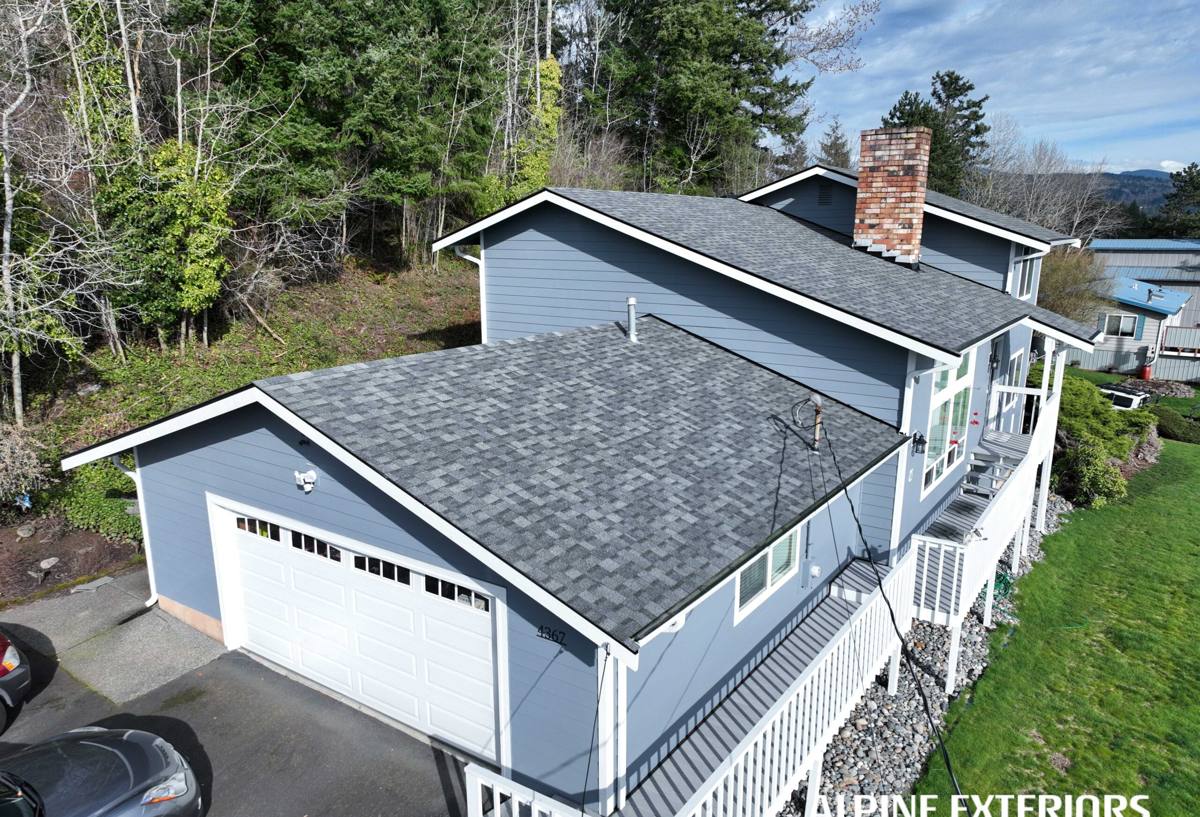
Common Roof Repair Issues We See in Sedro-Woolley
- Moss-lifted shingles along shaded slopes and roof edges under tree cover
- Failed pipe boot flashing — the rubber collar around plumbing vents cracks and shrinks well before the shingles around it wear out
- Valley leaks where two roof planes meet and water volume concentrates
- Chimney and skylight flashing separation from age, settling, or improper original installation
- Clogged or undersized gutters causing water to back up under the first course of shingles
- Wind-lifted or missing shingles after fall and winter storm systems
- Soft or spongy decking discovered once a slow leak has been running longer than the homeowner realized
How We Diagnose a Roof Repair
A roof leak rarely shows up where the water actually enters. Water travels along the underlayment, framing, or decking before it finds a path through the ceiling, which means a proper diagnosis has to start on the roof itself, not just in the attic or ceiling stain.
What a Proper Inspection Covers
- Full visual sweep of all roof planes, not just the area near the reported leak
- Close inspection of valleys, penetrations (vents, chimneys, skylights), and edge details
- Moss and debris assessment, including how far growth has spread under the shingle line
- Flashing condition check — looking for separation, corrosion, or improper overlap
- Attic-side inspection where accessible, checking decking, insulation, and framing for moisture staining or soft spots
- Gutter and drainage check, since backed-up water is one of the most common hidden causes of edge leaks
We explain what we find in plain terms — what's causing the problem, what it will take to fix it correctly, and what happens if it's left alone. No pressure to upsize a repair into a full replacement unless the roof's condition actually calls for it.
What a Correct Repair Involves
The right repair depends entirely on what's actually failing, but a few principles hold across almost every job we do in this climate.
Match the Repair to the Cause, Not Just the Symptom
Replacing a stained shingle without addressing the flashing detail or moss growth that caused the staining just buys a homeowner a few more months before the same spot leaks again. A repair that lasts starts with fixing the actual failure point — the flashing, the valley, the ventilation gap — not just the visible surface damage.
Flashing Gets the Same Attention as Shingles
Most callback leaks we're asked to look at trace back to flashing, not shingle material. When we open up a repair area, we check the flashing underneath and replace or re-seat it as needed rather than shingling over questionable metal.
Moss Removal Is Done Without Damaging the Surface
Aggressive pressure washing strips granules and shortens the life of the roofing material around the area being cleaned. We remove moss using methods that clear growth without gouging the shingle surface, and we look at whether zinc or copper strips make sense for a given roof to slow regrowth going forward.
Decking Repairs Are Never Skipped or Hidden
If a leak has been running long enough to soften the roof deck underneath, patching over it isn't a repair — it's a delay. Any compromised decking gets cut out and replaced before new roofing material goes back down.
Repair vs. Replacement: How We Help You Decide
Not every roof problem in Sedro-Woolley needs a full replacement, and not every repair is worth doing if the roof is near the end of its service life. Here's how we generally think through that decision:
| Factor | Favors Repair | Favors Replacement |
|---|---|---|
| Roof age | Under 15-20 years, depending on material | Nearing or past manufacturer's expected service life |
| Extent of damage | Isolated to one area or detail (valley, flashing, one slope) | Widespread moss damage, multiple failure points across the roof |
| Decking condition | Solid, dry decking around the repair area | Soft or rotted decking in multiple locations |
| Prior repair history | First or second repair on this roof | Repeated patch jobs in different spots over the years |
| Material availability | Matching shingles/panels still available or close enough | Discontinued material making seamless matching impossible |
We'll give you an honest read on which side of that table your roof falls on, including the cases where a repair is genuinely the right call and replacement would be spending money you don't need to spend yet.
Why Local Experience in Skagit County Matters
Roofing crews unfamiliar with this region sometimes underestimate how aggressive moss and moisture cycling can be here, or they apply repair standards suited to drier climates. A crew that already works Sedro-Woolley and the surrounding Anacortes area knows which roof orientations tend to hold moss longest, which flashing details fail first under driving rain, and how much ventilation a given attic actually needs to keep moisture from condensing on the underside of the decking during our wetter months.
That regional knowledge shows up in small decisions that add up: how much flashing overlap to use in a valley given our rain volume, whether a roof needs better attic ventilation as part of the repair rather than just as a separate recommendation, and how to sequence a repair around our unpredictable stretches of dry weather so the work gets done right instead of rushed ahead of the next front moving in.
What to Check Before You Call a Roofer
A little homeowner-level observation before we arrive helps speed up diagnosis and gives us a head start on the inspection:
- Note where and when you noticed a leak — during heavy rain, wind-driven rain, or after a specific storm
- Look for moss buildup, especially on north-facing or shaded slopes
- Check gutters for overflow marks or standing debris after the last rain
- Note any ceiling stains and roughly where they sit relative to the roof above
- Avoid climbing on the roof yourself, especially when it's wet or mossy — this is exactly the surface condition that causes falls
Maintenance That Extends the Life of a Repair
A well-executed repair still depends on basic upkeep to reach its full lifespan in this climate. Keeping gutters clear so water doesn't back up under shingle edges, trimming back tree limbs that shade a roof and keep it from drying out, and scheduling periodic moss treatment on shaded slopes all reduce the odds of a repeat call. We're happy to walk through a simple maintenance schedule specific to your roof's exposure and material when we're out for the repair itself.
If you're dealing with a leak, moss buildup, or storm damage on a Sedro-Woolley roof, we're glad to take a look and give you a straightforward assessment — no pressure, no inflated scope. Request a free estimate using the form below and we'll get back to you to schedule a time that works.