 Anacortes Siding
 Siding Repair Built Around Sedro-Woolley's Weather
Sedro-Woolley sits inland along the Skagit River valley, tucked against timber and farmland rather than open water, but that doesn't mean the siding here gets an easy ride. The valley traps moisture. Tree cover keeps roof lines and north-facing walls shaded and slow to dry. Long stretches of steady, low-intensity rain soak into anything with a gap, a crack, or a failed caulk joint, and once the wet season settles in, it can stay damp for days at a time. Add a moss season that runs longer here than it does on more exposed, wind-swept sites, and you've got a climate that is quietly hard on siding even when nothing looks dramatically wrong from the curb.
We're based in Anacortes and work across Skagit County, including regular repair calls in Sedro-Woolley. That matters because siding damage here doesn't always look like storm damage. It looks like a soft spot below a window, a stain that keeps coming back after you pressure wash it, or a board that's started to sag at a seam. Knowing what's normal weathering versus what's a real moisture problem is the first skill a repair crew needs in this area, and it only comes from working here regularly.
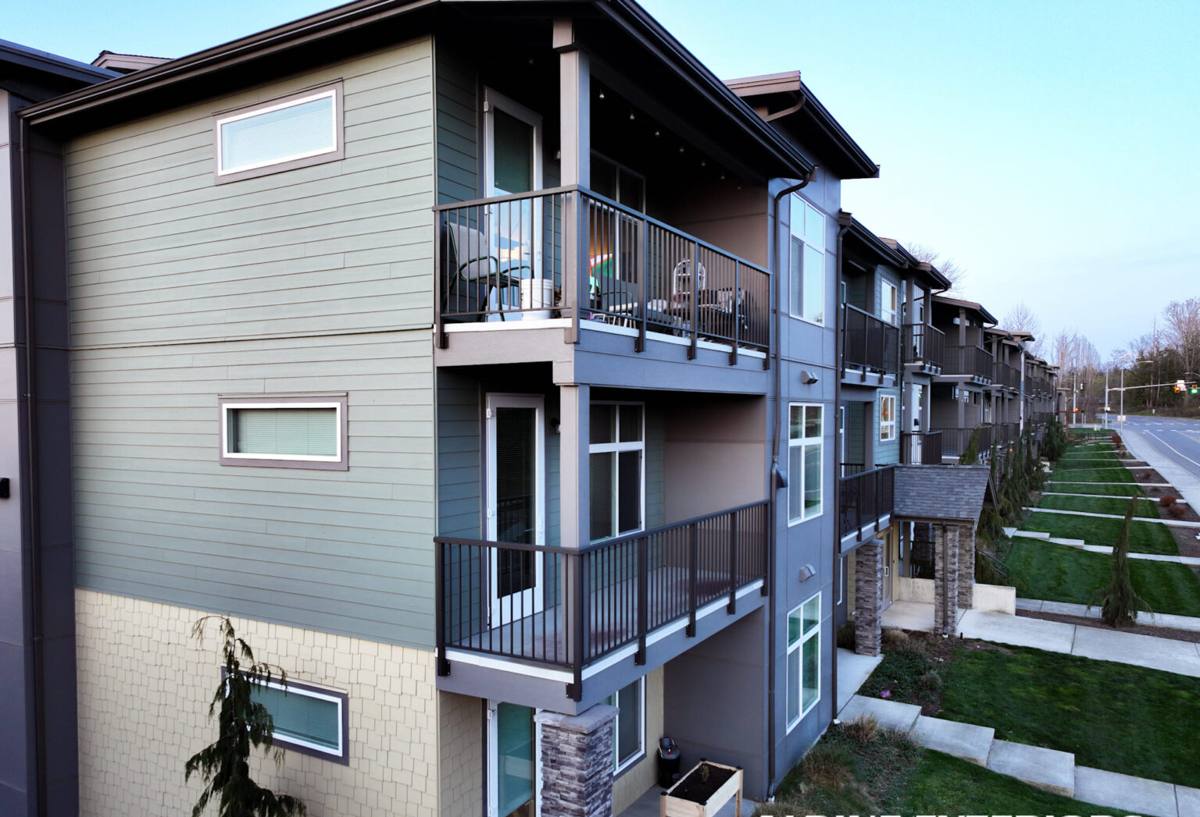
What Actually Causes Siding Damage in This Area
Moisture That Doesn't Get a Chance to Dry Out
Sedro-Woolley's tree cover and valley setting mean less direct sun and wind hitting some walls than you'd get on a more open lot. That's pleasant for the yard and murder on siding that's already compromised. Wood-based products (cedar, primed spruce, or older LP-style panels) that take on water and then sit in shade for days will swell, warp, and eventually rot from the inside before the surface paint ever shows it.
Long Moss and Algae Season
Moss doesn't just sit on top of siding — its root structure works into seams, nail holes, and caulk lines, holding moisture against the substrate around the clock. On shaded or north-facing walls in Sedro-Woolley, moss and green algae can establish well before summer and persist well past it, which shortens the window every year when siding actually gets to dry completely.
Driving Rain and Wind-Driven Water
Fall and winter storms push rain sideways into corner boards, window trim, and butt joints. On siding installed with insufficient overlap or without proper flashing, that water finds its way behind the cladding, where it can travel and cause damage far from where it entered — which is why a stain in one spot sometimes traces back to a failure point several feet away.
Freeze-Thaw Cycling
Skagit County doesn't see extreme cold most winters, but it does see enough freeze-thaw cycling to matter. Water trapped in a crack or a swollen seam expands when it freezes, widening the damage a little more each time, which is how a small crack in October becomes a real repair by February.
Signs a Sedro-Woolley Home Needs Siding Repair
- Soft or spongy siding when pressed near the bottom edge of boards, around windows, or near ground level
- Paint that's bubbling, peeling, or failing in the same spot repeatedly, even after repainting
- Visible gaps, cracks, or separated seams at butt joints and corners
- Moss or algae that returns quickly after cleaning, especially on shaded walls
- Warping, cupping, or boards that no longer sit flat against the wall
- Interior signs — musty smell, discolored drywall, or peeling interior paint on an exterior wall
- Stains that track downward from a window, vent, or roofline
- Siding that flexes or feels hollow when tapped, suggesting rot behind the surface
Any one of these on its own might be minor. Two or three together, especially on the same wall, usually means water has been getting behind the siding for a while and the repair needs to address the cause, not just the cosmetic damage.
What a Correct Repair Actually Involves
A repair that just patches the visible board and leaves the underlying cause in place is a repair that comes back. We treat every repair call as a two-part job: fix what's damaged, and figure out why it got damaged in the first place.
Diagnosis Before Demolition
We start by identifying the actual water path — is it a failed caulk joint, a flashing gap, a missing kick-out at a roofline, or straightforward age-related material failure? Pulling a damaged board without understanding why it failed means the replacement board is on the same clock as the one that just came off.
Removing Damaged Material Completely
Rot and moisture damage don't stop where they're visible. We open up the area enough to find solid material on all sides, including checking the water-resistive barrier and sheathing underneath. If the sheathing itself has taken on damage, that gets addressed before any new siding goes back on — patching over compromised sheathing is how small repairs turn into bigger problems two years later.
Correct Flashing and Water Management
Most of the repeat siding failures we see in Skagit County trace back to flashing details — around windows, at butt joints, above trim, and where siding meets roof lines. A repair that doesn't correct the flashing is a repair that's guaranteed to fail again in the same spot.
Matching Materials the Right Way
For homes with James Hardie fiber cement siding, repairs use matching Hardie product and, where the wall was originally finished with ColorPlus factory finish, we match color and sheen as closely as the product line allows so the repair doesn't stand out as a patch. For homes with other siding types needing a repair rather than a full replacement, we do honest work with compatible materials — and we'll tell you plainly if the smarter long-term move is a phased or full replacement instead of another patch.
Our Repair Process
| Step | What Happens |
|---|---|
| Inspection | On-site assessment of visible damage plus a check of likely water entry points — flashing, seams, trim, and grade clearance |
| Diagnosis | Identify the actual cause of the failure, not just the symptom, including checking behind the siding where needed |
| Written Scope | Clear explanation of what's damaged, why, and what the repair involves — no vague line items |
| Removal | Careful removal of damaged siding and, if needed, affected sheathing or barrier material |
| Correction | Fix the underlying water management issue — flashing, sealant, clearance — before any new material goes on |
| Reinstallation | New material installed to manufacturer spec, matched for color and profile where possible |
| Final Check | Walk the repair with the homeowner and confirm the fix addresses the cause, not just the appearance |
Repair vs. Replacement: An Honest Read
Not every damaged wall needs full replacement, and not every "just patch it" request is the right call either. A few honest guidelines:
Repair Usually Makes Sense When:
The damage is localized to one or two areas, the rest of the siding is in solid condition, and the cause of the failure is something we can correct at the source (a flashing detail, a caulk joint, isolated impact damage).
Replacement Is Usually the Smarter Call When:
Damage shows up in multiple areas across different walls, the siding is an older wood-based or laminate product nearing the end of its practical life, or repeated repairs on the same wall suggest a systemic moisture issue that patching won't solve. We'll tell you which situation you're in and why — a repair we know won't hold isn't a repair worth selling.
Why James Hardie Siding Repairs Differently — and Why We Only Install It
We install exclusively James Hardie fiber cement siding on new work, and it changes what a repair looks like on the homes we've already put it on. Fiber cement doesn't swell, warp, or rot the way wood-based siding can, so when we do get a repair call on a Hardie home, it's far more often an isolated issue — impact damage, a failed caulk joint, or a flashing detail that needs correcting — rather than the widespread moisture failure we see on older wood or laminate siding around the county. The ColorPlus factory finish also means color-matched repairs are realistic, since the finish is applied and cured under controlled conditions rather than mixed on site.
For homes we didn't originally install, we'll still repair what's there and give you a straight assessment. But if a wall is showing the kind of widespread, repeat-failure damage that's common with older wood-based or engineered wood siding in a wet, shaded climate like Sedro-Woolley's, we'll say so, and we'll explain why fiber cement is what we'd put back up instead.
Why a Crew That Already Works This Area Matters
Skagit County covers a lot of ground, from open coastline in Anacortes to the shaded valley terrain around Sedro-Woolley, and siding fails differently depending on where a house sits. A crew that mostly works drier, sunnier regions can misdiagnose a Sedro-Woolley moss and moisture problem as simple cosmetic wear, or miss a flashing detail that's specific to how this valley handles driving rain. We're out in this county regularly, which means we're not guessing at how local weather patterns behave — we've seen the same failure points repeat on the same wall orientations often enough to know what to check first.
That local familiarity also means faster, more accurate estimates. We're not learning the area on your job.
Maintenance That Prevents the Next Repair Call
Whether your siding is fiber cement or something else, a few habits go a long way in this climate:
- Rinse moss and algae off shaded walls before it establishes a heavy root structure, rather than after
- Keep gutters clear so overflow doesn't run down the wall behind the siding
- Trim back vegetation and tree limbs that keep walls shaded and damp longer than they need to be
- Re-caulk seams and trim joints on the schedule the material calls for — don't wait for a visible gap
- Walk the exterior once or twice a year and press-test any spot that looks discolored or swollen
If you're seeing soft spots, recurring stains, or moss that keeps coming back on a Sedro-Woolley home, we're happy to take a look. We offer free, no-pressure estimates — we'll tell you honestly whether you need a repair, a bigger fix, or nothing at all right now. Just fill out the form below to get started.