 Anacortes Siding
 Why Decks on Fidalgo Island Fail Faster Than the Rest of the Country
Fidalgo Island sits where salt air off Rosario Strait and the Guemes Channel meets a wet, mild Pacific Northwest climate. That combination is hard on outdoor structures. Salt-laden air accelerates corrosion in fasteners, connectors, and any exposed metal hardware. Add the region's long stretch of rain from fall through spring, plus a moss and algae season that can run most of the year on shaded or north-facing decks, and you have conditions that break down decking, framing, and finishes well ahead of the timelines you'd see in a drier climate.
Most decks in this area aren't failing because the original build was careless. They're failing because moisture found a way in — through a cracked board, an under-flashed ledger, a fastener that rusted through, or a joist that never quite dried out between rain events. Once water gets past the surface and into the framing, rot spreads quietly under boards that can still look fine from the top.
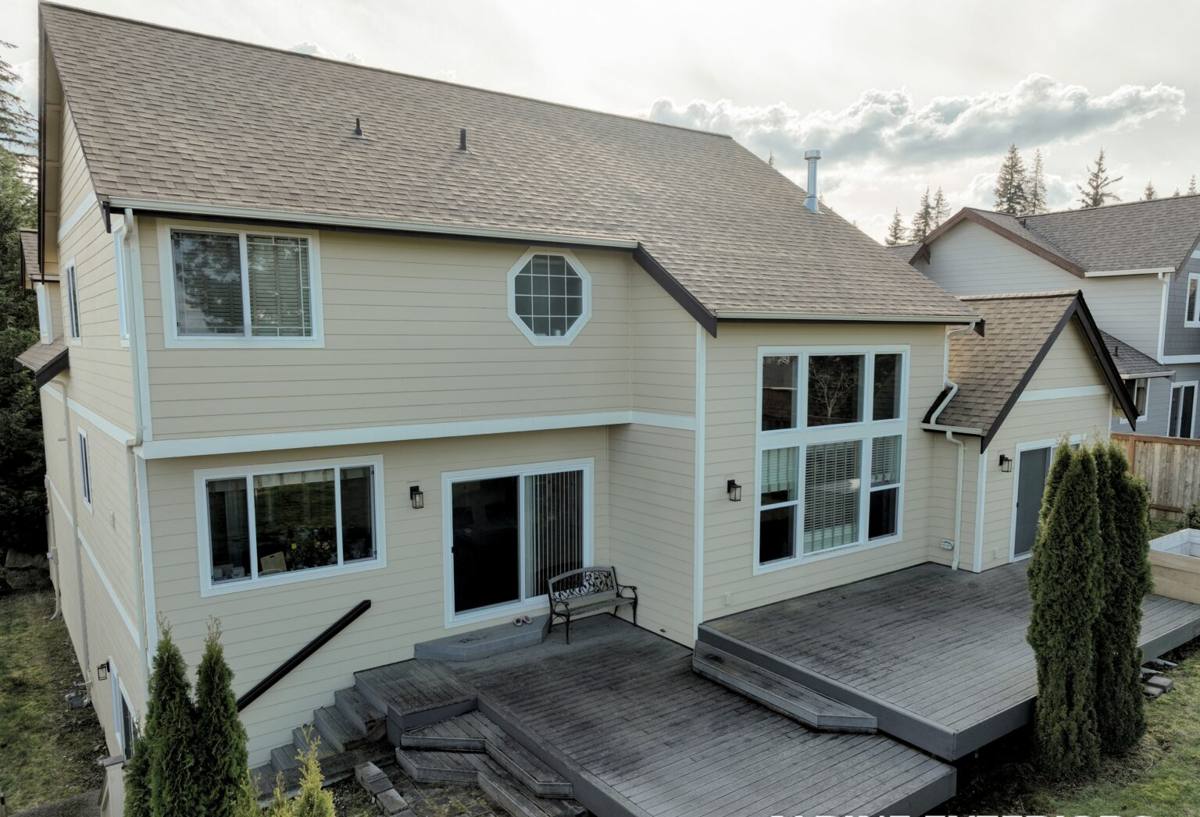
Signs a Deck Needs Replacement, Not Just Repair
Not every worn deck needs a full teardown. But there's a point where patching individual boards stops making sense — either because the framing underneath is compromised, or because the cost of piecemeal repairs starts to rival a proper rebuild. Some signs worth taking seriously:
- Soft, spongy, or springy spots in the decking or near the stairs
- Visible rot, splitting, or delamination on more than a few boards
- Rust staining running down from screws, nails, or metal connectors
- A ledger board pulling away from the house, or gaps at the house-to-deck connection
- Persistent black or green staining that pressure washing won't clear
- Railings or posts that flex or wobble under normal weight
- A deck older than 20-25 years that was never rebuilt to current fastening standards
If you're seeing two or more of these, it's usually time to have someone look at the framing, not just the surface boards.
What a Correct Deck Replacement Actually Involves
Framing and Substructure
The framing is where most of a deck's long-term durability comes from, and it's the part homeowners see the least. On a Fidalgo Island rebuild, that means pressure-treated joists and beams rated for ground contact where applicable, joist tape or a comparable barrier over the top of the joists to keep water from soaking into end grain, and corrosion-resistant structural hardware — hangers, screws, and bolts rated for treated lumber and coastal exposure. Standard, uncoated hardware corrodes noticeably faster this close to salt water, and a rusted-through hanger is a structural problem, not a cosmetic one.
Ledger and Flashing Details
The ledger board — where the deck attaches to the house — is the single most common source of hidden rot on older decks. A correct replacement includes proper flashing behind and over the ledger, with the house's water-resistive barrier lapped correctly over that flashing, so rain running down the siding is directed away from the connection instead of pooling behind it. This detail is invisible once the deck is finished, which is exactly why it gets skipped on lower-quality jobs and exactly why it matters most in a climate that sees this much driving rain.
Decking Material Options
The decking surface itself is a tradeoff between upfront cost, appearance, and how much maintenance you're willing to keep up with. Here's how the common options compare for this climate specifically:
| Material | Upkeep in Wet, Salt-Air Climate | Typical Lifespan | Notes |
|---|---|---|---|
| Pressure-treated wood | Annual cleaning, periodic staining/sealing | 10-15 years | Lowest upfront cost; needs the most ongoing attention to resist moss and moisture |
| Cedar | Regular sealing to hold color and resist checking | 15-20 years | Naturally rot-resistant but still needs maintenance in this rainfall |
| Composite decking | Periodic washing; no staining or sealing | 25-30+ years (mfr. warranty dependent) | Resists moss staining better than wood; quality varies by product line |
| PVC/capped polymer | Washing only | 25-30+ years | Best moisture resistance of the group; highest material cost |
We install what fits the homeowner's budget and expectations, but we're honest about tradeoffs. Uncapped wood-composite blends can absorb moisture at cut ends if they're not properly sealed during install, which matters more here than in a dry climate — so installation detail work matters as much as the material choice itself.
Railings and Code Requirements
Railing height, baluster spacing, and guard requirements are governed by the applicable building code, and any deck replacement that includes railings needs to meet current standards regardless of what the old deck had. This isn't optional detail work — it's a safety requirement, and it's one of the things a permitted, inspected job gets right that an unpermitted patch job often misses.
Our Deck Replacement Process
- On-site assessment. We inspect the existing deck, framing, ledger connection, and footings to determine what's salvageable and what needs to come out.
- Written scope and estimate. You get a clear breakdown of what's being replaced, the materials involved, and the cost — no vague allowances.
- Permitting. Most deck replacements in Anacortes require a building permit, especially when the structure is being rebuilt from the framing up. We handle that process rather than leaving it to the homeowner.
- Demolition and disposal. Old decking, framing, and hardware are removed and hauled off the site.
- Framing and flashing. New joists, beams, ledger flashing, and hardware go in to current code and to the moisture-management details this climate demands.
- Decking, railings, and stairs. Surface material and railings are installed per the agreed scope, with attention to fastener spacing and drainage gaps between boards.
- Final walkthrough and inspection. The completed deck is inspected as required, and we walk the finished job with you before calling it done.
What Drives the Cost of a Deck Replacement
Every deck is different, so we don't quote a flat number without seeing the site. But the main variables that move the price are consistent:
| Factor | Why It Matters |
|---|---|
| Deck size and shape | More square footage and complex angles increase material and labor time |
| Decking material chosen | Pressure-treated wood, cedar, composite, and PVC span a wide cost range |
| Framing condition | Rotted joists, beams, or posts add rebuild scope beyond a surface-only job |
| Height and stairs | Elevated decks and multi-flight stairs require more structural work and railing |
| Ledger and foundation access | Difficult access to the house connection or footings can add labor time |
| Permit and inspection requirements | Structural rebuilds typically require permitting, which adds a fixed cost and timeline |
As a general range, homeowners on Fidalgo Island should expect a full deck replacement to run from the low thousands for a small, simple pressure-treated deck up to significantly more for a large composite or PVC deck with multiple levels, built-in railings, or extensive stairs. We'll give you real numbers once we've seen the site.
Maintaining a New Deck in This Climate
A properly built deck still needs seasonal attention here — the climate doesn't let anything coast. A short checklist that applies regardless of material:
- Sweep debris and standing leaves off the surface regularly, especially under trees or overhangs where moisture sits longest
- Clean moss and algae buildup before it stains or gets slick, particularly on shaded north- or east-facing decks
- Check and clear drainage gaps between boards so water isn't trapped against the framing
- Inspect the ledger flashing and house connection once a year for gaps or staining
- Re-seal or re-stain wood decking on the manufacturer's or a reasonable annual-to-biennial schedule
- Tighten or replace any hardware showing early rust before it spreads
Why Local Experience on Fidalgo Island Matters
A deck built to a generic national spec sheet doesn't always hold up to Skagit County's specific mix of salt air, rainfall volume, and moss growth. A crew that already works this island knows which fastener grades actually hold up near the water, which decking products handle the wet season without excessive staining, and how the local permitting process runs — so the job doesn't stall waiting on paperwork nobody planned for. That familiarity shows up in fewer callbacks and a deck that's still solid well past the point where a generic build would be showing problems.
Get a Free Estimate for Your Fidalgo Island Deck
If your deck is showing soft spots, rust staining, or a ledger connection that doesn't look right, it's worth having it looked at before those problems spread into the framing. We offer free, no-pressure estimates for deck replacement across Fidalgo Island and the rest of the Anacortes area — fill out the form below and we'll take a look.