 Anacortes Siding
 Roofing in Ship Harbor: What the Marine Climate Demands
Ship Harbor sits close to open water on Fidalgo Island, and that proximity changes what a roof has to survive. Homes here take wind-driven rain off Rosario Strait, near-constant salt-laden air, and a moss season that can run from fall through spring in a normal Skagit County year. None of that is unusual for this part of Washington, but it does mean a roof built to a generic spec — rather than one built for this specific exposure — tends to show problems years before it should.
Salt air is the one people underestimate most. It accelerates corrosion on exposed fasteners, flashing, and metal roofing components faster than it would a few miles inland. Driving rain finds any weak point in flashing or underlayment and pushes water sideways and upward, not just straight down, which is why laps and details matter more here than the shingle brand does. And the long wet season keeps roof surfaces damp enough, long enough, for moss and algae to take hold — especially on north-facing slopes and anywhere shaded by trees.
A new roof installed for Ship Harbor should be built with all three of those in mind from the start, not patched for them later.
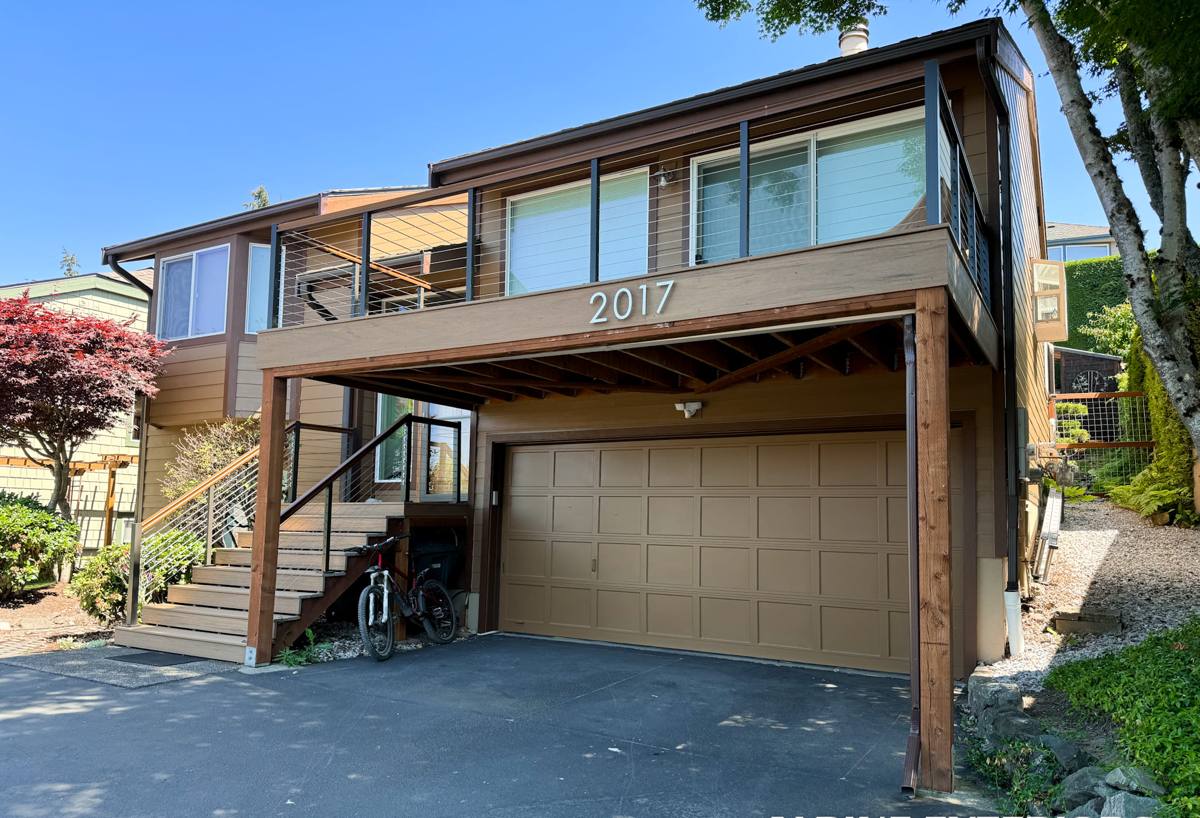
Is It Time for a New Roof, or Will a Repair Hold?
Not every roof problem in this neighborhood means a full replacement. A licensed roofer should be able to tell you honestly which category yours falls into. Some signs point toward full replacement rather than another round of patching:
- Shingles are curling, cupping, or losing granules across large sections, not just one spot
- You've had two or more roof leaks in different areas within the past couple of years
- The roof is original to the home and is past the manufacturer's expected service life
- Moss has been established long enough to lift shingle edges or hold moisture against the deck
- Flashing around chimneys, skylights, or sidewalls is rusted, cracked, or was never properly stepped and counter-flashed
- You can see daylight, sagging, or soft spots in the decking from the attic
If only one of these applies and the roof is otherwise sound, a repair may be the more honest answer. We'll tell you that directly rather than pushing a replacement that isn't needed yet.
Roofing Materials That Actually Hold Up Near the Water
Every roofing material has trade-offs, and near Ship Harbor's salt air and moisture, those trade-offs matter more than in a drier inland climate. Here's how the common options compare for this specific setting.
| Material | Strength in This Climate | Maintenance Consideration |
|---|---|---|
| Architectural asphalt shingle | Good wind rating, wide manufacturer warranty options, proven track record locally | Needs periodic moss/debris clearing on shaded slopes |
| Standing seam metal | Excellent water shedding on low-slope sections, long service life | Requires corrosion-resistant fasteners and coatings rated for coastal/marine exposure |
| Synthetic composite shingle | Resists moisture absorption better than natural wood products | Higher upfront cost; product-specific installation requirements |
| Cedar shake | Traditional look that fits many Anacortes homes | Highest moisture and moss sensitivity of the group; needs the most consistent upkeep in a wet marine climate, which is why we discuss this trade-off honestly before you commit to it |
We don't steer every homeowner toward the same material. We steer toward whichever one matches your home's exposure, your budget, and how much upkeep you actually want to do.
Fasteners and Flashing Metal Matter More Here
Whatever roofing material you choose, the fasteners and flashing around it need to be rated for coastal exposure. Standard galvanized components can start showing surface corrosion within a few years this close to salt water. We spec corrosion-resistant fasteners and flashing on every Ship Harbor installation, not as an upgrade, but as the baseline.
What a Correct Installation Actually Involves
A new roof is only as good as what's underneath the shingles. This is where most of the long-term performance in a climate like this one actually gets decided.
Tear-Off and Deck Inspection
We remove the old roofing down to the deck rather than layering over it. That's the only way to actually see the plywood or plank decking underneath — soft spots, rot, or old water staining don't show up until the surface is exposed. Any damaged decking gets replaced before anything new goes down.
Underlayment and Water Barrier
Given how much wind-driven rain this area sees, we pay close attention to underlayment coverage, with extra protection at eaves, valleys, and any low-slope transitions where water is most likely to back up under normal shingle lap.
Flashing Details
Chimneys, skylights, sidewalls, and roof-to-wall transitions are where most roof leaks actually start, not out in the open field of the roof. Correct step flashing and counter-flashing, properly lapped and sealed, is non-negotiable on every job — it's also the detail that gets rushed most often on a low-quality install.
Ventilation
A roof deck that can't breathe traps moisture underneath the shingles, which shortens the life of the roofing material from below even if the surface looks fine. We evaluate intake and exhaust ventilation as part of every replacement, not as an afterthought.
Moss, Algae, and the Long Wet Season
Moss doesn't just look bad — it holds moisture against the roof surface and can work its way under shingle edges over time, which is how a cosmetic issue becomes a leak. In a climate with as many damp, mild months as Skagit County gets, moss resistance has to be designed into the roof, not just treated after the fact.
A few things help on a new installation:
- Zinc or copper strips near the ridge, which release trace metals that discourage moss growth as rain washes over the roof
- Adequate roof ventilation, so the deck and shingle underside dry out between wet spells instead of staying damp
- Keeping overhanging branches trimmed back where the homeowner is able to, since shade and debris are moss's best friends
- Choosing a shingle or material with built-in algae resistance where that fits the home's look and budget
None of this makes a roof moss-proof forever — nothing is, in this climate — but it meaningfully extends the years before moss becomes a real problem again.
Our Installation Process
We run the same process on every full roof replacement, adjusted for the specifics of your home:
- On-site inspection and honest assessment of whether you need a repair or a full replacement
- Written estimate covering material options, scope of work, and timeline
- Material selection based on your home's exposure, roof pitch, and budget
- Tear-off of existing roofing and full deck inspection
- Repair or replacement of any damaged decking found underneath
- Installation of underlayment, ice-and-water barrier, and all flashing details
- Installation of the new roofing material to manufacturer specification
- Ventilation check and adjustment where needed
- Full site cleanup, including magnetic sweep for stray fasteners
- Final walkthrough so you can see the finished work before we consider the job done
What a New Roof Costs in Ship Harbor — Cost Factors
Every roof is different, so we don't quote a number without seeing the home. What we can tell you is what actually moves the price up or down:
| Factor | Why It Affects Cost |
|---|---|
| Roof size and pitch | More square footage and steeper pitches take more material and more labor time |
| Material choice | Asphalt, metal, synthetic, and cedar options carry different material and installation costs |
| Number of existing layers | Tearing off multiple old layers takes more labor than a single-layer tear-off |
| Deck condition | Rotted or soft decking found during tear-off requires repair before installation continues |
| Roof complexity | Valleys, dormers, skylights, and multiple roof planes all add flashing and labor time |
| Access | Steep lots or limited staging area can affect equipment and labor logistics |
We walk through these factors with you during the estimate so the final number makes sense, rather than handing you a lump sum with no explanation behind it.
Why Hire a Crew That Already Works Ship Harbor
A roofer who works this part of Anacortes regularly already knows how the wind comes off the water, which slopes tend to hold moss longest, and how quickly salt air can chew through the wrong fasteners. That's not something you can fully learn from a spec sheet — it comes from doing the work here, on homes with the same exposure yours has.
Local experience also means knowing how to work around Skagit County's weather windows. Roofing in this climate means planning tear-off and dry-in around rain forecasts, not just calendar dates, so your home isn't left exposed longer than necessary.
Questions to Ask Before You Hire a Roofer
Whoever you choose to work with, these are worth asking directly:
- Are you licensed, bonded, and insured in Washington State, and can you provide proof?
- What underlayment and flashing materials do you use, and are they rated for coastal exposure?
- Will you replace damaged decking as part of the quoted price, or is that a separate change order?
- What does the manufacturer's warranty cover, and what does your workmanship warranty cover separately?
- How do you handle site cleanup and stray fastener removal when the job is done?
- Can you walk me through why you're recommending this specific material for my home?
A contractor who answers these clearly and specifically, without dodging, is generally the one worth trusting with a job this size.
If your roof is showing its age or you just want an honest opinion on where it stands, we're glad to take a look. The estimate is free, there's no pressure attached to it, and you'll get a straight answer about whether you need a repair or a full replacement — use the form below to get started.