 Anacortes Siding
 Why Fidalgo Island Siding Wears Differently
Fidalgo Island sits where Skagit County meets the salt water, and that location shapes everything about how siding ages here. Homes on the island face a combination that inland Skagit County properties don't deal with in the same way: salt-laden air moving off Rosario Strait and the surrounding channels, wind-driven rain that gets pushed sideways into wall assemblies, and a long, damp moss season that can run from fall through spring. Any one of these factors is manageable on its own. Together, over years, they find every weak point in a siding system.
Salt air is corrosive to exposed metal fasteners and trim, and it also accelerates the breakdown of finishes that weren't engineered for marine exposure. Driving rain doesn't just wet the surface of a wall — on a home with gaps, poor flashing, or the wrong siding material, it gets pushed behind the cladding, where it can sit against sheathing for days. And moss, which thrives in Anacortes's shaded, moisture-retentive microclimates, holds water against siding surfaces long after a storm has passed, keeping wood-based products damp far longer than they were designed to tolerate.
None of this means siding is a lost cause on Fidalgo Island. It means the material choice and the installation details matter more here than they would in a drier, more sheltered part of the state.
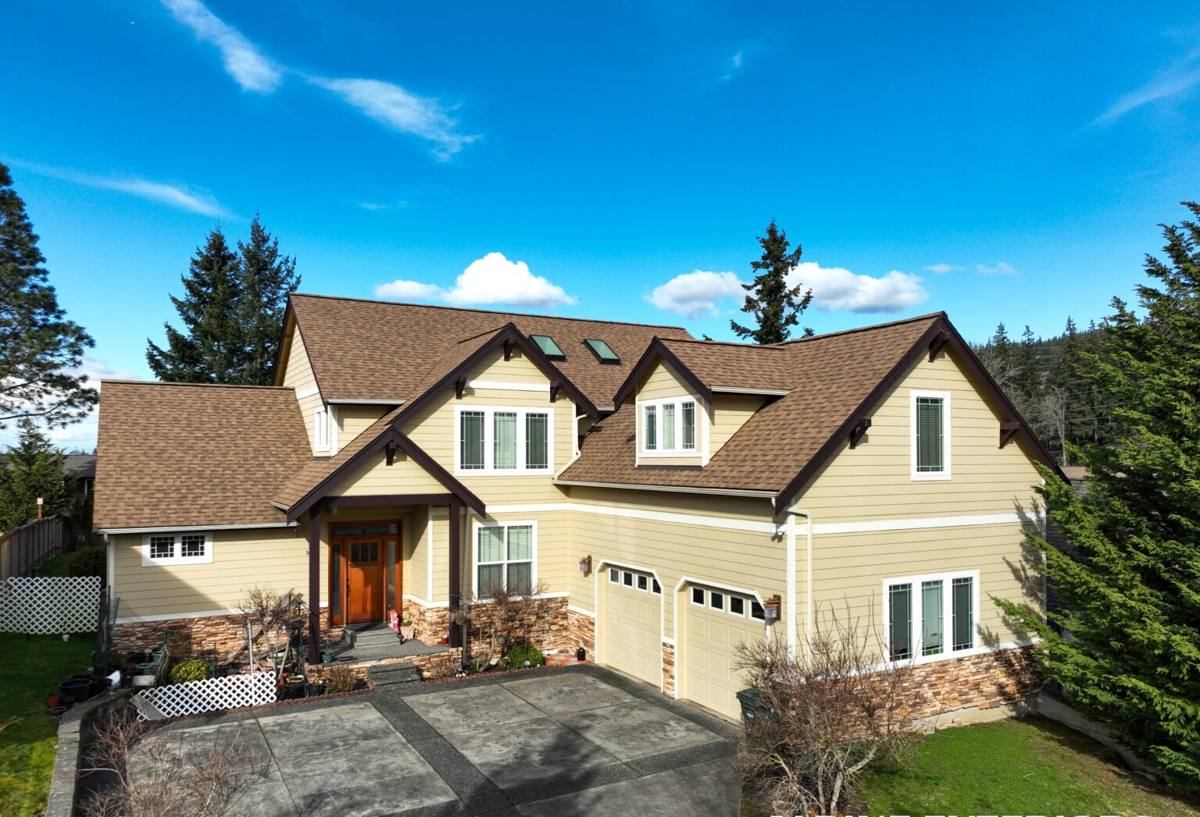
What a Correct Siding Replacement Involves
Replacing siding isn't just removing old boards and nailing up new ones. On a coastal property, the work that happens before the new siding goes on is often what determines whether the job lasts fifteen years or fifty.
Tear-Off and Inspection
Once the old siding comes off, we inspect the sheathing and framing underneath for rot, soft spots, and prior water intrusion. This is frequently the first time in decades anyone has actually looked at what's behind the wall. On older Anacortes homes, especially those close to the water, it's common to find some degree of moisture damage that wasn't visible from the outside.
Weather-Resistive Barrier
A correctly installed water-resistive barrier (house wrap or equivalent) is the layer that protects your wall assembly if any water does get past the siding. It needs to be installed with proper overlaps, sealed penetrations, and integrated flashing at every window, door, and horizontal trim break — not just stapled up and covered over.
Flashing at Every Transition
Windows, doors, roof-to-wall intersections, and deck ledgers are where siding failures start. Flashing has to shed water outward and downward at every one of these points. This is detail work, and it's the single most common place where corners get cut on a siding job.
Fastening and Clearances
Fiber cement siding has specific fastener requirements — corrosion-resistant nails or screws, correct spacing, and correct penetration depth. On Fidalgo Island specifically, we also pay close attention to ground clearance and clearance from roof lines, decks, and grade, since siding installed too close to the ground or to standing moisture stays wet longer and invites both rot and moss growth.
Why We Install Only James Hardie Fiber Cement
We've made a deliberate decision to install James Hardie fiber cement siding exclusively, and we don't install vinyl, LP SmartSide, or other fiber cement brands like Cemplank or Allura. That's not a marketing position — it's a standard we hold because of what we've seen play out on coastal homes over time.
Fiber cement as a category resists the two things that do the most damage on Fidalgo Island: moisture absorption into the substrate and long-term degradation from salt exposure. James Hardie's HardieZone system specifically engineers products for regional climate conditions, and their HZ5 line is built for the wetter, more marine-influenced climates found in the Pacific Northwest. That's a meaningful distinction from generic fiber cement or engineered wood products that aren't climate-zoned at all.
James Hardie siding is non-combustible, which matters for insurance and for long-term peace of mind, and it holds paint and factory finish far longer than wood-based alternatives because the substrate itself doesn't swell, warp, or absorb water the way wood fiber products can. The ColorPlus factory finish process bakes color onto the board under controlled conditions, which produces more consistent, longer-lasting color than field-applied paint — an advantage that matters on a home getting hit with salt air and UV year-round.
We also stand behind Hardie's warranty structure, which is transferable and backed by a manufacturer with a long track record in exactly this climate. When we put a product on a home, we want to be confident it will still be doing its job in twenty or thirty years without the homeowner needing to think about it. That's the bar we hold every material to, and it's why we don't compromise on it.
Siding Material Comparison for Coastal Skagit County Homes
| Factor | James Hardie Fiber Cement | Vinyl | LP SmartSide / Engineered Wood |
|---|---|---|---|
| Moisture resistance | Excellent — cement-based, doesn't absorb and swell | Good surface resistance, but seams and expansion gaps can let water track behind panels | Vulnerable if the wood substrate's protective coating is compromised or damaged |
| Salt air performance | Engineered for marine climates in HZ5 zoning | Can become brittle and discolor faster under UV and salt exposure | Wood fiber core is more susceptible to long-term degradation near salt water |
| Fire resistance | Non-combustible | Combustible, can melt or warp under heat | Combustible, wood-based |
| Finish longevity | Factory-baked ColorPlus finish, resists fading | Color molded in but can chalk and fade over time | Field or factory paint, requires more diligent maintenance |
| Moss and algae resistance | Cement surface doesn't feed organic growth the way wood fiber can | Resistant to growth itself but seams trap debris and moisture | Wood-based surface is more hospitable to moss and mildew if finish fails |
Our Process for Fidalgo Island Projects
Every siding replacement follows the same basic sequence, but the details we pay closest attention to are shaped by working this specific area repeatedly.
- On-site inspection and assessment of existing siding, trim, and any visible moisture damage or moss buildup
- Written estimate that outlines material, labor, tear-off, disposal, and any sheathing repair contingencies
- Full tear-off with sheathing inspection before anything new goes up
- Repair or replacement of any damaged sheathing or framing found underneath
- Installation of water-resistive barrier with proper overlaps and sealed penetrations
- Flashing installed at every window, door, and horizontal trim transition
- James Hardie fiber cement installation per manufacturer fastening and clearance specifications
- Final walkthrough covering caulking, trim details, and site cleanup
Why Local Experience on Fidalgo Island Matters
A crew that has worked homes across Anacortes and the surrounding island knows which sides of a house typically take the worst weather, which older neighborhoods tend to have specific sheathing or framing issues, and how moss patterns show up differently depending on tree cover and sun exposure. That's not something you can pick up from a manufacturer's install manual alone — it comes from doing the work here, repeatedly, and paying attention to what holds up and what doesn't.
Hiring a contractor unfamiliar with coastal Skagit County conditions is a real risk. A crew used to installing in a dry inland climate may not think twice about clearances, flashing details, or fastener corrosion resistance that are non-negotiable here. The result shows up years later as premature failure, and by then it's a much bigger repair than it needed to be.
What to Ask Any Siding Contractor Before Hiring
- Are you licensed and insured to work in Washington State, and can you provide proof?
- What siding material do you install, and why did you choose it over the alternatives?
- How do you handle flashing at windows, doors, and roof-to-wall transitions?
- What happens if you find rot or moisture damage once tear-off begins?
- Is your warranty coverage manufacturer-backed, and is it transferable if the home is sold?
Cost Factors for Fidalgo Island Siding Replacement
Siding replacement pricing varies based on several factors specific to each home, and we're glad to walk through the specifics during an on-site estimate rather than quote broad numbers that don't reflect your actual project. In general, cost is driven by the total square footage of siding, the complexity of the home's trim and architectural details, the condition of the sheathing once old siding is removed, and the amount of tear-off and disposal involved. Homes with more window and door openings require more flashing and trim work, which adds labor time. Homes that turn out to have hidden moisture damage will require sheathing repair before new siding can go on, which is impossible to price precisely until tear-off begins — we account for this with a clear contingency conversation up front, not surprise change orders.
Maintenance After Installation
One of the practical advantages of switching to James Hardie fiber cement on a Fidalgo Island home is how little ongoing maintenance it demands compared to wood-based sidings. It doesn't need repainting on the same cycle wood does, it won't swell or rot from repeated wetting, and its surface doesn't feed moss growth the way porous wood products can. That said, no siding is entirely maintenance-free in this climate. We recommend an annual visual check for any caulking that needs attention, especially around trim and penetrations, and periodic gentle cleaning to keep moss and algae from establishing on shaded sides of the house or near ground level.
If your Fidalgo Island home's siding is showing its age, or you just want an honest opinion on what condition it's really in, we're happy to take a look. Use the form below to request a free, no-pressure estimate.