 Anacortes Siding
 Building Decks for Similk Beach's Marine Environment
Similk Beach sits close enough to the water that every exterior structure on a property deals with salt-laden air, wind-driven rain off Skagit Bay, and long stretches of gray, damp weather that keep wood and composite surfaces wet for days at a time. A deck built here isn't just outdoor furniture attached to the house — it's a structure that has to shed water fast, resist corrosion in every metal fastener, and stand up to moss and algae growth that starts almost as soon as the fall rains settle in. A deck design that works fine in a drier inland part of Skagit County can fail early at Similk Beach if it wasn't planned with the coastline in mind.
We've built and repaired decks throughout the Anacortes area, including waterfront and near-waterfront lots like the ones around Similk Beach, and the pattern is consistent: decks that were framed, fastened, and finished for "average" Pacific Northwest weather age noticeably faster here than a few miles inland. The fixes aren't exotic — they're about picking the right hardware, the right ventilation, and the right maintenance schedule for a salt-air, high-rainfall site.
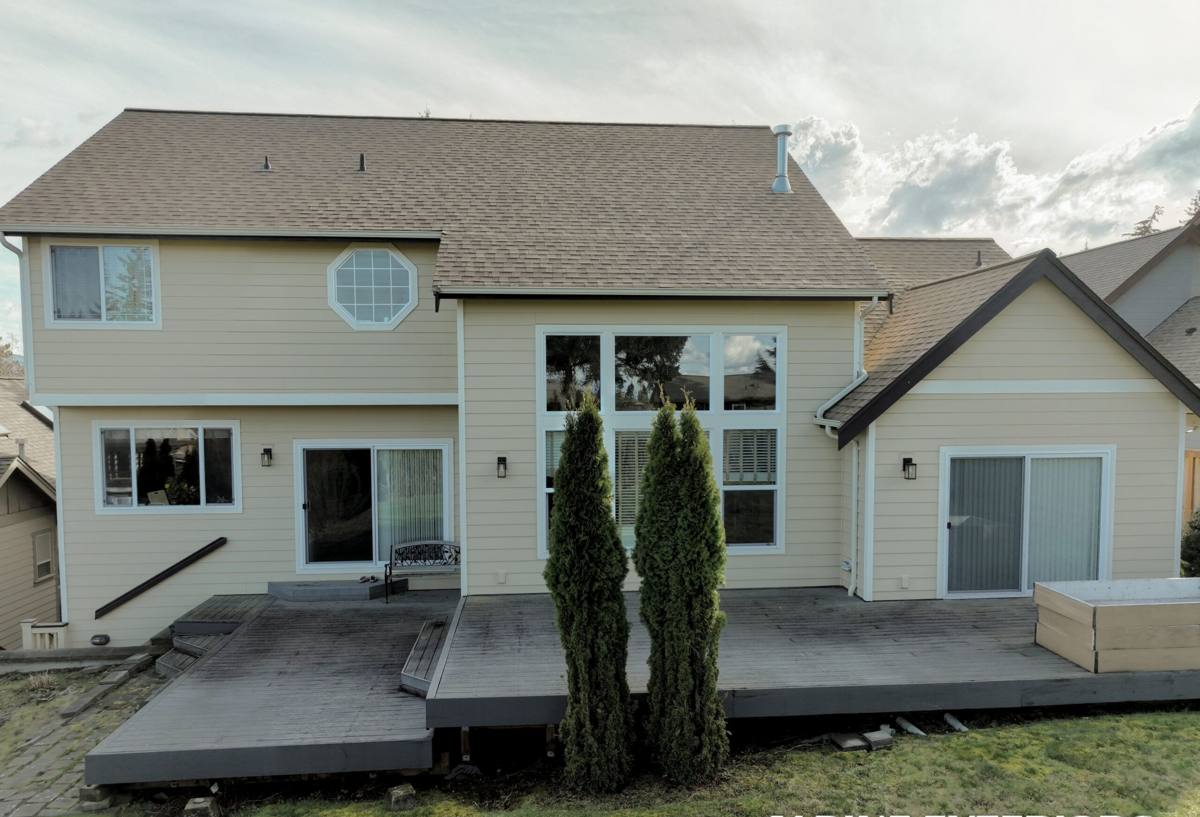
What Salt Air Does to a Deck Over Time
Salt air doesn't just smell like the beach — it's corrosive. Airborne salt settles on exposed metal and accelerates rust and pitting, especially on fasteners, brackets, and hardware that aren't rated for coastal exposure. On a standard-grade deck, this shows up first as rust streaks bleeding out around screw heads and joist hangers, then eventually as weakened connections at the framing level, which is a structural issue, not just a cosmetic one.
This is why hardware selection matters more here than in most parts of Skagit County. We spec stainless steel or heavy-duty coated fasteners and connectors rated for coastal or marine-grade use on Similk Beach projects, even though it costs more upfront than standard galvanized hardware. The difference shows up in year five and year ten, not on day one — which is exactly why it's easy for a builder unfamiliar with the area to under-spec it.
Where Corrosion Shows Up First
- Deck screws and structural screws at the board-to-joist connection
- Joist hangers and hurricane ties at the ledger and beam
- Railing post brackets and any exposed bolts
- Stair stringer hardware, which stays wetter longer due to less airflow
Driving Rain and Drainage: The Other Half of the Problem
Skagit County gets a lot of rain, but at Similk Beach it often arrives sideways, pushed by wind off the water. That changes how a deck needs to be built. Flat, poorly sloped decking traps water in the board grooves and around fastener heads instead of shedding it. Ledger boards that aren't properly flashed let wind-driven rain track behind the siding and into the house framing, which is one of the most expensive mistakes to fix after the fact because it's hidden until rot shows up.
A deck built for this location needs a slight, consistent slope away from the house, proper ledger flashing with a water-resistant barrier behind it, and gaps between boards sized to let water and debris pass through rather than pool. None of this is unusual construction practice — it's just practice that has to be followed carefully rather than treated as optional, because the consequences of skipping it show up faster near the water.
Choosing the Right Decking Material
There's no single "best" decking material for every home — it depends on budget, maintenance tolerance, and how close the deck sits to salt spray and shade. Here's how the common options actually compare for a Similk Beach setting:
| Material | Salt Air / Moisture Behavior | Maintenance | Typical Lifespan Here |
|---|---|---|---|
| Pressure-treated wood | Good if properly sealed and refinished; end grain and fastener holes need attention | Annual cleaning, resealing every 1-2 years | 15-20 years with upkeep |
| Cedar | Naturally moisture- and insect-resistant, but still needs finish protection near salt air | Cleaning plus periodic oil or stain | 15-25 years with upkeep |
| Composite decking | Doesn't rot or absorb moisture; some boards can show mineral staining from salt residue if never rinsed | Periodic washing, no sealing or staining | 25-30+ years, manufacturer-dependent |
| PVC decking | Fully moisture-proof, very stable in wet/dry cycling | Low — occasional washing | 25-30+ years, manufacturer-dependent |
Composite and PVC decking tend to do well at Similk Beach specifically because they don't absorb moisture into the board itself, which removes one of the main failure points in a salt-air, high-rain environment. That said, plenty of homeowners still want the look and feel of real wood — that's a legitimate choice, it just means committing to a real maintenance schedule rather than a "seal it once and forget it" approach.
Framing and Substructure: Where the Real Longevity Comes From
The decking surface is what everyone sees, but the framing underneath is what determines how long the deck actually lasts. For Similk Beach builds, we pay particular attention to:
Ledger Attachment
The ledger board connects the deck to the house and is the single most common source of long-term water damage when it's flashed incorrectly. It needs a continuous water-resistant barrier, correct flashing that directs water out and away from the wall, and fasteners rated for the exposure.
Joist Spacing and Post Footings
Wider joist spacing can work with some composite products but not others — manufacturer specs vary, and using the wrong spacing voids warranties and can cause boards to feel spongy over time. Post footings need to sit below the frost line and be sized for the soil conditions on the lot, which can vary even within a small area like Similk Beach depending on how close the site sits to the water and how the ground drains.
Ventilation Underneath
A deck built low to the ground with poor airflow underneath stays damp longer after every rain, which speeds up rot in wood framing and creates a better environment for moss and mold. Where grade and code allow, we build in enough clearance and skirting design to keep air moving underneath.
Moss, Algae, and the Maintenance Reality
Moss season in this part of Skagit County isn't a minor annoyance — it's a near-guaranteed part of deck ownership if the surface holds moisture. Moss and algae growth make decking surfaces slippery, which is a real safety issue on stairs and near door thresholds, and left unchecked they hold moisture against the board surface, which shortens the life of wood decking in particular.
The fix isn't complicated, but it does need to be routine:
- Sweep debris and organic buildup off the deck regularly through fall and winter, not just once a season
- Keep gutters and downspouts near the deck clear so runoff isn't dumping extra water onto the surface
- Trim back overhanging branches and vegetation that keep the deck in shade and slow drying
- Wash the surface (and re-seal wood decking) on a schedule matched to the material, not "whenever it looks bad"
- Check fastener heads and hardware annually for early rust or lifting
Our Process for a Similk Beach Deck Project
We start with a site visit, because two lots a few hundred feet apart at Similk Beach can have different wind exposure, drainage, and sun/shade patterns that affect material and design decisions. From there:
- We assess the site, existing structure (if replacing a deck), and how exposed the location is to wind-driven rain and salt spray
- We walk through material options honestly, including the real maintenance trade-offs of wood versus composite versus PVC for this specific location
- We handle permitting and design to current code, including footing depth and railing requirements
- We build with coastal-appropriate hardware, correct ledger flashing, and drainage sloped away from the house
- We walk the finished deck with you and explain the maintenance schedule specific to the materials chosen
We don't upsell materials a homeowner doesn't need, and we don't quietly downgrade hardware to save money on the bid — both of those show up as problems later, and at Similk Beach they show up faster than they would inland.
Why Local Experience at Similk Beach Matters
A contractor who mostly builds decks away from the water can still do competent framing and finish work, but they may not default to marine-grade hardware, proper ledger flashing for wind-driven rain, or a material recommendation that accounts for salt exposure — because those aren't daily concerns on most inland jobs. A crew that regularly works the Anacortes waterfront and communities like Similk Beach treats those details as standard practice, not an upgrade.
That local knowledge also extends to permitting and site conditions — knowing what Skagit County requires for footing depth and railing code, and having a realistic sense of how a given lot drains and how exposed it is to weather off the water, before the first post hole is dug.
Get a Straightforward Estimate
If you're planning a new deck or replacing one that's showing its age at Similk Beach, we're happy to take a look and give you an honest read on materials, scope, and cost — no pressure, no upsell. Use the form below to request a free estimate.