 Anacortes Siding
 Why West Anacortes Homes Are Turning to Metal Roofing
West Anacortes sits close enough to the water that homes here take a different kind of weather beating than roofs just a few miles inland. Salt-laden air off the Guemes Channel and the Strait works into every seam and fastener a roof has. Add Skagit County's long wet season, near-constant moss pressure under the fir and cedar canopy common in this part of town, and driving rain that comes in sideways off the water during winter storms, and you've got a roofing environment that punishes weak materials and sloppy installation fast.
Metal roofing has earned its reputation in this kind of climate because it handles the two things that wear out other roofing systems fastest here: standing water and organic growth. A correctly installed metal roof sheds rain immediately, doesn't give moss the rough, granulated surface it needs to grab onto, and — when the right alloy and coating are chosen — shrugs off salt exposure that will pit or stain lesser materials over time.
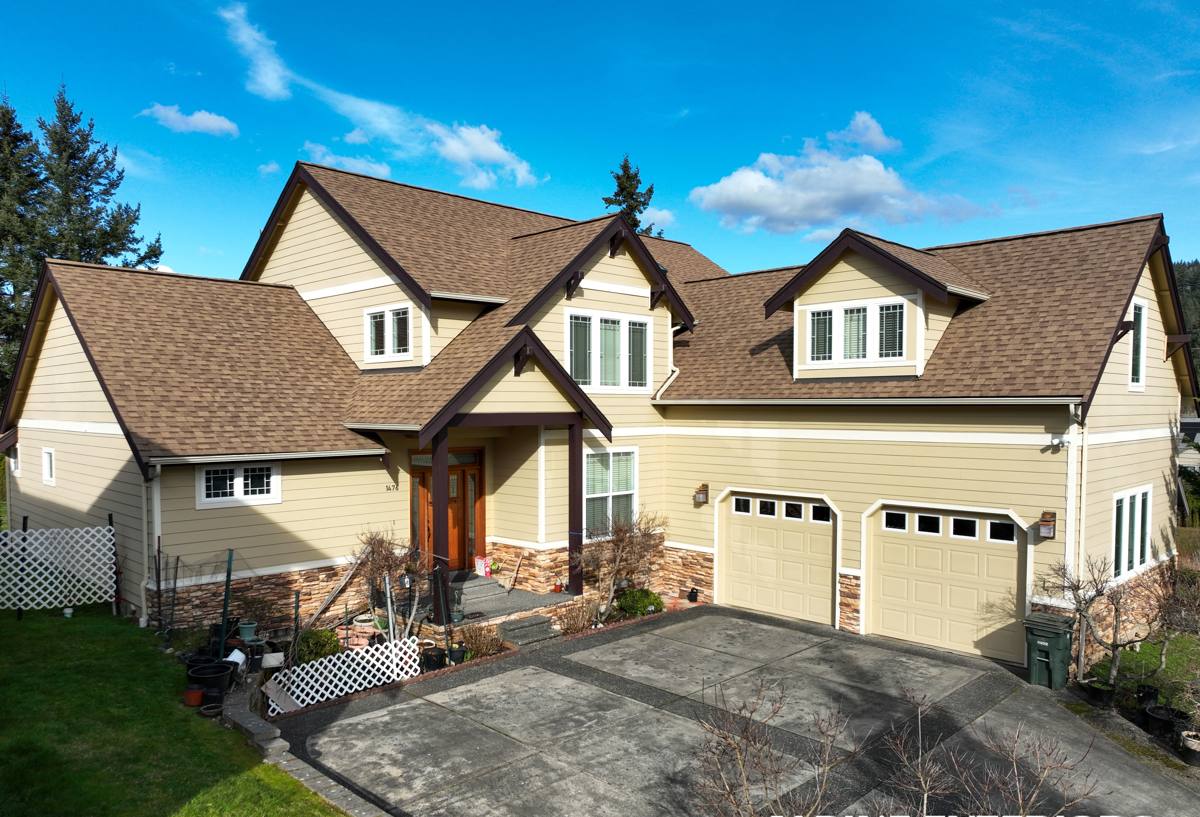
What Salt Air and Coastal Exposure Actually Do to a Roof
It's worth understanding the mechanism, not just the outcome. Salt in the air is hygroscopic — it pulls moisture out of the atmosphere and holds it against whatever surface it lands on. On a roof, that means fasteners, flashing, and any exposed metal edges stay damp longer than they would a few miles inland, even on days that feel dry. Over years, that constant low-grade moisture accelerates corrosion on unprotected steel and can degrade some coatings faster than their inland warranty life would suggest.
This is why panel and coating selection matters more here than it does for a roof going up in, say, Sedro-Woolley. It's not that metal roofing is a bad fit for the coast — it's one of the best-suited materials there is — but the specific product and finish need to be chosen with marine exposure in mind, not just picked off a standard order sheet.
What This Means in Practice
- Fastener material and coating need to match or exceed the panel's corrosion resistance — mismatched metals accelerate galvanic corrosion at every screw point
- Cut edges and field-cut panel ends need proper edge treatment, since raw cut metal is the most vulnerable point on any panel
- Flashing details at valleys, walls, and penetrations need to be sealed and lapped correctly the first time — coastal humidity doesn't forgive shortcuts the way a drier climate might
- Ventilation matters as much as the roof surface itself, since trapped moisture under the deck causes problems no amount of good roofing material can offset
Panel and Coating Options: What We Actually Recommend
Not every metal roofing product performs the same way in a marine environment. Here's how the common options compare for a West Anacortes application:
| Panel Type | Coastal Performance | Typical Use Case |
|---|---|---|
| Standing seam steel (concealed fastener) | Excellent — no exposed screw heads to corrode or back out over time | Primary roof surfaces, especially on homes with water-facing exposure |
| Exposed-fastener steel panels | Good, but fastener gaskets and screws will need periodic inspection and eventual replacement | Budget-conscious projects, outbuildings, secondary roof planes |
| Aluminum standing seam | Very good — naturally corrosion-resistant, doesn't rely on a coating layer for rust protection | Homes with direct, unobstructed water exposure or a documented history of coating failure with steel |
| Stone-coated steel | Fair to good — the coating adds a protective layer, but any chip or cut exposes bare steel underneath | Homeowners wanting a shingle or shake profile with metal's durability |
For most West Anacortes homes, we lean toward standing seam steel or aluminum with a high-performance coating system, because the concealed-fastener design removes the single biggest long-term maintenance item — exposed screws — from the equation entirely. That said, the right choice depends on the home's exposure, roof pitch, and budget, and we'll walk through the real trade-offs rather than steering everyone toward the same product.
Getting the Installation Details Right
A metal roof's performance in this climate is decided as much by the installation as by the product. We've seen good panels fail early because of installation shortcuts that would be forgivable in a milder climate but aren't here.
The Details That Matter Most
- Underlayment: A synthetic, high-temp underlayment with proper ice-and-water membrane at valleys, eaves, and penetrations — this is the roof's backup system if wind-driven rain ever gets past the panel seams
- Fastener spacing and torque: Over-driven or under-driven screws are one of the most common causes of early leaks on exposed-fastener systems; concealed-fastener systems remove this variable but still need correct clip spacing for thermal movement
- Flashing at penetrations: Vent pipes, chimneys, and skylights need flashing detailed for metal roofing specifically — asphalt-shingle flashing details don't transfer directly
- Panel expansion allowance: Metal expands and contracts with temperature swings; panels and clips need to be installed to allow for that movement or you get oil-canning and stress at the fasteners
- Edge and eave detailing: Drip edges and eave trim need to direct water fully off the roof edge, not behind gutters or into fascia, especially given how much rain this area sees over a winter
Moss, Debris, and Tree Cover in West Anacortes
Much of West Anacortes sits under a mix of mature conifers and deciduous trees, which means needle and leaf litter is a year-round fact of life for most roofs in the area. Moss spores travel on that debris and on the near-constant moisture the Pacific Northwest provides for a good chunk of the year. Asphalt shingles give moss a rough surface to root into; metal doesn't offer that same foothold, which is one of the biggest practical advantages of switching.
That said, metal roofing isn't maintenance-free in a tree-heavy setting. Debris can still accumulate in valleys and against any obstruction on the roof, and standing debris holds moisture against the panel surface even if moss itself can't take root the same way. Keeping valleys and gutter lines clear a couple of times a year — especially after fall leaf drop — goes a long way toward keeping a metal roof performing the way it's designed to.
Our Installation Process
- On-site assessment: We look at roof pitch, existing decking condition, ventilation, tree cover, and exposure to prevailing wind and rain direction before recommending a panel type
- Tear-off and deck inspection: Any soft or water-damaged decking gets identified and addressed before new material goes down — covering up a bad deck is how roofs fail early
- Underlayment and ice-and-water membrane installation: Applied per the panel manufacturer's specifications, with extra attention at valleys and low-slope transitions
- Panel installation: Panels and clips or fasteners installed to spec, with correct overlap, seaming, and expansion allowance
- Flashing and trim: All penetrations, valleys, and edges detailed and sealed
- Final walkthrough: We review the finished roof with the homeowner and go over any maintenance items specific to the home's setting
What Metal Roofing Costs and What Drives the Price
Metal roofing carries a higher upfront cost than asphalt shingles, but the calculation changes when you factor in lifespan and reduced maintenance, particularly in a moss- and salt-exposed setting where shingles tend to need earlier attention. The exact number for any given home depends on several factors:
| Cost Factor | Why It Matters |
|---|---|
| Panel type (exposed-fastener vs. standing seam vs. aluminum) | Concealed-fastener and aluminum systems cost more upfront but reduce long-term maintenance |
| Roof complexity (valleys, dormers, penetrations) | More cuts, flashing, and seams mean more labor and material |
| Existing deck condition | Rot or soft decking found during tear-off adds repair cost before the new roof goes on |
| Roof pitch and access | Steep or hard-to-access roofs take longer and require more safety setup |
| Coating and finish selection | Higher-grade coatings built for marine exposure cost more but extend service life near the water |
We'll give a written, itemized estimate that breaks these factors down for your specific roof rather than a flat per-square number that doesn't reflect what's actually driving the cost.
Maintaining a Metal Roof in This Climate
Metal roofing needs far less attention than asphalt shingles, but "low maintenance" isn't "no maintenance," especially this close to the water and under tree cover. A simple annual routine keeps a metal roof performing for decades:
- Clear needle and leaf debris from valleys and against any roof-to-wall transitions
- Check gutters and downspouts are flowing freely, especially before the fall rains ramp up
- Look for any scratched or chipped coating near flashing or fastener points, and touch up promptly — exposed bare metal is where corrosion starts
- Confirm attic or roof ventilation isn't blocked, since trapped moisture undermines even the best roof surface from underneath
- Have fasteners on exposed-fastener systems inspected periodically, since gaskets do wear out over a roof's lifespan
Why Local Installation Experience Matters Here
Metal roofing done right in West Anacortes isn't the same job as metal roofing done right in a dry inland town. The panel specs, flashing details, and coating choices that hold up here are shaped by this specific stretch of Skagit County — the salt exposure off the water, the rainfall totals, and the tree cover that drives moss and debris accumulation. A crew that already works this neighborhood knows which roof orientations catch the worst of the winter storms, which coating systems have actually held up under real salt exposure over years rather than just on paper, and where the common installation shortcuts tend to show up as leaks two or three years down the road.
That local knowledge is the difference between a metal roof that looks right on installation day and one that's still performing the way it should a decade later.
If you're weighing metal roofing for a home in West Anacortes, we're happy to take a look and give you a straightforward, no-pressure estimate — just fill out the form below.