 Anacortes Siding
 Why March Point Roofs Age Differently Than Roofs Inland
March Point sits out on the water, surrounded by Fidalgo Bay and Padilla Bay, which means homes here take a different kind of weather beating than a house twenty minutes inland in Mount Vernon or Burlington. The salt-laden air off the water accelerates corrosion on exposed metal, the wind off the bay drives rain sideways into roof edges and valleys, and the shade from mature evergreens combined with near-constant Skagit County moisture keeps roof surfaces damp long after a storm has passed. None of that is dramatic on its own, but stacked together over a Pacific Northwest winter, it adds up to roofs that show wear years before a manufacturer's warranty would suggest they should.
An asphalt shingle roof installed the same way you'd install one in a dry inland climate will underperform out here. The fasteners, underlayment, ventilation, and flashing details all need to account for the fact that this roof will spend a good chunk of the year wet, salted, and shaded. That's the difference between a roof that looks tired at year twelve and one that's still doing its job at year twenty-five.
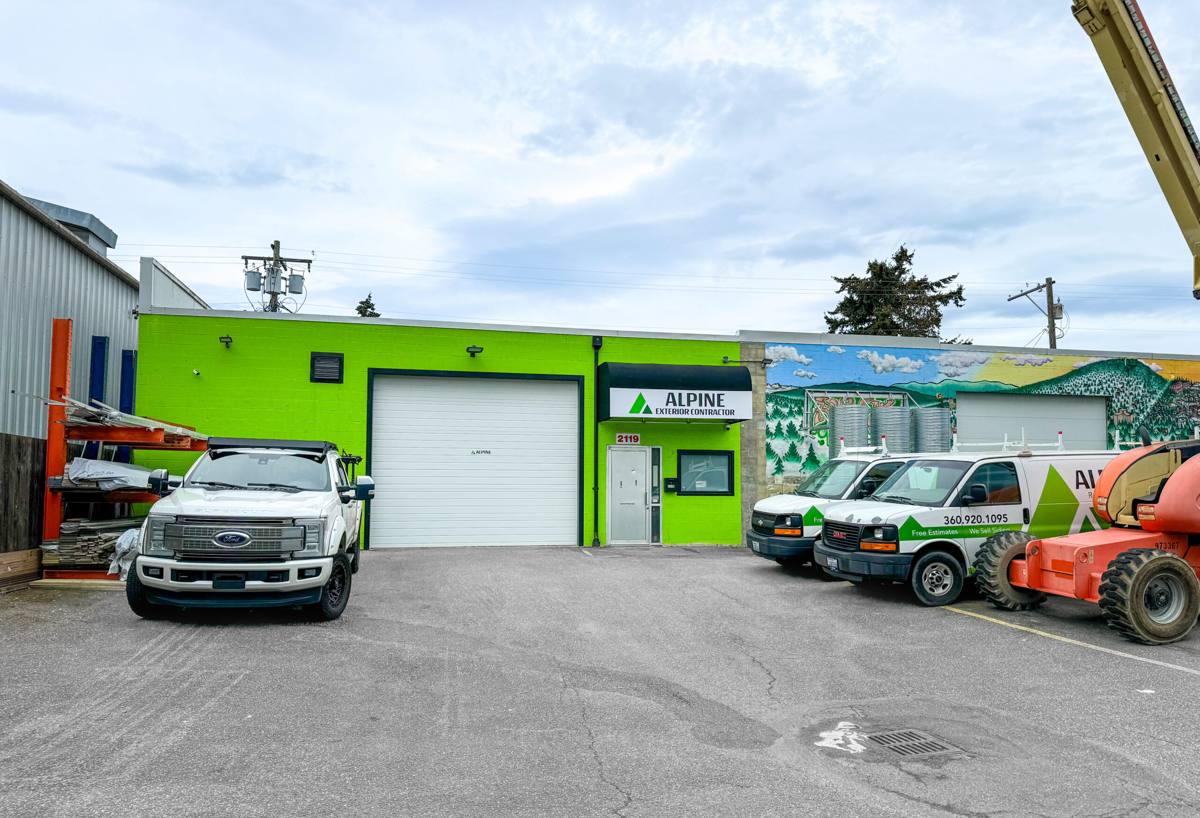
What Salt Air, Driving Rain, and Moss Actually Do to a Roof
Salt Air and Corrosion
Salt in the air doesn't just affect houses right on the water — it travels on wind and settles on any exposed metal, including roofing nails, flashing, vent caps, and gutter hardware. Once corrosion starts on a fastener or a piece of flashing, it's not cosmetic. A corroded nail loses holding power, and failed flashing is one of the most common sources of roof leaks we find on older March Point homes.
Driving Rain
Wind off the bay pushes rain into places a calm-weather roof design doesn't need to worry about — up under shingle tabs, into valley intersections, and around chimney and vent penetrations. A roof built for this location needs tighter attention to overlap, fastening pattern, and flashing at every transition, not just a shingle laid to minimum code.
Moss and Prolonged Moisture
Skagit County's long wet season, combined with shade from surrounding trees, means many March Point roofs stay damp for extended stretches. That's exactly the environment moss and algae need to establish. Moss doesn't just look bad — its root structure lifts shingle edges, holds water against the roof deck, and speeds up granule loss. Left untreated for a few seasons, a moss-covered roof section can fail well ahead of the rest of the roof.
Choosing the Right Shingle for This Location
Not every asphalt shingle product is built the same, and for a March Point home the right choice usually comes down to wind rating, algae resistance, and how the shingle is engineered to shed water rather than absorb it.
| Shingle Type | Typical Lifespan | Best Fit for March Point |
|---|---|---|
| 3-tab (standard) | 15-20 years | Budget projects only — lower wind rating and less algae resistance make this a poor match for waterfront exposure |
| Architectural / dimensional | 25-30 years | Our standard recommendation — heavier mat, better wind uplift rating, and available with algae-resistant granules |
| Premium / designer architectural | 30+ years | Worth considering for street-facing elevations or homes wanting a heavier, more dimensional look |
We steer most March Point homeowners toward architectural shingles with algae-resistant (AR) granules — typically copper-infused granules that slow the growth that causes those dark streaks you see on older roofs around the county. It's not a moss-proof guarantee, but it meaningfully slows the growth cycle compared to a standard shingle, and it's a small upcharge relative to the total job cost.
What a Correct Asphalt Shingle Installation Involves
The shingle itself is only part of what determines how a roof performs in this climate. The layers underneath and the details around penetrations matter just as much, and they're the parts a homeowner can't see once the job is done — which is exactly why they're worth understanding before you hire anyone.
- Deck inspection and repair — any soft, delaminated, or water-damaged sheathing gets replaced before a new shingle ever goes down. Roofing over a compromised deck just hides a bigger problem.
- Ice-and-water shield at vulnerable zones — eaves, valleys, and roof-to-wall transitions get a self-adhering waterproof membrane, not just felt, because these are the spots where wind-driven rain finds its way in first.
- Synthetic underlayment across the field — a water-resistant barrier under the shingles that adds a second line of defense if wind ever lifts a shingle edge.
- Corrosion-resistant fasteners and flashing — given the salt air, we don't cut corners here. Proper-gauge, corrosion-resistant nails and step/counter flashing at walls, chimneys, and skylights.
- Correct nailing pattern — placement and nail count matter for wind uplift rating; this is one of the most common shortcuts on rushed jobs and one of the least visible until a storm exposes it.
- Balanced attic ventilation — intake at the eaves, exhaust at the ridge, sized to the attic volume.
Ventilation and Moisture: The Part Homeowners Don't See
A shingle roof doesn't fail in isolation — what's happening underneath it matters just as much. Poor attic ventilation traps warm, moist air against the underside of the roof deck, which in a climate as damp as ours can lead to condensation, premature deck rot, and shortened shingle life from the inside out. We check existing ventilation as part of every March Point roofing estimate, because installing a new shingle over an under-ventilated attic just resets the clock on the same problem. Balanced intake-and-exhaust ventilation also helps regulate attic temperature in summer and reduces the freeze-thaw stress that contributes to ice damming during cold snaps.
Our Process From Estimate to Cleanup
We keep the process straightforward because a roof replacement is disruptive enough without added confusion.
- On-site inspection. We walk the roof, check the attic, and look at flashing, vents, and any problem areas you've noticed — like a stain on a ceiling or granules collecting in a gutter.
- Written estimate. A clear scope of work and price, no vague allowances, so you know exactly what's included before you decide.
- Scheduling around the weather. Given how much rain we get, we plan tear-off and dry-in carefully so your home isn't left exposed if a system rolls in off the water.
- Tear-off and deck inspection. Old material comes off, the deck gets inspected, and any needed repairs are addressed before anything new goes down.
- Installation. Ice-and-water shield, underlayment, flashing, shingles, and ventilation components installed to manufacturer specification and local code.
- Cleanup and magnetic sweep. Job site cleared of debris and swept for stray nails before we consider the job done.
Maintenance Checklist for March Point Homeowners
A correctly installed roof still benefits from a little seasonal attention, especially given how much moss and debris this area sees.
- Clear gutters and downspouts at least twice a year — clogged gutters back water up under the shingle edge
- Look for moss or dark algae streaks and address early growth before it spreads across a slope
- Trim back tree branches that shade the roof and drop needles or leaves into valleys
- After a significant windstorm, do a visual check from the ground for lifted or missing shingles
- Check attic ventilation isn't blocked by insulation stuffed into soffit vents
- Have flashing around chimneys, skylights, and vent pipes inspected every few years, since these are the most common leak points
What Drives the Cost of a Reroof Here
Every roof is different, but a few factors tend to move the price up or down more than anything else on March Point homes specifically.
| Factor | Why It Matters Here |
|---|---|
| Roof pitch and access | Steeper roofs and limited ground access near the water take longer and require more safety setup |
| Deck condition | Older homes with moisture history often need sheathing replacement, which isn't visible until tear-off |
| Number of penetrations | Chimneys, skylights, and multiple vent stacks each add flashing labor and material |
| Shingle tier chosen | Standard vs. architectural vs. algae-resistant granule upgrades shift material cost |
| Ventilation upgrades | Adding or correcting ridge and soffit ventilation adds scope but pays off in roof longevity |
We don't quote a roof over the phone based on square footage alone — too many of these factors only show up once we're actually on the roof and in the attic. What we can promise is a written estimate that spells out exactly what's driving the number, so there are no surprises mid-project.
Why Hiring a Crew That Already Works This Area Matters
A roofer who mostly works dry, inland neighborhoods and occasionally takes a job out toward the water isn't necessarily wrong about roofing — they're just less likely to default to the details that matter here: the extra ice-and-water coverage, the corrosion-resistant fasteners, the ventilation check that catches a problem before it becomes a deck replacement. A crew that regularly works March Point and the surrounding Anacortes waterfront treats those choices as standard practice, not upgrades, because we've seen firsthand what happens to a roof that skips them.
If you're weighing a repair against a full replacement, or just want a straight answer on how much life is left in your current roof, we're happy to take a look. Reach out for a free, no-pressure estimate using the form below — we'll walk the roof, tell you what we actually see, and give you a clear, written number to work from.