 Anacortes Siding
 Board & Batten in a Waterfront Microclimate
Flounder Bay homes sit close enough to the water that the siding on the house is doing real work every single day, not just holding up appearances. Board and batten has become a popular choice out here because the vertical lines read as clean, modern, and coastal without looking trendy — but the style only matters if the material underneath can survive where it's installed. On Fidalgo Island, that means salt-laden air, wind-driven rain that hits walls sideways during winter storms, and a long stretch of the year where shaded, damp siding never fully dries out.
We install board and batten siding for Flounder Bay homeowners using James Hardie fiber cement exclusively. Not because it's the only product that can physically be milled into a board and batten profile, but because it's the only one we've found that holds that profile, that paint finish, and that seam integrity for decades in this specific environment without turning into a maintenance project.
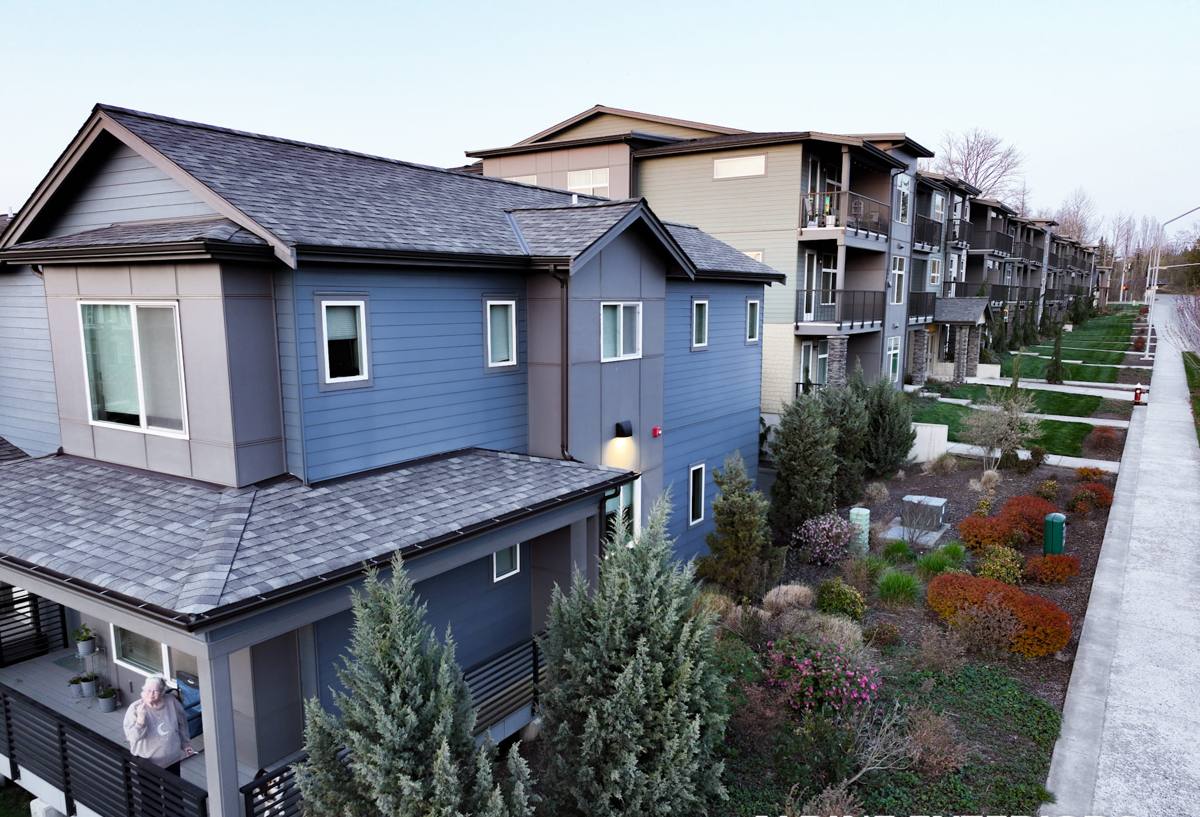
What Flounder Bay's Climate Actually Does to Siding
Salt Air
Homes near the water in Skagit County deal with airborne salt that settles on every exterior surface. Over time, salt exposure accelerates corrosion in metal fasteners and trim, and it degrades cheaper paint finishes faster than the same product would fail a few miles inland. Board and batten siding has more exposed seams and more fastener points per square foot than plain lap siding, so the fastener and finish quality matters even more here than on a standard wall.
Driving Rain
Storms off the Strait don't just fall on a house — they push water horizontally into every gap, joint, and batten seam. Vertical siding systems rely on the battens and the underlying panel joints to shed that water correctly. If those joints aren't detailed with the right flashing and gap tolerances, driving rain will find its way behind the siding, and once water gets behind board and batten, it tends to stay there.
Moss Season
Anacortes gets a long wet season, and shaded north- and west-facing walls near mature trees or dense landscaping can stay damp for months at a stretch. That's exactly the environment moss and algae need. Siding that absorbs moisture — or that has field-cut edges left unsealed — gives moss something to grab onto and gives moisture a path into the substrate underneath.
What James Hardie Board & Batten Actually Is
"Board and batten" describes the look, not a single product. James Hardie offers two ways to achieve it, and the right choice depends on the home:
- Hardie Artisan Board & Batten Collection — a thicker, dimensional panel purpose-built for this style, with a deeper reveal and a more substantial shadow line. It's the closer match to traditional board and batten proportions.
- HardiePanel Vertical Siding with battens — smooth or stucco-textured panels installed vertically with separate wood or trim battens over the seams, giving more flexibility on batten spacing and width.
Both are fiber cement — a mix of cement, sand, and cellulose fiber — engineered to resist moisture absorption, hold a factory-applied finish, and resist fire, rot, and pest damage. James Hardie's ColorPlus finish is baked on in a controlled factory environment rather than sprayed on site, which matters in a marine climate because it resists the fading and chalking that field-applied paint tends to show first on salt-exposed walls.
Why the Installation Details Matter More Than the Product
Fiber cement board and batten fails in this climate almost exclusively because of installation mistakes, not because the material itself is weak. The product is only as good as the details behind it.
Rainscreen Gap
Vertical siding in a high-rain environment needs a drainage gap behind the panel — a rainscreen — so any water that does get past the battens has somewhere to go besides sitting against the wall. Face-nailing board and batten straight to the wrap without that gap is a shortcut that shows up as trapped moisture years later.
Batten Spacing and Fastening
Battens need consistent spacing over the panel joints, with fasteners landing in framing, not just sheathing. James Hardie publishes specific fastener schedules and clearances for coastal and high-wind zones, and skipping them is one of the more common corner-cutting moves we see on jobs we're called in to fix.
Flashing at Every Transition
Every window, door, roofline, and deck ledger that meets vertical siding is a place where water wants to get behind the wall. Flashing has to be installed in the correct order — under the housewrap on top, over it on the bottom — at every one of those transitions, not just the obvious ones.
Sealed and Primed Cut Edges
Any time a Hardie panel or board is field-cut, that raw edge needs to be primed and sealed before it's closed up. An unsealed cut edge is a moisture entry point and, given the shaded, damp conditions common around Flounder Bay landscaping, it's often where moss gets its first foothold.
Correct Ground and Roof Clearance
Board and batten looks best running close to grade, but manufacturer clearance minimums from soil, decks, and roof lines exist for a reason — splash-back and standing moisture at the bottom edge is where a lot of siding damage starts, regardless of the material.
Comparing Board & Batten Material Options
| Material | Moisture Behavior | Finish Durability in Salt Air | Long-Term Maintenance |
|---|---|---|---|
| James Hardie Fiber Cement | Engineered to resist water absorption and swelling | Factory ColorPlus finish resists fading and chalking | Occasional wash; repaint intervals measured in decades, not years |
| Cedar or Primed Spruce | Absorbs moisture; prone to cupping and checking near water | Field finish weathers faster under salt exposure | Regular refinishing and moisture monitoring |
| Vinyl Board & Batten | Doesn't absorb water, but seams and panels can warp with heat and wind stress | Color is molded-through but can fade and become brittle over time | Low upkeep but limited repairability if damaged |
| LP SmartSide (engineered wood) | Wood-based substrate is more moisture-sensitive than fiber cement | Factory finish performs reasonably but relies on strict edge-sealing | Edge maintenance is critical in wet climates |
This is a general comparison of how these materials tend to behave, not a claim that any of them is unusable — it's why we made the call to standardize on James Hardie for homes in coastal Skagit County conditions like Flounder Bay's.
Our Process for a Flounder Bay Board & Batten Project
- On-site assessment of wall exposure — which elevations take the most driving rain and salt, which stay shaded and slow to dry
- Inspection of existing sheathing and framing for moisture damage before any new siding goes up
- Installation of a proper weather-resistive barrier and rainscreen gap behind the panels
- Panel and batten layout planned around windows, doors, and rooflines to minimize seams in vulnerable areas
- Flashing installed at every penetration and transition, in the correct shingle-lap order
- All field cuts primed and sealed before installation, per manufacturer specification
- Fastening schedule matched to Hardie's coastal/high-wind requirements
- Final walkthrough covering caulking, touch-up paint, and what to expect over the first year
Why Local Installation Experience Matters
A crew that's worked other homes around Anacortes and the surrounding Skagit County waterfront knows which elevations of a Flounder Bay-area home tend to take the worst of the winter storms, where moss pressure builds fastest, and how much clearance to leave given the amount of driving rain this stretch of coastline actually sees in a bad winter. That's not something you get from a spec sheet — it comes from having stood on ladders here through more than one storm season.
It also matters for warranty protection. James Hardie's product warranty is tied to installation meeting their specifications, so a crew that treats those specs as a minimum rather than a suggestion is protecting the homeowner's coverage, not just the look of the finished wall.
What to Expect Long-Term
Installed correctly, James Hardie board and batten siding on a Flounder Bay home should need very little from the homeowner: an occasional gentle wash to keep salt film and organic growth from building up, a visual check after major storms for any loose trim or caulk gaps, and repainting on a timeline measured in decades rather than years thanks to the factory finish. That's the entire point of paying for correct installation up front — it turns siding from a recurring maintenance line item into something you mostly forget about.
If you're weighing board and batten for a home near Flounder Bay, we're happy to walk the property, look at sun and wind exposure elevation by elevation, and put together a straightforward, no-pressure estimate using the form below.