 Anacortes Siding
 Building Decks for Bow's Corner of Skagit County
Bow sits in one of the more exposed pockets of Skagit County — close enough to the water that salt-laden air is a daily fact of life, open enough that wind and driving rain hit decks harder than they do in more sheltered neighborhoods, and shaded enough in places that moss gets a real foothold on any surface that holds moisture. A deck built here has to do more than look good on installation day. It has to shed water, resist corrosion, and keep working through a wet season that runs long by most standards.
We build custom decks for homeowners throughout the greater Anacortes area, and Bow properties come with their own set of demands. This page covers what actually matters for a deck built in this specific climate: the materials that hold up, the structural details that get skipped by crews who don't know the area, and what our process looks like from first visit to final walkthrough.
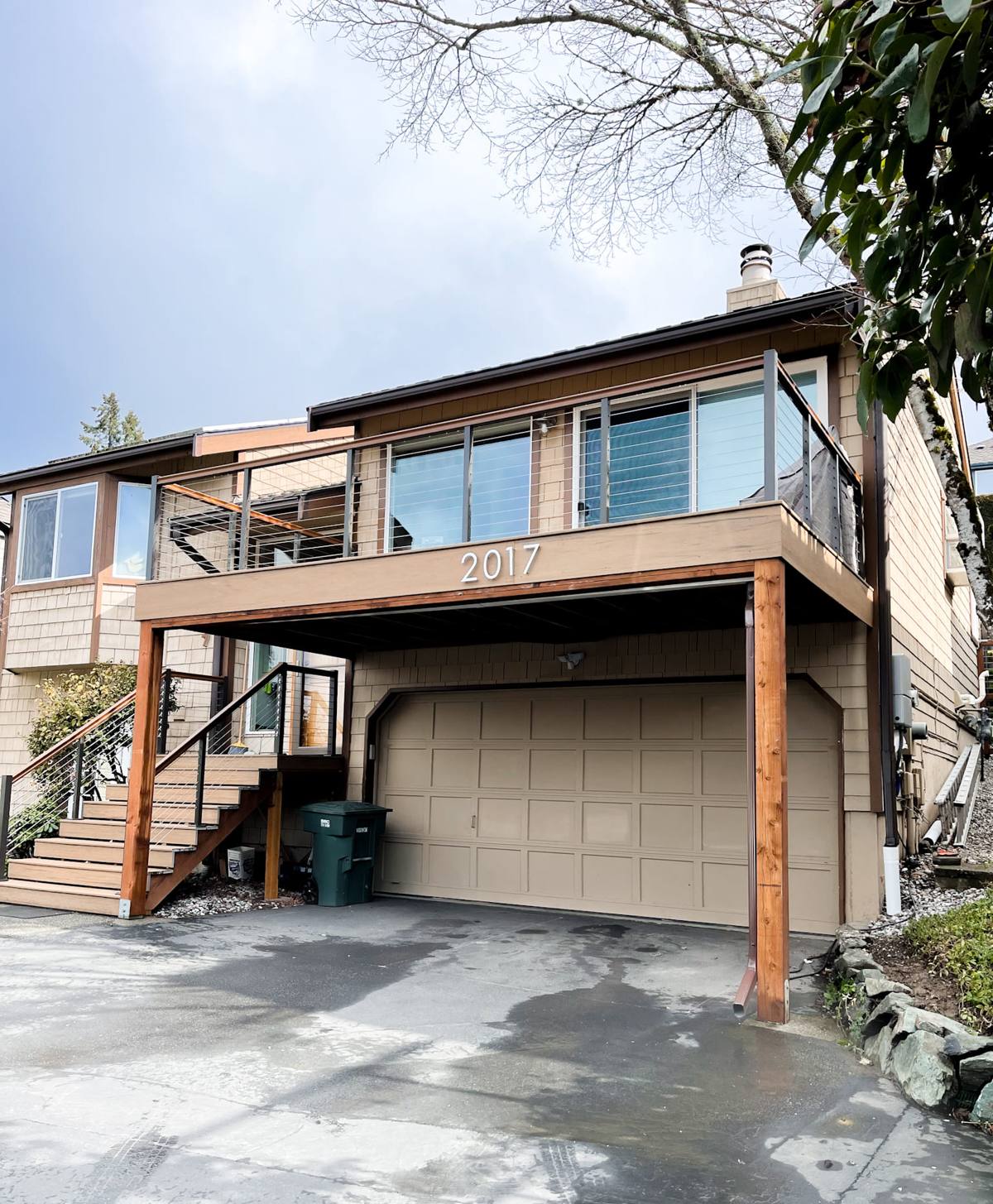
What Salt Air, Rain, and Moss Actually Do to a Deck
It's worth understanding the failure modes before talking about how to prevent them. Most deck problems we get called out to inspect trace back to the same handful of causes, and they show up faster near the water.
Moisture Intrusion at Fasteners and Framing
Every screw hole, ledger connection, and joist end is a place where water can get into wood fiber and stay there. In a climate with frequent, sustained rain rather than short bursts, wood doesn't get the drying-out time it needs between storms. Over a few seasons, untreated or poorly flashed connection points start to soften, and that's where structural problems begin — not in the open field of the decking, but at the joints.
Moss, Algae, and Organic Buildup
A long moss season means any deck surface that stays damp and shaded — under railings, along the house wall, in low corners with poor airflow — will grow something on it. Beyond being slippery and unsightly, moss holds moisture against the decking surface, which accelerates rot in wood products and can dull or discolor composite surfaces if left unaddressed.
Salt Air and Metal Corrosion
Standard zinc-coated fasteners and hardware corrode faster near saltwater exposure. Corroding fasteners lose holding strength, can streak or stain the decking around them, and in structural connectors like joist hangers and ledger bolts, corrosion is a safety issue, not just a cosmetic one.
Choosing Decking Material That Actually Holds Up Here
There's no single "best" decking material — there's the right material for this site, this budget, and this level of exposure. Here's how the common options compare for a Bow property specifically.
| Material | How It Handles This Climate | Maintenance Reality | Typical Lifespan Here |
|---|---|---|---|
| Cedar | Naturally rot- and insect-resistant, but still needs sealing to fight constant moisture and moss; can gray or streak near salt air | Annual or biannual cleaning and re-sealing | 15-20 years with upkeep |
| Pressure-Treated Pine | Budget-friendly and structurally solid, but more prone to cupping and checking under wet-dry cycling | Regular sealing; more prone to splintering over time | 10-15 years |
| Composite Decking | Doesn't absorb moisture or feed moss the way wood does; performs consistently in wet, shaded areas | Occasional washing; no sealing or staining | 25-30 years |
| PVC/Capped Polymer | Fully sealed surface resists moisture and staining; among the most stable options in salt air | Lowest maintenance of the group | 25-30+ years |
We don't push composite or PVC on every project — cedar still has a place, especially where a homeowner wants a natural look and is willing to keep up with maintenance. What we won't do is install a wood product without being honest about the upkeep it demands in this climate, or a composite product without proper ventilation underneath, since trapping moisture defeats the purpose of a low-absorption surface.
What's Underneath Matters More Than What's On Top
A deck's surface material gets all the attention, but the substructure is what determines whether it's still solid in fifteen years. This is where corners get cut, and it's not something you can inspect just by looking at the finished deck.
Ledger Attachment and Flashing
The ledger board — where the deck attaches to the house — is the single most common point of water intrusion and structural failure on any deck, anywhere. Proper flashing that directs water away from the house band joist, rather than trapping it against the ledger, is non-negotiable on every project we build.
Joist Protection
Joist tape or an equivalent membrane over the top of every joist keeps standing water from sitting directly on cut lumber where fastener holes and saw cuts have exposed unprotected wood. It's a small material cost that meaningfully extends framing life in a wet climate.
Footings and Post Bases
Footings need to be sized and set below frost depth per local code, with post bases that hold posts up off the concrete so end grain isn't sitting in standing water after every rain. On sites with poor drainage or soft soil — common on rural Bow lots — we adjust footing design rather than using a one-size-fits-all approach.
Under-Deck Drainage and Airflow
Low decks or decks built over patios need a way for water to get out from underneath rather than pooling against framing. Where grading allows, we build in slope and gaps that let air move and water drain instead of collecting under the structure.
Design Decisions Specific to Bow Properties
Beyond materials and framing, a handful of design choices make a real difference for how a deck performs on a site like this.
Wind and Open Exposure
Properties with open sightlines toward the water get more direct wind, which affects railing design, furniture placement, and even how fasteners are spec'd for uplift resistance on larger structures. We factor local exposure into railing and structural choices rather than defaulting to a standard spec.
Grading and Site Drainage
Rural Skagit County lots often have less engineered drainage than in-town properties — water has to go somewhere, and if a deck's footings or low edges interrupt natural runoff, you end up with standing water against the house or structure. We look at how water already moves across the site before finalizing footing placement.
Orientation and Shade
Deck placement relative to tree cover and the house itself determines how much of the surface dries out between rain events. Where a homeowner has flexibility in deck placement, orienting for better sun exposure and airflow reduces moss buildup and extends the life of whatever material goes down.
Our Process, Start to Finish
- Site visit and assessment. We look at grading, drainage, sun exposure, existing structure (for attached decks), and access before talking materials.
- Design and material selection. We walk through options honestly, including maintenance trade-offs, and design footings and framing to match the site rather than a generic plan.
- Permitting. We handle the permit process with the local jurisdiction, including any required inspections tied to footings and framing before decking goes down.
- Construction. Proper flashing, joist protection, corrosion-resistant hardware, and code-compliant footings and railings, built in the sequence that keeps the structure protected during the build itself.
- Final walkthrough. We go over the finished deck together, including what maintenance it does and doesn't need going forward.
Permits and Code Considerations for This Area
Bow is unincorporated, so deck permitting typically runs through Skagit County rather than a city building department. Requirements vary based on deck height, attachment to the home, size, and proximity to property lines, and footing depth requirements are tied to local frost and soil conditions. We handle this as part of the project rather than leaving it to the homeowner to sort out, and we won't build a structural deck without the proper permit and inspection — it protects you as the homeowner as much as it protects us.
Maintenance Checklist to Protect Your Investment
Whatever material you choose, a few habits go a long way in this climate. This is the same list we walk homeowners through at final walkthrough:
- Sweep or blow off leaves and debris regularly, especially in shaded corners where moss takes hold first
- Rinse the deck surface a few times a year to clear salt residue and organic buildup before it stains or grows
- Check fastener heads and hardware annually for early signs of corrosion, especially on railings and stair connections
- Inspect ledger flashing and the house connection point once a year, particularly after a hard winter
- Re-seal or re-stain wood decking on the schedule the product actually needs — don't stretch it to save a season
- Keep gutters and downspouts near the deck clear so roof runoff isn't dumping extra water onto or under the structure
- Trim back vegetation that's shading the deck and keeping it from drying out between rains
Why a Crew That Already Works in Bow Makes a Difference
A deck built by a crew that's only worked in drier, more sheltered inland areas often looks fine on day one and starts showing problems within a couple of wet seasons — the wrong fastener grade, missing joist protection, flashing details that work fine elsewhere but not against this much sustained rain. We build in this climate regularly, which means the flashing, hardware, and drainage details that matter here are standard practice for us, not an afterthought. We're also familiar with the county permitting process for this area, so that part of the project moves without unnecessary delays.
If you're considering a custom deck for your Bow property, we're happy to walk the site, talk through material options honestly — including what they'll actually cost you in upkeep over the years — and put together a straightforward estimate. There's no pressure and no obligation; use the form below to get started.