 Anacortes Siding
 Roofing in Bow: A Different Set of Problems Than Inland Skagit County
Bow sits close enough to the water that homes here take a version of weather that inland Skagit County towns don't deal with the same way. Salt-laden air off the bay works on metal fasteners and flashing year-round. Driving rain off Samish Bay doesn't fall straight down — it gets pushed sideways into eaves, valleys, and anywhere a roof has a seam. And the long stretch of grey, damp months from fall through spring gives moss every advantage it needs to take hold on north-facing slopes and anywhere shade keeps a roof from drying out between storms.
None of that means a Bow roof needs anything exotic. It means the ordinary parts of a roof replacement — flashing details, fastener choice, ventilation, underlayment — have to be done right rather than done fast. A roof that would hold up fine in a dry inland climate can fail early here if those details get skipped.
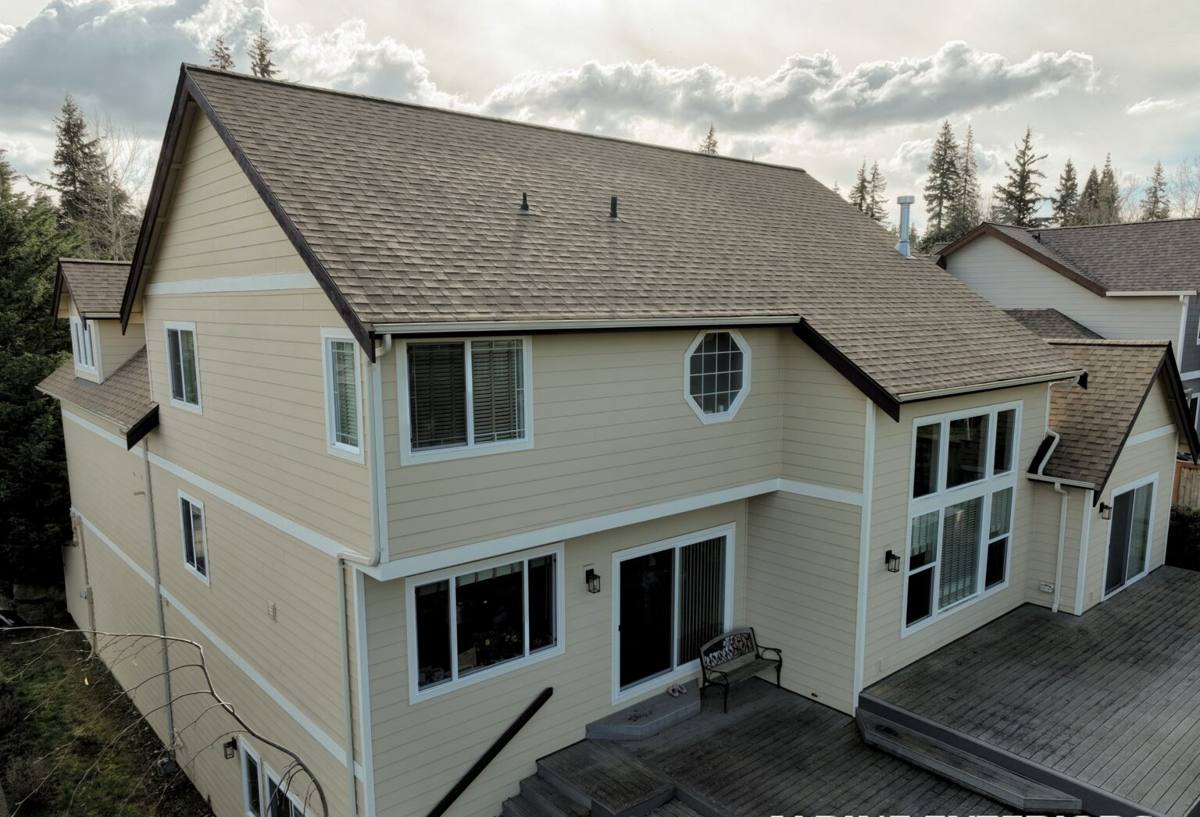
What Salt Air, Rain, and Moss Actually Do to a Roof
Salt Air
Airborne salt accelerates corrosion on exposed metal — nail heads, drip edge, valley flashing, and any fasteners that aren't rated for coastal exposure. Over years, corroded fasteners lose holding power, and corroded flashing thins out at exactly the spots that are supposed to be keeping water out. This is a slow process, which is part of why it's easy to underestimate until a roof is already leaking.
Driving Rain
Wind-driven rain off the bay finds the weak points in a roof system that vertical rain never would — under shingle tabs, up under ridge caps, and into any flashing lap that's facing the wrong direction. A roof designed and installed for a calmer inland site can be marginal here even when every shingle is technically intact.
Moss
Moss holds moisture against the roof surface long after the rain has stopped, which keeps shingles wet and speeds up granule loss and wood rot underneath. Once moss gets a foothold on a north-facing slope or a shaded valley, it spreads, and left alone it will work its way under shingle edges and lift them.
What a Correct Roof Replacement Involves
Tear-Off and Deck Inspection
We don't roof over an old roof, and we don't skip the deck inspection. Once the old roofing is off, we check the sheathing for soft spots, delamination, and rot — problems that are common on older Bow homes where moss or a slow leak has been sitting unnoticed for a while. Any damaged sheathing gets replaced before anything new goes down; it's a lot cheaper to fix at this stage than to find out later.
Underlayment and Moisture Barrier
Given how much wind-driven rain this area gets, we use a synthetic underlayment with self-adhered ice-and-water barrier at eaves, valleys, and roof penetrations — the spots where wind-driven rain is most likely to get pushed backward under the shingle line. This is a place where cutting corners doesn't show up for a year or two, then shows up as a stain on the ceiling.
Flashing and Fasteners
We use corrosion-resistant flashing and fasteners suited to a coastal-influenced environment, not the cheapest option that would pass in a drier climate. Valleys, chimneys, skylights, and wall-to-roof transitions get properly lapped and sealed, since these are the areas salt air and wind-driven rain attack first.
Ventilation
A roof that can't breathe traps moisture in the attic, which shortens the life of the decking and the shingles from underneath. We check existing intake and exhaust ventilation as part of every replacement and correct it where it's inadequate — this matters more in a damp climate like ours than in a dry one.
Material Options for Bow Homes
There isn't one right material for every Bow roof — it depends on the home's style, budget, roof pitch, and how much maintenance the homeowner wants to take on. Here's how the common options stack up for this specific climate.
| Material | Coastal/Moisture Performance | Moss Resistance | Typical Lifespan Here |
|---|---|---|---|
| Architectural asphalt shingle | Good, with proper flashing and underlayment | Moderate — benefits from zinc/copper strips | 20–30 years |
| Standing seam metal | Excellent when fasteners and coatings are coastal-rated | High — sheds moisture quickly | 40–50+ years |
| Composite/synthetic shake | Good, low water absorption | Moderate to high | 30–40 years |
| Cedar shake | Requires diligent maintenance in wet climates | Low without regular treatment | 20–30 years with upkeep |
We'll walk through these trade-offs honestly for your specific roof rather than pushing one product. Cedar shake, for example, can look great, but in a climate this damp it needs a homeowner committed to regular cleaning and treatment — that's a maintenance-burden conversation we have up front, not something we gloss over.
Our Process, Start to Finish
- On-site inspection — we look at the current roof, attic ventilation, and any signs of moisture damage before quoting anything.
- Written estimate — a clear scope of work and material options, no pressure to decide on the spot.
- Scheduling — we plan around Skagit County's weather windows to avoid tearing off a roof right before a storm system.
- Tear-off and deck repair — old roofing removed, sheathing inspected and repaired as needed.
- Underlayment, flashing, and new roofing installed — per manufacturer specs and adjusted for coastal exposure.
- Ventilation check and correction — intake and exhaust balanced for the attic space.
- Cleanup and final walkthrough — magnetic sweep for debris, and we go over the finished roof with you before we call it done.
Signs a Bow Roof May Need Replacing Rather Than Repairing
- Granules collecting in gutters or downspouts in noticeable amounts
- Shingles that are curling, cupping, or missing, especially on the north or shaded slopes
- Moss or dark streaking covering a significant portion of the roof
- Soft spots or sagging visible from the ground or in the attic
- Daylight visible through the roof deck from inside the attic
- Rusted or deteriorating flashing around chimneys, vents, or valleys
- The roof is 20+ years old and has never had a full tear-off
- Interior water stains that reappear after rain, even after past patch repairs
Not every one of these means a full replacement is the right call — some can be addressed with targeted repair. We'll tell you honestly which category your roof falls into.
What Affects the Cost of a Bow Roof Replacement
| Factor | Why It Matters |
|---|---|
| Roof size and pitch | Steeper roofs take longer and require more safety setup |
| Number of layers to remove | Multiple old layers add tear-off time and disposal cost |
| Deck condition | Rotted or delaminated sheathing needs replacement before roofing goes on |
| Material choice | Asphalt, metal, and composite carry different material and labor costs |
| Flashing and valley complexity | Chimneys, skylights, and multiple valleys add detail work |
| Ventilation upgrades | Correcting inadequate intake/exhaust adds a modest cost but pays off long-term |
We'd rather give you a real number after seeing the roof than a broad estimate that doesn't hold up once we're actually up there. General ranges are fine for early planning, but every Bow roof is different enough — pitch, exposure, existing damage — that a firm quote only comes after an inspection.
Why It Matters That We Already Work in Bow
A crew that only shows up in this specific stretch of Skagit County once in a while doesn't have the same feel for which slopes hold moss longest, which fastener specs actually hold up against the salt air off the bay, or how local permitting and inspection tends to go. We've worked enough roofs in and around Anacortes and Bow to know these patterns, and we build the job around them instead of learning them on your roof.
That local familiarity also means we're not guessing at weather windows. Scheduling a tear-off around this area's rain patterns is part of doing the job right, not an afterthought.
After the Install: Keeping a Bow Roof Performing
A correctly installed roof still benefits from basic upkeep in this climate. Keep gutters clear so water isn't backing up under the roof edge. Have moss growth addressed before it spreads rather than after. And have the roof looked at after any major windstorm — driving rain events are when a marginal flashing detail shows itself, and catching it early is a lot cheaper than dealing with the water damage later.
If you're weighing a repair against a full replacement, or just want an honest read on where your roof stands, we're happy to take a look. Fill out the form below for a free, no-pressure estimate.