 Anacortes Siding
 Why Bow Homes Need Siding That Can Handle This Climate
Bow sits in that stretch of Skagit County where the landscape can't decide if it's farmland, forest, or shoreline — and often it's all three within a few miles. That mix creates a tough combination for exterior siding: salt-laden air drifting in off the water, driving rain that comes in sideways during winter storms, and a long, damp moss season that starts earlier and lasts longer here than it does further inland. Siding that isn't built and installed for this environment doesn't fail dramatically. It fails slowly, one soft spot and one hairline crack at a time, until a homeowner is looking at rot behind the trim or paint that won't hold no matter how many coats go on.
We install siding for homes throughout the greater Anacortes area, and Bow properties present their own version of the region's core problem: near-constant moisture exposure paired with salt air that accelerates corrosion on fasteners, trim, and anything not rated for a coastal-adjacent climate. A siding job here isn't just about appearance. It's about choosing a material and installation method that can sit wet for days at a time, shrug off wind-driven rain, and resist the moss and algae that colonize anything porous or poorly ventilated.
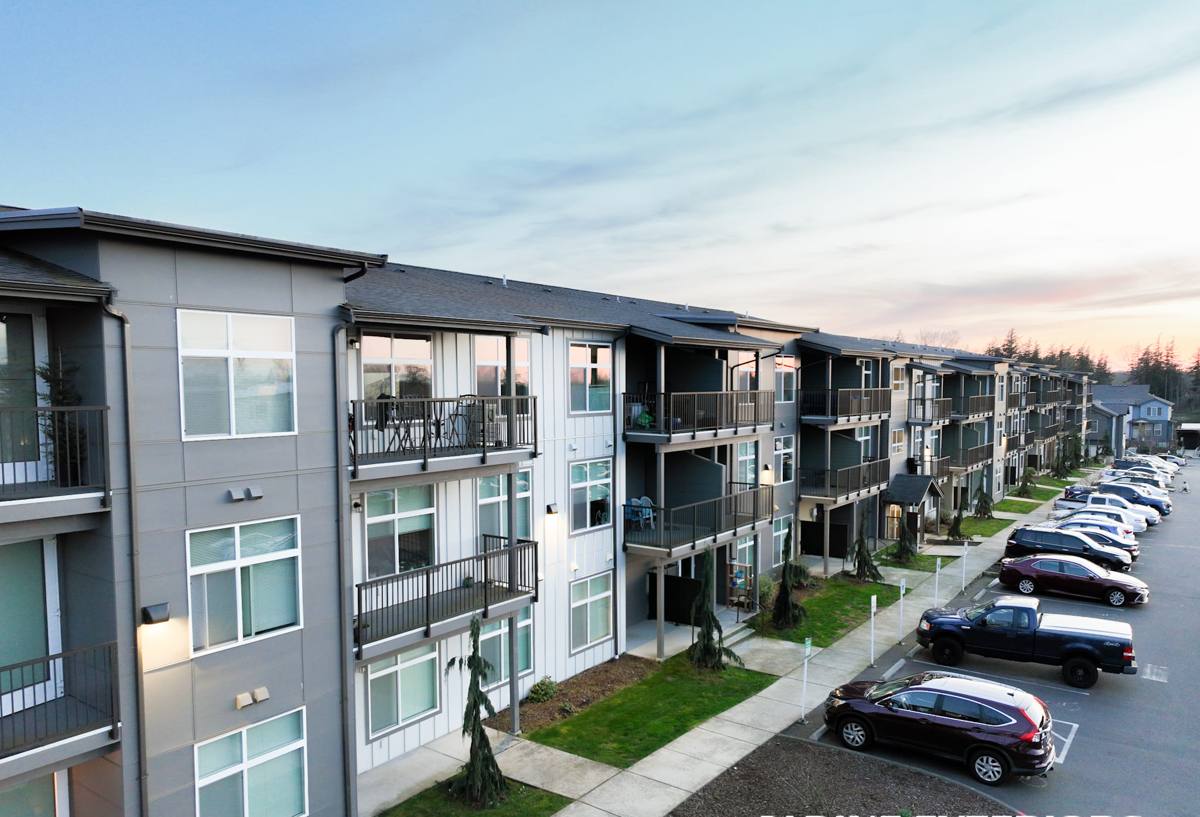
Signs Your Current Siding Is Losing the Battle
Most Bow homeowners don't call about siding until something visible finally shows up — but by then, the damage underneath is usually further along than it looks from the ground. Watch for:
- Green or black staining that returns within a season or two of cleaning, especially on north-facing walls or areas shaded by trees
- Paint that's peeling, bubbling, or chalking faster than it should, particularly near the bottom courses of siding
- Soft or spongy spots when you press on the siding, a sign moisture has already reached the substrate
- Visible cupping, warping, or separated seams, common on wood-based and engineered wood products exposed to repeated wet-dry cycles
- Rust streaks around nail heads or trim fasteners, often the first visible sign of salt-air corrosion
- Gaps opening up at butt joints, corners, or around windows where caulking has failed
None of these are emergencies the day you notice them. But every one of them gets more expensive to fix the longer it sits, because the damage is almost always worse behind the siding than on its face.
Why We Install Only James Hardie Fiber Cement
We made a deliberate decision as a company: we install James Hardie fiber cement siding, and we don't install vinyl, LP SmartSide, Cemplank, Allura, or bare wood products like primed spruce or cedar. That's not a marketing position — it's a standard we hold because we've seen how each of those alternatives performs, or doesn't, in exactly the kind of climate Bow sits in.
Fiber cement is a mix of cement, sand, and cellulose fiber, which means it doesn't absorb water and swell the way wood-based products do, and it doesn't soften or warp in heat and moisture the way vinyl can. James Hardie engineers its HZ5 product line specifically for climates like ours, where prolonged moisture exposure and wide humidity swings are the norm rather than the exception. The ColorPlus factory finish is baked on under controlled conditions rather than field-painted, which matters directly for moss and algae resistance and for how well the color holds up against salt air and UV over the years. Fiber cement is also non-combustible, which is a real consideration during dry summer stretches even in a generally wet region. And because Hardie backs its products with a strong, transferable warranty, homeowners aren't left carrying all the risk if something underperforms.
We're not suggesting other products don't have their place. We're saying that for the specific demands of a Bow property — salt air, driving rain, extended moss season — we've standardized on the one material system we're confident holds up without high maintenance or premature replacement.
What This Means for Your Project
Standardizing on one manufacturer's system lets our crew install to spec every time, rather than relearning a different set of manufacturer requirements on every job. We know Hardie's fastening patterns, clearance requirements, and flashing details cold, which reduces the chance of an installation error being the reason a product underperforms.
What a Correct Siding Installation Actually Involves
Siding failures in this region are rarely caused by the siding material itself — they're caused by shortcuts taken during installation. Doing it right takes more time and more attention to details that don't show up in a driveway walkthrough.
Tear-Off and Substrate Inspection
Before any new siding goes up, we remove the old material and inspect the sheathing underneath. This is often the first real look anyone gets at how much moisture has already gotten in. Soft or delaminated sheathing gets replaced, not covered up — installing new siding over compromised substrate just locks the problem inside the wall.
Weather-Resistive Barrier and Flashing
A weather-resistive barrier goes on correctly lapped, and flashing is installed at every horizontal transition, window, door, and penetration. In a climate with as much driving rain as Bow sees, flashing details are what actually stop water from getting behind the siding in the first place — the siding itself is the second line of defense, not the first.
Proper Fastening and Clearances
James Hardie specifies exact fastener types, spacing, and penetration depth, along with minimum clearances from grade, roof lines, and decks. Skipping these details is one of the most common causes of premature failure on fiber cement jobs done by crews unfamiliar with the product. We keep every clearance and fastening pattern to spec, not to a shortcut.
Caulking and Finish Work
Caulking is a maintenance item, not a substitute for correct flashing — but it still has to be done right at trim, corners, and penetrations using products rated for this climate. Sloppy caulk work is one of the first things to fail when driving rain hits a wall directly.
Our Process, Start to Finish
Every Bow project follows the same sequence, whether it's a full re-side or a targeted section replacement:
- On-site assessment: We walk the exterior, check for existing moisture damage, and measure for material.
- Written estimate: You get a clear scope of work and pricing before anything is scheduled.
- Prep and tear-off: Old siding comes off, sheathing is inspected and repaired as needed.
- Barrier and flashing installation: The weather-resistive barrier and all flashing go in before a single piece of new siding is hung.
- Hardie installation: Siding is installed to manufacturer spec, including fastening, clearances, and joint treatment.
- Trim, caulking, and cleanup: Finish details are completed and the site is cleaned of debris and old material.
- Final walkthrough: We go over the completed work with you before calling the job done.
What Influences the Cost of a Bow Siding Project
Every home is different, and we don't quote a project without seeing it, but the same factors drive cost on nearly every job in this area:
| Cost Factor | What It Affects | Why It Matters in Bow |
|---|---|---|
| Home size and wall complexity | Material quantity and labor hours | More corners, gables, and trim mean more flashing details to get right |
| Existing siding removal | Tear-off labor and disposal | Older wood or engineered siding on Bow homes often needs full removal to assess hidden moisture damage |
| Sheathing or framing repair | Added material and labor | Homes with long-term moisture exposure sometimes need substrate repair before siding can go on |
| Siding profile and exposure | Material cost and finish look | Lap width and texture choices affect both price and how the home reads visually |
| Trim and accessory scope | Total material and labor | Fascia, corner boards, and window trim are often replaced or upgraded during a re-side |
Why Hiring a Crew That Already Works in Bow Matters
A contractor who mainly works drier, inland areas can still do competent work, but they're often applying general practices to a site that doesn't behave like a general site. Bow's mix of open farmland, tree cover, and proximity to the water means moisture patterns vary a lot from one property to the next — a home in a clearing dries out differently than one tucked against a tree line, and both are common here. A crew that regularly works Skagit County properties has already seen how those differences play out on siding, flashing, and trim, and adjusts the install accordingly rather than treating every job identically.
Local experience also means fewer surprises with permitting and inspection timelines specific to Skagit County, and a realistic sense of how weather windows affect scheduling — driving rain doesn't respect a project timeline, and a crew that's used to working around it plans differently than one that isn't.
Choosing a Siding Contractor for Your Bow Home: A Checklist
- Ask what siding material they install and why — and be wary of a contractor who installs "whatever you want" with no stated standard
- Confirm they carry current licensing and insurance, and ask to see proof
- Ask specifically how they handle flashing at windows, doors, and horizontal transitions
- Get a written scope of work, not just a price, so you know exactly what's included
- Ask whether they inspect and repair sheathing as part of the job, not as a change-order surprise later
- Ask about warranty coverage on both material and labor, and get it in writing
- Ask for a realistic timeline that accounts for regional weather, not a best-case estimate
Built for the Way Bow Weather Actually Behaves
There's no shortcut around the fact that a Bow property sits in a demanding climate — salt air, driving rain, and a moss season that doesn't take much of a break. The right response isn't a fancier-looking product, it's the right material installed the right way, with flashing and fastening details that respect what this environment does to a home year after year. That's the standard we hold on every siding job we take on in this area.
If your siding is showing early warning signs, or you're planning ahead for a replacement, we're happy to walk the property with you and give you a straightforward, no-pressure estimate — just fill out the form below to get started.