 Anacortes Siding
 Siding Installation Built for Burlington's Skagit Valley Climate
Burlington sits in the Skagit River valley, close enough to the Salish Sea that homes here deal with the same damp, marine-influenced weather that defines this whole corner of Washington. Rain doesn't just fall here, it lingers — misting in off the water, settling into the valley, and soaking into anything that isn't shedding it properly. Add long stretches of overcast, shaded yards, and mild temperatures that never really dry things out, and you get a climate that is hard on exterior siding in ways that don't show up overnight.
We install siding in Burlington regularly, and the failures we get called out to fix follow a pattern: swollen seams, soft trim, moss creeping up north-facing walls, and paint that gave out years before it should have. None of that is bad luck. It's what happens when a siding product or installation wasn't matched to this specific climate.
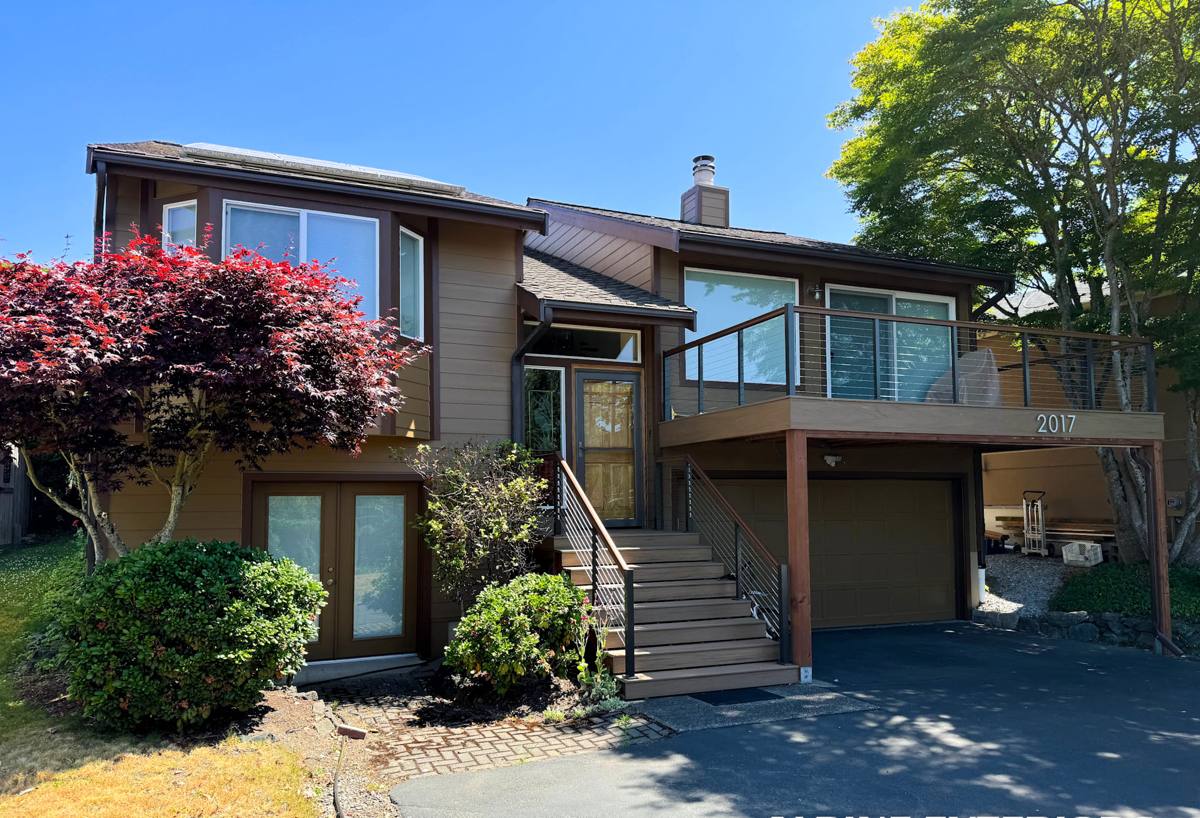
What Local Homes Actually Need From Their Siding
A siding system in Burlington has to do three jobs well, all at once, for decades:
- Shed driving rain without letting moisture track behind the panels at seams, corners, and penetrations
- Resist moss and mildew growth on shaded and north-facing walls where surfaces stay damp longest
- Hold its finish through repeated wet-dry cycles without cracking, peeling, or delaminating
Products that handle dry-climate installations just fine can struggle here. Wood-based and wood-fiber siding absorb moisture at cut edges and swell. Vinyl can buckle with the valley's temperature swings and never fully seals out wind-driven rain at the laps. It's why the material choice matters as much as the installation crew.
Why James Hardie Is the Only Siding We Install
We standardized on James Hardie fiber cement siding for every job we take on, including here in Burlington, and we don't install vinyl, LP SmartSide, Cemplank, Allura, primed spruce, or cedar. That's not a marketing position — it's a decision based on what actually holds up in this climate over the long run.
Fiber cement is engineered from cement, sand, and cellulose fibers. It doesn't absorb water the way wood or wood-composite products do, and it won't feed mold or moss growth the way organic siding materials can. James Hardie also builds region-specific product lines through its HZ5 engineering, developed specifically for climates like the Pacific Northwest that see extended wet seasons and cooler, humid conditions. That's a level of climate-matching most other siding brands simply don't offer.
The factory-applied ColorPlus finish is another reason we standardized on Hardie. It's baked on under controlled conditions rather than field-applied, so the color and coating are more consistent and better bonded than paint applied on-site after installation — which matters a lot in a climate where paint jobs are fighting damp air for weeks at a time. Hardie also backs its siding with a strong transferable warranty, which gives homeowners real protection instead of the thinner coverage typical of budget products.
None of this means other products are worthless — cedar has genuine character, vinyl is inexpensive, LP SmartSide has its market. But when we weigh moisture behavior, maintenance burden, installation sensitivity, and long-term performance in a valley climate like Burlington's, Hardie is what we're willing to put our name behind.
What a Correct Siding Installation Involves
Even the best siding product fails early if it's installed wrong, and fiber cement is less forgiving of shortcuts than people expect. A correct installation includes:
Weather-Resistive Barrier and Flashing
Everything starts underneath the siding. A properly lapped weather-resistive barrier, correctly flashed windows and doors, and a drainage plane that lets any moisture that does get behind the siding escape rather than pool — this is the layer that actually keeps a house dry, and it's invisible once the job is done.
Proper Clearances and Fastening
James Hardie specifies clearances from grade, roofing, and decks, along with fastener spacing and placement, for a reason: violate them and you create the exact moisture traps that lead to premature failure. We follow Hardie's installation instructions to the letter, not as a suggestion but as the baseline for the warranty to mean anything.
Sealed and Caulked Transitions
Butt joints, trim transitions, and penetrations for vents, lights, and hose bibs are where driving rain finds its way in. Correct sealing at these points is what separates a siding job that looks good on installation day from one that still looks good in fifteen years.
Our Installation Process in Burlington
| Stage | What Happens |
|---|---|
| Assessment | On-site inspection of existing siding, sheathing, and any moisture or rot damage before quoting the job |
| Product Selection | Choosing the right Hardie product line, plank width, texture, and color for the home and its exposure |
| Prep and Removal | Stripping old siding, checking sheathing condition, replacing anything compromised before new siding goes on |
| Barrier and Flashing | Installing weather-resistive barrier and flashing at every window, door, and penetration |
| Installation | Hanging siding to Hardie's fastening and clearance specifications, with attention to seams and corners |
| Final Walkthrough | Caulking, trim detail, cleanup, and a walkthrough so you know exactly what was done |
We don't skip the assessment stage, even on jobs that look straightforward. Sheathing damage hiding behind old siding is common in this climate, and finding it before installation — not after — is what keeps a project on schedule and on budget.
Comparing Siding Options for a Skagit Valley Home
| Material | Moisture Behavior in This Climate | Maintenance | Typical Lifespan |
|---|---|---|---|
| James Hardie Fiber Cement | Does not absorb water or feed rot; engineered HZ5 line for wet climates | Low — factory finish holds up for years | Decades, with proper installation |
| Vinyl | Can allow wind-driven rain behind panels at laps; warps with temperature swings | Low, but limited repair options once damaged | Moderate, shorter in harsh exposure |
| Cedar | Absorbs moisture, prone to moss and rot without diligent upkeep | High — regular refinishing and moss treatment needed | Varies widely with maintenance |
| LP SmartSide / Wood-Fiber Composite | Vulnerable at cut edges and seams if moisture gets in | Moderate — finish needs monitoring | Depends heavily on installation quality |
Signs Your Burlington Home Needs New Siding
Skagit Valley's damp climate tends to show siding problems gradually, then all at once. Watch for:
- Moss or algae building up on north- and shade-facing walls, even after cleaning
- Paint that's peeling, bubbling, or chalking faster than it should
- Soft or spongy spots when you press on siding or trim, especially near the bottom courses
- Visible gaps, warping, or separation at seams and corners
- Rising energy bills that suggest drafts or lost insulation value behind the siding
- Interior signs like musty smells, peeling wallpaper, or discolored drywall near exterior walls
Any one of these on its own might not mean full replacement, but a few together usually point to a moisture problem that's been building for a while.
Cost Factors for Siding Installation
Every Burlington home is different, so we don't quote a number until we've seen the house, but the main variables that move the price are:
- Home size and the amount of wall area being covered
- Whether old siding needs to be removed and disposed of, or sheathing repaired first
- Complexity of the home's shape — corners, dormers, trim detail, and roofline intersections all add labor
- Product selection within the James Hardie line, including plank profile, texture, and color
- Site access and staging conditions
We walk every homeowner through these factors during the estimate so there are no surprises once work starts.
Why Hiring a Crew That Already Works Burlington Matters
Siding installation isn't just about the product — it's about knowing how a specific climate behaves on a specific job site. A crew that regularly works in and around Burlington and the wider Skagit Valley already understands how the local moisture pattern moves across a wall, which exposures take the worst of the driving rain, and where moss tends to establish first. That local pattern recognition shows up in the small decisions made on-site: where extra flashing attention goes, how clearances are handled near landscaping, which details get reinforced against wind-driven rain off the valley.
It also means faster, more accurate estimates, because we're not guessing at what Skagit County weather does to a house over time — we've seen it firsthand, repeatedly, on homes not far from yours.
If your Burlington home needs new siding, or you want a second opinion on a job another contractor quoted, we're happy to take a look. The estimate is free, there's no pressure to commit, and you'll get a straight answer about what your home actually needs — just use the form below to get started.