 Anacortes Siding
 Cap Sante's Marine Exposure Is Different From the Rest of Anacortes
Homes around Cap Sante sit close to open water, with a direct line to wind coming off Rosario Strait and Guemes Channel. That means more than a nice view. It means salt-laden air settling on window frames and hardware year-round, driving rain that gets pushed sideways into siding and window openings during winter storms, and a long stretch of overcast, damp months when moss and mildew get a foothold on anything that stays wet. Windows here work harder than windows fifteen miles inland in Mount Vernon or Sedro-Woolley, and they fail differently too — not just from age, but from corrosion, seal breakdown, and water intrusion around the frame.
Skagit County's version of moss season runs long, roughly fall through spring, and it isn't just roofs and siding that take the hit. Moss and algae hold moisture directly against window frames, sills, and the caulk joints meant to keep water out, so a joint that would dry and hold up fine in a drier climate can stay damp for weeks at a stretch here. That extended dampness is a big part of why generic window details that work elsewhere don't always hold up this close to the water.
When we talk about "custom windows" for a Cap Sante home, we're not just talking about non-standard sizes for an older house. We're talking about matching frame material, glass package, and installation detail to a specific set of conditions: salt air, wind-driven rain, and Skagit County's damp shoulder seasons.
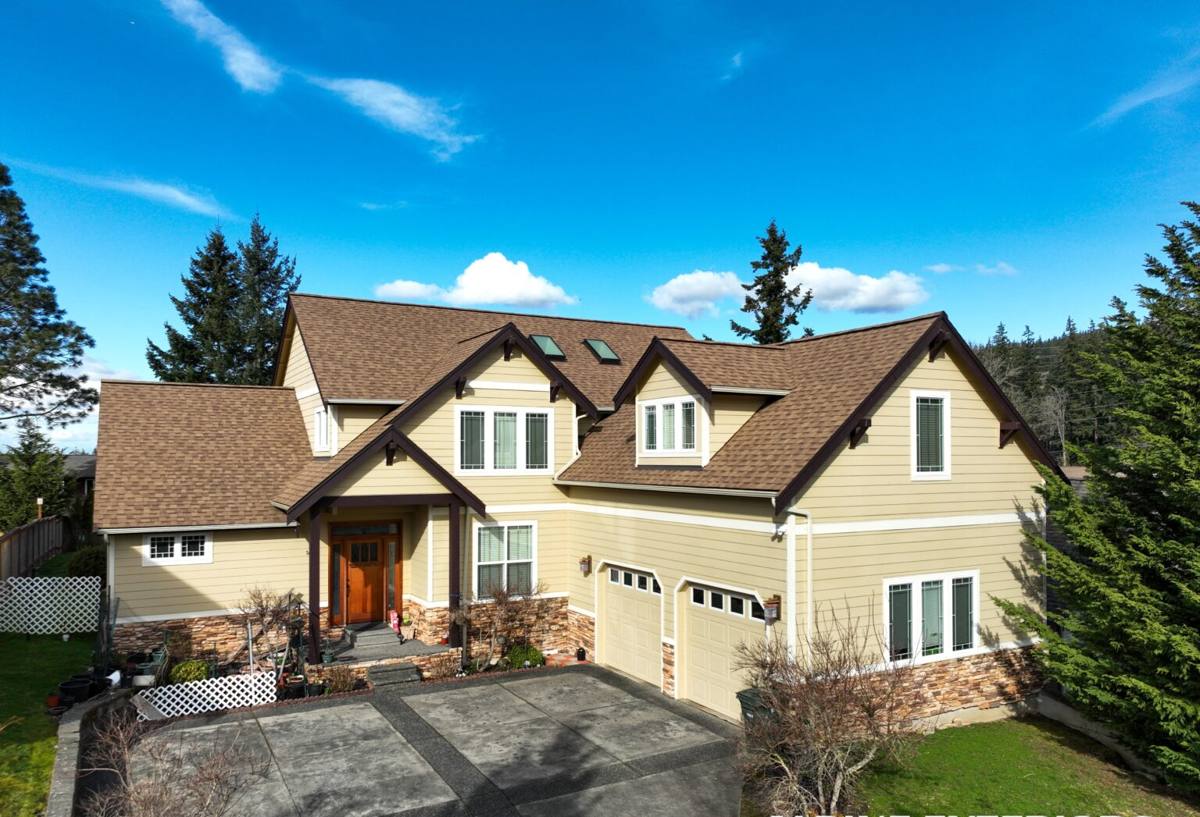
What "Custom" Actually Means Here
Older homes near Cap Sante — many built well before modern energy codes — often have window openings that don't match anything on a big-box shelf. Settling, past remodels, and non-standard framing mean a lot of these jobs are true custom orders: exact rough opening measurements, sometimes custom shapes or transoms, and trim details that need to match existing woodwork. Custom also means selecting the right combination of frame material and glass for a window that faces open water versus one tucked on a sheltered side of the house.
Washington's energy code also sets minimum performance requirements for replacement windows, so part of putting together a custom order is making sure the U-factor and other ratings on the new units meet current code, not just fitting the opening. We account for that during the initial assessment rather than leaving it as a surprise once the order is placed.
Frame Material Carries More Weight in This Location
Inland, frame material is mostly a budget and style decision. Near Cap Sante, it's a durability decision first. Aluminum hardware and fasteners corrode faster in salt air. Bare wood trim exposed to driving rain and long damp stretches is more prone to rot if it isn't detailed and maintained correctly. That doesn't mean wood or aluminum are off the table — it means the choice has to account for exposure, orientation, and how much upkeep the homeowner actually wants to do.
Glass Packages Built for Condensation and Heat Loss
Single-pane and older dual-pane windows in this climate tend to show their age through fogging between panes, condensation on interior glass during cold snaps, and noticeably drafty rooms in winter. A correctly specified glass package — insulated dual or triple pane with a low-e coating and the right gas fill — cuts down on both the energy loss and the interior condensation that leads to sill rot and mildew on window trim.
Comparing Frame Materials for Marine-Exposed Homes
There's no single "best" material for every Cap Sante home — the right call depends on sun and wind exposure, budget, and how much maintenance the homeowner wants to take on. Here's how the common options stack up under salt air and driving rain conditions:
| Frame Material | Salt Air / Corrosion Resistance | Maintenance Needed | Typical Lifespan |
|---|---|---|---|
| Vinyl | Good — won't corrode, though hardware quality varies | Low — occasional cleaning | 20-30 years |
| Fiberglass | Very good — stable in temperature swings and salt exposure | Low | 30-40 years |
| Aluminum-clad wood | Good exterior protection if detailing is correct; interior wood still needs care | Moderate — low exterior, some interior finish upkeep | 25-35 years with upkeep |
| Bare aluminum | Fair — prone to pitting and hardware corrosion near open water without upgraded fasteners | Moderate to high near the water | 20-25 years, shorter with neglect |
| Bare wood | Fair — needs consistent paint or finish maintenance to resist driving rain and moss | High | Highly variable, dependent on upkeep |
For homes with direct water exposure, we generally steer customers toward fiberglass or quality vinyl with corrosion-resistant hardware, or a well-detailed aluminum-clad wood window when the look calls for it. Bare aluminum and unfinished wood aren't ruled out, but we're upfront that they demand more attention in this specific location, and we frame that as a maintenance trade-off, not a knock on the material itself.
The Installation Details That Actually Keep Water Out
A quality window installed wrong will leak. That's true anywhere, but the consequences show up faster in a location that gets sustained wind-driven rain off the water. Most window failures we see near Cap Sante aren't glass or frame failures at all — they're installation failures around the opening.
Flashing and the Weather-Resistive Barrier
Proper flashing — sill pan, side flashing, and head flashing integrated correctly with the house wrap or weather-resistive barrier — is what actually stops water from getting behind the window and into the wall cavity. On a home taking direct wind-driven rain, this detail matters more than the window brand. We build a drainage path so any water that does get past the exterior sheds back out, rather than trapping moisture where it will rot framing.
Sealants and Fasteners Rated for the Exposure
Not every exterior sealant holds up the same way under constant salt air and UV exposure near open water. We use sealants and fasteners rated for the conditions rather than whatever is cheapest, and we pay attention to where a bead of caulk is doing real waterproofing work versus where it's cosmetic. Corners and the bottom of the sill are where a shortcut here shows up first, usually as a soft spot in the trim a couple of years later.
Our Process, Start to Finish
- On-site assessment. We look at every opening individually — sun exposure, wind direction, current condition of trim and framing, and any signs of past water intrusion.
- Precise measurement. Especially on older Cap Sante homes, openings are rarely perfectly square. We measure for the actual opening, not a catalog size.
- Material and glass selection. Based on exposure and the homeowner's priorities — budget, maintenance tolerance, energy performance, and how it needs to look with the rest of the house.
- Permitting, when required. Some replacement projects, especially where an opening size changes or egress requirements come into play, need a permit through the City of Anacortes. We sort out whether that applies before work starts, not after.
- Removal and inspection. When we pull the old window, we check the framing underneath for rot or prior water damage before anything new goes in — no covering up a problem behind a nice new window.
- Correct flashing and sealing. This is the step that determines whether the window performs for the next twenty years or leaks in three.
- Interior and exterior trim finish. Matched to the existing house wherever possible.
- Cleanup and walkthrough. We haul away the old units and debris and walk the homeowner through operation and basic care before we leave.
Signs Your Current Windows Are Losing the Fight
A lot of Cap Sante homeowners live with failing windows longer than they need to simply because the signs are gradual. Watch for:
- Fogging or a cloudy haze between panes — the seal has failed and the insulating gas is gone
- Soft, spongy, or discolored trim or sill wood around the frame
- Windows that are hard to open, close, or lock, especially after damp weather
- Noticeable drafts or a cold radiating feeling near the glass in winter
- Visible corrosion, pitting, or stiff hardware on aluminum components
- Moss, algae, or persistent black mildew staining building up on frames or sills
- Condensation forming on the inside of the glass regularly, not just during a hard freeze
Any one of these on its own might just mean a repair or resealing. Several at once, especially combined with soft trim, usually means the window and its surrounding opening need to be addressed together.
Keeping New Windows Performing Through Salt Air and Moss Season
Custom windows installed correctly for this climate still benefit from basic upkeep. A few habits go a long way for homes near the water:
- Rinse salt residue off frames and hardware periodically, especially after storms with onshore wind
- Keep weep holes clear of debris and moss so water can drain out as designed
- Check caulk lines once a year, particularly at corners and sills, and touch up before small gaps become entry points
- Trim back vegetation that keeps a window shaded and damp longer than the rest of the house
- Wipe down interior sills during colder months if you notice condensation building up
None of this is heavy maintenance, but skipping it in a marine climate shortens the life of even a well-installed, high-quality window.
Why It Matters That We Already Work in Cap Sante
A crew that mostly installs windows on the dry side of the county approaches every job the same way, because most of the time they can get away with it. That's not the case here. Working regularly around Cap Sante means knowing which elevations of a home take the brunt of wind-driven rain, how quickly hardware corrodes on a west-facing window with an open water view versus one tucked behind a windbreak, and how the City of Anacortes's permitting and inspection process works for window replacements on both older and newer homes in the area. It also means scheduling installation days around actual weather patterns instead of a generic forecast, since a dry opening is non-negotiable for correct flashing work.
That local familiarity shows up in fewer callbacks — not because the products are different, but because the detailing accounts for what this specific stretch of Skagit County shoreline actually throws at a house.
If your windows near Cap Sante are fogging, drafty, sticking, or just showing their age, we're glad to take a look and walk you through honest options for your home's exposure and budget. Use the form below to request a free, no-pressure estimate.