 Anacortes Siding
 Cap Sante's Setting Is Beautiful — and Hard on a Deck
Homes on and around Cap Sante sit close to the water, often with some elevation and open exposure toward the harbor and the strait. That's exactly what makes the views worth having, and it's exactly why a deck up here ages differently than one built a few miles inland in Skagit County. Wind off the water carries salt spray onto railings and fasteners. Storms roll in with driving, sideways rain that gets up under boards and against ledger boards that a calmer site would never see. And the long gray stretch of fall through spring here means moss and algae get a real head start on any horizontal wood surface that doesn't drain and dry properly.
None of that means you can't have a great deck in this neighborhood. It means the build has to account for the site from the framing up, not just the decking on top. That's the difference between a deck that looks good for a couple of summers and one that's still solid in fifteen years.
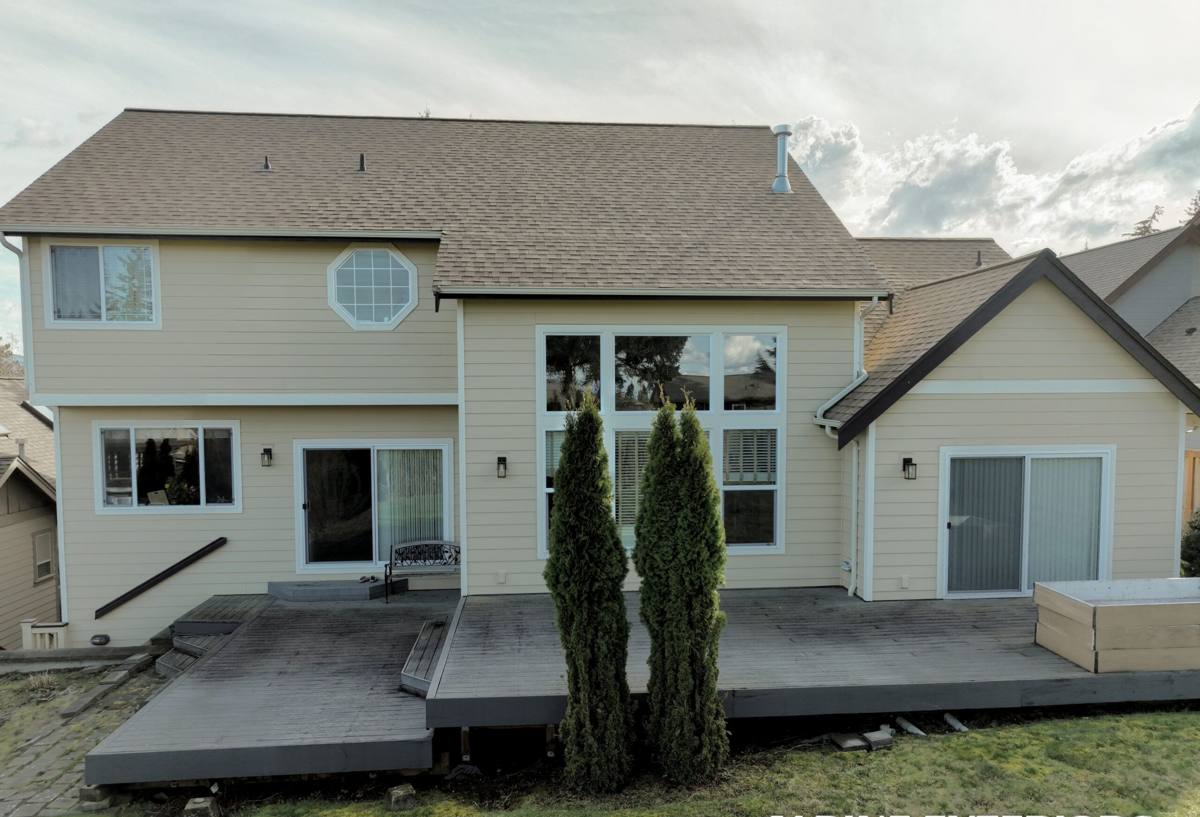
What Salt Air and Driving Rain Actually Do Over Time
It helps to know the specific failure patterns we see, because they explain most of the decisions below.
Corrosion at the fasteners first
Salt-laden air accelerates corrosion in metal — screws, joist hangers, bolts, flashing. The deck boards themselves are often still fine when the hardware underneath starts to rust, stain, or weaken. Once a hanger or ledger bolt is compromised, the structural integrity of the deck is compromised, even if nothing looks wrong from the top.
Trapped moisture at the ledger and joists
Driving rain doesn't just fall straight down — near the water it comes in at an angle and gets pushed against the house wall and up under railings and board ends. Where a deck ledger attaches to the house, or where joists meet a rim board, water that isn't flashed and shed properly sits and soaks in. That's where rot starts, and it's almost always hidden until a board or post starts to feel soft.
Moss, algae, and slick surfaces
Anacortes gets long stretches of damp, low-light weather, and a deck that doesn't get much direct sun or doesn't shed water well will grow moss and algae faster than most homeowners expect. Beyond looking neglected, a mossy deck surface is a genuine slip hazard, especially on stairs.
Choosing Decking Material for a Cap Sante Site
There's no single "best" decking material — there's a best material for your specific exposure, budget, and how much upkeep you actually want to do. Here's how the common options compare for a salt-air, high-rain site like this one.
| Material | How it holds up here | Maintenance | Typical lifespan |
|---|---|---|---|
| Pressure-treated wood | Affordable, workable, but needs sealing to resist moisture and salt staining | Annual cleaning and re-sealing/staining | 10–15 years with upkeep |
| Cedar | Naturally rot-resistant and handsome, but softer and can gray or streak faster in salt air without care | Cleaning and oiling every 1–2 years | 15–20 years with upkeep |
| Capped composite | Best resistance to moisture, salt, and moss buildup of the common options; won't rot or splinter | Periodic washing, no sealing/staining | 25+ years |
| Uncapped composite | More affordable than capped composite but more prone to surface staining and moisture absorption at the edges | Regular cleaning, watch board ends | 15–20 years |
We won't push everyone toward the same material. A wood deck maintained on schedule can look great for years; the honest trade-off is that "on schedule" matters more here than it would inland, because the salt air and moss season are less forgiving of a missed year. Capped composite costs more up front and gives you the most margin for error if upkeep isn't going to be consistent. We'll walk through the real difference in cost, look, and maintenance for your situation rather than defaulting to whatever's easiest to install.
What's Underneath Matters More Than What's on Top
The decking boards get all the attention, but the framing, fasteners, and flashing decide whether the deck is still safe in ten or fifteen years.
Fasteners and hardware
In a coastal-exposure setting, standard galvanized hardware corrodes faster than it would elsewhere. We use stainless steel or heavy-duty coated fasteners and connectors rated for coastal or wet-use exposure — it costs a bit more up front and it's the difference between hardware that's still sound in year twelve and hardware that's rusting through in year six.
Ledger flashing and house connection
Where the deck attaches to the house is the single most common failure point on any deck, and it's worse near the water. Proper flashing — installed correctly, in the right order relative to the house's water-resistive barrier or siding — is what keeps rain from tracking behind the ledger and into the rim joist and wall framing. This is not a place to cut corners or reuse old flashing on a rebuild.
Footings and post bases
Footings need to be sized and set to Skagit County's frost and soil requirements, and post bases should hold the post above the deck surface so water doesn't wick up into the end grain. On sites with any slope or fill, we also check that footings are bearing on solid, undisturbed soil — not just poured into whatever was easiest to dig.
Railings, Stairs, and Guardrails
Elevated lots near Cap Sante often mean a deck with real height off the ground, which brings guardrails and stair railings into play as safety features, not just style choices. A few things we hold to on every build:
- Guardrails are required once the deck surface is a certain height above grade — we confirm the exact trigger height and specs against current Anacortes building code, not general assumptions
- Baluster spacing has to meet code so a small child can't pass through it
- Railing posts need solid blocking or through-bolting, not just screws into a rim joist — this is one of the most common things we find undersized on older decks we're asked to repair
- Metal railing components should be corrosion-resistant given the salt exposure, same as the structural fasteners
- Stair stringers and treads need consistent rise and run — inconsistent stairs are a fall risk that shows up in the fine print of a lot of home inspections
Our Deck Building Process
The process is straightforward, but we don't skip steps just because a homeowner is in a hurry to get the deck done before summer.
- Site visit and design conversation — we look at the exposure, the slope, the connection point to the house, and talk through how you'll actually use the space and what material makes sense for your budget and maintenance appetite.
- Permit and code check — we confirm what Anacortes and Skagit County require for your specific deck size and height before any work starts, so there are no surprises at inspection.
- Demo of the old deck, if applicable — including a real look at the ledger and framing behind it, which is often where we find the actual condition of things.
- Framing, flashing, and footings — the structural work that determines how long the deck lasts, done to the fastener and flashing standards above.
- Decking, railings, and stairs — installed to the material manufacturer's spec, which matters for warranty coverage on composite products especially.
- Final walk-through — we go over the finished deck with you, including what maintenance it needs and on what schedule.
Keeping a Salt-Air Deck Looking Right
Whatever material you choose, a little regular attention goes a long way in this climate. A simple seasonal checklist:
- Sweep off debris and standing leaves regularly — they trap moisture against the decking and feed moss growth
- Rinse salt residue off railings and boards a few times a year, especially after windy storms off the water
- Check for early moss or algae on shaded or low-drainage areas and treat it before it spreads to stairs
- Inspect fasteners and railing connections annually for rust staining or looseness
- Re-seal or re-stain wood decking on schedule — don't wait until it's visibly gray and dry
- Keep gutters and downspouts near the deck clear so runoff isn't dumping extra water onto or under it
Why It Matters That We Already Work in Cap Sante
A deck detail that works fine on a sheltered lot inland can fail early on an exposed site near the water — the same fastener spec, the same flashing approach, the same decking choice, but a very different outcome depending on exposure. Working regularly in this part of Anacortes means we're not guessing at how much salt exposure your specific site gets or how the wind and rain typically hit a given elevation — we've seen how decks in this area actually hold up, not just how they look on installation day. That experience shapes the material recommendations, the hardware we spec, and the flashing details we won't skip, even when they add a little time to the job.
If you're planning a new deck or need to replace one that's showing its age near Cap Sante, we're happy to take a look and talk through what makes sense for your site. There's a form below if you'd like a free, no-pressure estimate.