 Anacortes Siding
 Roofing on Cap Sante: A Different Kind of Job
Cap Sante sits close to the water, with homes catching wind off Fidalgo Bay and the boat basin below. That proximity is part of what makes the area desirable — and part of what makes roofing here harder than it looks from the ground. Salt-laden air corrodes exposed metal faster than it does even a few miles inland. Wind off the water drives rain sideways under poorly lapped shingles and loose flashing. And the shade from mature evergreens combined with near-constant damp keeps moss and moisture sitting on north-facing slopes for months at a time. A roof built to a generic spec sheet, without accounting for any of that, tends to show problems years before it should.
A full roof replacement on a Cap Sante home isn't just "put new shingles where the old ones were." It's a chance to correct whatever weakness let the old roof fail early — usually ventilation, flashing detail, or underlayment that wasn't rated for this kind of exposure — and build something that's actually suited to living a few blocks from Skagit County saltwater.
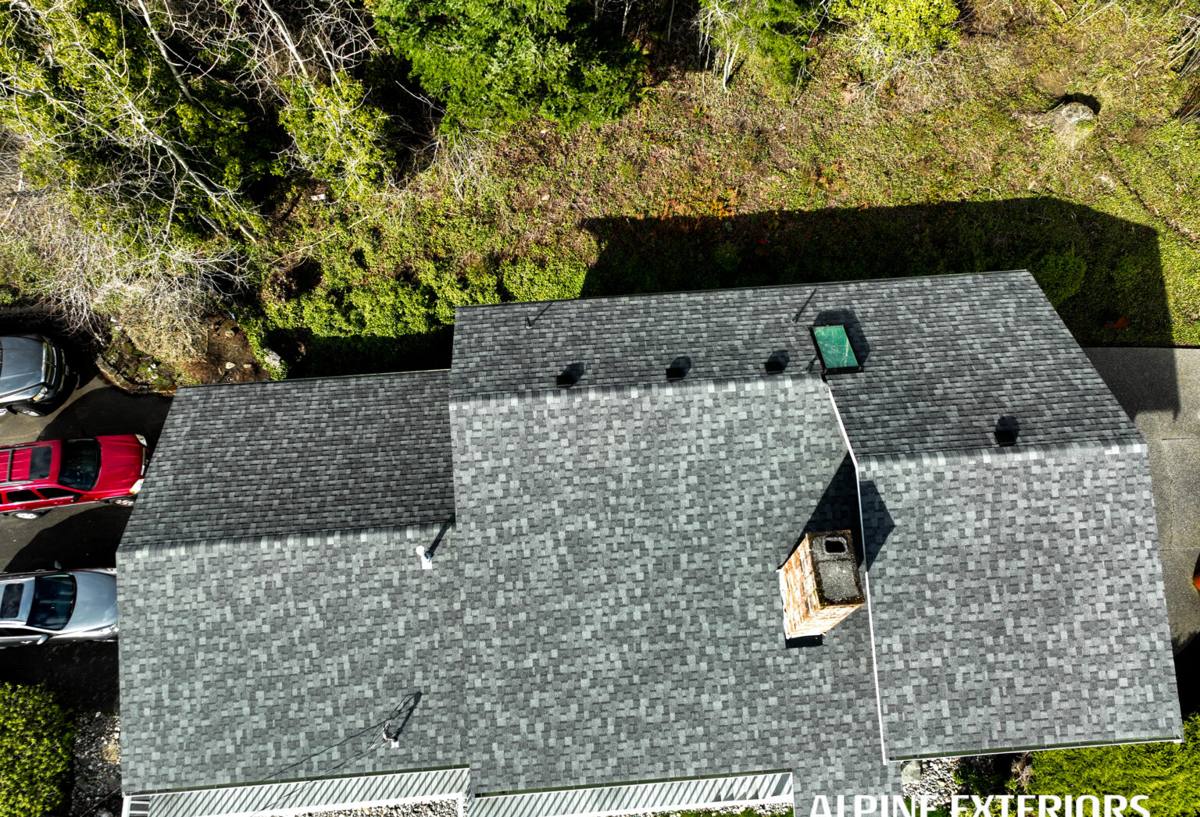
How Skagit County's Marine Climate Wears Down a Roof
Anacortes doesn't get extreme weather in the dramatic sense — no hail storms, no hurricane-force gusts most years. What it gets instead is relentless, low-grade exposure that adds up over a roof's lifespan:
- Salt air corrosion — fasteners, flashing, and vents made from lower-grade metal pit and rust noticeably faster within sight of the water than they would a few miles east.
- Driving rain — wind off the bay pushes water sideways and uphill under shingle edges, valleys, and anywhere flashing laps the wrong direction.
- Moss and organic growth — shaded, damp roof sections stay wet long after the rest of the roof has dried, which is exactly the environment moss and moss-related shingle degradation need.
- Freeze-thaw cycling — not as severe as inland Washington, but Anacortes still sees enough cold snaps each winter to stress any roof that's already retaining moisture.
None of these are exotic problems. They're the same handful of stresses that hit every roof on this stretch of coastline — which is exactly why a correct installation matters more here than in a drier, calmer inland town.
Signs a Cap Sante Roof Needs Replacement, Not Another Repair
Not every roofing problem calls for a full tear-off. But there's a point where patching stops making financial sense. Watch for:
- Shingles that are cupping, cracking, or losing granules across large sections rather than just one localized spot
- Soft or spongy decking felt underfoot in the attic, especially near valleys or the roof's lowest edges
- Daylight visible through the roof deck from inside the attic
- Moss buildup that keeps coming back within a season or two of cleaning, even after treatment
- Flashing around chimneys, vents, or dormers that's separated, rusted through, or was never properly stepped in the first place
- A roof that's simply reached the end of its material's rated life — most asphalt composition roofs in this climate are realistically good for 18–25 years, not the 30 printed on the wrapper
If a roof is hitting two or more of these at once, repair usually just delays the same decision by a year or two while spending money that doesn't carry forward into a new roof.
What a Correct New Roof Installation Actually Involves
A roof is a system, not a single product. Skipping any one layer undercuts the rest, no matter how good the shingles are. A proper installation on a Cap Sante home covers:
Tear-Off and Deck Inspection
Old roofing comes off down to the deck so it can actually be inspected — not just re-covered. Any decking that's soft, delaminated, or water-stained gets replaced before anything new goes down. This step is where hidden damage from years of slow leaks usually turns up.
Underlayment Built for Wet Exposure
Given the rain and humidity here, a synthetic underlayment rated for extended exposure — not the cheapest felt option — is the right call, especially on any roof with lower-slope sections or valleys where water sits longer.
Ice-and-Water Barrier at Vulnerable Points
Eaves, valleys, and areas around penetrations get a self-adhering waterproof membrane underneath the main underlayment. This is cheap insurance against the wind-driven rain that's common off the bay.
Flashing Done Right, Not Reused
Flashing around chimneys, skylights, sidewalls, and vent stacks should be new, step-flashed correctly, and matched to a metal that won't corrode quickly in salt air. Reusing old flashing to save a little money is one of the most common shortcuts that leads to a leak within a few years.
Ventilation Matched to the Attic
Intake at the eaves, exhaust at the ridge, balanced to the attic's actual volume — this is what keeps moisture from condensing inside the roof deck and what keeps ice dams from forming in the rare hard freeze. It's also one of the biggest factors in how long the new roofing material actually lasts.
Roofing Material Options for a Waterfront Anacortes Home
There's no single "best" roofing material — the right choice depends on budget, roof pitch, and how much long-term maintenance a homeowner wants to take on. Here's how the common options stack up for a Cap Sante property specifically:
| Material | Salt Air / Moisture Performance | Typical Lifespan Here | Maintenance |
|---|---|---|---|
| Asphalt composition shingle (architectural) | Good with proper ventilation and algae-resistant granules | 18–25 years | Periodic moss removal, gutter checks |
| Standing seam metal | Excellent if finish and fasteners are marine-rated; poor if not | 40+ years | Low; occasional fastener/seam check |
| Synthetic/composite shingle | Very good; resists moisture absorption better than wood | 30–40 years | Low to moderate |
| Cedar shake (untreated) | Poor in this climate without diligent maintenance | Highly variable; short if neglected | High — regular treatment needed to resist rot and moss |
For most Cap Sante homes, a mid- to upper-tier architectural asphalt shingle with algae-resistant granules hits the right balance of cost and durability. Homeowners planning to stay long-term, or who want the lowest possible maintenance, often lean toward metal — the upfront cost is higher, but the corrosion resistance and lifespan can make sense this close to the water, provided the metal and fasteners are actually rated for a marine environment and not just standard-grade stock.
Our Installation Process
- On-site inspection — we walk the roof and attic, check decking condition, ventilation, and flashing points before quoting anything.
- Written scope and material selection — a clear breakdown of what's being replaced, what material is going on, and why, no vague line items.
- Tear-off and deck repair — old material removed, deck inspected and repaired as needed.
- Waterproofing layers — ice-and-water membrane at vulnerable points, underlayment across the full roof.
- Flashing and ventilation install — new flashing throughout, intake and exhaust ventilation balanced for the attic.
- Roofing material installation — installed to manufacturer spec, which is also what keeps material warranties valid.
- Final walkthrough — cleanup, magnetic nail sweep, and a walk-through so the homeowner sees the finished work directly.
Why Local Experience on Cap Sante Actually Matters
A roofing crew that regularly works Cap Sante and the surrounding Anacortes waterfront isn't guessing at material choices — they've seen which flashing details hold up to wind off the bay and which ones come loose within a couple of winters. That matters for a few practical reasons:
- Wind and rain exposure judgment — knowing which slopes and roof edges on a bayfront property need extra waterproofing versus which ones don't.
- Permitting familiarity — City of Anacortes and Skagit County permitting requirements for roof replacement, handled correctly the first time.
- Material sourcing suited to the coast — steering away from fasteners and flashing metals that corrode fast in salt air, based on what's actually held up locally.
- Realistic scheduling around local weather patterns — timing tear-off and dry-in around Anacortes' rain windows so an open roof isn't left exposed longer than necessary.
None of that shows up on a spec sheet. It comes from doing this work repeatedly in this specific environment.
Keeping a New Roof Performing After Installation
A correctly installed roof still needs basic upkeep to hit its full lifespan in this climate. A simple annual routine covers most of it:
- Clear gutters and downspouts before the fall rains start
- Check for moss or algae growth on shaded, north-facing slopes each spring
- Trim back overhanging branches that keep sections of the roof shaded and damp
- Have flashing around chimneys and vents visually checked every couple of years
- Address any small leak signs — a stain on a ceiling, a musty attic smell — right away rather than waiting
None of this is complicated, but skipping it is how a well-installed roof still ends up with an early moss problem or a slow leak nobody caught in time.
Get a Straight Answer on Your Roof
If a Cap Sante roof is showing its age or you're just not sure whether it's a repair-or-replace situation, we're glad to take a look and give a straightforward assessment — no pressure, no inflated scope. Use the form below to request a free estimate.