 Anacortes Siding
 Composite Decking Built for Guemes Island, Not Just Installed There
Guemes Island sits in the marine waters of Skagit County, reached by ferry from Anacortes, and that setting shapes everything about a deck built out here. Salt-laden air moves off the water and settles on every exposed surface. Driving rain comes in sideways during fall and winter storms. And the long, damp shoulder seasons common to this part of Washington give moss and algae months at a time to take hold on anything that stays wet. A deck built to a generic spec sheet, without those conditions in mind, tends to show its age fast — fading unevenly, staining at the fastener heads, or growing a slick green film in the shaded corners. A deck built specifically for this island holds up the way it's supposed to.
This page is about one service, done one way, for one place: composite decking on Guemes Island. Not a general overview of decking everywhere — the specific choices that matter when the job site is on an island in Skagit County's marine climate.
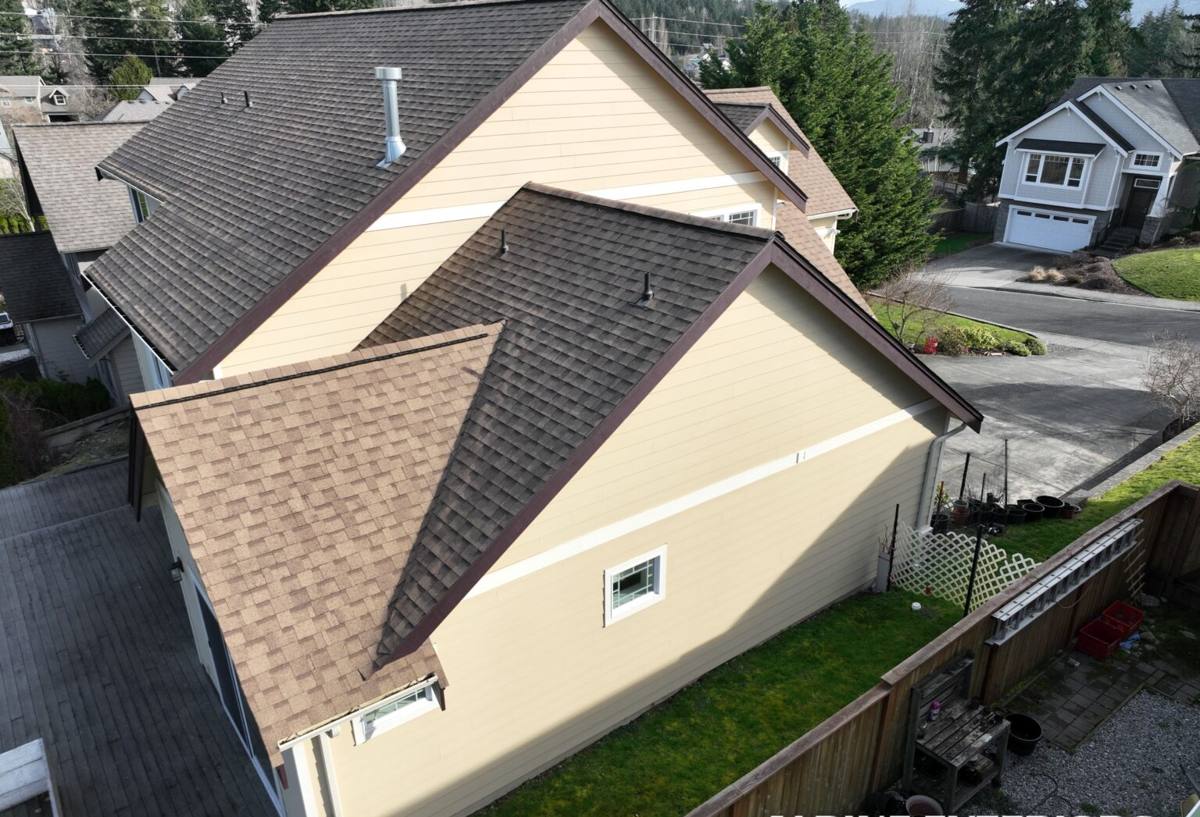
What This Climate Actually Does to a Deck
Before talking about materials or installation methods, it helps to be honest about what a deck on Guemes Island is up against day to day.
Salt Air and Metal Hardware
Homes near the shoreline, and even those set back from the water, get a steady dose of salt-bearing air. Over time that air accelerates corrosion on any fastener, bracket, or ledger connector that isn't rated for it. Rust streaks bleeding down a light-colored composite board are almost always a hardware problem, not a board problem — and they're avoidable with the right hardware from day one.
Driving Rain and Water Management
Storms here don't just fall straight down. Wind-driven rain gets pushed under rail caps, behind fascia boards, and into any gap in the flashing that a calmer climate might let slide. A deck that isn't detailed for wind-driven moisture will eventually show it at the ledger board and the framing underneath, even if the decking surface itself looks fine.
Moss, Algae, and Extended Damp Seasons
Skagit County's marine layer keeps humidity elevated for long stretches, especially in shaded or north-facing areas of a deck that don't get much direct sun. That's exactly the environment moss and algae prefer. Uncapped or lower-grade decking surfaces with more texture and porosity give moss more to grip onto; smooth, capped composite gives it far less.
Why Composite Decking Is the Right Call for This Environment
Composite decking isn't automatically the right choice for every project everywhere, but for Guemes Island's combination of salt exposure, rain, and moss, it has real advantages worth naming plainly:
- No annual refinishing. Wood decking in this climate typically needs sealing or staining every year or two to keep moisture out. Capped composite doesn't need that maintenance cycle.
- Consistent moisture resistance. Composite boards don't cup, crack, or splinter the way wood can when it swells and dries repeatedly through a wet-then-dry cycle.
- Better resistance to surface growth. A capped composite board's outer shell sheds water and gives moss and algae less to hold onto compared to raw wood grain or uncapped composite.
- Consistent appearance over time. Quality capped boards fade evenly and predictably, which matters on a coastal property where UV and salt exposure are both in play.
That said, composite isn't maintenance-free — it's lower-maintenance, and the difference matters. We'll get to what upkeep actually looks like further down.
Comparing Decking Materials for This Setting
| Material | Salt air performance | Moisture behavior | Ongoing maintenance |
|---|---|---|---|
| Capped composite | Strong — shell resists corrosion staining and salt residue | Doesn't absorb water into the core | Periodic washing, no sealing or staining |
| Uncapped composite | Moderate — more porous surface can hold salt residue and moisture | Can absorb some surface moisture over time | More frequent cleaning to prevent mildew buildup |
| Pressure-treated wood | Moderate — hardware and fasteners corrode faster near the water | Absorbs and releases moisture with the seasons; prone to cupping | Sealing or staining every 1-2 years |
| PVC decking | Strong — fully synthetic, no wood fiber to hold moisture | Essentially waterproof | Occasional washing; higher upfront cost |
What a Correct Composite Deck Build Involves Here
The decking boards themselves get most of the attention, but on Guemes Island the framing and hardware decisions underneath the surface matter just as much for how long the deck lasts.
Framing and Fasteners
We spec stainless steel or coated, marine-rated fasteners and structural connectors rather than standard galvanized hardware. It costs more up front, but standard galvanized hardware in a salt-air environment can start showing corrosion well before the decking surface shows any wear at all — and once hardware fails, the surface above it doesn't matter.
Ledger Flashing and Water Diversion
Where the deck attaches to the house, proper flashing that directs water away from the ledger board is non-negotiable in a climate with regular wind-driven rain. This is the single most common failure point we find on older decks out here, and it's invisible until it isn't.
Joist Protection
Joist tape over the framing lumber keeps moisture from wicking into fastener holes and end grain — a detail that matters more here than in a drier climate, given how many months a year the framing stays damp.
Hidden Fastener Systems
Hidden fastener clips avoid putting screw holes through the top face of the board, which removes a common entry point for moisture and gives the deck a cleaner look without exposed metal susceptible to salt staining.
Ventilation and Drainage Underneath
Airflow beneath the deck matters for keeping the underside dry and reducing the conditions moss and mildew need to establish. We grade and detail the substructure so water moves off the site instead of pooling under the deck.
Cost Factors Specific to a Guemes Island Job
Every deck estimate depends on size, board selection, and structural complexity — that part isn't unique to the island. What is specific to Guemes Island is a short list of logistical factors that affect scheduling and, in some cases, cost:
| Factor | Why it matters here |
|---|---|
| Ferry-dependent material delivery | Lumber and composite decking need to be staged and scheduled around ferry sailings, not just a truck route |
| Site access | Some island properties have narrower or less direct access than mainland lots, which affects equipment and material staging |
| Hardware grade | Marine-rated fasteners and connectors cost more than standard-grade hardware but are the right call for salt air exposure |
| Permitting | Deck projects typically require a Skagit County permit; we handle that as part of the process rather than leaving it to the homeowner |
How Our Process Works for an Island Project
Working on Guemes Island means building the ferry schedule into the plan from the start, not treating it as an afterthought.
- On-site assessment. We walk the existing deck or build site, check the framing condition if it's a replacement, and talk through board selection and layout.
- Written estimate. A clear scope and price before anything is ordered — no surprise add-ons once material is on the island.
- Permitting. We pull the required Skagit County permit and handle the paperwork.
- Material staging. Decking, framing lumber, and hardware are ordered and staged to arrive together, timed around ferry sailings so the crew isn't waiting on materials mid-project.
- Build and inspection. Framing, flashing, and decking go in with the hardware and drainage details above, followed by any required inspection.
- Walkthrough. We go over basic care and answer questions before we call the job done.
Maintaining a Composite Deck in This Climate
Composite decking cuts down on maintenance — it doesn't eliminate it, especially in a climate this damp. A little seasonal attention goes a long way:
- Sweep off fallen leaves and debris regularly — trapped organic matter is what feeds moss and mildew growth.
- Wash the deck surface once or twice a year with a soft brush and a mild composite-safe cleaner, especially in shaded sections that stay damp longer.
- Rinse salt residue off after storms with heavier onshore wind, particularly on waterfront or near-waterfront properties.
- Keep gutters and downspouts near the deck clear so runoff isn't dumping extra water onto the surface or substructure.
- Check hardware and railing connections annually, even with corrosion-resistant fasteners — it's a five-minute check that catches problems early.
Why It Matters That We Already Work on Guemes Island
A crew that's never worked on an island learns these lessons on your project — figuring out ferry timing, hardware grade, and moisture detailing as they go. A crew that already works Guemes Island has that built into the plan before the first board is ordered. That's the difference between a deck that's simply installed and one that's built to actually hold up against salt air, driving rain, and a moss season that doesn't let up for months. We treat every island job with that same standard, whether it's a full replacement or new construction.
If you're considering composite decking for a Guemes Island property, we're happy to walk the site, talk through material options, and put together a straightforward written estimate — no pressure, no obligation. Use the form below to get started.