 Anacortes Siding
 Asphalt Shingle Roofing Built for the Conway Climate
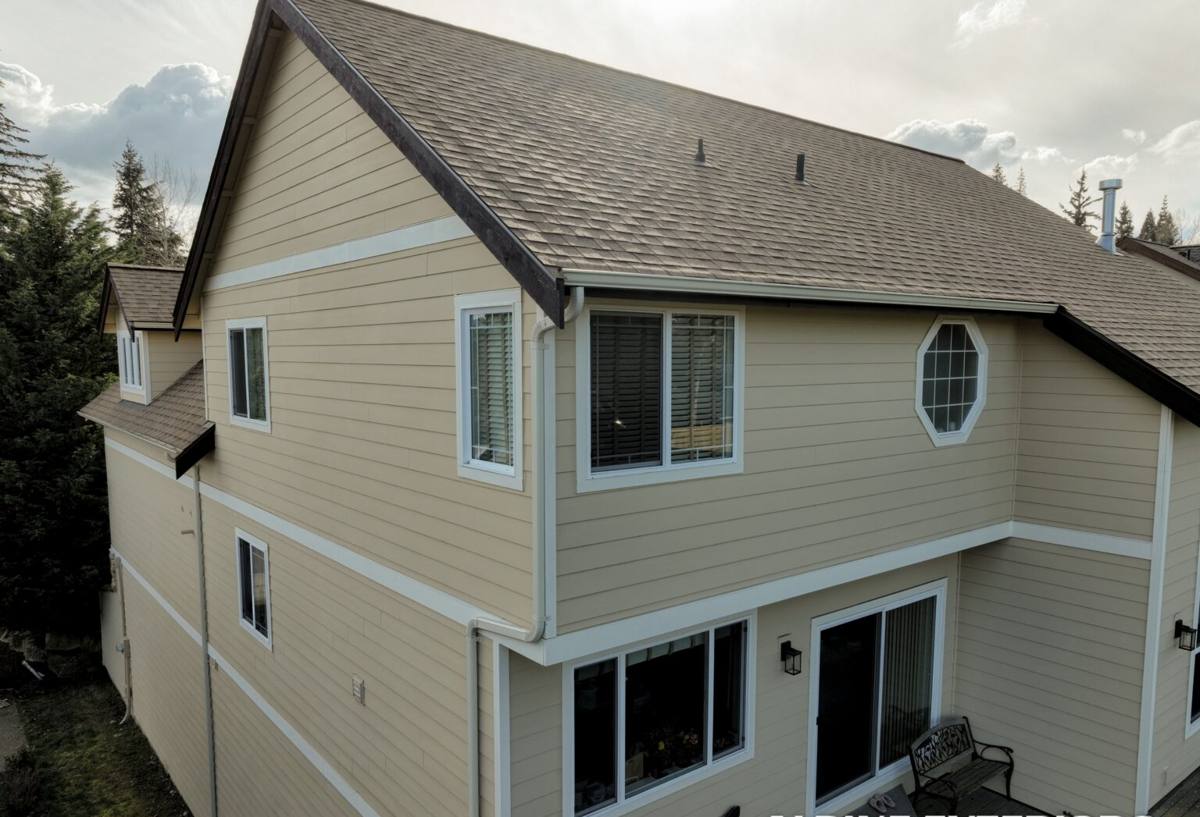
Conway sits in the low-lying stretch of the Skagit Valley, close enough to Skagit Bay and the tidal flats that salt-laden air is part of daily life, and close enough to the river bottom that fog, standing moisture, and shade linger longer than they do on higher, drier ground. That combination is hard on a roof. An asphalt shingle system that would hold up fine in a dry inland climate can wear out early here if it wasn't installed with this specific environment in mind. We install and repair asphalt shingle roofs for homes in and around Conway, and our approach is shaped by what actually happens to a roof in this valley over ten, fifteen, twenty years — not by a generic install checklist.
Why Conway's Location Puts Extra Strain on a Roof
Salt Air Off the Bay
Airborne salt doesn't just affect metal flashing and fasteners on homes right at the waterline — it travels inland on wind and settles on every exterior surface it touches, including shingles. Over years, that salt exposure accelerates the breakdown of exposed metal components (flashing, drip edge, nail heads) and speeds up general granule and sealant wear. It's a slower process than what you'd see on a beachfront home, but Conway is close enough to the bay that it's a real factor, not a theoretical one.
Low-Lying Fog and a Long Moss Season
Because Conway sits in the river valley rather than up on a slope, morning fog and heavy dew tend to sit longer before burning off, especially on north-facing roof planes and sections shaded by trees. That extended damp period is exactly what moss and algae need to get established. Once moss takes hold under the shingle tabs, it lifts them, holds water against the roof deck, and shortens the life of the shingle field years before it would otherwise need replacing. Skagit County's moss season isn't a two-week nuisance — it's close to a year-round condition on roofs that don't get sun or airflow.
Driving Rain and Wind
Western Washington's rain isn't always straight-down rain. Wind-driven storms push water sideways and up under shingle edges, laps, and any flashing detail that wasn't sealed correctly the first time. A roof that's watertight in a light, calm rain can still leak in a wind-driven one if the underlayment, flashing, and shingle overlap weren't done to handle that specific condition.
What a Correct Asphalt Shingle Roof Involves Here
A shingle roof is a system, not just a layer of shingles nailed to plywood. In a climate like Conway's, every layer underneath the shingles matters as much as the shingles themselves.
Underlayment and Water-Entry Points
We install synthetic underlayment across the full roof deck and add self-adhered ice-and-water membrane at the vulnerable points — valleys, eaves, and around any roof penetration — where wind-driven rain and standing moisture are most likely to find a way in. This is the layer that keeps the house dry even if a shingle gets lifted or damaged in a storm.
Ventilation
Proper intake and exhaust ventilation keeps the attic space close to outside temperature and humidity, which does two things: it prevents condensation from forming on the underside of the roof deck, and it keeps shingles from cooking from underneath in the rare hot stretch. Poor ventilation is one of the most common reasons a shingle roof fails early, and it's invisible from the ground — you have to check the attic to know it's a problem.
Flashing at Every Transition
Chimneys, skylights, sidewalls, and roof-to-wall transitions are where most leaks actually start, not in the open field of shingles. We flash these with step flashing, counterflashing, or kickout flashing as appropriate to the detail, rather than relying on caulk or roof cement to do a metal component's job.
Nailing and Fastening
Shingle warranties assume correct nail placement, nail count, and nailing pattern. Underdriven, overdriven, or misplaced nails are a leading cause of shingles blowing off in wind — and a wind event pulling shingles loose is one of the most common reasons a homeowner calls us for an unplanned repair.
Choosing the Right Shingle for a Conway Home
Not every shingle product is a good fit for a valley climate with heavy moss pressure and salt air. The table below covers the main options homeowners in this area typically weigh.
| Shingle Type | Typical Lifespan | How It Handles Conway's Climate |
|---|---|---|
| 3-tab (economy) | 15–20 years | Lower upfront cost, but thinner profile wears faster under moss and driving rain; least wind resistance of the three |
| Architectural / laminate | 25–30 years | Heavier, multi-layer construction stands up better to wind-driven rain; the standard choice for most homes in this area |
| Algae-resistant (AR) architectural | 25–30 years | Copper- or zinc-infused granules resist algae and moss staining longer, which matters on shaded, fog-prone roof planes |
For most Conway homes, especially those with any tree cover or north-facing roof sections, we recommend an algae-resistant architectural shingle. It costs modestly more than a standard architectural shingle up front, but it directly addresses the moss and staining pressure that's specific to this valley, and most major manufacturers now offer AR technology as a standard feature rather than a premium upgrade.
Repair, Recover, or Full Replacement?
Not every roofing problem needs a full tear-off. Part of an honest inspection is telling a homeowner which of these three their roof actually needs.
| Situation | Typical Fix | What Drives the Decision |
|---|---|---|
| Isolated damage, roof deck sound, shingles otherwise in good shape | Targeted repair | Localized wind damage, a failed flashing detail, or a single damaged section |
| Single existing shingle layer, deck in good condition | Recover (new layer over existing) | Can save cost but isn't always advisable — it hides deck condition and shortens the life of the new shingles |
| Aging or failing shingles, moss damage, multiple layers, or deck issues | Full tear-off and replacement | The only option that lets us inspect and repair the deck and start every layer fresh |
We generally steer homeowners away from recovering over an existing layer, even though it's cheaper. It traps whatever moisture or moss damage is already there, and it prevents us from ever seeing the roof deck to catch soft spots before they become a bigger problem.
Our Process
- Inspection: We walk the roof and the attic, not just look from the ground, and document what we find with photos.
- Honest scope of work: We tell you plainly whether you need a repair, a recover, or a full replacement, and why.
- Tear-off and deck check: Old material comes off down to the deck, and any soft, rotted, or damaged sheathing gets replaced before anything new goes down.
- Underlayment and flashing: Ice-and-water membrane at the vulnerable points, synthetic underlayment across the field, new flashing at every transition.
- Shingle installation: Installed to manufacturer nailing specs and local wind conditions, not just "close enough."
- Ventilation check: We confirm intake and exhaust are balanced before we call the job done.
- Cleanup: Magnetic sweep for nails, full debris removal, and a final walkthrough with you.
Maintenance That Actually Extends Roof Life Here
A shingle roof in a moss-prone, salt-air valley needs a bit more attention than a roof in a drier climate. A few habits go a long way:
- Have moss and debris cleared from the roof and gutters at least once a year, more often under tree cover
- Avoid pressure washing shingles — it strips granules and shortens shingle life; soft treatment methods are safer
- Keep gutters and downspouts clear so water isn't backing up under the shingle edge during heavy rain
- Trim back branches that keep a roof section shaded and damp longer than the rest of the roof
- Get flashing around chimneys and skylights checked periodically — these fail before the shingle field usually does
- Have a professional look at the roof after any significant windstorm, even if nothing looks obviously wrong from the ground
Why a Crew That Already Works Conway Matters
A roofing crew that mostly works drier, inland areas doesn't think about moss pressure, salt air, or wind-driven rain the same way a crew based in Skagit County does. We're out in this valley regularly, we know how differently a north-facing roof ages compared to a south-facing one on the same street, and we know which flashing details tend to fail first in this specific climate. That local pattern recognition is what tells us where to spend extra attention on your roof instead of treating every job the same way a national checklist would.
We also know the practical side of working in this area — permitting through Skagit County, coordinating around the weather windows that actually allow for a dry tear-off and install, and being close enough to respond quickly if something needs attention after a storm rather than being a call center routing you to whoever's available.
Get a Straightforward Estimate
If your Conway home's roof is showing moss, worn granules, or you're just not sure what condition it's really in, we're glad to take a look. There's no pressure and no obligation — just a straight answer about what your roof needs and what it will cost to do it right. Use the form below to request your free estimate.