 Anacortes Siding
 Conway Decks Carry a Different Kind of Load
Conway sits down in the Skagit River valley, a low, flat stretch of farmland and river bottom between Mount Vernon and Stanwood. It's a different world from a bluff-top lot in Anacortes, but it shares the same wet, marine-influenced weather that defines western Skagit County: long stretches of driving rain, heavy fall and winter dew, and a moss season that can run eight months or more. Add in the lower elevation and the moisture that tends to sit in the valley rather than drain off quickly, and a deck built here has to work harder than one built on higher, drier ground.
None of that means a deck in Conway can't last. It means the framing, the footings, the fasteners, and the decking material all have to be chosen and installed with that ground and that climate in mind, not just picked off a lumber yard shelf because it's what's in stock.
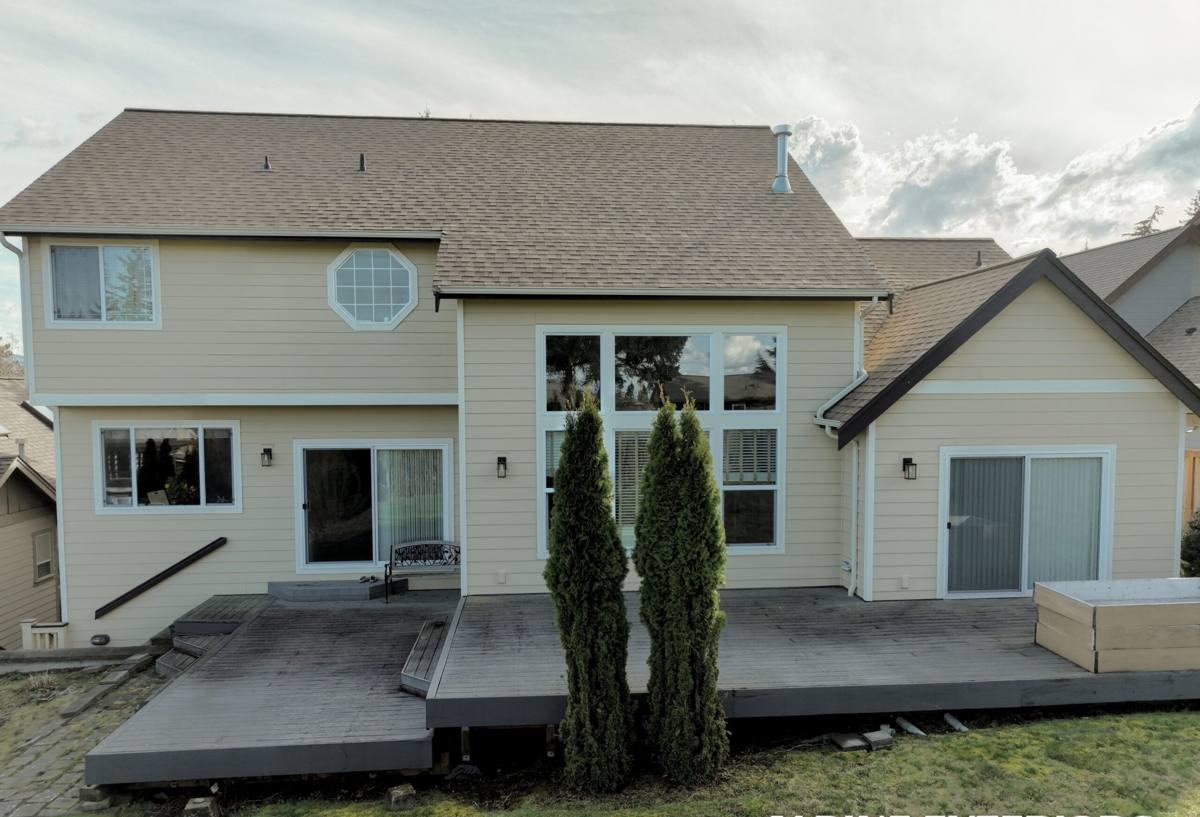
What the Local Climate Actually Does to a Deck
Salt air off the Sound reaches inland through the valley on a lot of weather patterns, and combined with the near-constant humidity, it accelerates corrosion on any fastener or hardware that isn't rated for it. Driving rain gets under improperly flashed ledger boards and ends up rotting the rim joist from the inside, often years before the surface decking shows any obvious damage. And moss doesn't just make a deck look neglected — a mat of moss holds moisture against the boards continuously, which is exactly the condition that breeds rot in untreated or under-treated wood and accelerates surface wear on lower-grade composites.
The Three Failure Points We See Most
- Ledger board attachment to the house without proper flashing, letting water track behind the siding and into the rim joist
- Standard, uncoated fasteners corroding in framing that's still structurally sound otherwise
- Decking installed tight to the ground or with poor airflow underneath, trapping moisture and speeding up moss growth and rot
Building for Conway's Ground
The valley floor around Conway tends to hold water longer after a storm than higher ground closer to town, and soil that stays saturated for stretches of the year behaves differently under footings than well-drained soil does. This is one of the first things we check on-site before ever pricing a job: how the specific lot drains, how far the frost and moisture line typically sits, and whether the existing grade pushes water toward or away from where the deck will stand.
Footings need to be set to the depth the local building code requires for the soil conditions, not just a standard minimum. Where a lot holds water, we'll also look at whether the post bases need extra standoff height to keep wood posts out of standing moisture altogether, and whether the yard needs any grading or drainage work before deck construction even starts. Skipping this step is the single most common reason a deck built by out-of-town crews starts failing early in low-lying parts of the county.
Footings and Framing Checklist
- Footing depth and diameter matched to local code and the soil's drainage behavior, not a generic minimum
- Post bases with standoff hardware keeping wood off concrete and out of pooled water
- Stainless or hot-dip galvanized structural hardware rated for coastal/marine exposure
- Proper ledger flashing with a drainage gap, never sealant alone as a substitute for flashing
- Joist tape or equivalent protection on any wood joist top that decking will be fastened through
- Grading and drainage planning around the deck footprint before framing begins
Decking Material Options for This Climate
There's no single "correct" decking material for every Conway property — it depends on budget, how much upkeep the homeowner actually wants to do, and how much sun versus shade the deck will get (shaded decks under trees hold moisture and moss longer than open, sunny ones). Here's how the main options compare for this specific climate:
| Material | Moisture & Moss Behavior | Maintenance | Typical Lifespan Here |
|---|---|---|---|
| Pressure-treated lumber | Resists rot when properly sealed; needs the cut ends and fastener holes re-treated or the treatment breaks down faster in constant damp | Annual cleaning, re-sealing every 1-2 years | 10-15 years with upkeep, less without it |
| Cedar | Naturally rot- and insect-resistant but softer, so it holds surface moisture and shows moss faster if not maintained | Cleaning and oiling roughly every 1-2 years | 15-20 years with consistent care |
| Composite decking | Doesn't rot, but lower-grade composites can absorb moisture at the core and grow mildew on the surface if not capped | Periodic washing; no sealing or staining | 20-25+ years for capped composite |
| PVC decking | Fully synthetic, sheds water and resists moss growth best of the options here | Occasional washing | 25-30+ years |
We install all of these, and we'll walk through the honest trade-offs for your specific lot and budget rather than steering everyone toward the highest-margin product. A shaded, low-lying yard in Conway is exactly the kind of site where a composite or PVC board earns its higher upfront cost back in reduced maintenance and moss resistance. A sunnier, open lot can do just fine with well-maintained wood.
Substructure Materials Matter as Much as the Decking
Homeowners naturally focus on what the decking surface looks like, but the framing underneath is what actually determines how long the deck lasts. We use pressure-treated framing lumber rated for ground contact where posts meet grade, corrosion-resistant structural connectors throughout, and fastener systems matched to whatever decking material goes on top — composite and PVC boards each have fastener systems designed for their specific expansion and contraction behavior, and using the wrong screw type is a common shortcut that shows up as popped fasteners or surface staining within a few years.
How We Approach a Conway Deck Project
1. On-Site Walk and Site Assessment
We look at drainage, sun exposure, existing grade, and how the deck will tie into the house before we talk products or price. On a river-valley lot, this step changes the footing and framing plan more than it would on higher ground.
2. Design and Material Selection
We talk through decking material, railing style, and layout against your budget and how much maintenance you actually want to sign up for long-term, not just what looks best in a showroom sample.
3. Permitting
Deck projects above certain heights or attached to the house typically require a permit through Skagit County. We handle that process rather than leaving it for the homeowner to sort out.
4. Framing and Waterproofing Details
This is where the ledger flashing, footing depth, corrosion-resistant hardware, and drainage planning all come together — the parts of the job that don't show once the decking is on, but determine whether the deck is still solid in fifteen years.
5. Decking, Railing, and Finish Work
Boards, railing, stairs, and any fascia or skirting go on last, installed to the fastening specifications for whichever material was chosen.
6. Final Walkthrough
We walk the finished deck with you, cover basic care for the material you chose, and make sure everything is solid before we call the job done.
What Drives Cost on a Conway Deck
| Factor | Why It Matters Here |
|---|---|
| Footing depth and site drainage work | Low-lying, water-holding soil sometimes needs deeper footings or added drainage before framing starts |
| Decking material | Pressure-treated lumber costs least upfront; PVC and premium composites cost more but need far less upkeep in a moss-prone climate |
| Height and grade change | A deck that sits well above grade needs more substructure, railing, and often stairs |
| Hardware package | Marine-grade or coastal-rated fasteners and connectors cost more than standard hardware but resist corrosion far longer |
| Size and layout complexity | Multiple levels, angles, or built-in features add labor beyond a simple rectangular deck |
We're not going to publish a price list here that pretends every lot is the same — the drainage and footing work alone can shift a bid meaningfully between two properties a mile apart. What we can promise is a clear, itemized estimate that shows exactly what you're paying for.
Keeping a Conway Deck in Good Shape
- Sweep debris and standing leaves off the deck regularly, especially in fall — trapped organic matter is what starts moss and mildew
- Rinse or lightly scrub moss growth off in early spring before it spreads, rather than waiting until it's established
- Check that gaps between boards stay clear so water drains through instead of pooling
- Inspect ledger flashing and railing connections yearly for any sign of water intrusion or loose hardware
- Re-seal or re-stain wood decking on the schedule the product calls for — skipping a cycle in this climate shortens lifespan noticeably
- Keep vegetation trimmed back from the deck edges to improve airflow and sun exposure underneath
Why a Crew That Already Works This Area Matters
A contractor who mostly builds decks on dry, well-drained lots elsewhere in the county doesn't always plan for what a river-valley site in Conway needs — deeper attention to footing depth, drainage, and hardware selection. We work throughout the Anacortes and Skagit County area regularly, which means we've already worked out the footing depths, flashing details, and material choices that hold up specifically in this kind of low, wet ground, not just in a generic Pacific Northwest climate. That local pattern-recognition is what keeps a deck solid past year ten instead of needing early repairs.
If you're planning a new deck or need to know whether an existing one is still sound, we're happy to come take a look. Reach out for a free, no-pressure estimate using the form below and we'll walk your property and give you a straight answer on what it needs.