 Anacortes Siding
 Siding Built for What Edison Actually Deals With
Edison sits out on the flat, low-lying farmland edge of Skagit County, close enough to Samish Bay and the tidal flats that salt air is a fact of life, not an occasional visitor. Homes here take a specific combination of weather that a lot of siding products simply aren't built for: salt-laden air moving in off the water, driving rain that comes in sideways during winter storms, and a moss and mildew season that runs long in this part of the Pacific Northwest. We do James Hardie siding installations in Edison and the surrounding Anacortes-area communities, and the approach we bring to this work is shaped entirely by what that climate does to a wall over the years, not just what a product brochure claims it can handle.
This page is about one thing: James Hardie fiber cement siding, installed correctly, on Edison homes. Not a general overview of every exterior product on the market — just what local homes actually need, what a correct installation involves, and why the material and the crew both matter more here than they would in a milder, drier part of the state.
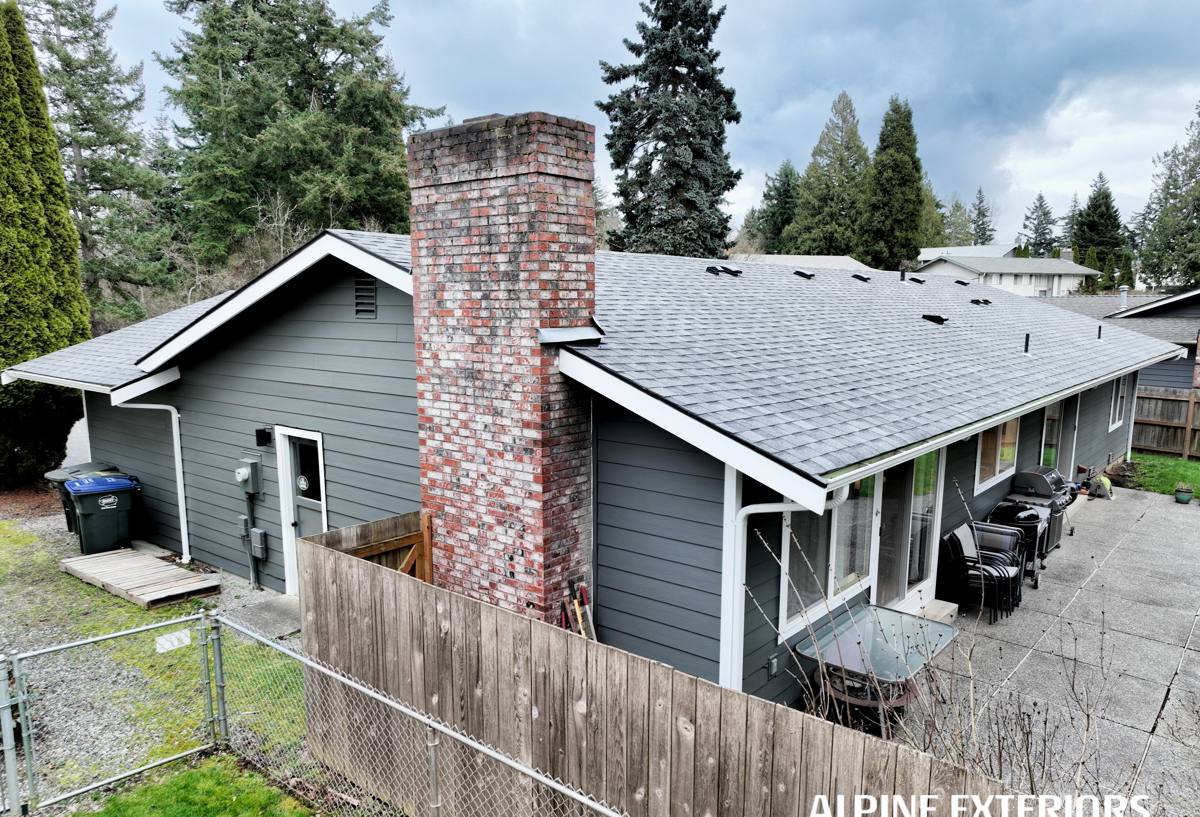
What Salt Air, Driving Rain, and Moss Do to a Wall Over Time
Salt Air
Proximity to open water means airborne salt settles on every exterior surface, not just the siding facing the water. Salt is corrosive to metal fasteners, flashing, and hardware, and it also accelerates the breakdown of coatings and finishes that aren't formulated to resist it. A paint job or a lower-grade coating that would hold up fine twenty miles inland can start chalking, fading, or peeling years earlier on a property this close to the bay.
Driving Rain
Storms coming off the water don't fall straight down — they push rain sideways into walls, trim, and window flashing. On flat, open farmland like the ground around Edison, there's little in the way of terrain or tree cover to slow that wind down before it hits a house. Siding systems that depend on caulk and butt joints instead of proper lap and flashing details tend to let water in first at those wind-exposed elevations, and once moisture is behind the siding on a low-lying property, it doesn't dry out quickly.
A Long Moss Season
Mild temperatures, persistent regional dampness, and plenty of shaded or north-facing wall area add up to a moss and algae season that stretches across much of the year here. It shows up as green or black staining on siding and trim long before it becomes a structural concern, but sustained organic growth holds moisture directly against the wall assembly — which is exactly the condition that leads to rot behind siding that isn't sealed and drained correctly.
Why We Install Only James Hardie Fiber Cement in Edison
We don't install LP SmartSide, vinyl siding, Cemplank, Allura, primed spruce, or cedar. That's a professional standard, not a sales pitch, and it's based on watching how different siding materials actually hold up in this specific climate over years of jobs in Skagit County. Vinyl isn't a water barrier on its own — it depends entirely on what's behind it, and in a spot that takes real wind-driven rain, that's a weak link we're not willing to build a job around. Wood-based and engineered wood products need consistent repainting and are vulnerable to swelling and rot once moisture gets behind them, which is a demanding maintenance cycle to keep up with this close to salt water. Cedar is attractive but asks for the same ongoing sealing and staining commitment, on a schedule that a busy household often can't keep up with year after year.
James Hardie fiber cement addresses the specific problems Edison's climate creates:
- Non-combustible core — fiber cement doesn't feed a fire the way wood-based siding can, which matters for both household safety and insurance underwriting.
- Factory-applied ColorPlus finish — the color is baked on under controlled conditions rather than brushed on in the field, so it resists the fading and chalking that salt air and UV exposure cause faster here than inland.
- Climate-engineered HZ product lines — Hardie builds different formulations for different exposure zones, including versions engineered for sustained moisture and marine air, which is a direct match for a property near Samish Bay.
- Dimensional stability — fiber cement doesn't swell, cup, or warp the way engineered wood siding can after repeated wet-season moisture cycles.
- A strong transferable warranty — real protection for the homeowner, backed by a warranty structure that holds up as long as the installation follows spec.
None of that means other products are worthless everywhere. It means we made a professional call that one system, installed correctly and stood behind completely, serves an Edison homeowner better than a cheaper option that quietly shifts maintenance risk onto them a few years down the road.
Choosing the Right Hardie Product for an Edison Home
Not every Hardie product is the right fit for every home, and part of doing this job correctly is matching the product line to the house — its style, its exposure, and what the homeowner actually wants to maintain over time.
| Product Line | Best Use | Why It Fits This Area |
|---|---|---|
| HardiePlank lap siding | Most single-family homes, traditional and updated styles | Sheds wind-driven rain effectively when installed with correct overlap and flashing; available in smooth or cedar-textured finishes |
| HardiePanel vertical siding | Accent walls, gables, modern and farmhouse-style designs | Clean vertical lines that pair well with the barn and farmhouse aesthetic common around Edison |
| HardieShingle siding | Craftsman details and accent sections | The textured, shingled look without the moisture absorption and repainting cycle of real wood shingle |
| HardieTrim boards | Corners, window and door casing, fascia | Factory-finished trim resists the same salt air and moisture cycling as the field siding, instead of becoming the weak point |
Color and profile come down to the individual home, but the product family and the installation approach stay consistent — we spec what actually fits an Edison property's exposure rather than defaulting to whatever's easiest to install.
What a Correct Installation Involves Here
Material choice only solves half the problem. The other half is installation detail, and on a property that takes direct salt air and wind-driven rain, cutting corners on any of the following tends to show up within a season or two rather than a decade.
Drainage and Clearance
Siding needs to sit with proper clearance from grade and from roof and deck surfaces so it isn't wicking moisture up from wet, low-lying ground — a real consideration on flat Skagit County farmland where water doesn't drain away quickly. A drainage plane behind the siding, rather than relying on the cladding itself as the only water barrier, gives any moisture that does get past the surface a way out instead of a place to sit.
Flashing and Fastening
Every window, door, and penetration needs flashing that actually integrates with the house wrap underneath it, not just a bead of caulk covering a gap. Fasteners and flashing hardware need to be corrosion-resistant and rated for coastal exposure — standard-grade hardware corrodes faster this close to salt water, and a corroded fastener eventually means a loose board and an open path for water.
Joints and Fastening Patterns
Lap joints need to be properly overlapped and, where required, sealed — not simply butted together and caulked. Fastening patterns should account for the wind exposure a flat, open lot near the water actually sees, which is more demanding than a sheltered inland site. This is where a lot of the long-term difference between a siding job that lasts and one that fails early actually gets decided, and it's detail work that doesn't show up on a spec sheet.
Our Process, Start to Finish
- On-site inspection — we walk the exterior, check current siding and trim condition, and note where salt air, moisture, or moss have already caused wear.
- Honest scope and estimate — we explain what's actually needed, what product lines make sense for the home, and give a written estimate with no pressure to sign on the spot.
- Prep and moisture check — before new siding goes up, we check the wall assembly underneath for hidden water damage, since covering a problem instead of fixing it just delays the cost.
- Installation to spec — correct drainage plane, flashing, fastening, and joint detail, installed the way Hardie's own specifications call for, not shortcut for speed.
- Final walkthrough — we go over the finished job with the homeowner and make sure every question about maintenance and warranty coverage is answered before we leave.
Keeping Hardie Siding Looking Right in This Climate
James Hardie siding is low-maintenance compared to wood or vinyl, but "low-maintenance" isn't "no-maintenance," especially this close to the water. A little regular attention keeps it performing the way it's designed to.
- Rinse siding down once or twice a year to clear salt residue and dust, especially on walls facing open water or prevailing wind
- Check north-facing and shaded walls for early moss or algae growth and clean it off before it spreads or holds moisture against the surface
- Walk the exterior after major winter storms and look for any caulking that's cracked or pulled away at trim joints and window edges
- Keep gutters clear so overflow isn't running down and pooling against siding at corners
- Trim back vegetation that's shading walls and keeping them from drying out between rain events
- Address any small caulking or flashing issue right away — on this coastline, small gaps don't stay small for long
Why Hire a Crew That Already Works in Edison
Skagit County's microclimates aren't uniform, and a flat, open, water-adjacent property like the ones around Edison faces a different mix of wind, salt, and moisture than a sheltered lot a few miles inland toward Anacortes proper. That's something you learn by working on homes here repeatedly — which walls take the worst of a winter storm, how fast moss actually comes back in this specific setting, and which flashing and fastening details are worth the extra time versus which ones are just code minimums. A crew that already knows the area isn't guessing at any of that, and it shows up in how the job is scoped and detailed before a single piece of siding goes up.
If your Edison-area home is showing salt residue, moss buildup, fading or cracked siding, or water staining near trim and windows, we're happy to take a look and give you a straight answer about what it actually needs. Reach out for a free, no-pressure estimate — we'll walk the exterior with you, explain what we see, and let you know honestly whether you're looking at repair, partial replacement, or a full re-side.