 Anacortes Siding
 Windows Built for Edison's Weather, Not Just Its Look
Edison sits in the low, open farmland of Skagit County near Samish Bay, which means homes here take weather from a direction most inland Washington houses never deal with: straight off the water. Salt-laden air, wind-driven rain that comes in sideways during winter storms, and a long wet season that keeps moss and algae growing on anything shaded or slow to dry all put extra stress on window frames, seals, and sills. A window that would hold up fine in a sheltered subdivision twenty miles inland can fail early out here if it wasn't installed with this specific climate in mind.
We replace windows across the Anacortes and greater Skagit County area, and Edison's older farmhouses, converted outbuildings, and mix of historic and newer construction present their own particular set of problems. This page covers what we actually look at when we replace windows in this area, what a correct installation involves, and why local experience matters more here than a lot of homeowners realize.
What Edison-Area Homes Typically Need
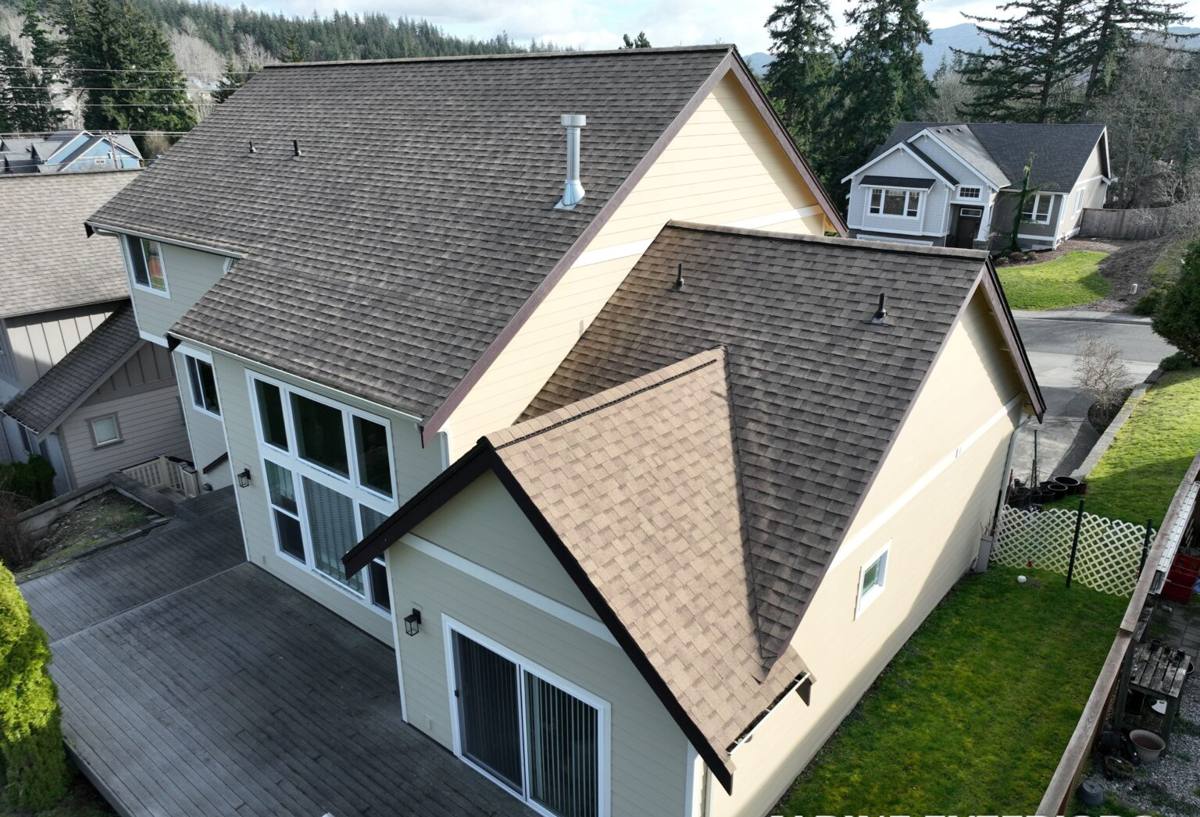
Edison's housing stock is a mix — original farmhouses and older cottages dating back decades, a scattering of newer builds, and outbuildings that have been converted to living space over the years. Most of the calls we get here fall into a few categories:
- Original single-pane wood windows on older farmhouses that have never been upgraded, often with failed glazing putty, warped sashes, and drafts you can feel standing next to them.
- First-generation vinyl replacements installed 20-30 years ago that are now fogging between panes (a sign the seal has failed) or have hardware that's corroded from years of salt exposure.
- Wood-framed windows with visible rot at the bottom corners and sill, usually where driving rain has been getting past old caulking or undersized flashing for years.
- Condensation and mold at the interior sill, especially on north- and west-facing rooms, which is often a sign of a poor thermal seal rather than a household humidity problem.
None of these are unusual for a coastal Skagit County property. They're just accelerated here compared to a drier, more sheltered location, which is why we pay close attention to material choice and installation detail rather than just swapping in whatever's on sale.
Why This Climate Is Hard on Windows
Salt Air
Salt-laden air off Samish Bay accelerates corrosion on window hardware — hinges, cranks, locks, and screws — especially on lower-quality aluminum or unprotected steel components. Over time this shows up as stiff or seized hardware, pitting on metal trim, and premature failure of weatherstripping that's been sitting in a slightly corrosive environment for years.
Driving Rain
Storms coming off the water don't just fall straight down here — they get pushed sideways into siding and window openings. That means flashing details and sill pans matter more in Edison than they would on a home in a more sheltered inland location. A window that's caulked in place without proper flashing will eventually let water behind the frame, and once that happens the rot spreads into the wall framing, not just the window itself.
Moss and Algae Season
Skagit County's long wet season keeps shaded, north-facing surfaces damp for months at a time. Wood sills and trim that don't get much sun grow moss and algae readily, and that constant moisture accelerates wood decay and holds water against caulk joints, shortening their working life. It's a slow, quiet kind of damage — by the time it's visible, it's usually been building for a while.
What a Correct Window Replacement Actually Involves
Swapping a window is straightforward in theory. Doing it right in a climate like this takes more care at a handful of specific steps:
- Full removal and inspection of the opening. We pull the old window out completely rather than doing a "pocket" insert over a potentially damaged frame, so we can see the actual condition of the framing, sheathing, and sill underneath.
- Repair of any hidden rot or water damage before the new window ever goes in. Installing a new window over damaged framing just hides the problem and guarantees a repeat repair later.
- Proper flashing and a sloped sill pan so any water that does get past the exterior seal drains back out instead of pooling against the frame — critical given how much wind-driven rain this area sees.
- Correct sizing and shimming so the window is square and level, which affects both how it operates long-term and how well it seals.
- Continuous, compatible sealant and weatherstripping around the full perimeter, sized and rated for the exposure the window will actually see.
- Interior and exterior trim finished properly so there's no gap or unfinished edge where moisture can collect.
Skipping any one of these steps is usually invisible on install day and becomes a problem two, five, or ten years down the road — which is exactly when it's most expensive to fix.
Choosing the Right Frame Material for This Exposure
There's no single "best" window material for every home — it depends on exposure, budget, and how the house is built. Here's how the common options hold up specifically against salt air, driving rain, and a long wet season:
| Frame Material | Salt Air / Corrosion | Moisture Behavior | Maintenance |
|---|---|---|---|
| Vinyl | Doesn't corrode; hardware quality varies by manufacturer | Won't rot; seals are the main long-term wear point | Low — occasional cleaning |
| Fiberglass | Excellent resistance; dimensionally stable in temperature swings | Won't rot or swell | Low |
| Aluminum | Prone to pitting and corrosion near salt air unless well-coated | Conducts cold, prone to interior condensation | Moderate — watch for corrosion at hardware |
| Wood / Wood-clad | Cladding protects from salt exposure; exposed wood does not | Vulnerable to rot if seals or cladding fail | Higher — periodic inspection and finish upkeep |
For most Edison-area replacements we lean toward vinyl or fiberglass because they hold up to the salt and moisture exposure with the least ongoing maintenance. That said, wood-clad windows still make sense on homes where matching an original architectural look matters more than minimizing upkeep — it's a genuine trade-off, not a right-or-wrong answer, and we'll walk through it honestly for your specific house.
Glass and Performance Options Worth Knowing About
Beyond the frame, the glass package affects both comfort and how well the window handles this climate:
- Dual-pane vs. triple-pane: Dual-pane with a good Low-E coating is standard and performs well for most homes here; triple-pane adds meaningful insulation value but at a higher cost and weight.
- Low-E coatings: Reduce heat loss in winter and heat gain in summer, and also cut down on UV fading of interior floors and furniture.
- Argon or krypton gas fill: Improves insulating performance between panes; argon is the common, cost-effective choice for most residential replacements.
- Warm-edge spacers: The material separating the panes affects how well the seal resists temperature swings and condensation at the edge of the glass — worth asking about rather than assuming all spacers are equal.
Our Process for Edison Window Replacement
We keep the process straightforward and try not to waste your time with upsells you don't need:
- On-site assessment. We look at each window's actual condition — frame, sill, surrounding siding and trim — not just take a count and a quote off a phone call.
- Honest recommendation. If a window can be repaired instead of replaced, we'll tell you. If replacement makes sense, we'll explain why and what material fits your home and budget.
- Written estimate that spells out material, scope, and timeline before any work starts.
- Removal, repair, and install following the steps outlined above, with attention to flashing and drainage given the exposure out here.
- Cleanup and walkthrough so you can see the finished work and ask questions before we consider the job done.
What Affects the Cost of a Window Replacement
Every home and every window opening is a little different, but the main cost drivers we run into on Edison-area jobs are consistent:
| Factor | Why It Matters |
|---|---|
| Frame material | Vinyl is typically the most budget-friendly; fiberglass and wood-clad cost more upfront |
| Hidden rot or water damage | Repair work behind the opening adds labor and material beyond the window itself |
| Window size and configuration | Larger openings, custom shapes, and multi-panel units cost more than standard sizes |
| Glass package | Triple-pane, specialty coatings, and gas fills add cost over a standard dual-pane unit |
| Number of windows | Doing a whole house at once is usually more cost-efficient per window than one-off replacements |
| Access and site conditions | Second-story openings or tight rural access can add labor time |
We'd rather give you real ranges based on your actual home than a number pulled out of thin air over the phone — that's what the on-site estimate is for.
Why Local Experience Matters in Edison
Edison is unincorporated, so permitting and inspection for exterior work generally runs through Skagit County rather than a city building department — worth knowing before you assume the process works the same way it does in Anacortes or Mount Vernon. A crew that already works this area knows that distinction, along with the practical realities of rural properties: longer driveways, older electrical and structural quirks in farmhouses, and the specific weather exposure that comes with being this close to the water. That familiarity shortens the learning curve on your project and reduces the chance of surprises mid-job.
It also means we've seen how windows in this specific area actually fail over time — not in a generic climate, but in this one — which shapes the material and installation choices we recommend.
A Simple Maintenance Checklist for Edison Homeowners
Whether your windows are new or you're planning a replacement down the road, a few habits go a long way in this climate:
- Rinse salt residue off window exteriors and hardware a few times a year, especially after storms.
- Check and clear weep holes on vinyl and aluminum frames so water can drain properly.
- Inspect exterior caulking annually and re-seal any cracked or separated joints before winter.
- Remove moss or algae buildup on sills and trim promptly rather than letting it sit against the wood.
- Watch for condensation between panes — it's an early sign of seal failure, not just a humidity issue.
- Lubricate hardware periodically to keep locks and cranks from seizing up from salt exposure.
If you're dealing with drafty, foggy, or hard-to-operate windows on an Edison-area home, we're happy to take a look and give you a straightforward, no-pressure estimate. Use the form below to get started.