 Anacortes Siding
 Why Cap Sante Homes Ask for Fiber Cement First
Cap Sante sits right where Anacortes meets the water — homes here look out over the boat harbor and the channel, and that view comes with a price. Wind off the water carries salt, moisture sits in the air for days at a time, and the bluff above the marina catches weather that inland Skagit County neighborhoods barely notice. Siding on these homes isn't just decorative. It's the first line of defense against a climate that never really lets up.
We get called out to Cap Sante often enough that we've stopped being surprised by what we find: paint failing years ahead of schedule, trim soft at the corners, moss creeping up north-facing walls that never get direct sun. None of that is a mystery once you've stood on that hill in a January rain. It's why, when a homeowner up here asks us about siding, we talk about fiber cement before anything else — and specifically about James Hardie, which is the only fiber cement product we install.
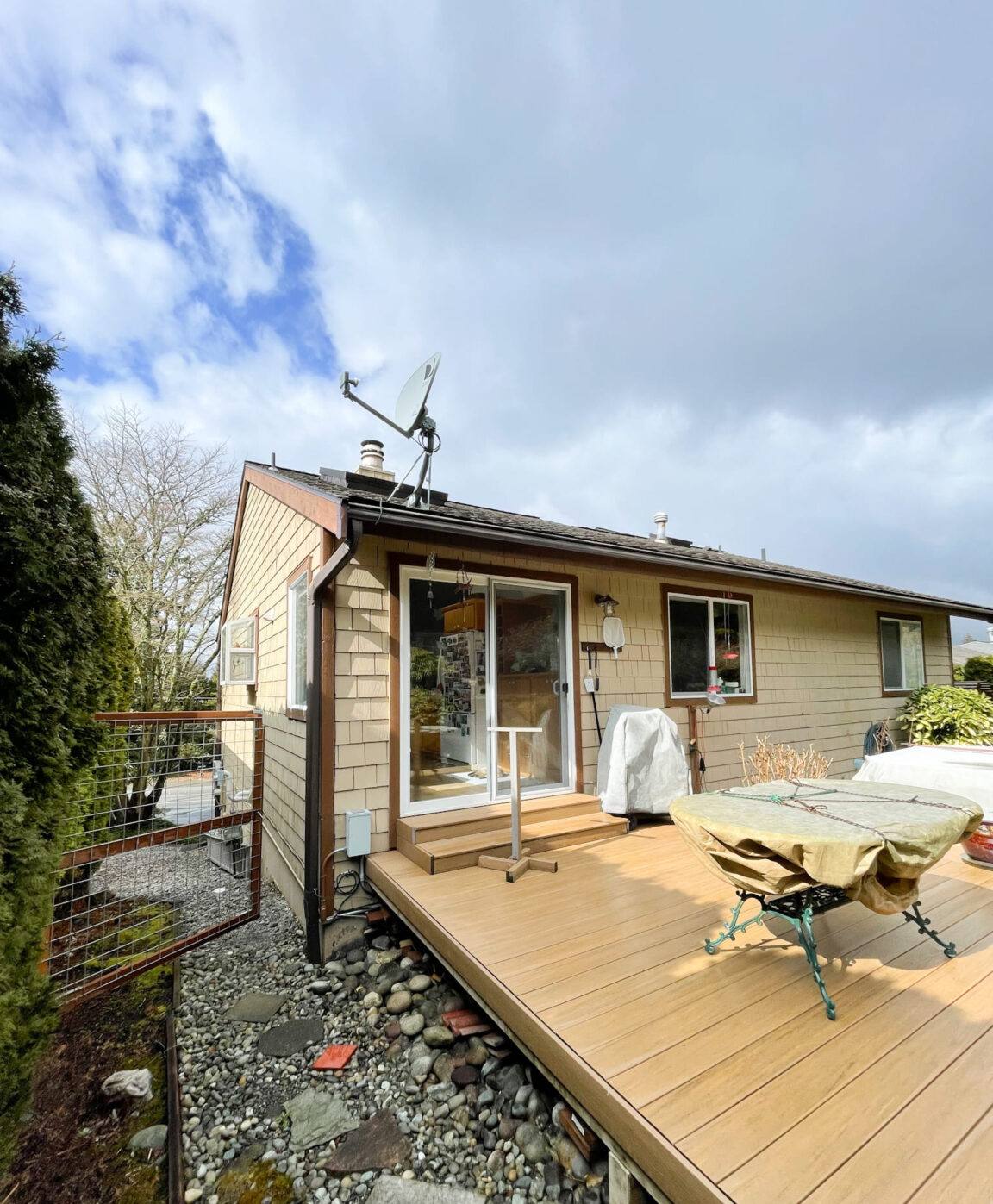
What the Salt Air and Rain Actually Do to Siding
Salt air
Airborne salt from the water is corrosive and it's persistent. It settles on exterior surfaces and accelerates the breakdown of paint film, especially on siding that wasn't built to take a factory finish designed for the job. Fasteners, trim, and any exposed wood take the brunt of it. Over years, that steady low-grade exposure is what separates a home that still looks sharp at fifteen years from one that needed a repaint at year six.
Driving rain
Wind-driven rain off the water doesn't just fall — it hits siding sideways, working into laps, seams, and butt joints that would stay dry in a calmer inland setting. Any weakness in flashing, caulking, or panel overlap becomes a moisture entry point, and moisture behind siding is the single biggest cause of rot and sheathing damage we see on Anacortes homes.
The long moss season
Western Washington's damp stretch runs long, and Cap Sante's exposure and shade patterns — bluff-side homes, tree cover, north walls that rarely dry out — give moss and algae a head start most neighborhoods don't have. Moss holds moisture against the siding surface, and on softer or absorbent materials that's a slow path to decay. It's cosmetic at first. It doesn't stay that way.
Why We Install Only James Hardie Fiber Cement
Fiber cement as a category handles all three of those problems better than wood, vinyl, or engineered wood products — it doesn't absorb moisture the way wood-based sidings do, it won't warp or buckle in temperature swings, and it holds paint and factory finishes far longer under UV and salt exposure. But not all fiber cement is built the same, and we don't install every brand on the market.
We standardized on James Hardie for a few concrete reasons that matter specifically in a place like Cap Sante:
- ColorPlus factory finish — baked on in a controlled environment, it resists fading and chipping far better than field-applied paint, which matters when salt air is working against the finish every day.
- HZ5 engineered formulation — Hardie's HZ product lines are engineered for specific climate zones, and the HZ5 formulation is built for the wetter, harsher conditions the Pacific Northwest coast delivers.
- Non-combustible core — cement-based composition doesn't feed a fire, which is a real consideration during Skagit County's dry summer wildfire-smoke stretches even though the bigger year-round issue here is moisture.
- A warranty that's actually transferable and backed by a manufacturer that's been in this exact business for decades, not a newer or thinner-margin product line.
That's also why we don't install LP SmartSide, vinyl, Cemplank, Allura, or unprimed cedar and spruce siding. Each of those has a place in the market, and each has honest trade-offs — engineered wood products still rely on a wood-fiber core that needs an unbroken paint seal to stay dry; vinyl can't offer the same rigidity or fire performance and tends to show its age with sun exposure; cedar looks great on day one but demands a maintenance schedule most homeowners underestimate. We'd rather stand behind one product we trust completely in this climate than offer five we'd have reservations about.
What a Correct Fiber Cement Installation Involves
Fiber cement siding is only as good as the installation underneath it. A rushed or under-detailed install can undercut even the best product, and in a wind-and-rain-exposed spot like Cap Sante, the details matter more than usual.
Moisture management comes first
Before a single panel goes up, the wall needs a proper water-resistive barrier, correctly lapped and taped, with flashing integrated at every window, door, and penetration. This is the step that actually keeps water out — the siding itself is the second layer of defense, not the first.
Fastening and clearances to spec
Hardie has specific fastener patterns, nailing lines, and minimum clearances from grade, roof lines, and decks. Skipping these — nailing too close to panel edges, or letting siding sit too close to the ground or a roof surface — is exactly how moisture problems and premature failure start, regardless of how good the material is.
Caulking and joint detailing
Butt joints, corners, and trim transitions need to be sealed correctly and with the right products. In a location that takes rain from multiple directions, a poorly sealed joint is a guaranteed leak point eventually — it's a matter of when, not if.
Factory-cut edges where possible
Field-cut fiber cement edges expose raw material that isn't factory-sealed. Good installers minimize field cuts, and where they're unavoidable, they seal the cut edge properly before it goes up.
Our Process for Cap Sante Projects
- On-site assessment — we look at current siding condition, moisture staining, trim and flashing state, and how the home's specific exposure to wind and water should shape the plan.
- Product and line selection — matching the right Hardie panel profile (lap, shingle-style panel, or board-and-batten) and HZ5 formulation to the home's exposure and the look the owner wants.
- Tear-off and substrate check — removing existing siding gives us a direct look at the sheathing underneath, which is where hidden moisture damage from years of exposure usually shows up.
- Weather barrier and flashing installation — the unglamorous part that determines whether the siding actually performs for the next few decades.
- Hardie panel installation to spec — correct fastening, clearances, and joint sealing throughout.
- Trim, caulking, and final detailing — the finish work that keeps water out of every seam and corner.
- Site cleanup and walkthrough — we don't consider a job finished until the owner has walked the exterior with us.
Choosing Colors and Profiles for a Waterfront Setting
ColorPlus finishes come in a range of options, and for homes with harbor or channel views, a lot of owners lean toward tones that hold up visually against a gray-water, gray-sky backdrop for much of the year — deeper, more saturated colors tend to show salt film and water spotting less than very light or very glossy finishes. Panel profile matters too: a smooth lap works well on more contemporary Cap Sante homes, while a traditional lap or shingle-style panel suits the area's older coastal character. There's no universally "right" choice — it's a conversation about the specific house and what the owner wants to look at every day.
What Fiber Cement Siding Costs to Install
Every project is different once you factor in home size, existing damage, and detailing, but the table below outlines the main variables that move the price up or down on a Cap Sante job.
| Cost Factor | Why It Matters Here |
|---|---|
| Home size and wall complexity | More corners, dormers, and trim detail mean more cutting, sealing, and labor time |
| Existing substrate condition | Salt-air and moisture exposure often means some sheathing repair is needed once old siding comes off |
| Panel profile and finish | Shingle-style and board-and-batten profiles run higher than standard lap siding |
| Flashing and trim scope | Homes with more windows, decks, and roof intersections need more flashing detail work |
| Access and site conditions | Bluff lots, tight setbacks, and multi-story elevations near the harbor can add labor time |
We give every Cap Sante homeowner a specific, itemized estimate after an on-site look — broad national averages don't account for what your particular home and lot actually need.
Living With Fiber Cement Siding on the Water
Even the right material still needs some basic upkeep, especially in an environment with this much moss and salt exposure. A short annual routine keeps a Hardie install performing the way it's designed to for decades:
- Rinse siding down once or twice a year to clear salt film and organic buildup, especially on walls facing the water or shaded from direct sun
- Check and clear gutters before the fall rains start, since overflow is a common source of moisture stress at the top of siding runs
- Keep plantings and irrigation pulled back from siding so foliage doesn't trap moisture against the surface
- Watch north-facing and shaded walls for early moss growth and address it before it establishes
- Have caulking and trim joints inspected every few years — sealant is the one component that ages faster than the siding itself
Why Local Experience in Cap Sante Matters
Anyone can install siding from a spec sheet. Getting it right in a place like Cap Sante means understanding how this specific stretch of Anacortes waterfront behaves — which walls take the worst of the driving rain, where moss establishes first, how much salt exposure a given elevation actually sees. A crew that's worked this neighborhood before isn't guessing at flashing details or clearance requirements; they've already seen what happens when those details get skipped on a home two streets over.
That local pattern recognition is worth as much as the product spec sheet. It's the difference between a siding job that looks right on installation day and one that's still performing the way it should in year twenty.
If you're weighing options for your Cap Sante home, we're glad to come take a look and talk through what your specific house needs — no pressure, no obligation. Use the form below to request a free estimate.