 Anacortes Siding
 Guemes Island sits just across the water from Anacortes, reachable only by a short ferry crossing, and that combination of marine exposure and island logistics puts real demands on a home's exterior. Salt air moves off the water constantly, driving rain off Rosario Strait and Bellingham Channel finds every weak seam in a wall, and a moss season that runs long on shaded, north-facing lots doesn't let up the way it might further inland. We install James Hardie fiber cement siding exclusively, and on Guemes Island specifically, that choice comes down to matching a product to a climate that punishes anything less than a correctly detailed, genuinely durable exterior.
What Guemes Island Homes Need From Their Siding
A home on Guemes Island faces the same general Skagit County weather pattern as Anacortes, but with a few things intensified by the island's exposure to open water on multiple sides and its distance from a hardware store or a same-day repair crew.
Salt Air and Marine Exposure
Airborne salt is corrosive to fasteners, flashing, and any finish that isn't engineered to resist it. Over years of exposure, it accelerates fading, chalking, and the breakdown of caulked joints, especially on walls that face open water directly. Siding and trim here need a finish system and hardware that are built for that exposure, not standard products borrowed from an inland spec.
Driving Rain and Wind Exposure
Storms crossing the Salish Sea rarely arrive as straight-down rain. Wind pushes water sideways into south- and west-facing walls, and on a mostly rural island with fewer windbreaks than a dense neighborhood provides, that wind-driven rain finds its way into butt joints, corner trim, and anywhere flashing was cut short. The siding material matters less here than the quality of the flashing and joint work behind it, but the material still has to tolerate sustained wetting without swelling or breaking down.
A Long Moss Season
Shaded lots under fir and madrona canopy, which describes a lot of Guemes Island, stay damp long after a storm clears. That's exactly the condition moss and mildew need to establish, and once organic growth takes hold on a wall, it holds moisture against the surface and speeds up whatever deterioration is already underway. A siding substrate that doesn't feed that growth the way wood can is a real advantage on shaded island lots.
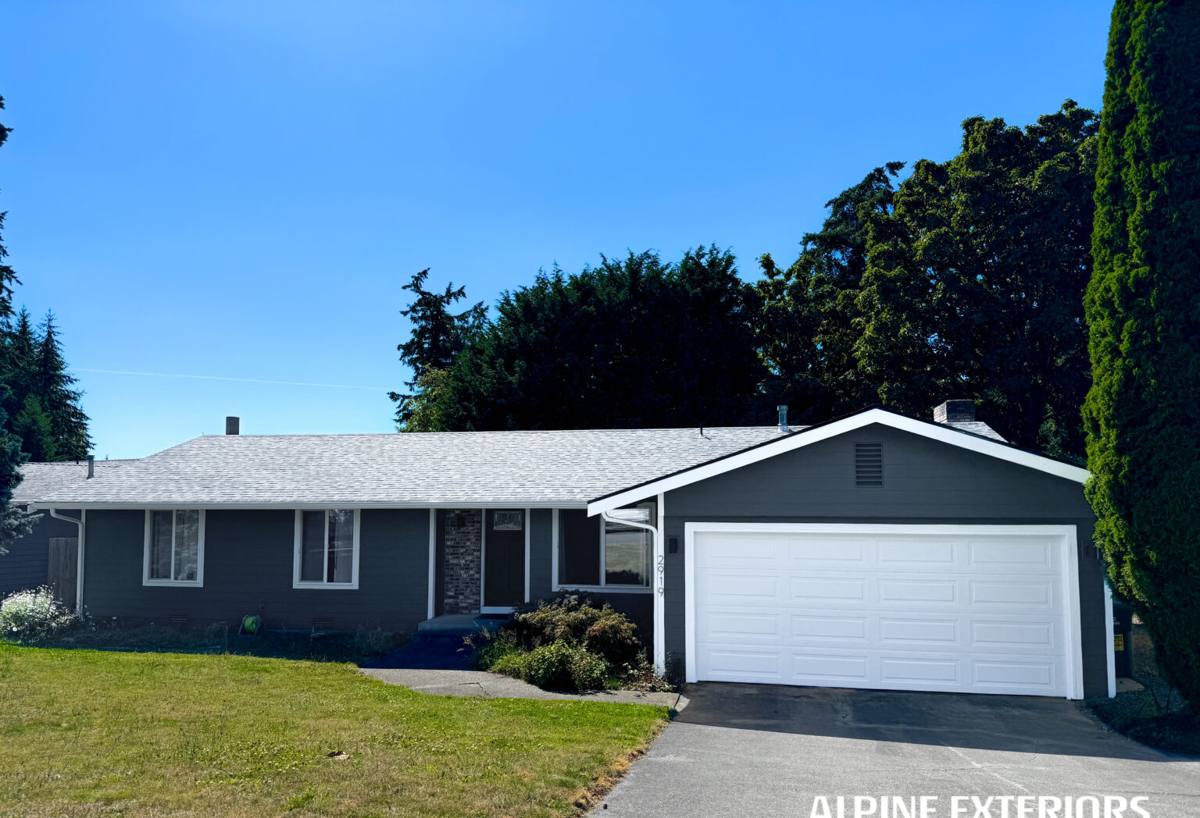
Why Fiber Cement Is the Right Match for This Climate
Fiber cement is made from cement, sand, and cellulose fiber rather than wood or PVC, and that composition changes how it responds to everything Guemes Island's climate throws at it. It doesn't swell, cup, or rot from sustained moisture the way wood-based sidings can. It doesn't get brittle or fade unevenly under UV and salt exposure the way vinyl does. And because the substrate itself is inorganic, it doesn't give moss and mildew the same foothold that wood grain and wood fiber provide. None of that means a fiber cement wall is maintenance-free forever, but it means the material itself isn't the weak point in the system the way an organic or plastic cladding can be in a marine environment.
Non-combustibility is also worth mentioning directly. Guemes Island has real wooded acreage and, like much of the region, dry-season wildfire risk is a genuine seasonal concern. A non-combustible exterior is one less variable to worry about, on top of everything the material does for moisture and salt resistance.
The James Hardie Product Lines That Fit Guemes Island
James Hardie doesn't sell one generic siding product — it builds climate-engineered HZ product lines, and the versions rated for this region are what we install on Guemes Island homes. Beyond the core plank product, the lineup includes options suited to different parts of a house and different design goals.
| Product Line | What It's Used For | Why It Fits Here |
|---|---|---|
| HardiePlank lap siding | Primary wall cladding, traditional horizontal look | The most common choice for full-house re-siding; wide range of profiles and ColorPlus colors |
| HardiePanel vertical siding | Modern vertical look, often paired with battens | Popular on newer island builds and accent walls; sheds driving rain cleanly when detailed correctly |
| HardieShingle siding | Shingle-style accent areas, gables | Gives a coastal, textured look without the maintenance a real cedar shingle would demand here |
| HardieTrim boards | Corners, window and door trim, fascia | Matches the siding's moisture and salt resistance at the joints where water intrusion typically starts |
All of these come with the factory-applied ColorPlus finish, which is baked on under controlled conditions rather than field-applied after installation. In a climate with long gray stretches and constant salt exposure working against any coating, that factory finish holds color and resists chalking far longer than a site-applied paint job would, and it's backed by its own product warranty.
What Correct Installation Actually Involves
Fiber cement's reputation for durability only holds if it's installed to spec. A few details separate a Guemes Island installation that will hold up for decades from one that develops problems in a few years.
Flashing and the Weather-Resistive Barrier
Siding is not the primary waterproofing layer on a wall — the weather-resistive barrier and flashing behind it are. Every window, door, and roof-to-wall intersection needs flashing installed in the correct shingle-lap order so water is always directed out and down, never trapped behind the cladding. This is the step that matters most in wind-driven rain, and it's also the step that's invisible once the siding goes up, which is exactly why it needs to be done right the first time.
Fastening and Joint Treatment
Hardie specifies fastener type, size, and spacing for a reason, and in a salt-air environment, using corrosion-resistant fasteners placed correctly is not optional. Butt joints need to be treated per Hardie's installation instructions, whether that's a caulked joint or a flashed joint, since a failed joint is one of the most common entry points for water on any lap siding installation.
Clearance and Drainage
Siding needs proper clearance from grade, roof lines, and decks, and a drainage plane behind the siding lets any incidental moisture that does get past the cladding escape instead of sitting against the wall. Skipping a rainscreen or drainage gap is a common shortcut that doesn't show up as a problem for a year or two, which is exactly long enough for a homeowner to have forgotten who installed it.
Our Process for Guemes Island Projects
Working on an island reachable only by ferry changes how a siding project gets planned, and we build that into the schedule rather than treating it as an afterthought.
Assessment and Material Planning
We do a full on-site assessment of sun exposure, shaded and moss-prone elevations, and the current siding's condition before ordering anything. Because getting materials and a crew to Guemes Island means working around ferry sailings, we plan deliveries and staging to minimize the number of trips and avoid a job stalling out because one more board needs to come over.
Crew Scheduling
We schedule the crew's time on the island in continuous blocks rather than piecemeal day trips, which keeps the project moving efficiently and respects that a crew's ferry commute is real time and cost, not a formality. That planning is part of why working with a contractor who already does jobs on Guemes Island, rather than one quoting their first island trip, tends to go more smoothly.
Follow-Up and Warranty Service
A Hardie installation is backed by a strong transferable warranty, but a warranty only means something if the contractor who installed it can actually get back out to service it. We factor future service visits into how we plan and price island work from the start, rather than leaving that as a problem for later.
Cost Factors for a Guemes Island Siding Project
Every siding project's price depends on the house, but a few factors specifically shift the numbers on an island job compared to the same project in Anacortes proper.
| Factor | Why It Affects Cost |
|---|---|
| House size and wall complexity | More square footage and more corners, dormers, and trim details mean more material and labor |
| Full tear-off vs. installing over existing siding | Removing old siding down to the sheathing adds labor but allows a proper weather barrier install underneath |
| Ferry and logistics time | Material deliveries and crew commute need to be scheduled around ferry sailings, which affects crew-day planning |
| Trim and accent complexity | Mixing HardiePanel or HardieShingle accents with standard lap siding adds detail work at transitions |
| Color and finish selection | Factory ColorPlus finishes vary by color availability; custom field-painted finishes carry their own cost |
| Access and site conditions | Driveways, tree cover, and staging space on rural island lots can affect equipment and material handling |
We give a straight, itemized quote after seeing the property in person — broad estimate ranges without a site visit tend to miss the details that actually move the number on an island project.
A Pre-Project Checklist for Guemes Island Homeowners
Before hiring anyone for a siding job on the island, it's worth confirming a few basics:
- The contractor has done finished work on Guemes Island before, not just quoted it
- They can explain their flashing and weather-barrier approach in specific terms, not just "we do it right"
- Fasteners and hardware are specified for salt-air, marine exposure
- The quote is itemized and based on an actual site visit, not a phone estimate
- They're certified to back the manufacturer's warranty they're quoting
- There's a clear, realistic answer for how follow-up service or repairs get scheduled given ferry access
Why Hiring a Crew That Already Works Guemes Island Matters
A contractor unfamiliar with island logistics can still do competent work, but they're solving problems for the first time that a crew with island experience has already worked out — how to stage materials efficiently, how to plan a crew's ferry schedule so labor time isn't wasted, and how a specific lot's tree cover and orientation to open water tend to affect moss growth and wind-driven rain exposure. That experience shows up in fewer surprises during the project and a more realistic plan for warranty service afterward, which matters more here than it would on a mainland job you can simply drive back to.
If you're weighing a siding project for a home on Guemes Island, we're glad to come take a look, walk through your property's specific sun exposure and moisture risk, and give you a straight, itemized answer on what correct James Hardie installation would involve for your house. Reach out for a free, no-pressure estimate.