 Anacortes Siding
 Fidalgo Island's Marine Climate and What It Means for New Windows
Fidalgo Island sits where the Salish Sea meets the mainland, and that location shapes almost every decision that goes into a new-construction window package. Homes here deal with salt-laden air off Rosario Strait and Guemes Channel, long stretches of wind-driven rain, and a wet season that runs far longer than most of the country experiences. None of that is a problem if the windows and the install are matched to it. It becomes a problem when a new build uses generic products and generic flashing details that were designed for a drier, calmer climate.
The practical effect shows up in three places: hardware and fasteners that corrode faster near saltwater exposure, water intrusion at the sill and head when flashing isn't sequenced correctly with the weather-resistant barrier, and moss or algae growth on horizontal surfaces that stay damp for months at a time. A new-construction window job on Fidalgo Island needs to account for all three from the rough-opening stage forward, not patch them in later.
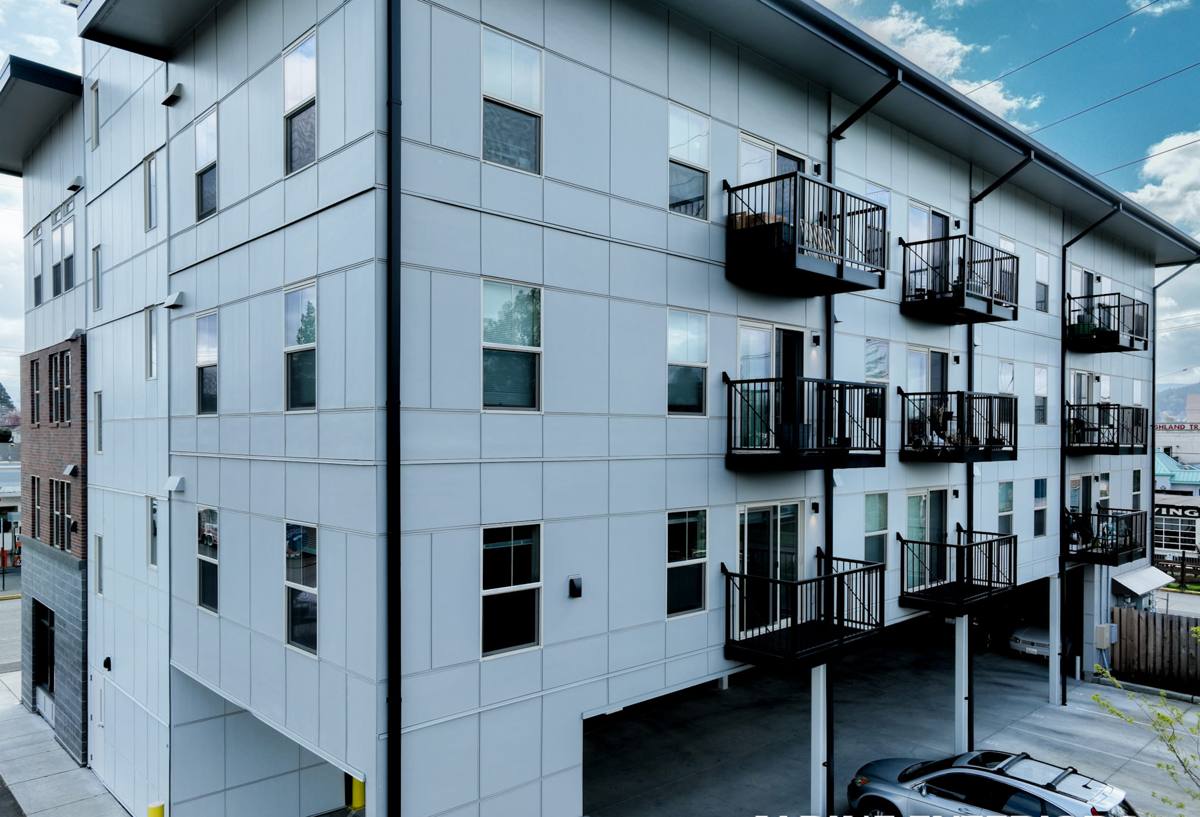
New Construction vs. Retrofit: Why the Install Itself Is Different
New-construction windows are not the same product or process as replacement windows, and mixing up the two on a build is one of the more common sources of long-term leaks. New-construction units typically use a nailing flange that fastens directly to the framing and gets integrated into the wall's weather-resistant barrier (WRB) before siding goes on. That gives us full access to the rough opening, the sheathing, and the flashing layers — which is exactly what a marine climate build needs, because it lets us build a proper drainage plane instead of working around finished walls.
That access also means timing matters. Windows need to go in after the WRB is up but before siding, trim, and in most cases before the roof is fully closed in if the opening is under an eave. On an active jobsite, that's a narrow window (no pun intended) that has to be coordinated with framing, roofing, and siding crews so the openings aren't left exposed to weather any longer than necessary.
Choosing a Frame and Glass Package Built for the Salish Sea Climate
Frame Materials
There's no single "best" frame material for every Fidalgo Island lot — the right choice depends on exposure, budget, and how much upkeep the homeowner wants to take on. What we can tell you honestly is how each option behaves in a salt-air, high-moisture environment over time.
| Frame Type | Salt Air / Corrosion Resistance | Maintenance | Typical Trade-Off |
|---|---|---|---|
| Vinyl | Good — won't corrode, but hardware quality varies by manufacturer | Low; occasional cleaning | Lower upfront cost; frame flexes more on larger units |
| Fiberglass | Excellent — very stable, resists expansion/contraction | Low | Higher upfront cost; narrower dealer network for repairs |
| Wood interior / aluminum-clad exterior | Good exterior durability if clad seams are sealed correctly | Moderate; interior wood needs periodic attention | Best appearance option for some homeowners; installation sensitivity is higher |
Glass and Performance Ratings
For this climate, we pay closer attention to a few NFRC numbers than others. U-factor matters for keeping heat in through our long heating season, but on a waterfront or wind-exposed lot, the window's Design Pressure (DP) rating and air infiltration rating matter just as much — they tell you how the unit performs under sustained wind-driven rain, not just in a lab test on a calm day. We'll walk through what rating actually fits your lot's exposure rather than defaulting to a standard package that may be overbuilt for a sheltered inland site or underbuilt for a shoreline-facing one.
Flashing and Water Management: Where New-Construction Jobs Go Wrong
Almost every window leak we're called out to investigate on an existing home traces back to a flashing detail, not the window unit itself. On new construction we get to prevent that from ever becoming an issue, but only if the sequence is followed correctly:
- A sloped sill pan flashing under every opening, so any water that gets past the glazing drains back out — not into the wall cavity
- Proper shingle-lap integration with the WRB: house wrap laps over the flanges at the top, and under at the sill, so water always sheds outward and downward
- Head flashing or a drip cap above the unit, sized to actually kick water clear of the sill below it
- Sealed but not fully caulked-shut assemblies — the drainage plane needs a path out, not a watertight seal that traps moisture inside the wall
- Corrosion-resistant fasteners at every attachment point, given the salt content in the air here
Skipping or rushing any one of these doesn't usually show up as a problem in year one. It shows up in year five or six, as staining, soft trim, or interior moisture — right around the time it's expensive and disruptive to fix, and long after the crew that installed it is a distant memory. Getting it right the first time costs the same in materials and only marginally more in labor.
Coordinating With Your Builder or General Contractor
Most new-construction window jobs on Fidalgo Island happen as one piece of a larger build, whether that's a full custom home or an addition. We're used to working inside someone else's construction schedule rather than running the whole job, which means clear communication with the GC or builder about a few things: when the rough openings will be ready, how long the openings can sit open to weather before windows go in, and how our flashing work needs to sequence with the siding trade that follows us.
We also flag rough-opening issues before they become window-fit issues — out-of-square openings, undersized headers, or sheathing gaps are far cheaper to correct before a $600–$2,000 window unit is sitting in the opening. Catching that early is one of the more valuable things a window crew with real new-construction experience brings to a job, versus a crew that's only ever done retrofit replacements.
Sun, Wind, and View: Orientation Considerations on Fidalgo Island
Fidalgo Island's geography means two homes a few miles apart can face very different exposure conditions. A lot with a clear view toward Rosario Strait or Guemes Channel often gets more direct wind-driven rain and stronger gusts than a comparable lot tucked into a more sheltered, tree-lined interior setting. West- and southwest-facing openings generally take the brunt of our winter storm systems.
That doesn't mean water-facing lots need a completely different product line — it means the DP rating, flashing detail, and even overhang or trim design around those openings deserve a closer look during design. On more sheltered inland lots, we can often spec a lighter-duty (and less expensive) package without giving up performance where it isn't needed. Part of our job is telling you honestly where you can save money and where you shouldn't cut corners, based on how exposed your specific site actually is.
Our New-Construction Window Process
The process is straightforward, but every step exists for a reason we've learned from working other builds in this climate:
- Site visit and plan review — we look at orientation, exposure, and rough-opening sizes against the window schedule
- Product and glass package recommendation, matched to each elevation's exposure rather than a single blanket spec
- Coordination with your builder on install timing within the framing/roofing/siding sequence
- Rough-opening inspection before any unit goes in — square, level, properly sheathed
- Sill pan flashing, unit installation, and WRB integration following a consistent, repeatable sequence
- Final water-management check and fastener/hardware verification before siding closes the wall up
Every one of those steps is documented as we go, so if a question ever comes up later — during a home inspection at resale, for instance — there's a clear record of how the openings were built, not just a memory of it.
Why a Crew That Already Works Fidalgo Island Matters
A lot of window installation knowledge is generic and transfers anywhere. Some of it doesn't. Knowing which parts of the island take the harshest wind-driven rain, how long moss season actually runs here and what that means for scheduling exterior work, and which flashing details hold up over years in this specific salt-air environment — that comes from doing this work locally, not from a manufacturer's install manual written for a national market. We've built our process around what actually holds up on Fidalgo Island and around Anacortes and Skagit County more broadly, not around what looks fine in a showroom.
That local grounding also means fewer surprises during permitting and inspection, since we're familiar with how these builds typically get reviewed in this area, and it means we're not learning the region's quirks on your project.
Get a Straightforward Estimate
If you're building new on Fidalgo Island and want a window package that's actually sized to your lot's exposure — not a one-size-fits-all spec — we're happy to walk the plans with you. Fill out the form below for a free, no-pressure estimate and we'll give you an honest read on what your build needs.