 Anacortes Siding
 Roofing in Flounder Bay Has to Deal With the Water on Three Sides
Flounder Bay sits right up against the water, and that changes what a roof has to put up with compared to a house a few miles inland. You get salt-laden air moving off the bay, wind-driven rain that hits shingles at an angle instead of straight down, and shade from the surrounding evergreens that keeps roof surfaces damp long after a storm has passed. None of that is unusual for Skagit County, but it's more concentrated here than in drier pockets of Anacortes, and it's why a roof that would hold up fine somewhere else can wear out early on a Flounder Bay home.
Asphalt shingle roofing is still the right call for most houses in this neighborhood. It's proven, it's repairable, it's priced sensibly, and modern architectural shingles handle coastal exposure well when they're specified and installed correctly. The key phrase there is "installed correctly" — in a marine environment, the difference between a roof that lasts its full warranty term and one that fails at year twelve almost always comes down to details most people never think to ask about.
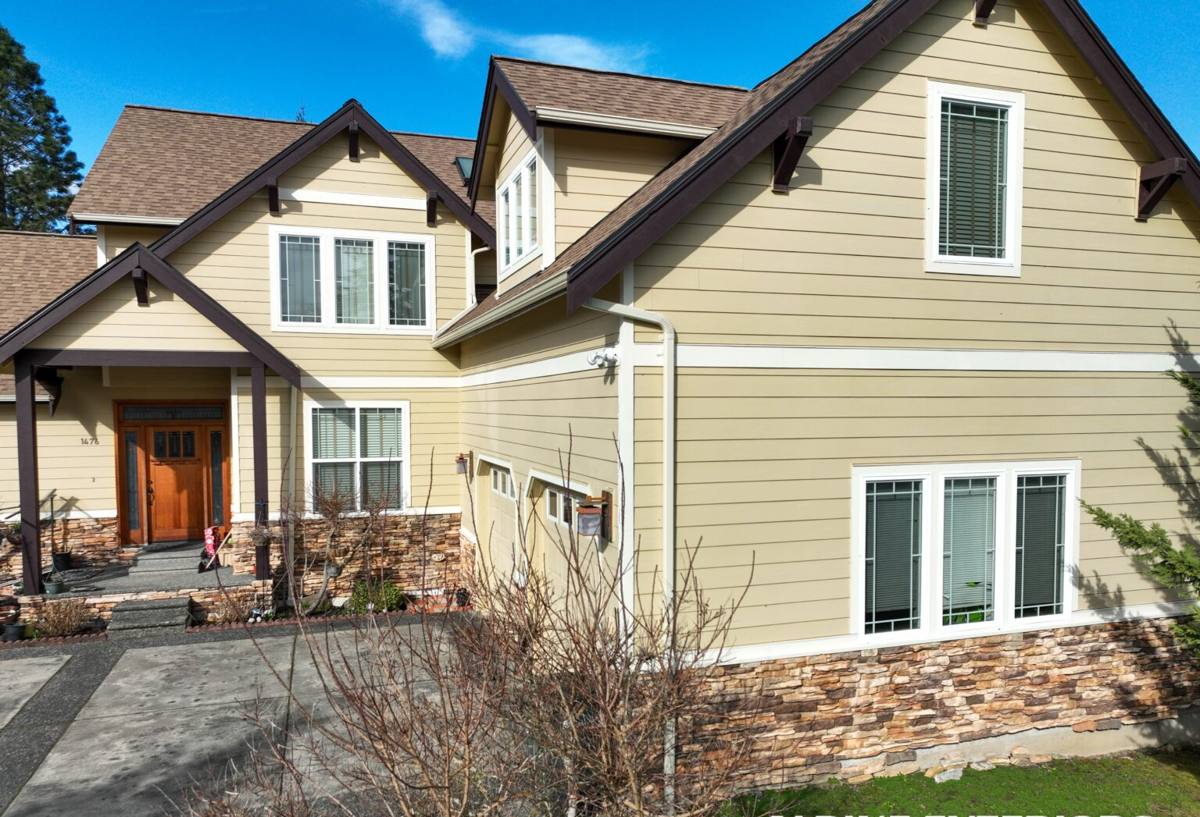
What Salt Air and Moss Actually Do to a Shingle Roof
Salt Air
Salt in the air doesn't rot shingles the way it corrodes metal, but it does accelerate the breakdown of exposed fasteners, flashing, and any metal roof components — vent caps, drip edge, valley metal. Cheap or improperly coated metal will show rust and pitting years before it should. It also means algae and lichen tend to establish faster on a roof that's staying damp near the coast, which is a separate problem from moss but often shows up alongside it.
Moss
Anacortes gets a long wet season, and Flounder Bay's tree cover keeps a lot of roofs shaded through the fall and winter months when moss growth is most active. Moss doesn't just look bad — it holds moisture against the shingle surface, works its way under shingle edges as it grows, and can lift tabs enough that wind-driven rain gets underneath. A roof that's dealing with moss colonization every year is aging faster than the shingle's rated lifespan suggests, regardless of what the warranty paperwork says.
Wind-Driven Rain
Open water exposure means rain doesn't always fall straight down here. When it comes in at an angle, it tests every lap, every nail line, and every piece of flashing on the roof. A roof built to a minimum-code standard can pass a normal rain test and still leak in a sideways storm, because the margin for error on underlayment coverage and flashing detail is smaller than it is on a sheltered, inland roof.
What a Correct Asphalt Shingle Roof Looks Like for This Neighborhood
We don't sell a different product for Flounder Bay than we do anywhere else in Anacortes — we adjust the specification and the installation details to match the exposure. That includes:
- A synthetic underlayment rated for extended exposure, not the cheapest felt option, since moisture sits on these roofs longer than average
- Ice-and-water shield at eaves, valleys, and any low-slope transitions, even though Flounder Bay doesn't see heavy snow — it's just as effective against wind-driven rain intrusion
- Corrosion-resistant flashing and fasteners suited to salt air exposure, rather than standard-grade metal that will show rust prematurely
- Proper ventilation balance between intake and exhaust, so moisture from inside the attic isn't adding to what the roof is already absorbing from outside
- Shingle selection that accounts for algae resistance, since coastal humidity speeds up staining and growth on lower-grade products
None of this is exotic. It's what a roofing job should include anywhere on the water, and it's the standard we hold every Flounder Bay job to, whether it's a full replacement or a smaller repair.
Our Process on a Flounder Bay Roofing Job
1. On-Site Assessment
We walk the roof, not just look at it from the ground. That means checking the deck condition, looking for soft spots, evaluating existing ventilation, and noting how much moss or algae growth is present and where it's concentrated — moss patterns usually tell us which parts of the roof are staying wet longest.
2. Honest Scope, Written Down
We tell you what actually needs to happen — full replacement, partial repair, or maintenance — and why. If a roof still has useful life left and just needs moss removal and a repair to a flashing detail, we say so. We're not going to sell a tear-off on a roof that doesn't need one.
3. Material Selection for the Site
We walk you through shingle options with the coastal exposure in mind — algae-resistant lines, warranty terms, and appearance — and explain the trade-offs plainly so you're picking based on what matters to you, not a sales pitch.
4. Installation to the Detail Level That Matters Here
Deck inspection and repair as needed, correct underlayment and ice-and-water shield placement, proper nailing pattern (not staples, and not high-nailing to save time), flashing done in the sequence that actually sheds water, and ventilation checked before we call the job finished.
5. Cleanup and Walkthrough
Magnetic sweep for debris, full site cleanup, and a walkthrough so you know what was done and what to watch for going forward.
Repair, Moss Treatment, or Full Replacement — How to Tell Which One You Need
Not every Flounder Bay roof needs a full tear-off. Here's how we generally think about it when we're standing on the roof:
| Situation | Likely Approach | Why |
|---|---|---|
| Isolated moss growth, shingles otherwise intact, roof under 15 years old | Moss treatment and cleaning | Removes the moisture-holding growth without disturbing sound shingles |
| Localized leak near a valley, chimney, or vent | Targeted flashing repair | Flashing fails well before field shingles do, especially in wind-driven rain areas |
| Granule loss, curling tabs, or shingles brittle to the touch | Full replacement | These are signs the shingle itself has reached the end of its service life |
| Roof deck soft or spongy underfoot | Full replacement with deck repair | Underlying moisture damage won't be solved by a new layer of shingles |
| Persistent moss returning yearly despite cleaning | Replacement with improved ventilation, sometimes tree/shade discussion | Recurring moss usually points to a moisture or airflow problem, not just growth on the surface |
What Asphalt Shingle Roofing Costs in a Coastal Neighborhood Like This
Pricing depends on roof size, pitch, layers to remove, deck condition, and the shingle line you choose, so we won't quote a number without seeing the roof. What we can tell you honestly: coastal-grade underlayment, corrosion-resistant flashing, and algae-resistant shingles cost more upfront than the bare-minimum version of the same job. That difference is usually modest compared to the total project cost, and it's the part of the spec that determines whether you're doing this again in twelve years or in twenty-five. We'll always show you what's driving the number, not just hand you a total.
Maintenance That Actually Extends Roof Life Here
- Have moss and algae growth addressed before it spreads across the roof, not after — early treatment is cheaper and less disruptive than a heavy cleaning later
- Keep gutters clear so water isn't backing up under the shingle edge, especially where tree cover drops needles and debris
- Get flashing around chimneys, vents, and valleys checked periodically — these fail before the shingle field does, particularly in wind-driven rain conditions
- Confirm attic ventilation is balanced, since trapped moisture from inside the house adds to what the roof already deals with from outside
- Schedule a walk-on inspection every few years rather than waiting for a visible leak — most roof problems are cheaper to catch early
Why Hire a Crew That Already Works Flounder Bay
A roofer who mostly works inland, drier parts of Skagit County can still do competent work, but they're not necessarily thinking about salt air corrosion on fasteners or the specific moss patterns that show up on shade-heavy, water-adjacent roofs. We work throughout Anacortes and know this stretch of coastline — what the exposure does to materials, which details matter most in wind-driven rain, and what a roof here actually needs to hold up long-term. That's not a marketing line, it's just the practical benefit of doing this work in this specific climate repeatedly instead of occasionally.
If you're dealing with moss buildup, a leak you can't pin down, or a roof that's simply reaching the end of its service life, we'll come take a look and give you a straight answer — no pressure, no inflated scope. Request a free estimate below and we'll get a time on the calendar to walk your roof in person.