 Anacortes Siding
 Windows Built for a Waterfront Address
Flounder Bay sits close enough to the water that the air itself is part of the building envelope you're working against. Homes here don't just face weather — they face salt-laden air, wind-driven rain off the strait, and long stretches of damp, low-light months where surfaces stay wet for days at a time. Windows in this setting work harder than windows a few miles inland, and they fail faster when they're not specified and installed with that in mind.
This page covers what custom window replacement and installation actually looks like for a home in the Flounder Bay area — what the climate demands, what a correct install involves, and how we run the job from first estimate to final walkthrough.
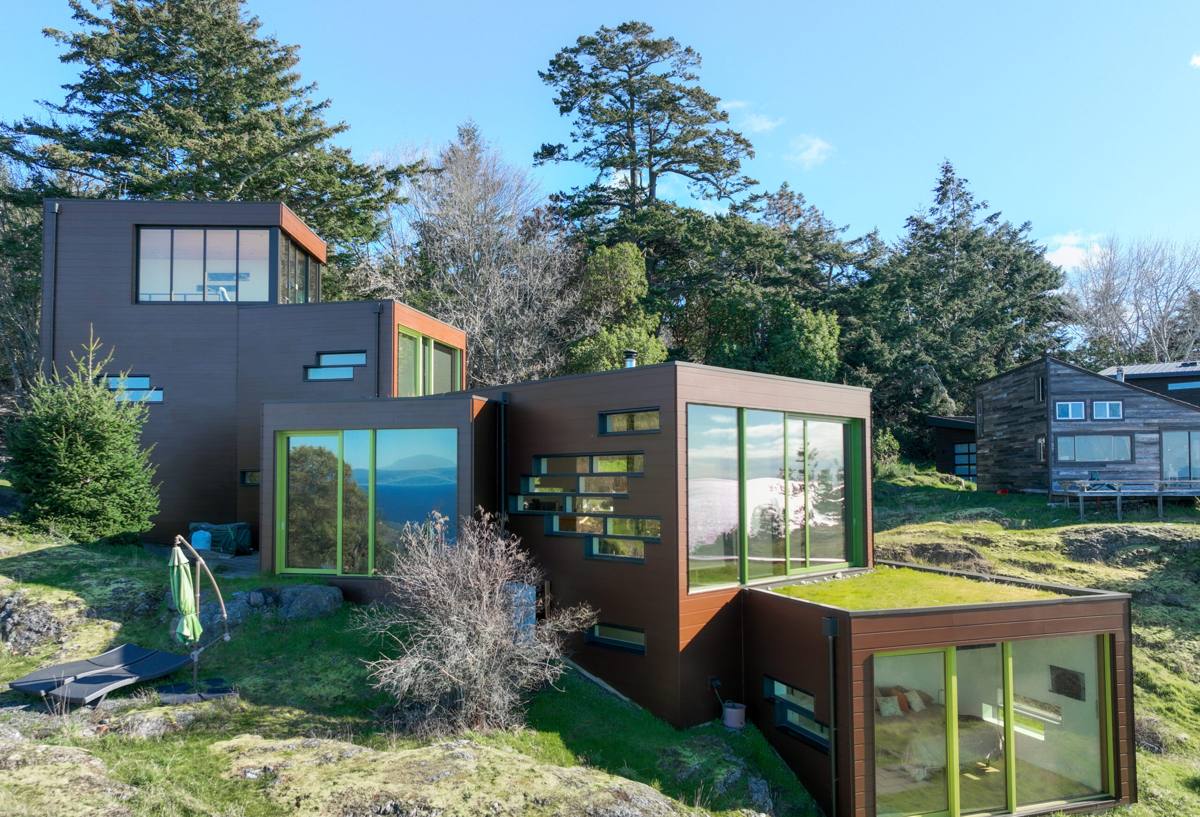
What Salt Air, Driving Rain, and Moss Season Do to Windows
Skagit County's marine climate is generally mild, but "mild" doesn't mean gentle on building materials. Three things stand out for homes close to the water in and around Anacortes:
- Salt air accelerates corrosion on exposed metal hardware, screws, and lower-grade aluminum components — even under a painted finish, salt-laden moisture finds its way into seams and fastener points over years of exposure.
- Driving rain off open water doesn't fall straight down — wind pushes it sideways into wall assemblies and window openings, which means flashing details and sill pitch matter more here than they would on a sheltered inland lot.
- Moss and algae season, which in this part of Washington can run most of the fall through spring, keeps north-facing and shaded window surfaces damp for extended periods, which is hard on wood sills, unsealed trim, and any gap where water can sit instead of shed.
None of this means a window is destined to fail. It means the frame material, the glazing, and — most of all — the installation detailing need to be chosen for this specific environment rather than a generic spec sheet.
What a Correct Custom Window Job Involves
It Starts With the Opening, Not the Window
A window is only as good as the opening it sits in. Before any new unit goes in, we check the rough opening for rot, soft framing, and old flashing that's failed or was never installed correctly. On older Flounder Bay-area homes, this is often where problems actually live — the window itself may look fine while the sheathing behind it has been absorbing moisture for years.
Flashing and Water Management
This is the single biggest factor in whether a window lasts in a wet, wind-exposed setting. Correct installation means sill pan flashing that directs any water that gets past the window back outside the wall assembly, properly lapped house wrap or building paper, and sealant used at the right points — not as a substitute for physical flashing, but as a backup to it. Sealant-only installations are a common shortcut, and they're also the most common reason we get called out to homes with water staining around window trim.
Frame Selection for a Marine Environment
Not every frame material handles salt air and constant humidity the same way. We'll walk through the trade-offs honestly rather than pushing one product line, because the right choice depends on your home's exposure, style, and budget.
Glass and Weatherstripping
For a home exposed to wind off the water, the glazing package and the quality of weatherstripping matter as much as the frame. Dual-pane or triple-pane glass with a good low-E coating cuts down on heat loss and condensation risk, and tight, durable weatherstripping is what actually keeps driving rain from finding its way in around a closed sash.
Comparing Frame Materials for Flounder Bay Homes
There's no single "best" window material — there's a best fit for your home's exposure, maintenance appetite, and budget. Here's how the common options stack up in a coastal Skagit County setting:
| Frame Material | Salt Air / Moisture Performance | Maintenance | Typical Fit |
|---|---|---|---|
| Vinyl | Good — won't corrode or rot, some UV fading over decades | Low | Value-focused replacements, rental or secondary homes |
| Fiberglass | Very good — dimensionally stable, resists moisture and corrosion well | Low | Homes wanting durability without wood maintenance |
| Wood / Wood-clad | Requires diligence — clad exterior protects the frame, but any breach in the cladding exposes wood to rot risk near the water | Higher | Historic or high-end aesthetic where the look of wood matters |
| Aluminum | Weakest in this climate unless thermally broken and well-finished — prone to corrosion and condensation | Moderate | Modern/architectural styling where design intent outweighs upkeep |
We don't install every option on this list on every job. If a homeowner wants something we don't recommend for their specific exposure, we'll say so plainly and explain the trade-off — usually a maintenance burden, a moisture risk, or a warranty limitation — rather than just building what's asked and letting the climate sort it out later.
Signs Your Current Windows Are Losing the Battle
Before you commit to full replacement, it's worth knowing what to actually look for. These are the signs we see most often on homes in wet, wind-exposed parts of the county:
- Fogging or moisture trapped between panes — a sign the seal has failed and the insulating gas has escaped
- Soft or discolored trim and sill wood, especially on north- or west-facing windows
- Visible rust or corrosion streaks on hardware, tracks, or fasteners
- Drafts you can feel around a closed window, or curtains that move on a windy day
- Difficulty opening, closing, or locking — frames can swell, warp, or shift out of square
- Green or black growth building up in corners or on sills that never fully dry out
- Noticeably higher heating costs without any other change in usage
One or two of these on a single window might just mean that window needs attention. Several of these across multiple windows, especially on the weather-exposed side of the house, usually points to a broader replacement decision being more cost-effective than a repair.
How We Approach a Custom Windows Project
Estimate and Assessment
We start by looking at the home itself — exposure, existing window condition, framing, and how the home is oriented relative to prevailing wind and rain. This is also when we talk through style, frame material, and budget honestly, including what we would and wouldn't recommend for that specific house.
Measuring and Ordering
Custom windows are built to the exact opening, which means precise measurement matters — a unit that's slightly off in size creates gaps that are hard to seal correctly no matter how good the installer is. We measure carefully and account for any out-of-square conditions common in older homes.
Removal and Opening Prep
Old units come out carefully, and we inspect the opening before anything new goes in. If we find rot, damaged sheathing, or old flashing that's failed, we address it at this stage rather than covering it up — sealing a new window over a compromised opening just delays the problem and makes it more expensive later.
Installation
New sill pan flashing, correctly lapped water-resistive barrier, proper shimming so the unit isn't under stress, and sealant applied as a backup layer, not the primary defense. This is the step where most of the long-term performance of the window is actually decided.
Final Check and Walkthrough
We test operation, check for square and level, confirm the seal, and walk the finished work with the homeowner before calling the job done.
What Affects the Cost of a Custom Windows Project
Every home and window count is different, so we don't publish flat pricing — but these are the main factors that move the number up or down on a typical Flounder Bay-area project:
| Factor | Why It Matters |
|---|---|
| Frame material | Vinyl and fiberglass are generally more budget-friendly than wood-clad; performance and appearance trade off against cost |
| Number and size of openings | Larger openings and full-home replacements have per-unit efficiencies but a higher total project cost |
| Condition of existing openings | Rot repair or reframing found during removal adds labor beyond a straightforward swap |
| Glass package | Upgraded low-E coatings or triple-pane glass cost more upfront and pay back through comfort and energy performance |
| Access and site conditions | Second-story or hard-to-reach openings take more time and equipment than ground-level work |
We'll break down these factors specifically for your home during the estimate, so you know what's driving the number rather than getting a single lump figure with no explanation behind it.
Why Local Experience in This Area Matters
A window installer who mostly works drier, more sheltered inland jobs isn't necessarily thinking about sill pan flashing, corrosion-resistant hardware, or how far wind-driven rain can travel up a wall. Working regularly in and around Anacortes and Skagit County's waterfront neighborhoods means we're used to specifying and installing for exactly these conditions — not treating them as an edge case.
That local pattern recognition shows up in small decisions: which flashing detail to use on a west-facing wall that catches the weather, which frame materials hold up without a maintenance headache near the water, and knowing that a window that performs fine on a sheltered inland lot might not be the right call a few blocks from the bay.
Get a Straight Answer for Your Home
If you're weighing repair versus replacement, or just want an honest read on what your Flounder Bay home's windows actually need, we're glad to take a look. The estimate is free, there's no pressure, and you'll get a clear explanation of what we see and what we'd recommend — use the form below to get started.