 Anacortes Siding
 Building New in Flounder Bay? The Windows Need to Match the Site
Flounder Bay sits close to the water on Anacortes's west side, which means homes going up there deal with a heavier dose of salt-laden air and wind-driven rain than a lot of inland Skagit County builds. If you're framing a new home or a major addition near the bay, the window package and — more importantly — the way those windows get installed needs to account for that from day one. New-construction windows aren't just "bigger and newer" than a retrofit job. They go in before the siding, before the weather-resistive barrier is fully lapped, and often before the trim details are finalized. That's actually the advantage: done right, a new-construction window installation gives you the cleanest possible water management of any window job, because everything is built around the opening instead of retrofitted into an existing wall.
We install new-construction windows for builders and homeowners working in and around Flounder Bay and the rest of Anacortes. This page covers what that job actually involves, what the local climate demands, and what to look for in a crew before you hand them your rough openings.
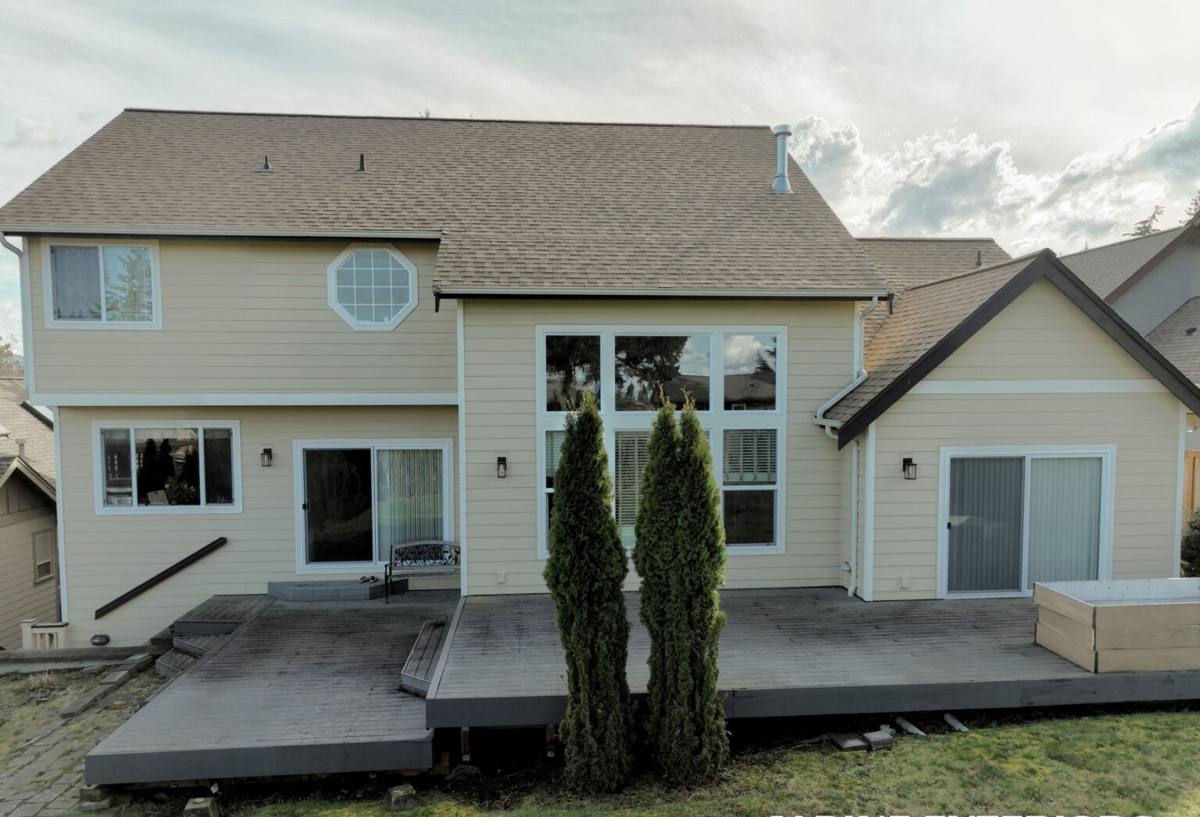
Why Flounder Bay's Location Changes the Job
Anacortes as a whole gets more marine exposure than most of Skagit County — that's true anywhere close to Fidalgo Bay, Guemes Channel, or the Flounder Bay/Skyline area. A few things stack up here that a window installer has to plan for:
- Salt air corrosion: Fasteners, flashing tape adhesives, and window hardware near the water age faster than the same materials a few miles inland. Cheap or mismatched metals will show pitting and staining years before they should.
- Driving rain: Storms off the water push rain sideways, not straight down. That means water is hitting the window head and jambs at an angle, testing the flashing details in ways a calm-weather install never would.
- Long moss and mildew season: Western Washington's wet stretch runs long, and shaded or north-facing walls near the bay can stay damp for weeks at a time. Any gap in the water-resistive barrier around a window opening becomes an entry point for moisture that has nowhere to dry out quickly.
- Wind exposure: Open water views usually mean less windbreak. Larger window units, especially sliders and picture windows popular in new construction with a bay outlook, need to be rated and anchored for that wind load.
None of this means new construction near Flounder Bay is harder to get right — it just means there's less room for shortcuts. A window opening built correctly the first time, before siding closes it in, is far cheaper to get right than fixing a leak behind finished walls two years later.
What a Correct New-Construction Window Install Actually Involves
Rough Opening and Flashing Sequence
New-construction windows have a nailing fin around the perimeter that gets flashed into the building's water-resistive barrier in a specific, layered order — sill pan first, then the window itself, then jamb flashing, then head flashing, each one lapping over the layer below it like shingles. This "shingle-lap" sequence is what actually keeps water out; the window unit itself is only part of the system. On a bay-exposed wall, we pay particular attention to:
- A proper sloped sill pan under every opening, not just a bead of caulk, so any water that gets past the window has somewhere to drain instead of pooling on the sill.
- Flashing tape rated for the temperature range and UV exposure it'll see during construction, not just whatever's on hand.
- Corrosion-resistant fasteners appropriate for near-water exposure.
- Head flashing with a drip edge that kicks water away from the wall instead of letting it run down the face of the siding.
Air Sealing and Insulation at the Jambs
The gap between a window frame and the rough framing needs to be sealed and insulated, not just stuffed. Over-filling with rigid foam or packing fiberglass too tight can actually bow the frame and cause the window to operate poorly or fail to seal against its own weatherstripping. We use low-expansion foam or backer rod and sealant sized to the actual gap, which keeps the frame true and the opening properly insulated.
Product Selection for Wind and Water Exposure
Not every window line is built the same, and on a bay-facing elevation the specs matter more than the price tag. We look at design pressure (DP) ratings for wind and structural load, water penetration resistance ratings, and frame material behavior in a marine climate before recommending a product for a Flounder Bay opening — especially on larger units like sliders, picture windows, or multi-unit combinations that are common in new construction taking advantage of a water view.
Frame Material Comparison for Marine-Exposed New Construction
| Frame Material | How It Handles Salt Air / Moisture | Maintenance | Where It Fits Best |
|---|---|---|---|
| Vinyl | Won't corrode; performs well near water when properly installed | Low — occasional cleaning | Most Flounder Bay new builds; strong value and durability match |
| Fiberglass | Very stable, minimal expansion/contraction, excellent moisture resistance | Low | Larger openings, higher-end builds wanting minimal frame movement |
| Aluminum-clad wood | Good exterior protection but interior wood is moisture-sensitive if the seal ever fails | Moderate — exterior finish and seals need monitoring | Homeowners wanting a wood interior look who accept ongoing upkeep |
| Bare wood | Most vulnerable to the area's long wet season without diligent upkeep | High — regular refinishing needed | Historic-style projects where the owner commits to maintenance |
We're upfront that we steer most Flounder Bay new-construction clients toward vinyl or fiberglass. It's not that wood-framed windows can't work here — it's that this stretch of coastline gives a moisture-sensitive frame material fewer chances to dry out between storms, and the maintenance commitment to keep a wood exterior sealed near salt air is real and ongoing. That's a trade-off we'd rather explain up front than have a client discover five years in.
Our Process on a New-Construction Job
1. Plan Review and Opening Verification
Before windows arrive, we review the rough opening sizes against the window order and confirm they match the plans. Catching a sizing mismatch before install day saves a builder's schedule.
2. Sequencing With the Builder
Windows have to go in at the right point in the build — after the WRB is up but before siding closes the wall. We coordinate directly with the general contractor or builder on Flounder Bay projects so the timing lines up and nobody's waiting on us or working around us.
3. Flashing and Set
Sill pan, window set plumb and level, jamb and head flashing installed in proper lap order, fasteners set to the manufacturer's schedule.
4. Interior Air Seal and Insulation
Perimeter gaps sealed and insulated without over-compressing the frame.
5. Final Check
Every unit gets operated, checked for square, and inspected for a clean, continuous flashing lap before we call it done.
What to Ask Before Hiring a Window Crew for a Flounder Bay Build
New-construction window work is largely hidden once the siding goes on — you're trusting the flashing details you can't see anymore. A homeowner or builder should be comfortable asking a few direct questions before signing off on a crew:
- Do you install a sloped sill pan on every opening, or rely on sealant alone?
- What flashing tape and fastener materials do you use, and are they rated for near-water exposure?
- Can you walk me through your flashing lap sequence?
- Have you worked in Anacortes or on other bay-facing sites before, and do you understand the wind and rain exposure difference from an inland build?
- What's your process if a rough opening doesn't match the window order?
A crew that already works this area should be able to answer all of these without hesitation, because it's routine to us — it shouldn't be routine for you to have to ask.
Why Local Experience Matters More Here Than It Sounds
A window crew that mostly works drier, inland jobs can still do competent work, but they may not default to the extra step of a sloped sill pan, or think twice about fastener corrosion resistance, because it hasn't bitten them before. Working Anacortes and the Flounder Bay area regularly means we've seen what the marine climate does to a window opening that was flashed to a lower standard, and we build every install — new construction or replacement — to hold up against driving rain and salt air, not just pass a dry-day inspection.
We also know the practical side of building near the water in Skagit County: permitting timelines, typical exposure categories for wind design, and how local builders sequence a job so trades aren't stepping on each other. That familiarity saves time and rework on a new build.
Common New-Construction Window Mistakes We Watch For
Even experienced crews can develop bad habits if they're not building for marine exposure specifically. On Flounder Bay projects we're careful to avoid:
- Skipping or shortcutting the sill pan and relying on caulk as the primary water barrier
- Reversing the flashing lap order so water gets directed behind the barrier instead of over it
- Using standard fasteners where corrosion-resistant hardware is called for
- Over-compressing insulation at the jambs, which can warp the frame and cause operational issues
- Installing before the WRB is properly lapped and ready, forcing rework later
Cost Factors on a New-Construction Window Package
Every build is different, so we won't quote a number without seeing the plans, but a few things consistently move the price on Flounder Bay jobs:
| Factor | Why It Matters |
|---|---|
| Number and size of openings | More openings and larger units (common for bay views) mean more material and labor |
| Frame material chosen | Vinyl, fiberglass, and clad-wood options carry different price points and long-term maintenance costs |
| Wind/design pressure rating required | Higher-DP-rated units for exposed elevations typically cost more than standard-rated windows |
| Site access and staging | Waterfront lots can have tighter access, which affects delivery and install logistics |
| Build timeline coordination | Tight schedules with other trades can affect crew scheduling and sequencing |
If you're planning a new build or major addition near Flounder Bay, we're happy to walk the site, review your plans, and give you a straight answer on what the window package should include for this location. Reach out for a free, no-pressure estimate using the form below.