 Anacortes Siding
 Why Flounder Bay Roofs Wear Differently
Flounder Bay sits close to open water on Fidalgo Island, which means homes here deal with a combination of stresses that inland Skagit County roofs rarely see all at once. Salt-laden air moves through the neighborhood on a near-constant basis, wind-driven rain comes in at angles that regular roofs in drier climates were never designed for, and the tree cover and shade that make the area attractive also keep roof surfaces damp for much longer stretches of the year. Any one of those factors is manageable on its own. Together, over fifteen or twenty years, they shorten the useful life of a roof and make ordinary wear show up in unusual places — fastener heads, flashing seams, and shaded valleys long before the shingle field itself looks tired.
A roof replacement in this part of Anacortes isn't just a matter of swapping old shingles for new ones. It's a chance to correct whatever let the last roof fail early, and to build in the details that actually matter for a home exposed to marine weather.
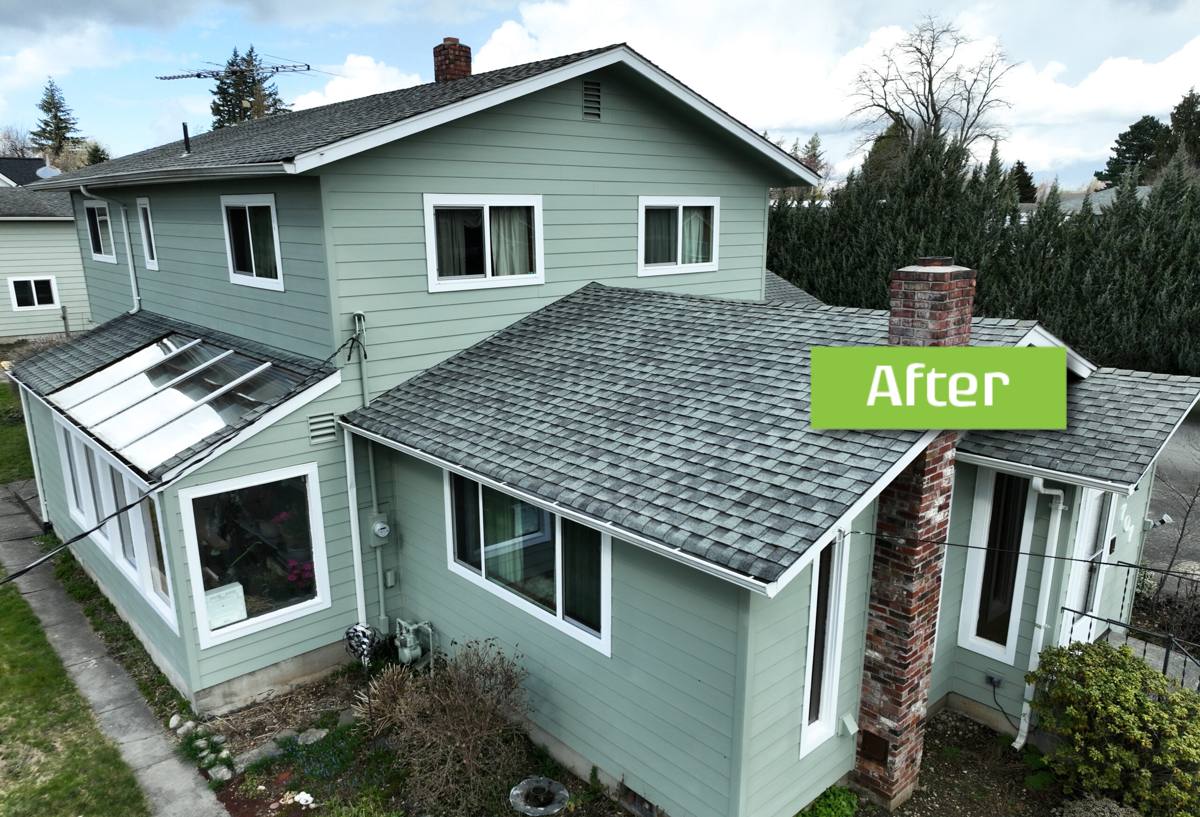
Signs a Flounder Bay Roof Has Reached the End of Its Life
Not every roof problem means a full replacement — plenty of leaks and worn spots can be repaired. But there's a point where patching becomes a losing game, and it's worth recognizing before a small problem becomes water damage inside the house. Walk your roofline and attic and look for:
- Shingle granules collecting in gutters or at downspout outlets
- Shingles that are curling, cupping, or cracking at the edges
- Thick moss or algae mats, especially on north-facing or shaded slopes
- Soft or springy spots underfoot when walking the roof
- Daylight, damp insulation, or dark staining visible from inside the attic
- Rusting or lifting flashing around chimneys, skylights, and vent pipes
- A roof that's 20+ years old, which is close to the practical ceiling for asphalt shingles in a marine climate
- Rising heating bills that track with visible roof deterioration
If you're seeing two or three of these at once, it's time for a real inspection rather than another round of caulk and patch.
What a Correct Roof Replacement Actually Involves
Tear-Off and Deck Inspection
A proper replacement starts with a full tear-off down to the roof deck — not a layover on top of old shingles. That's the only way to find out what's actually happening underneath: soft plywood, rot around old flashing, or moisture that's been quietly working its way in for years. In a damp climate like this one, skipping that step means burying problems instead of fixing them. Any damaged decking gets cut out and replaced before anything new goes down.
Underlayment and Water Barriers
This is where a roof earns its keep in wind-driven rain. A synthetic underlayment across the full roof deck, combined with a self-adhering ice-and-water membrane at eaves, valleys, and other vulnerable transitions, gives the roof a second line of defense if wind ever pushes rain up under the shingle tabs. Given how directly this neighborhood catches weather off the water, we treat that membrane as standard, not an upgrade.
Flashing Details
Flashing failures — not worn-out shingle fields — are the most common reason roofs leak. Chimneys, skylights, dormers, and sidewall intersections all need new step flashing, counterflashing, and sealant sized and installed correctly for the surface they're protecting. In salt air, we pay close attention to the metal itself: fastener and flashing corrosion shows up here years before it shows up anywhere else on the roof.
Ventilation
An underventilated attic traps moisture, and trapped moisture is exactly what accelerates moss growth, rot, and premature shingle aging from underneath. Balanced intake at the eaves and exhaust at the ridge keeps air moving through the attic year-round, which matters more here than in a dry inland climate where that moisture has more chances to evaporate off.
Fastening and Wind Resistance
Homes exposed to open water take wind gusts that inland roofs don't. Shingles need to be nailed per the manufacturer's high-wind pattern — correct nail count, correct placement, correct depth — or the warranty and the wind resistance it's based on don't actually apply. This is a detail that's easy to shortcut and impossible to check once the roof is finished, which is exactly why it matters who's doing the work.
Choosing a Roofing Material for This Climate
There's no single "best" roofing material — the right choice depends on budget, roof pitch, how much moss and shade the property deals with, and how long you plan to own the home. Here's how the common options stack up for a property like this:
| Material | Typical Lifespan | Moss/Moisture Resistance | Salt Air Durability | Relative Cost |
|---|---|---|---|---|
| Architectural asphalt shingle | 20–30 years | Good with proper ventilation; needs periodic moss removal | Good — but use corrosion-resistant flashing and fasteners | $ |
| Standing seam metal | 40–50+ years | Excellent — sheds moisture, little surface for moss to grip | Very good with marine-grade coatings; watch fastener quality | $$$ |
| Cedar shake | 20–30 years with upkeep | Poor in shaded, damp spots without regular treatment | Fair — natural material, needs more maintenance near salt air | $$ |
| Composite/synthetic shake | 30–50 years | Good — doesn't absorb moisture like real wood | Good | $$–$$$ |
For most Flounder Bay homes, a quality architectural shingle with the right underlayment and ventilation package is the practical choice — it balances cost, appearance, and durability well. Homeowners planning to stay long-term, or those with heavily shaded roofs where moss is a constant fight, often find the higher upfront cost of standing seam metal pays for itself in reduced maintenance over the decades.
Moss and Algae: Managing It Instead of Fighting It Every Spring
Skagit County's long moss season isn't going away, and no roofing material is completely immune to it if the conditions are right — shade, moisture, and organic debris. What changes the outcome is what happens during the replacement:
- Trimming back overhanging branches before or during the project to cut down on shade and debris
- Installing zinc or copper strips near the ridge on shingle roofs, which release trace metal ions that inhibit moss growth over time
- Making sure ventilation is correct so the underside of the deck isn't adding to the moisture problem
- Choosing algae-resistant shingle products where heavy shade makes staining likely
None of these eliminate the need for the homeowner to keep gutters clear and knock moss back occasionally — but they meaningfully slow it down, which is the realistic goal.
Our Roof Replacement Process
- On-site inspection and estimate. We walk the roof and the attic, not just look from the ground, and give you a written estimate that spells out materials, scope, and price — no vague allowances.
- Material selection. We walk through the options above based on your budget, roof design, and how much moss and moisture exposure your specific roof deals with.
- Scheduling around the weather. Tear-off exposes your home to the elements, so we plan around forecasted dry windows and stage the job so no section sits open overnight if weather turns.
- Tear-off and deck repair. Old roofing comes off down to the deck, damaged sheathing is replaced, and the deck is inspected before anything new goes on.
- Underlayment, flashing, and ventilation installation. This is where the long-term performance of the roof actually gets decided.
- Final install and cleanup. Roofing material goes on per the manufacturer's specified fastening pattern, and the property is cleared of debris and nails with a magnetic sweep.
- Walkthrough. We go over the finished roof with you, explain what was done, and answer questions before we consider the job complete.
Permits, Access, and Timing in Anacortes
A full roof replacement in the City of Anacortes typically requires a building permit, and we handle that process as part of the job rather than leaving it to the homeowner. Waterfront and near-waterfront properties can also have site-specific access considerations — narrower driveways, limited staging space, or proximity to neighboring structures — that affect how we set up dumpsters, material delivery, and equipment. None of this needs to be complicated, but it does need to be planned for before the first shingle comes off, not figured out mid-project.
Why It Matters That We Already Work in Flounder Bay
A roofing crew that's worked this specific stretch of Anacortes knows what a roof here is actually up against — which slopes hold moss the longest, how much fastener corrosion to expect after a decade of salt air, and how local wind patterns off the water tend to find weak spots in flashing and shingle edges. That's not something you get from a general roofing checklist. It shows up in the small decisions: which fastener coating to spec, where to add extra ice-and-water membrane, how aggressive to be with ridge and eave ventilation. Those decisions are the difference between a roof that needs attention again in twelve years and one that goes the full distance.
It also matters for the practical side of the job — knowing the permit process at the city, understanding realistic weather windows for this part of Skagit County, and not treating a waterfront property's access constraints as a surprise on install day.
Get a Straight Answer About Your Roof
If your roof is showing its age, we're happy to take a look and give you an honest read on whether you're looking at a repair or a full replacement — no pressure either way. Fill out the form below to schedule a free estimate for your Flounder Bay home.