 Anacortes Siding
 Board & Batten on an Island Changes the Job
Guemes Island sits a short ferry ride off Anacortes, and that short crossing changes more about a siding project than most homeowners expect. The island's homes face the same Skagit County weather as the mainland — salt-laden wind off the Sound, driving rain that comes in sideways off the water, and a moss season that runs long into what other regions would call summer — but they face it with less margin for error. There's no quick run back to a supply house if a crew forgot a box of fasteners, and a contractor who doesn't plan around the ferry schedule will burn half a day standing in line at the dock instead of standing on a ladder.
Board and batten is one of the more forgiving-looking siding styles, but it's also one of the least forgiving to install poorly. The vertical lines and shadow reveals that make it handsome on a Guemes Island home are the same details that trap water if the assembly underneath isn't built correctly. This page is about doing that assembly right, with the one material we think earns a permanent place on an island exterior, and with a crew that has already worked out the logistics of getting there.
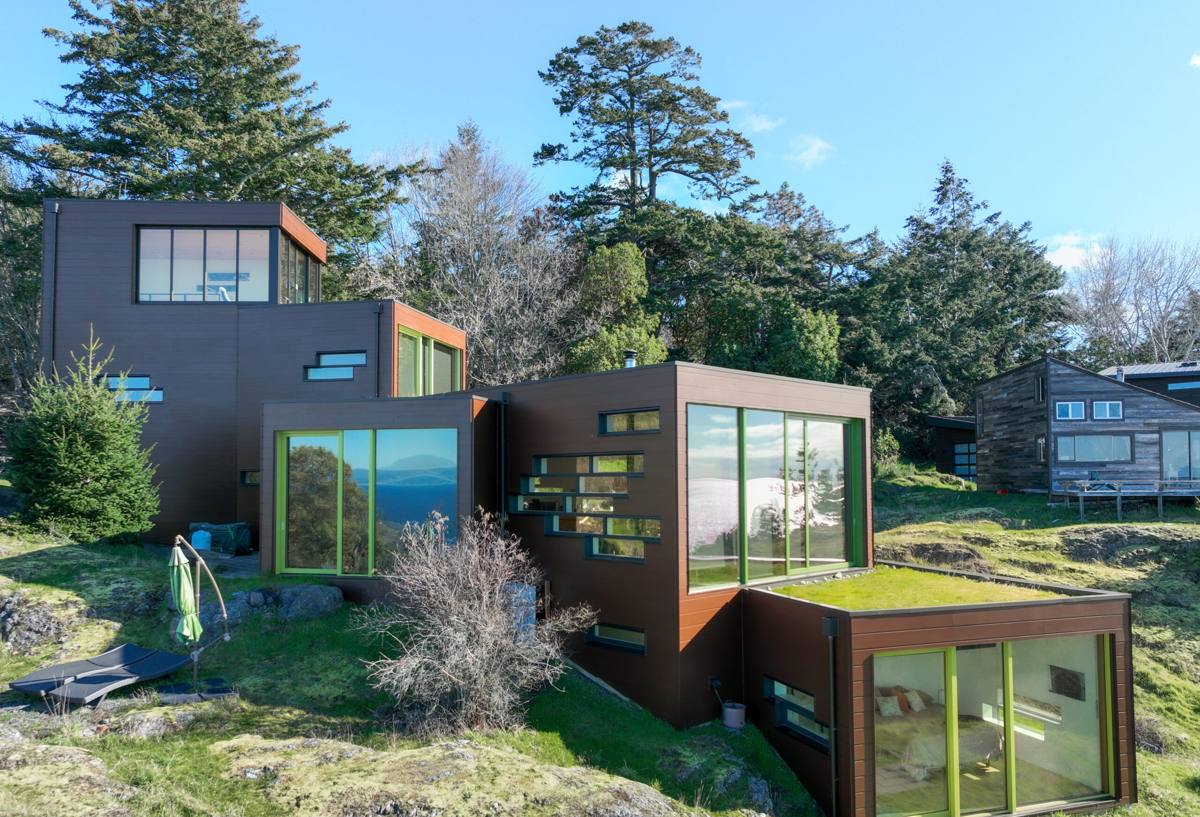
Why Board & Batten Suits Guemes Island Homes
Board and batten is a vertical siding pattern — wide boards or panels installed with narrower battens covering the seams between them. It reads as clean, tall, and a little rustic, which is why it shows up so often on waterfront cabins, converted seasonal homes, and newer builds trying to fit the wooded, low-density character of the island. It also pairs naturally with the mix of shed roofs, deep porches, and simple gable forms common out here.
Beyond looks, the vertical profile has a practical edge in a wet climate: water runs down the face of the boards instead of pooling along horizontal laps, so a well-built board and batten wall sheds rain a little more directly than clapboard does. That advantage only holds if the installation underneath — the water-resistive barrier, the flashing, the gap behind the siding — is built to let that water actually drain. A beautiful board and batten face over a poorly detailed wall just moves the moisture problem behind the boards instead of solving it.
What Salt Air, Rain, and Moss Actually Do to Siding Here
Salt Air
Guemes Island homes near the water take on airborne salt that mainland Anacortes properties see less of. Salt is hygroscopic — it pulls moisture out of the air and holds it against whatever surface it lands on. Over years, that means paint film breaks down faster, fasteners and trim hardware corrode sooner, and any wood-based product with exposed end grain or a compromised finish absorbs moisture it wouldn't in a drier inland setting.
Driving Rain
Storms off the Strait and the Sound don't fall straight down — they push rain sideways into whatever wall is facing the water. That means seams, joints, and butt ends on a west- or south-facing elevation take a real beating that a south-facing wall in eastern Washington never would. Board and batten has more vertical seams than lap siding, and every one of them needs to be detailed as if it will get wet, because on this island it will.
Moss and Sustained Moisture
The long wet season here keeps siding damp for extended stretches, especially on shaded, tree-covered lots — common on a wooded island like this one. Moss and algae don't just look bad; sustained dampness is what eventually finds its way into any gap in a wall assembly that wasn't sealed or flashed correctly. A material and installation method that can sit damp for weeks without degrading is not optional for a Guemes Island exterior — it's the baseline requirement.
Why We Only Install James Hardie for This Job
We install James Hardie fiber cement exclusively — not vinyl board and batten, not engineered wood panels, not primed spruce or cedar boards. On an island exposure like this, that's not a brand preference; it's a decision built around what actually holds up.
Fiber cement is non-combustible and dimensionally stable, meaning it doesn't expand, contract, cup, or swell with the moisture cycles that define this climate the way wood-based products can. James Hardie's HZ10 formulation is engineered specifically for the wetter climate zones of the Pacific Northwest, and the factory-applied ColorPlus finish is baked on under controlled conditions rather than field-applied — which matters enormously in an environment where a site-applied paint or stain job has to fight salt exposure and constant dampness from day one. The panels and boards used for a board and batten look also carry a strong transferable warranty, which is worth more on a waterfront or seasonal property than almost anywhere else, since these homes often change hands or sit unoccupied for stretches where problems can go unnoticed.
| Material | Behavior in Salt Air & Sustained Damp | Where It Falls Short Here |
|---|---|---|
| James Hardie fiber cement | Non-combustible, dimensionally stable, factory ColorPlus finish resists fading and moisture intrusion | Heavier material, requires correct fastening and flashing knowledge to install |
| Vinyl board & batten | Won't rot, but can warp or distort with heat/cold swings and UV; seams can loosen over time | Appearance and rigidity degrade faster in strong sun and wind exposure than fiber cement |
| Engineered wood panels | Treated to resist moisture, but relies on an intact factory seal and careful field cutting | Any exposed cut edge or coating breach is an entry point for the moisture this island sees constantly |
| Primed spruce / cedar boards | Natural material, needs ongoing paint/stain maintenance to stay sealed | Highest maintenance burden in a salt-air, high-moss environment; end grain and joints are vulnerable |
What a Correct Board & Batten Installation Actually Involves
The finished look of board and batten hides most of the work that determines whether it lasts. On Guemes Island exposures, we treat these details as non-negotiable, not upgrades:
- A drainable rainscreen gap behind the siding, so any water that gets past the outer layer has somewhere to go instead of sitting against the wall sheathing
- A continuous, properly lapped water-resistive barrier with correctly integrated window and door flashing — the single biggest source of hidden leaks on any home
- Batten spacing and fastening that follows James Hardie's engineering specs, not a generic "looks about right" layout
- Corrosion-resistant fasteners appropriate for a salt-air environment, driven at the correct depth so the board isn't overdriven or under-fastened
- Sealed and back-primed cut edges at every field cut, since a factory finish only protects the surface it was applied to
- Careful transitions at rooflines, decks, and grade — the points where driving rain concentrates and where most siding failures actually start
Skipping any one of these doesn't show up on day one. It shows up in year three or four, as staining, soft spots, or paint failure at the seams — exactly the pattern this climate produces when board and batten is installed to look right rather than to perform right.
Our Process for a Guemes Island Job
- Assessment on the island. We look at the home's actual exposure — which walls face open water, which are shaded and slower to dry, and what the existing wall assembly looks like before we plan the new one.
- Material staging around the ferry. Board and batten materials, battens, flashing, and fasteners get ordered and staged in advance so the crew isn't making last-minute runs that depend on ferry timing.
- Crew scheduling built around the schedule, not against it. We plan work days to make full use of time on the island rather than losing hours to crossings, so the project moves at the pace it should.
- Installation to spec. Rainscreen, flashing, fastening, and batten layout all follow James Hardie's published installation requirements for this climate zone — not a shortcut version.
- Final walkthrough. We check seams, trim, and transitions before we call it finished, since these are the details that determine how the wall performs in year one versus year ten.
Living With Board & Batten in a Marine Climate
Correctly installed James Hardie board and batten is low-maintenance, not no-maintenance. A little seasonal attention keeps it performing the way it's designed to:
- Rinse salt residue and grime off the siding once or twice a year, especially on water-facing walls
- Keep gutters and downspouts clear so runoff doesn't sheet down the siding face during heavy rain
- Trim back vegetation and overhanging branches that keep a wall section shaded and slow to dry, which encourages moss growth
- Check caulked joints and trim transitions periodically, since sealant is the one component that does wear out before the siding itself
- Address any paint chipping or exposed cut edges promptly — factory ColorPlus finish is durable, but any breach should get sealed before moisture can work in behind it
What Board & Batten Costs on Guemes Island
Costs vary with home size, elevation and roofline complexity, existing wall condition, and how much trim detail the design calls for. Island logistics — ferry scheduling, material staging, and site access — are a real factor in project timelines, though a crew that already works out here has largely priced that friction into a predictable process rather than treating it as a surprise.
| Cost Factor | Why It Matters |
|---|---|
| Home size and wall area | More square footage means more material and labor hours, the largest single driver of total cost |
| Existing wall condition | Rot, damaged sheathing, or a failed water-resistive barrier found during tear-off adds repair scope before new siding goes up |
| Trim and batten complexity | Detailed corners, window returns, and tighter batten spacing add labor time over a simple, wide-spaced layout |
| Site access and elevation | Steep or waterfront lots can slow material staging and require more careful scaffolding or lift use |
| Ferry logistics | Affects scheduling and delivery timing more than it affects the price itself, when planned for in advance |
If you own a home on Guemes Island and you're weighing board and batten siding, we're glad to come take a look. A free, no-pressure estimate gets you a straight answer on what your home's exposure actually needs — just fill out the form below to get started.