 Anacortes Siding
 Storm Damage Roof Repair Built for Guemes Island
Guemes Island sits apart from the rest of Skagit County in a way that matters for roofing. It's reached only by the ferry from Anacortes, which means every home on the island is more exposed and, in a practical sense, harder to get help to fast. When wind tears off shingles or a fallen limb punches through a roof deck, islanders can't just call the first name that shows up in a search and expect a crew on site in twenty minutes. Getting materials and people across the water takes planning, and that changes how storm damage repair has to work here.
We treat Guemes Island storm repair as its own service, not a copy-paste version of what we do on the mainland. The wind loading is different close to the water, the salt exposure is heavier, and a lot of the housing stock is older, seasonally occupied, or shaded by mature evergreens that keep roofs damp long after a storm has passed. A repair that holds up on a sheltered lot in town won't necessarily hold up on an open, water-facing roof on the island.
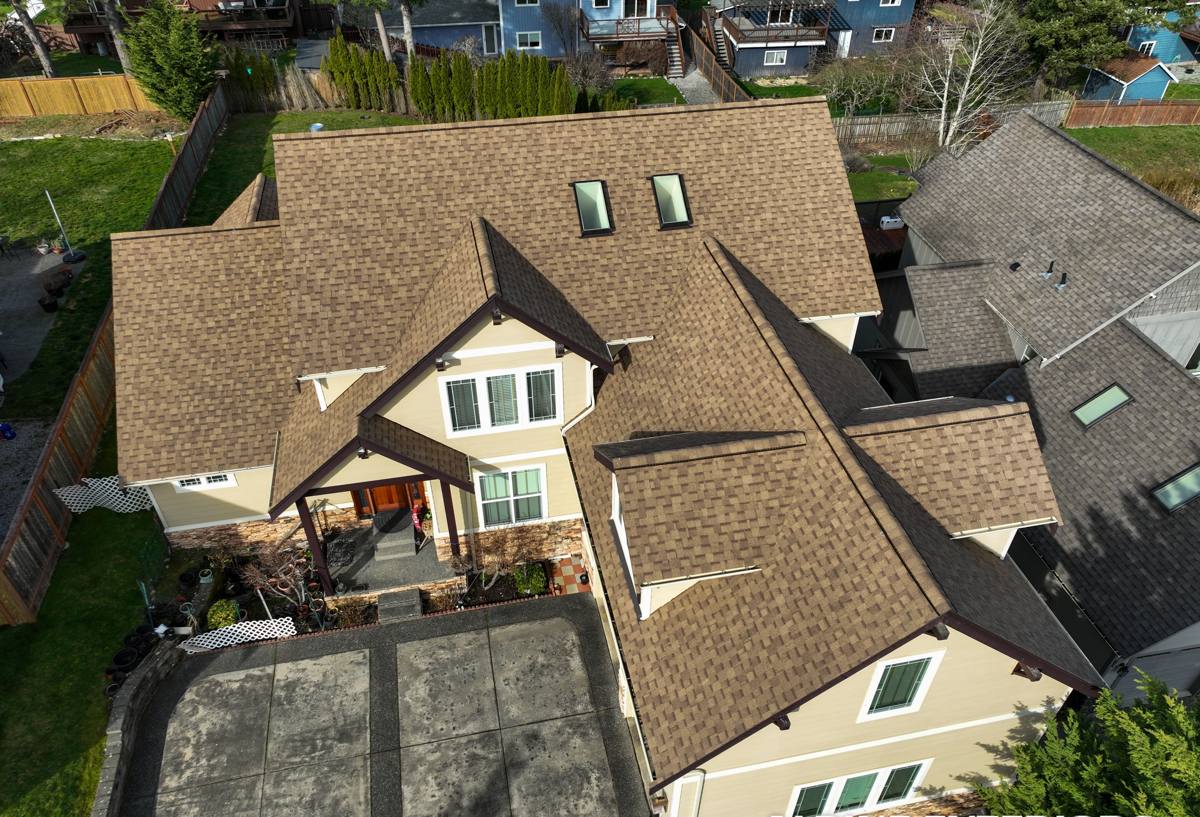
How Storms and Salt Air Wear Down Guemes Island Roofs
Wind and Driving Rain Off the Water
Homes on or near the island's shoreline take wind straight off the surrounding waters with little to break it up. That wind doesn't just loosen shingles — it drives rain sideways and up under roof edges, ridge caps, and flashing that would stay dry in a more sheltered spot. Once wind gets a shingle tab lifted even slightly, the next storm finds that weak point and makes it worse. Repairs on exposed roofs need fastening and sealing that account for uplift, not just a patch that looks fine on a calm day.
Salt Air and Metal Corrosion
Salt air is hard on anything metal on a roof — nail heads, flashing, gutter fasteners, vent caps. Corrosion often starts small, as rust staining or a fastener backing out slightly, long before it becomes a leak. On a mainland roof a few miles inland, that same hardware might last decades. Close to the water on Guemes Island, it can fail years sooner. Any honest storm repair here has to look past the obvious damage and check the metal components nearby, because a storm that damages shingles is often the same storm that finished off already-weakened flashing.
Moss, Shade, and a Long Wet Season
A lot of Guemes Island properties sit under tree cover, which is part of what makes the island appealing and part of what's hard on a roof. Shade keeps moisture sitting on shingles and in valleys longer after every storm, and moss takes hold in those damp, shaded areas over a long wet season. Moss isn't just cosmetic — it lifts shingle edges as it grows, holds water against the roof surface, and gives storm winds something to grab onto. A roof already dealing with moss growth is more vulnerable to storm damage than a clean one, and repairs that ignore that connection tend not to last.
Signs Your Guemes Island Roof Has Storm Damage
Some storm damage is obvious. A lot of it isn't, especially from the ground. After any significant wind or rain event, it's worth checking for:
- Missing, cracked, or curled shingles, especially near edges, ridges, and valleys
- Granules collecting in gutters or at downspout outlets
- Soft or discolored ceiling patches inside the home after heavy rain
- Visible daylight through the attic roof deck or soffits
- Bent, lifted, or missing flashing around chimneys, vents, and skylights
- New moss growth along shingle edges or in shaded valleys following a wet stretch
- Debris, branches, or gravel from the shingle surface scattered on the ground
- Gutters pulled loose or sagging away from the fascia
None of these by itself always means a full replacement is needed, but any of them is a reason to get a roof looked at before the next storm finds the same weak spot.
What a Correct Storm Damage Repair Actually Involves
A repair that's done right starts with figuring out how the damage happened, not just patching what's visible. Wind damage, impact damage from debris, and long-term wear that a storm finally exposed all call for different fixes, even when the end result looks similar from the driveway.
- Confirm the roof deck itself is sound — a shingle repair over a soft or rotted deck won't hold.
- Match the repair to the surrounding roofing material as closely as possible, including exposure and fastening pattern.
- Replace flashing and fasteners in the repair area rather than reusing corroded or bent hardware.
- Check and clear the immediate area of moss or debris so the repair isn't sitting under existing moisture problems.
- Verify the repair ties into existing underlayment and flashing correctly so water is shed, not trapped.
Skipping any of those steps is how a "repair" turns into a callback a year later, usually right after the next big storm.
Cost Factors for Storm Damage Repairs
| Factor | Why It Matters on Guemes Island |
|---|---|
| Extent of the damage | A few shingles versus a section of deck changes both material and labor significantly |
| Roof pitch and access | Steep or high roofs, common on older homes, take longer and require more safety setup |
| Condition of surrounding roofing | An older roof around a repair site may need extra flashing or transition work to blend in |
| Material and hardware availability | Matching materials and sourcing corrosion-resistant fasteners for a ferry-dependent job affects scheduling |
| Moss or moisture damage found underneath | Hidden rot discovered once shingles are pulled back can add scope |
Our Process for Guemes Island Storm Repairs
Getting to the Island Without Losing Time
Because the island is ferry-access only, we plan storm calls differently than mainland Anacortes work. When a roof is actively leaking or a tarp is needed to stop further damage, we prioritize getting a crew and the right materials over on the same trip rather than making multiple runs. That planning is the difference between a temporary fix that actually holds through the next round of weather and one that fails before we can get back.
Assessment and Documentation
Once on site, we inspect the full roof, not just the obvious damage point, since wind and rain rarely affect just one spot. We document what we find with photos, both for your records and for insurance if you're filing a claim. This is also when we check flashing, fasteners, and any moss or moisture issues nearby that could undercut a repair if left alone.
The Repair Itself
We match materials to what's already on the roof where possible, replace corroded hardware rather than reusing it, and pay particular attention to sealing and fastening given how exposed many island roofs are to wind-driven rain. Where a repair is close to existing moss growth, we address that as part of the job rather than leaving it to undermine the new work.
Cleanup and Follow-Up
We clear debris, old materials, and displaced granules from gutters and the ground before we leave. If we see anything else during the repair that's worth watching — aging flashing elsewhere on the roof, for example — we'll tell you directly rather than padding the job or staying quiet about it.
Repair or Replace? How We Help You Decide
| Situation | Repair Usually Makes Sense | Replacement Worth Considering |
|---|---|---|
| Age of roof | Mid-life roof with isolated damage | Roof already near or past its expected service life |
| Extent of damage | Localized to one area or slope | Damage spread across multiple sections |
| Underlying deck | Deck is sound once exposed | Rot or soft decking found in more than one spot |
| History of repairs | First or second repair on this roof | Roof has needed repeated storm repairs in recent years |
| Moss and moisture | Manageable with cleaning and minor treatment | Long-term moss damage affecting shingle integrity broadly |
We'll give you a straight answer based on what we actually find, not a default push toward the bigger job. Plenty of storm damage genuinely is a repair, not a replacement.
Materials We Choose for Coastal Storm Repairs
Given the salt air and wind exposure on Guemes Island, we lean toward corrosion-resistant fasteners and flashing rather than standard-grade hardware, even when it costs a little more up front. Standard galvanized fasteners can start showing rust in coastal exposure faster than most homeowners expect, and a fastener failure is exactly the kind of small problem that turns into a bigger leak after the next storm. We also pay close attention to underlayment quality in valleys and along eaves, since that's where wind-driven rain concentrates on an exposed roof.
We're upfront when a particular product isn't a good fit for this kind of exposure — not because a brand is bad, but because certain materials, fastening systems, or flashing details are more sensitive to installation quality and moisture cycling in a marine environment. Our standard is to use what holds up reliably here, and to explain the trade-offs plainly if you're weighing options.
Why It Matters to Hire a Crew That Already Works Guemes Island
A contractor who's never worked on the island has to learn its logistics on your dime — figuring out ferry timing, what materials to bring the first trip versus the second, and how exposed roofs here behave differently than roofs a few miles inland in Anacortes. A crew that already works Guemes Island has that figured out, which means less delay when a roof is actively damaged and more of the visit spent actually working instead of scrambling.
It also means familiarity with the kind of housing stock common on the island — older homes, seasonal cabins, and waterfront properties with roofs that have seen decades of Skagit County weather. Knowing what those roofs typically need, and what corners were cut on some of them over the years, makes for a more accurate first look and fewer surprises once work starts.
Keeping Your Roof Ready for the Next Storm
Storm damage repair fixes what already happened. Keeping a Guemes Island roof in good shape between storms is what keeps the next one from doing as much damage. A few habits go a long way here:
- Clear gutters and downspouts before the fall storm season, especially under tree cover
- Have moss treated or removed before it spreads across a full slope, not after
- Trim back branches that overhang the roof and drop debris into valleys
- Walk the roofline visually after any major wind event, even if nothing seems wrong
- Have flashing and fasteners checked periodically given the salt air exposure
None of this replaces a professional inspection after real storm damage, but it reduces how often you need one.
If a recent storm has left your Guemes Island roof missing shingles, leaking, or just looking rougher than it should, we're happy to take a look. Fill out the form below for a free, no-pressure estimate — we'll tell you honestly what we find and what it actually needs.