 Anacortes Siding
 Bow's Siding Problem Isn't Like Most of the Country's
Bow sits in the stretch of Skagit County between Anacortes and Bellingham, close enough to Samish Bay that salt-laden air is a daily fact of life, not an occasional nuisance. Add in the long, wet Pacific Northwest rain season and the deep shade many Bow properties sit under from mature evergreens, and you get a climate that's genuinely tough on exterior building materials. Siding here doesn't just get rained on — it stays damp for days at a stretch, gets misted with salt, and spends a good chunk of the year hosting moss and algae in every north-facing shadow line.
Most siding products sold in this country were never engineered with a climate like this in mind. They're built for average American weather — moderate humidity, moderate rain, no salt exposure. Bow doesn't get average weather. That mismatch is exactly why we standardized on one product system rather than offering a menu of options, and it's worth explaining in plain terms before you decide what goes on your walls.
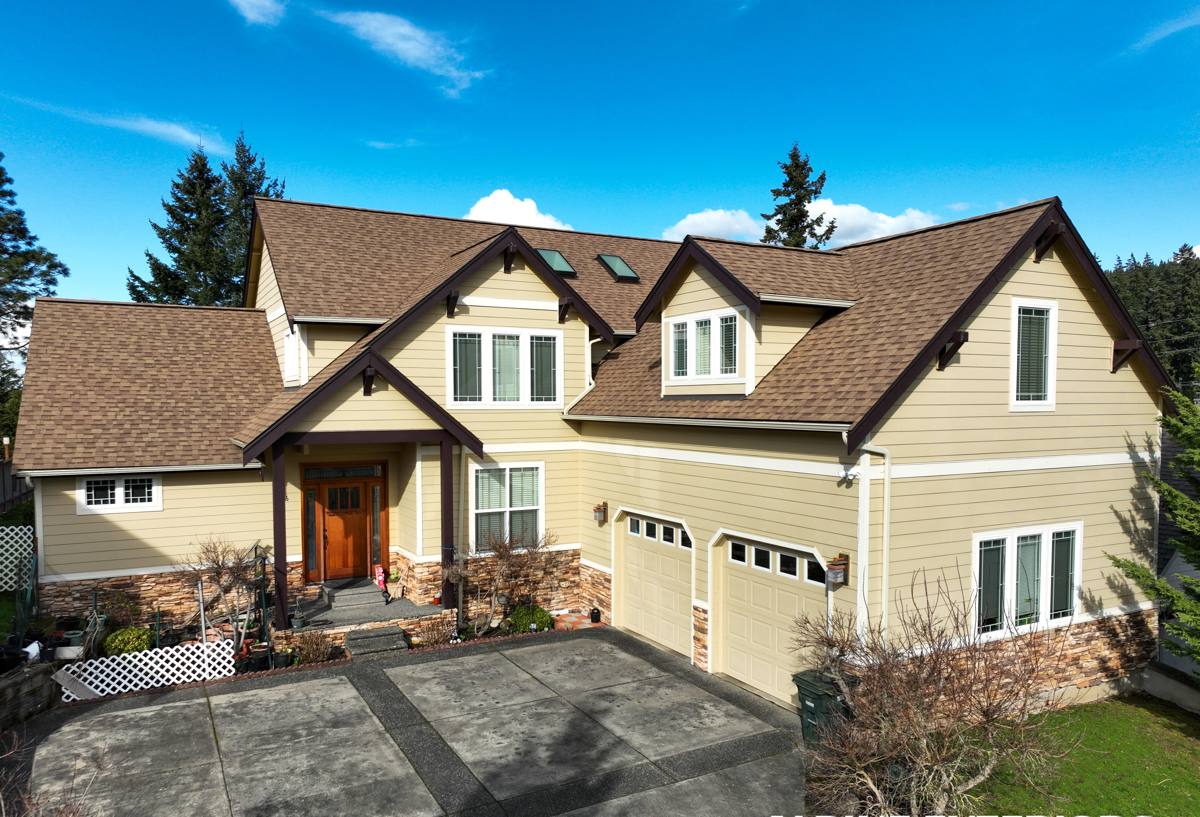
What Salt Air, Rain, and Moss Actually Do to a Wall
Salt Air
Airborne salt is corrosive and hygroscopic — it pulls moisture out of the air and holds it against whatever surface it lands on. On siding, that means fasteners, trim edges, and seams stay damper longer than they would inland. Over years, that constant low-grade moisture exposure is what separates siding that ages gracefully from siding that swells, cups, or lets rot start at the edges.
Driving Rain
Skagit County doesn't just get rain — it gets wind-driven rain that hits walls at an angle, working its way behind trim, into laps, and around penetrations if those details weren't built correctly the first time. A siding system's water-management design (how laps shed water, how flashing directs it back out, how house wrap ties into openings) matters more here than in a dry climate where a few construction shortcuts might never get tested by weather.
Moss and Algae
Shaded, north-facing walls in Bow's tree-covered lots stay damp long after the rest of the property has dried out. That's prime territory for moss and algae growth, which not only looks bad but holds moisture against the siding surface even longer, extending the exposure window every wet season brings.
Why This Company Only Installs James Hardie
We install James Hardie fiber cement siding exclusively. We don't install vinyl, LP SmartSide, cemplank, Allura, primed spruce, or cedar — not because those products are without merit, but because we've made a professional judgment call about what holds up best in Skagit County's specific combination of salt exposure, sustained moisture, and moss pressure, and we'd rather stand behind one system we know well than offer a catalog of options with different failure modes.
Wood siding (cedar or primed spruce) looks great on day one, but it's organic material in a climate that stays wet for months at a time — it needs regular refinishing and is genuinely vulnerable to the rot and moss growth this area produces. Vinyl is low-maintenance but it's a thin plastic product that can warp in temperature swings, fade over time, and doesn't offer the same fire resistance or perceived home value as fiber cement. Engineered wood products like LP SmartSide use a wood-strand core that, while treated, is still more moisture-sensitive at cut edges and seams than a cement-based product. Other fiber cement brands compete reasonably well on paper, but James Hardie's regional engineering, factory finish warranty, and installation-support infrastructure in the Pacific Northwest are what tipped our decision.
James Hardie fiber cement is non-combustible, dimensionally stable (it doesn't expand and contract with moisture the way wood does), and comes factory-finished with ColorPlus Technology — a baked-on finish that resists the fading and peeling that field-applied paint eventually suffers, especially under UV and salt exposure. That combination is the closest match we've found to what a Bow home actually needs.
The James Hardie Lines That Make Sense for This Climate
James Hardie engineers its siding in regional formulations called HZ5 and HZ10, built for exactly the wet, humid coastal conditions Skagit County sees. For Bow homes, we typically spec HZ5, which is designed for climates with sustained moisture and freeze-thaw cycling — an accurate description of a winter here.
| Product | Best Use | Why It Fits Bow |
|---|---|---|
| HardiePlank Lap Siding | Most homes, primary wall coverage | Classic lap profile sheds driving rain effectively; available in ColorPlus factory finishes |
| HardiePanel Vertical Siding | Accent walls, gables, modern facades | Clean vertical water path, popular for contemporary Skagit County builds |
| HardieTrim Boards | Corners, window and door surrounds, fascia | Matches plank durability so trim doesn't become the weak point in the system |
| HardieSoffit Panels | Eaves and overhangs | Resists the humidity and staining that build up under shaded eaves |
Color matters more here than homeowners often expect. ColorPlus finishes are baked on in a controlled factory environment, which gives noticeably better fade and chip resistance than field-applied paint — a real advantage given how much UV and salt exposure a Bow exterior sees across a full year.
What a Correct Installation Actually Involves
James Hardie siding performs the way it's engineered to only when it's installed to spec. In a climate like Bow's, the installation details are what separate siding that lasts thirty-plus years from siding that develops problems in five.
- Proper water-resistive barrier and flashing: House wrap and flashing must be correctly lapped and sequenced so any water that gets behind the siding drains back out instead of pooling.
- Correct fastener pattern and type: Hardie specifies fastener placement, type, and depth precisely — over-driven or misplaced nails are one of the most common causes of premature failure.
- Manufacturer-specified clearances: Siding needs proper clearance from grade, roofing, and decks so water and debris don't sit against the bottom edge.
- Caulking and joint treatment done right: Butt joints and trim intersections need the correct sealant approach — too much or too little caulk both cause problems over time.
- Painted or factory-finished cut edges: Any field-cut edge needs to be sealed to prevent moisture wicking into the cut face of the board.
These aren't optional refinements — they're the difference between a warrantied installation and one that voids its own protection. James Hardie's warranty structure assumes installation to their published specifications, and installers who cut corners on flashing or fastening put that protection at risk regardless of how good the siding material itself is.
How Our Process Works on a Bow Project
Every project starts with an on-site assessment of your home's specific exposure — which walls take the worst of the weather, where existing moisture or moss damage has already started, and what the current siding and sheathing condition looks like once we're able to inspect it directly. From there we walk you through product selection (lap profile, panel style, and color), confirm measurements, and put together a written estimate before any work begins.
During installation, our crew follows James Hardie's published fastening, flashing, and clearance specifications on every wall, not just the visible ones. We pay particular attention to the details that matter most in this climate: water-resistive barrier continuity, flashing at windows and doors, and clearance at grade and roof lines. We walk the finished job with you before calling it complete, so you know exactly what was done and why.
What Drives the Cost of a Bow Siding Project
| Factor | Why It Matters |
|---|---|
| Home size and wall complexity | More corners, gables, and dormers mean more trim work and cutting |
| Existing siding removal and sheathing condition | Rot or moisture damage found underneath old siding adds repair scope |
| Product selection | Lap width, panel style, and ColorPlus finish choice affect material cost |
| Access and site conditions | Tree cover, slope, and driveway access affect labor time in Bow's rural lots |
| Trim and detail work | Window surrounds, fascia, and soffit replacement add to full-exterior scope |
We don't quote a number without seeing the home first — every property's exposure and existing condition is different, and a fair estimate depends on an actual on-site look rather than a square-footage guess.
Keeping Hardie Siding Looking Right in This Climate
James Hardie siding is genuinely low-maintenance compared to wood, but "low-maintenance" doesn't mean "no maintenance" in a climate that produces this much moss and salt exposure.
- Rinse siding down once or twice a year, especially shaded north-facing walls where moss and algae accumulate fastest
- Keep gutters clear so overflow doesn't run down the siding face repeatedly
- Trim back vegetation and tree limbs that keep walls shaded and damp longer than necessary
- Inspect caulking at trim joints and penetrations every couple of years and touch up as needed
- Address any impact damage or chipped finish promptly rather than letting exposed edges sit unsealed
Why a Crew That Already Works Bow Matters
Siding installation isn't generic work — the right approach changes based on the specific weather a home is going to face. A crew that already works Bow and the surrounding Skagit County waterfront communities knows which walls typically take the worst driving rain, how much moss pressure to expect on shaded elevations, and how salt exposure near Samish Bay affects fastener and finish choices over time. That local knowledge shows up in details a crew unfamiliar with the area might not think to prioritize — flashing sequencing, clearance at grade, and where extra attention to sealed edges actually pays off years down the road.
It also means straightforward logistics: a local crew can get to your property without long travel delays, is familiar with the permitting and inspection process for Skagit County work, and has a reputation in the community to stand behind.
If you're planning a siding replacement or repair in Bow, we're happy to come take a look and walk you through what your home specifically needs. Reach out for a free, no-pressure estimate using the form below.