 Anacortes Siding
 Flounder Bay's Siding Challenge: Salt Air, Driving Rain, and a Long Moss Season
Homes in Flounder Bay sit close enough to the water that the siding is doing real work every day, not just holding paint. Salt-laden air off the bay settles on every exposed surface, wind-driven rain finds its way into seams and laps during fall and winter storms, and the shaded, damp sides of a house stay wet long enough for moss and algae to take hold. This isn't a one-season problem. It's a year-round load on the building envelope, and it's the reason siding choices that work fine forty miles inland don't always hold up the same way on a Flounder Bay lot.
We install siding across Anacortes and the rest of Skagit County, but waterfront and near-waterfront neighborhoods like Flounder Bay get a different level of attention because the failure modes are different. A siding job that looks fine on day one can start showing problems in three or four years if the details weren't built for salt air and sustained moisture. This page is about what that means for James Hardie fiber cement siding specifically, and what a correct installation looks like on a home in this setting.
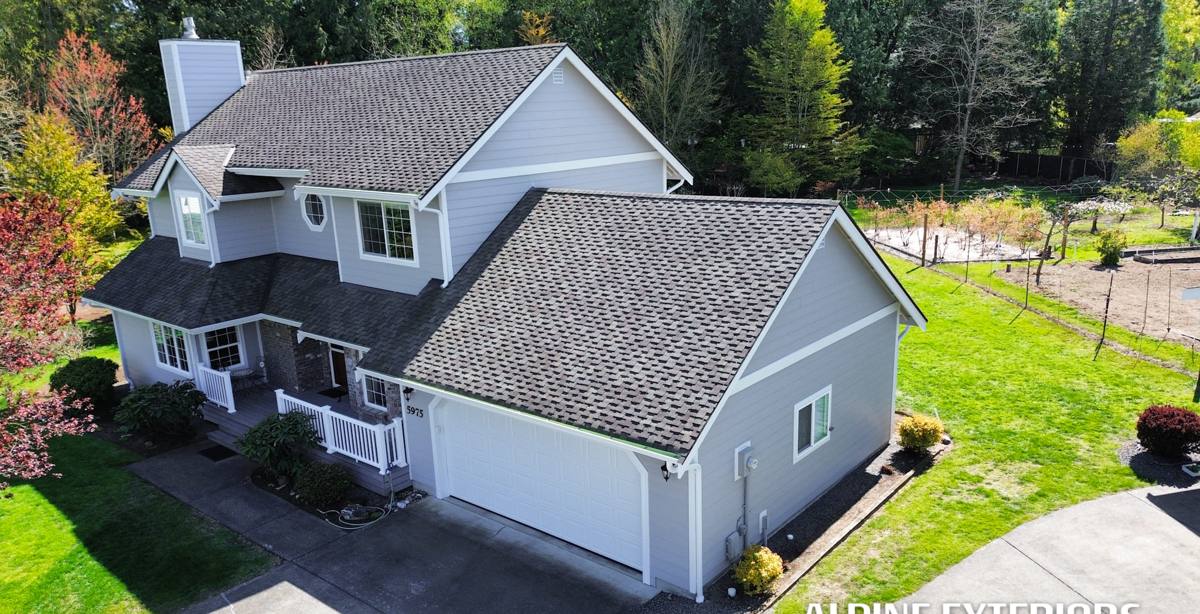
Why Waterfront Exposure Wears Out Siding Faster
A few things compound on a bay-facing home in a way they don't on a sheltered inland lot:
- Salt residue settles on siding, trim, and especially fasteners. Left alone, it accelerates corrosion on anything not rated for a marine environment.
- Wind-driven rain doesn't just run down a wall — it gets pushed sideways and upward into joints, at window and door heads, and around penetrations like hose bibs and light fixtures.
- Shaded, north-facing walls and areas under eaves or tree cover stay damp longer, which is exactly what moss and algae need to establish and spread.
- Temperature swings between damp nights and daytime sun stress any material that expands and contracts differently than the fasteners holding it in place.
None of this means siding can't perform well here — it means the product and the installation both need to be built with this exposure in mind, not treated the same as a job across town in a more sheltered part of Anacortes.
What Happens When the Wrong Product Meets This Exposure
Wood and wood-based siding absorb moisture at the very seams and cut edges this climate targets hardest. Once moisture gets behind the surface layer, the clock starts on swelling, delamination, or rot — and by the time it's visible from the ground, the damage is usually further along than it looks. Vinyl doesn't rot, but it flexes and can loosen or crack over time under repeated wetting and drying cycles, and it doesn't offer much of a moisture barrier at the seams. This is the backdrop for why we standardized on one product for every home we side, waterfront or not.
Why We Only Install James Hardie in This Climate
James Hardie fiber cement is cement, sand, and cellulose fiber — it doesn't absorb and swell the way wood-based products do, and it won't rot. That matters anywhere in Skagit County, but it matters more directly on a lot exposed to salt air and driving rain like Flounder Bay. A few specific reasons this is the product we put on homes here:
- Non-combustible core — fiber cement doesn't feed a fire the way wood siding can.
- Engineered for wet climates — Hardie's HZ5 product line is specifically formulated for regions with sustained moisture and freeze-thaw cycles, which describes the Pacific Northwest coast well.
- Factory-applied ColorPlus finish — baked on under controlled conditions rather than field-painted, it holds color and resists the kind of surface breakdown that lets moss and algae get a foothold.
- Dimensionally stable — it doesn't expand and contract with moisture the way wood does, which keeps joints and caulk lines from working themselves loose as fast.
- Backed by a strong, transferable warranty — worth something on a home near the water, where owners want assurance the product was built to last in this exact kind of exposure.
The ColorPlus Advantage on a Bay-Facing Home
A lot of the visible aging you see on older siding — chalking, fading, dark streaking under eaves — comes down to a finish that wasn't built to shed water and resist organic growth. ColorPlus is cured onto the board in a factory environment, which gives it a harder, more consistent surface than field-applied paint. On a home that's fighting salt air and shade-driven moss all year, that difference shows up in how long the finish actually looks good before it needs attention.
What a Correct Installation Involves Here
James Hardie siding performs the way it's designed to only when it's installed to spec — and in a marine-exposure setting like Flounder Bay, a few details matter more than they would elsewhere:
- Proper flashing at every window head, door head, and penetration, so wind-driven rain has nowhere to collect and no path behind the cladding.
- A drainage plane behind the siding so any moisture that does get past the surface has somewhere to go instead of sitting against the sheathing.
- Corrosion-resistant fasteners rated for the exposure, since standard fasteners are exactly what salt air attacks first.
- Correct clearance from grade, decks, and roof lines per Hardie's installation instructions, so splashback and standing water aren't sitting against the bottom edge of the siding.
- Manufacturer-spec nailing patterns and joint treatment, including proper caulking at butt joints — skipped or rushed here is where most premature failures start.
This is also why we don't install siding during active wind-driven rain, and why we check moisture conditions in the wall assembly before closing anything up. On a typical inland job that level of care matters; on a Flounder Bay waterfront lot, it's the difference between siding that looks right for two years and siding that actually performs for decades.
How James Hardie Compares in This Climate
| Siding Type | Moisture & Salt Air Resistance | Ongoing Maintenance | Typical Lifespan Here |
|---|---|---|---|
| James Hardie fiber cement | Strong — non-combustible, doesn't absorb and swell, HZ5 line engineered for wet climates | Occasional wash-down; ColorPlus finish resists fading and organic growth longer than field-painted surfaces | Multiple decades when installed to spec |
| Vinyl | Doesn't rot, but seams can loosen and panels can warp or crack under repeated wetting/drying and temperature swings | Low, but limited repair options if a panel is damaged | Moderate; performance varies with installation quality |
| Cedar / primed wood | Absorbs moisture at joints and cut ends; salt air and shade accelerate rot and moss growth | High — regular refinishing, caulking, and moss treatment needed | Shorter without frequent upkeep |
| LP SmartSide (engineered wood) | Better than raw wood but still wood-based; edges and cuts remain moisture-sensitive | Moderate — finish and joint maintenance still required | Depends heavily on installation and upkeep |
This table isn't a knock on any of these products in general — vinyl, cedar, and engineered wood all have a place. It's specifically about what holds up best against sustained salt air, wind-driven rain, and a long moss season, which is the exposure profile that defines Flounder Bay.
Our Process for a Flounder Bay Project
Every siding job we do starts with a look at the specific exposure of that lot — which walls face prevailing wind and rain, where shade keeps a surface damp longest, and what condition the existing wall assembly is in before we touch it. On waterfront and near-waterfront homes, that assessment also includes checking for any existing moisture damage or corrosion around fasteners, trim, and penetrations, since those are the areas most likely to already be under stress.
From there, we walk through product and color selection — including which Hardie profile and climate line fits the home — before scheduling installation around weather rather than around a fixed calendar date. Wind-driven rain events are common enough here that we plan around them instead of working through them. Once the siding is up, we do a final walk-through checking flashing, caulk lines, and clearances before calling the job done.
Maintenance Homeowners Can Do Between Visits
James Hardie siding installed correctly needs far less attention than wood, but a bay-facing home still benefits from a little seasonal awareness:
- Rinse salt residue off siding periodically, especially after storms with onshore wind
- Walk the exterior once a year and look at caulk lines around windows, doors, and trim for cracking or gaps
- Check shaded and north-facing walls for early moss or algae growth and address it before it spreads
- Keep gutters and downspouts clear so water isn't sheeting down onto siding below
- Watch for any staining or discoloration near penetrations, which can signal a flashing issue worth catching early
Why a Crew That Already Works in Flounder Bay Matters
Siding experience in general is useful. Siding experience on waterfront lots in this specific part of Skagit County is more useful, because the failure points aren't theoretical — they're the same handful of details that show up again and again on homes exposed to this kind of salt air and rain. A crew that already works in and around Flounder Bay knows which walls typically need the most flashing attention, understands local permitting through the City of Anacortes, and isn't guessing at how a marine climate treats fasteners, joints, and finishes over time.
That local familiarity also shows up in smaller, practical ways — planning around tighter waterfront lots, coordinating access near marina-adjacent properties, and sequencing work around the wetter stretches of the year instead of fighting them. It's the difference between a generic install and one built for the house it's actually going on.
If you're weighing a siding replacement or repair on a Flounder Bay home, we're happy to take a look and talk through what your specific exposure calls for. Reach out for a free, no-pressure estimate using the form below.