 Anacortes Siding
 Metal Roofing in Burlington: Built for What This Climate Actually Does to a Roof
Burlington sits in the Skagit Valley, close enough to the Salish Sea and the San Juans that homes here deal with a blend of coastal and valley weather: salt-tinged marine air rolling in off the water, long stretches of steady rain, and short, low-angle winter sun that lets moss and moisture sit on a roof far longer than it should. Homeowners who've lived here more than a winter or two already know the pattern — a roof that looked fine in July can be growing moss in the shaded valleys by January. Metal roofing has become a popular answer to that pattern, but only when it's specified and installed correctly for this specific climate. This page covers what that actually means for a Burlington home.
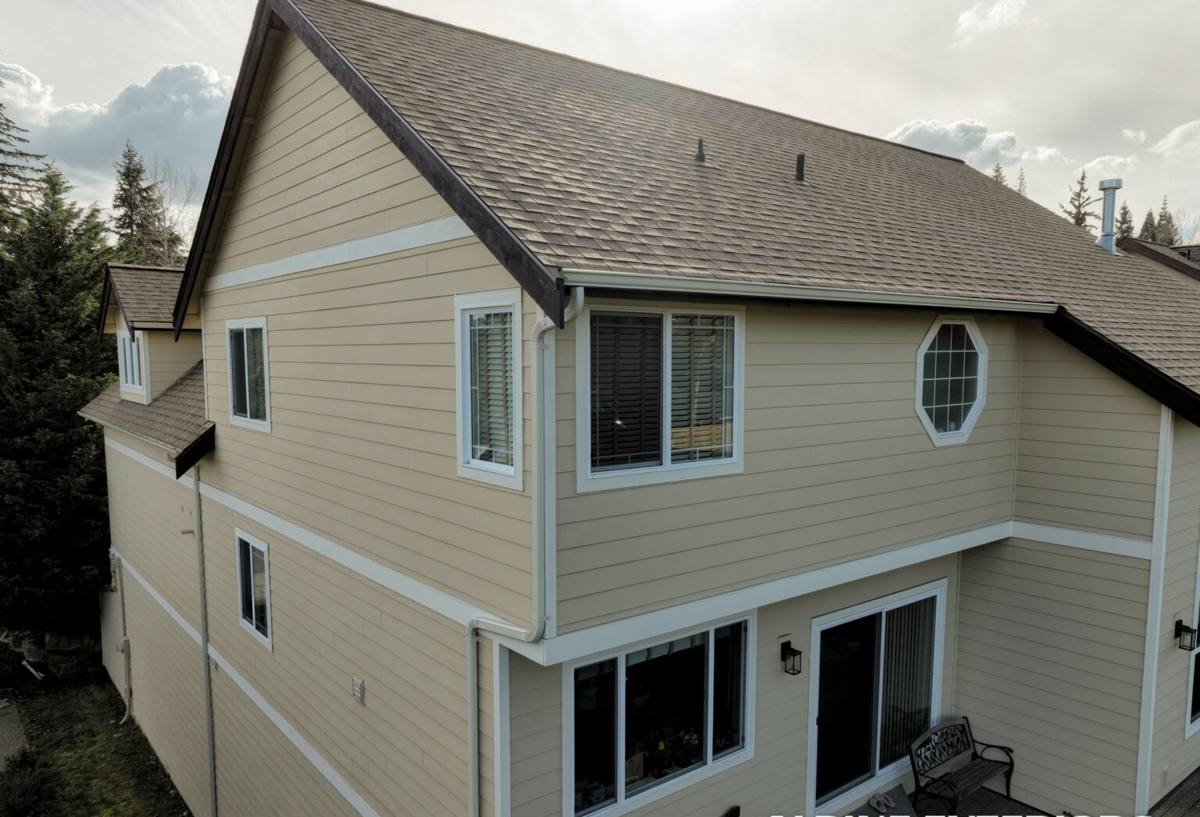
What Skagit County Weather Does to a Roof Over Time
Every roofing material eventually fails from the same handful of causes: trapped moisture, UV breakdown, wind uplift, and organic growth. In Burlington, three of those four show up constantly.
Salt Air and Corrosion
Proximity to Anacortes and the Sound means fasteners, flashing, and exposed metal edges take on airborne salt over the years. Untreated or mismatched metals corrode faster here than they would inland, which is why fastener and flashing selection matters more in this area than a generic spec sheet would suggest.
Driving Rain and Wind-Driven Water
Rain in this part of Washington doesn't fall straight down as often as homeowners from drier states expect. Wind off the water pushes it sideways, which means water finds its way under lifted shingles, poorly lapped flashing, and undersized underlayment far more often than in calmer climates. A roof here needs to shed water even when it's coming in at an angle.
Moss and Shade
Long, wet winters combined with tree cover common around Burlington properties create ideal conditions for moss and algae. On roofs with the wrong surface texture or poor drainage, moss doesn't just sit on top — it works into seams and holds moisture against the roof deck for months at a time.
Why Metal Roofing Fits This Climate Well
Metal isn't a fix for every roofing problem, but it addresses several of Burlington's specific issues better than most alternatives:
- Smooth, hard panel surfaces give moss and algae far less to grip onto compared to the textured surface of asphalt shingles.
- Interlocking or properly lapped seams shed wind-driven rain more reliably than a shingle roof with the same pitch.
- Steel and aluminum panels don't absorb water the way organic shingle mats can, so freeze-thaw cycling causes less long-term damage.
- A correctly installed metal roof typically outlasts two or more asphalt roof cycles, which matters on a property where reroofing means dealing with wet-season scheduling every time.
None of that happens automatically just because the material is metal. Panel type, fastener choice, and underlayment all have to be matched to this climate — the same panel installed the same way in a drier region wouldn't need the same details.
Metal Roofing Options for Burlington Homes
Not every metal roofing system is the same, and the right choice depends on the home's roofline, budget, and how much the owner wants to think about maintenance later.
| System | How It's Fastened | Best Fit | Maintenance Considerations |
|---|---|---|---|
| Standing seam | Concealed clips, no exposed fasteners on the field | Homes wanting the longest service life and cleanest look | Lowest long-term maintenance; seams handle wind-driven rain well |
| Exposed-fastener panel | Screws through the panel face into the deck or purlins | Budget-conscious projects, outbuildings, simpler rooflines | Fastener gaskets and washers need periodic inspection as they age |
| Stone-coated steel | Interlocking panels, often profiled to look like shingle or tile | Homeowners wanting a traditional look with metal's durability | Coating and profile edges need attention during install to avoid trapping moisture |
In a climate with this much rain and salt exposure, we lean toward standing seam or well-detailed stone-coated systems for anything long-term. Exposed-fastener panels have their place, but every penetration through the panel face is a future maintenance point, and that adds up over a 30-to-50-year roof life in a wet marine climate.
What a Correct Metal Roof Installation Actually Involves
The panels get most of the attention, but the parts you don't see are what determine whether the roof performs in this climate.
Deck and Ventilation
We check the roof deck for existing moisture damage before anything goes down — a common finding on older Burlington homes where a slow leak or trapped moss has been quietly softening sheathing for years. Proper attic and roof ventilation also matters more here than in drier climates, since condensation under a metal roof behaves differently than under asphalt if airflow isn't right.
Underlayment
Given how much wind-driven rain this area sees, we don't treat underlayment as an afterthought. High-quality synthetic underlayment, with self-adhered ice-and-water membrane at eaves, valleys, and penetrations, gives the roof a real second line of defense if wind ever pushes water past the panel seams.
Flashing and Fasteners
This is where salt air exposure matters most. Flashing and fastener metals need to be compatible with the panel metal to avoid galvanic corrosion, and exposed hardware should be rated for coastal-adjacent conditions rather than a generic inland spec.
Panel Expansion
Metal expands and contracts more than most homeowners expect across Skagit County's seasonal temperature swings. Panels and clips need to be installed with room to move, or you end up with oil-canning, loosened fasteners, or stressed seams a few years in.
Our Process for a Burlington Metal Roof Project
The steps themselves aren't unusual, but we don't skip any of them, and we walk the homeowner through each one before it happens.
- On-site inspection — we look at the existing roof, deck condition, ventilation, and any moss or moisture patterns specific to the property's shade and exposure.
- Tear-off vs. overlay decision — metal can sometimes go over an existing roof, but we only recommend that when the deck and existing layer are genuinely sound, since covering a moisture problem never fixes it.
- Underlayment and flashing detail — installed to handle wind-driven rain, not just straight-down rainfall.
- Panel installation — fastened and lapped to the manufacturer's spec and adjusted for this climate's expansion and moisture demands.
- Final walkthrough — we go over the finished roof, drainage points, and what maintenance (if any) the homeowner should expect going forward.
Maintaining a Metal Roof in a Wet, Salt-Air Climate
Metal roofing needs less attention than shingle roofing, but "less" isn't "none," especially this close to the water. A short seasonal checklist covers most of what matters:
- Clear debris and overhanging branches that trap moisture against panels or in valleys.
- Check gutters and downspouts before the fall rains start — clogged drainage backs water up under panel edges.
- Look at exposed fasteners (if the system uses them) every couple of years for early signs of corrosion or gasket wear.
- Rinse off any salt residue or organic buildup near ridge caps and valleys where debris tends to collect.
- After major windstorms, do a visual check for lifted panel edges or loosened flashing rather than waiting for a leak to show up inside.
Why It Matters to Hire a Crew That Already Works in Burlington
A metal roof installed to a generic national spec can still fail early in this climate if the details weren't adjusted for local conditions. A crew that regularly works Burlington and the surrounding Skagit County area already knows which fastener and flashing combinations hold up against salt air, how much underlayment protection this rain pattern actually calls for, and where moss and moisture tend to collect on the rooflines common in this area. That local pattern recognition is the difference between a metal roof that quietly does its job for decades and one that needs early repairs because it was built for a drier, calmer climate somewhere else.
We also know the practical side of working here — permitting expectations in the county, realistic scheduling around the wet season, and how to sequence a tear-off so an open roof isn't sitting exposed when a storm rolls in off the water.
Get a Straightforward Estimate
If you're weighing metal roofing for a Burlington home, we're glad to take a look and give you an honest read on what your roof actually needs — no pressure, no inflated claims, just a clear assessment and a straightforward estimate using the form below.