 Anacortes Siding
 Window Replacement Built for the Skagit Valley Climate
Mount Vernon sits low in the Skagit River valley, close enough to Puget Sound and the Salish Sea that homes here deal with the same marine weather pattern that shapes the rest of Skagit County: damp winters, wind-driven rain off the water, salt-tinged air carried inland on prevailing westerlies, and shaded, moisture-holding conditions that keep moss and algae going most of the year. Windows take the brunt of that weather more than almost any other part of a house. They're the seams in the building envelope, and once a seam starts failing, water finds its way in long before it's visible from the curb.
A window replacement job in Mount Vernon isn't the same job as one in a dry inland climate. The materials, the flashing detail, and the sequencing all need to account for sustained moisture exposure, not just occasional rain. This page covers what that actually looks like for local homes.
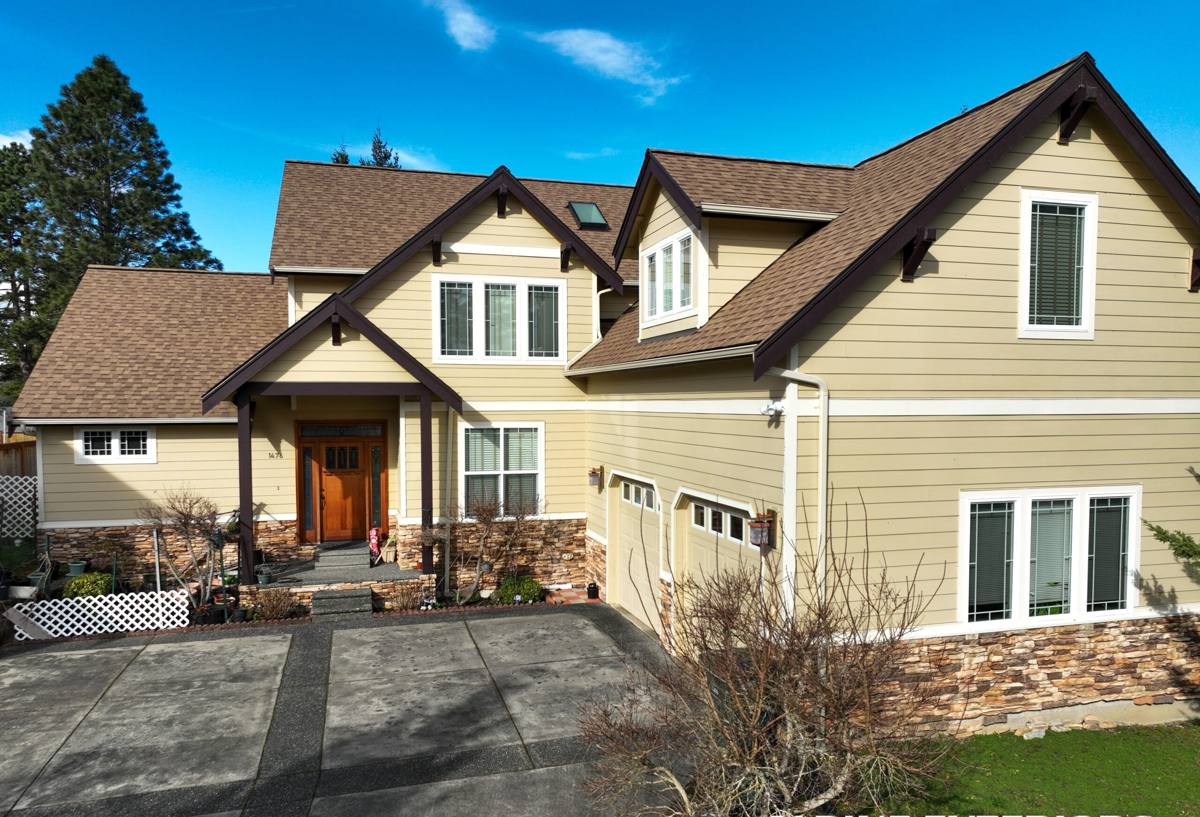
What Skagit County Weather Does to Old Windows
Moisture and Wood Rot
Older wood-frame windows are the most common failure point we see on Mount Vernon homes. Even well-built original wood sashes eventually let water past the paint film and glazing, and once moisture gets into the wood fibers around the sill and jambs, rot spreads quietly behind trim and siding. By the time it's visible as soft wood or a sagging sash, the damage usually extends further into the wall than the window opening itself.
Salt Air and Hardware Corrosion
Homes closer to the water deal with salt-laden air more directly, but even several miles inland, the humid, mineral-carrying air common to this part of Western Washington accelerates corrosion on window hardware — hinges, balances, locks, and screws — faster than it would in a dry climate. Once hardware seizes or corrodes, windows stop sealing tightly even if the frame itself still looks fine.
Moss, Algae, and a Long Growing Season
Skagit County's moss season runs long. On north-facing and shaded elevations, moss and algae can hold moisture directly against window frames and trim for weeks at a time. That constant dampness breaks down caulking, paint, and wood fiber faster than direct rain exposure alone, and it's a big reason window trim on the shaded side of a house often fails years before the sunnier side.
Condensation and Temperature Swings
The valley's humidity combined with cool, damp winters means single-pane and older double-pane windows fog and sweat on the interior. That condensation runs down onto sills and wall cavities, adding an inside-out moisture problem on top of the outside-in one.
Signs a Window Needs Replacement, Not Repair
Not every window problem calls for full replacement. But there's a point where patching stops being worth it. Homeowners in Mount Vernon should watch for:
- Visible rot, soft spots, or crumbling wood at the sill, corners, or bottom rail
- Windows that won't stay open, won't latch securely, or have seized balances
- Fogging or a visible haze between the panes of a double-pane window (a sign the seal has failed)
- Persistent condensation on the interior glass even with normal ventilation
- Drafts you can feel by hand around the frame on a windy day
- Paint that keeps failing on the same window no matter how often it's touched up
- Visible daylight or gaps between the frame and the wall from outside
- A noticeable jump in heating costs with no other explanation
One or two of these on a single window can sometimes be repaired. Several of these across multiple windows, especially on the same elevation, usually means the underlying seal and flashing have failed and repair is just delaying the inevitable.
Choosing the Right Window for a Wet Marine Climate
Frame material matters more here than in drier parts of the state, because it's the frame — not the glass — that takes the long-term beating from moisture. Here's how the common options compare for Mount Vernon's conditions:
| Material | Moisture Resistance | Maintenance | Typical Cost Range | Best For |
|---|---|---|---|---|
| Vinyl | Very good — won't rot, doesn't corrode | Low — occasional cleaning | Lower to mid-range | Most retrofit and replacement projects |
| Fiberglass | Excellent — very stable in wet/dry cycling | Low | Mid to upper range | Homes wanting longer service life and less expansion/contraction |
| Wood-clad | Good if detailed correctly, but cladding seams are a moisture risk point | Higher — exterior cladding and interior wood both need upkeep | Upper range | Homeowners prioritizing interior wood appearance |
| Aluminum | Fair — prone to condensation without thermal breaks | Moderate | Varies | Limited residential use in this climate; generally not our first recommendation |
We lean toward vinyl and fiberglass for most Mount Vernon replacements. Both shed water without relying on paint film to stay protected, and neither gives salt-tinged, moist air a wood substrate to slowly break down. Wood-clad windows can still be a good choice when the look matters to a homeowner, but we're upfront that they carry a higher long-term maintenance commitment in this climate — that's a trade-off we'll walk through honestly, not talk anyone out of.
What a Correct Installation Actually Involves
Flashing and Water Management
More window failures trace back to bad flashing than bad windows. Water has to be directed out of the wall assembly, not just blocked at the surface. That means proper sill pan flashing, correctly lapped house wrap or weather-resistant barrier at the head and jambs, and sealant used in the right places — not as a substitute for proper flashing sequence, but as a backup to it.
Insulation and Air Sealing
The gap between a new window frame and the rough opening needs to be insulated and air-sealed correctly — not overpacked with expanding foam, which can bow the frame and cause the sash to bind, and not left with gaps, which defeats the point of replacing the window in the first place.
Fastening and Shimming
A window that isn't shimmed level and plumb will operate poorly and stress its own seals over time, which shortens its service life regardless of how good the product is. This is a detail that's easy to rush and hard to notice until the window starts sticking or leaking a few years down the road.
Our Process for a Mount Vernon Window Replacement
- On-site assessment. We look at each window's condition, the wall assembly behind it, and any signs of existing moisture damage before recommending replacement over repair.
- Accurate measurement and product selection. We measure for a correct fit and walk through frame material, glass package, and hardware options based on the window's exposure — a shaded, moss-prone north wall gets different consideration than a sheltered south-facing one.
- Removal and inspection. Old windows come out carefully so we can check the rough opening and sheathing for hidden rot or water damage before anything new goes in.
- Correct flashing and installation. New sill pan flashing, properly lapped weather barrier, and careful shimming and fastening — the steps that actually determine how long the window lasts.
- Air sealing and interior/exterior trim. Insulation, sealant, and trim work finished cleanly on both sides.
- Final walkthrough. We check operation, sealing, and cleanup with the homeowner before calling the job done.
Energy Efficiency and Comfort
Skagit County's climate is moderate compared to much of the country, but the combination of cool, damp winters and drafty, failing old windows still shows up directly in heating bills and comfort. When we spec glass packages for Mount Vernon homes, we pay attention to two numbers in particular: the U-factor (how well the window resists heat loss) and the condensation resistance rating (how well it handles our humidity without fogging or sweating on the interior). Low-E coatings help with both, and in a climate this damp, condensation resistance matters just as much as insulating value.
Why Local Installation Experience Matters
Window replacement done wrong doesn't usually fail on day one — it fails two, five, or ten years later, when the flashing detail that skipped a step finally lets water behind the wall. A crew that regularly works Mount Vernon and the rest of Skagit County has already seen how local moisture, moss, and salt-tinged air affect different frame materials and installation shortcuts over time. That experience shows up in the details: how flashing gets lapped, which materials we steer homeowners away from for a given exposure, and where we tell a homeowner a repair is genuinely fine and replacement isn't necessary yet.
It also means we're familiar with the kind of older housing stock common in this area and the wall assemblies typically found behind their original windows, which helps us anticipate issues before they turn into surprises mid-project.
Get a Straightforward Estimate
If you're dealing with drafty, foggy, or failing windows on a Mount Vernon home, we're happy to take a look and give you an honest read on whether it's a repair situation or a replacement one — no pressure either way. Use the form below to request a free estimate.