 Anacortes Siding
 Why Windows in Old Town Anacortes Need Special Attention
Old Town Anacortes carries some of the oldest housing stock in Skagit County, and that means a lot of original or early-replacement windows that were never designed for the job they're doing now. A window built decades ago wasn't engineered around today's energy costs, and it definitely wasn't engineered around the specific abuse that comes with sitting a few blocks from saltwater. Marine air, near-constant humidity swings, and a wet season that can stretch from October well into spring put steady pressure on glazing, frames, and the seals that hold it all together.
We're not talking about a hypothetical. We're talking about the actual, physical toll of salt-laden air on metal hardware, the way driving rain finds its way behind poorly flashed trim, and the moss and algae that colonize any surface that stays damp too long. Windows in this neighborhood need to be selected and installed with that reality in mind, not treated like a generic upgrade.
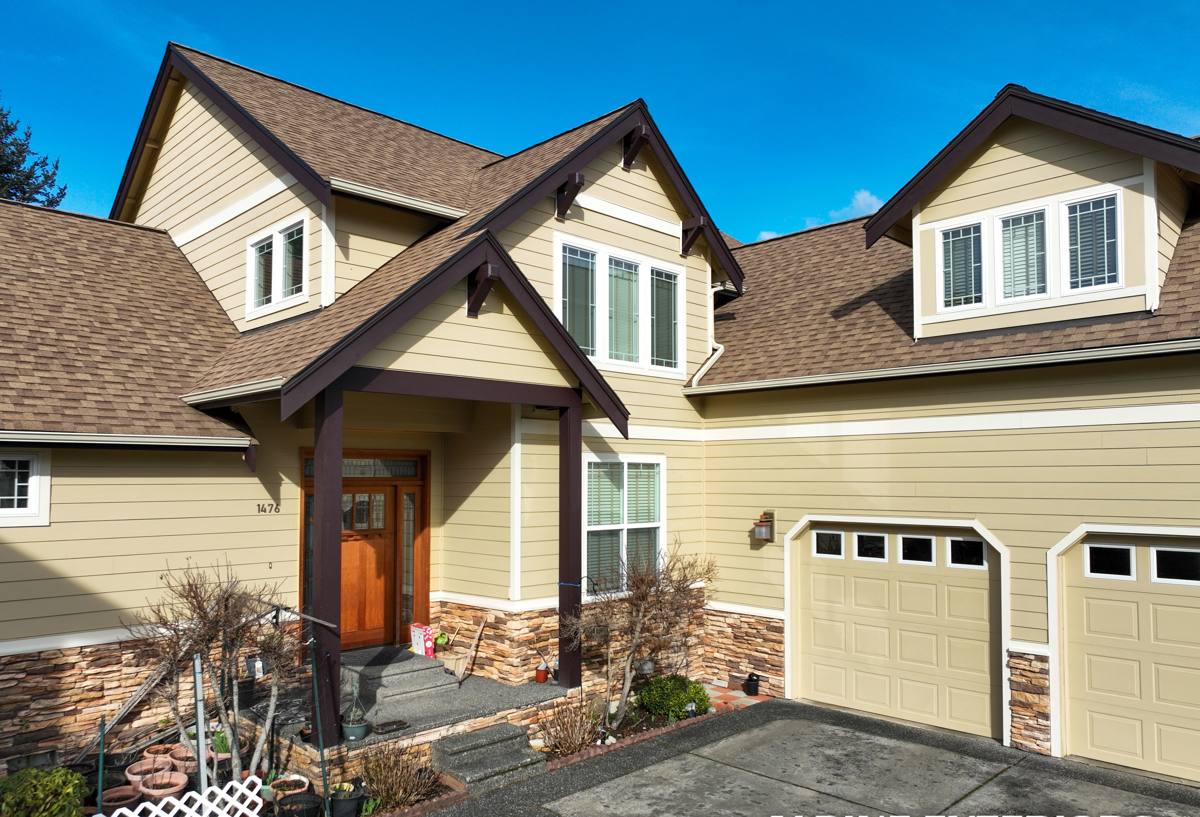
What Actually Goes Wrong With Older Windows Here
When we walk through an older Anacortes home, the problems tend to repeat themselves. Recognizing them helps you understand what you're paying to fix.
Single-Pane Glass and Failed Seals
Original single-pane windows offer almost no insulating value. Even "upgraded" double-pane units from 20-30 years ago often have failed seals by now — you'll see fogging or a cloudy band between the panes, which means the gas fill (if there ever was any) is gone and the insulating value with it.
Wood Rot at the Sill and Corners
Wood-frame windows that haven't been maintained take on water at the bottom corners and sill first. In a climate with this much sustained rain, rot can travel further into the frame and the surrounding wall structure than it looks like from outside.
Corroded Aluminum Hardware
Aluminum-framed windows from the mid-century era are common in this area, and salt air is hard on the latches, cranks, and balance hardware. Even when the frame itself is intact, corroded hardware means windows that won't lock, won't stay open, or won't close all the way — all of which bleed conditioned air.
Drafts Around the Frame, Not Just the Glass
A lot of homeowners assume old glass is the whole problem. Often the bigger energy loss is air infiltration around a warped or shrunken frame, which no amount of glass upgrade fixes on its own.
What "Energy-Efficient" Actually Means
It's a phrase that gets used loosely. On paper, a window's performance comes down to a handful of ratings from the National Fenestration Rating Council (NFRC), and they're worth understanding before you buy anything.
| Rating | What It Measures | Why It Matters Here |
|---|---|---|
| U-Factor | How well the window resists heat transfer | Lower is better — keeps heat in during our long wet, cool season |
| SHGC (Solar Heat Gain Coefficient) | How much solar heat passes through the glass | Moderate values suit our mostly overcast climate without overheating south-facing rooms in summer |
| Air Leakage | How much air passes through the assembly | Lower leakage matters more on wind-exposed lots near the water |
| Condensation Resistance | How well the window resists interior condensation | Directly relevant given our humidity swings and heating season |
Low-E (low-emissivity) coatings and argon or krypton gas fills between panes are what actually move these numbers in the right direction. A window can be double-pane and still perform poorly if it skips the coating and gas fill — glass count alone isn't the whole story.
Choosing the Right Frame Material
Frame material affects both energy performance and how the window holds up to salt air and rain over the long run. There's no single "best" choice — it depends on your home's age, your budget, and how much upkeep you're willing to do.
| Material | Energy Performance | Maintenance in This Climate | Typical Cost Position |
|---|---|---|---|
| Vinyl | Good, especially multi-chamber designs | Low — doesn't rot or corrode, minimal upkeep | Lower to mid-range |
| Fiberglass | Very good, dimensionally stable | Low — handles moisture and temperature swings well | Mid to upper range |
| Wood or Wood-Clad | Good with proper detailing | Higher — exposed wood needs regular paint/finish upkeep near salt air | Upper range |
| Aluminum (modern, thermally broken) | Fair to good depending on break design | Moderate — better corrosion resistance than older aluminum, but still metal near saltwater | Mid range |
For homes closest to the water, we generally steer clients away from bare wood exteriors and unclad aluminum, not because either product is bad, but because the maintenance burden in a salt-air, high-rain environment is real and ongoing. That's a trade-off we'll walk through honestly rather than sell around.
Why the Installation Matters More Than the Window Brand
We say this to every homeowner: the best window on the market will still fail early if it's installed poorly. This is doubly true in a climate with driving rain, because water doesn't need much of a gap to find its way behind trim and into wall framing.
- Proper flashing integration between the window and the surrounding siding, so water sheds outward rather than tracking behind the assembly
- Correctly sloped sill pans that direct any incidental moisture back outside instead of pooling
- Continuous, compatible sealant beads at all sides — not just a bead across the top
- House wrap or building paper lapped correctly over the flashing, not tucked under it
- Insulation and air-sealing in the gap between the window frame and rough opening, not just foam sprayed in as an afterthought
Because we install siding as well as windows, we look at the whole wall assembly together — the window, the flashing, and the siding all have to work as one weatherproofing system. A window replacement that ignores how it ties into the existing siding is a common source of hidden leaks down the road.
Working With an Older Home's Character
Old Town Anacortes has a mix of historic and early-20th-century homes where the window proportions, trim profiles, and sightlines are part of what gives the house its character. Replacing windows doesn't mean losing that.
Matching Sightlines
Modern energy-efficient windows can have thicker sashes and frames than the original wood windows they replace. We pay attention to matching the visual proportions as closely as practical so the house doesn't end up looking like it has mismatched "new" windows punched into an old facade.
Trim and Casing
Original trim and casing can often be preserved or replicated even when the window unit itself is replaced, which keeps the street-facing character of the home intact.
Older Materials on Site
Homes built before 1978 may have lead-based paint on original trim and sashes. If that's the case, removal and disposal need to follow proper containment practices — this is standard, not optional, and we plan for it rather than treating it as a surprise mid-project.
How Our Process Works
We keep the process straightforward and try to remove guesswork for the homeowner.
- On-site assessment — we check every window's frame condition, look for rot or corrosion, and note air leakage and existing flashing details
- Honest scope discussion — some windows may only need hardware repair or resealing; we'll tell you if full replacement isn't necessary
- Material and rating selection — matched to your home's exposure, budget, and character, not a one-size push toward the priciest option
- Removal and flashing integration — old units come out, rough openings are inspected and repaired if there's hidden rot, and new flashing ties into the surrounding siding
- Installation and sealing — units are set, insulated, and sealed per manufacturer specs adapted for our wet climate
- Final walkthrough — operation, sealing, and trim are checked together before we consider the job done
Why a Crew That Already Works This Neighborhood Matters
Anacortes and the surrounding Skagit County shoreline have a specific set of conditions — salt exposure, sustained rain, moss growth on any damp surface, and a housing stock with real age on it. A crew that works here regularly already knows which frame materials hold up, which flashing details actually keep water out during a driving rain event, and how to work around older home construction without guessing. That local, repeated experience is worth more than a manufacturer's marketing brochure.
A Quick Checklist Before You Hire Anyone
- Do they explain U-factor, SHGC, and air leakage ratings, or just say "energy efficient" without numbers?
- Do they inspect the rough opening for hidden rot before installing, not just swap the visible unit?
- Do they detail how flashing ties into your existing siding?
- Do they have a plan for lead-safe practices if your home predates 1978?
- Can they explain trade-offs between frame materials honestly, rather than pushing one product line?
- Do they offer a written scope before starting, including which windows need full replacement versus repair?
If your windows are drafty, foggy, hard to operate, or just old enough that you're not sure what's behind the trim, we're glad to take a look. We offer free, no-pressure estimates — walk the house with you, point out what we actually find, and lay out real options before any work begins. The form below is the easiest way to get started.